
India’s Hunger Index in 2024 and the Urgent Need for Solutions
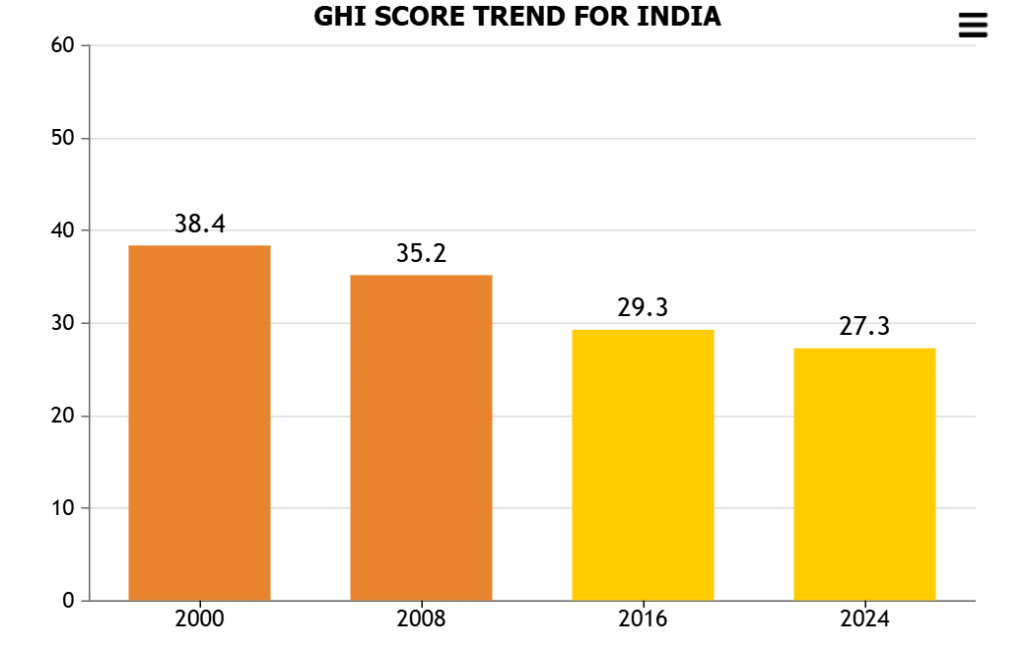
India’s position in the 2024 Global Hunger Index (GHI) reflects significant challenges in food and nutrition security. Ranked 105th out of 127 countries, the country faces a “serious” level of hunger with a GHI score of 27.3. Despite some progress since 2000, indicators such as child malnutrition remain deeply concerning. With 35.5% of children under five stunted, 18.7% wasted (the highest globally), and 13.7% of the population undernourished, India’s path towards achieving the United Nations’ Zero Hunger goal by 2030 seems increasingly unlikely. While India’s overall economic growth has been steady, the data indicates that growth alone has not translated into equitable food security. Socioeconomic disparities and gaps in policy implementation continue to impact nutrition outcomes. India performs worse than several neighboring countries, including Nepal, Bangladesh, and Sri Lanka, which have achieved better hunger scores despite having fewer economic resources. The report further emphasizes that achieving food security will require addressing systemic issues such as gender inequality and climate change. Solutions include improving maternal nutrition, ensuring better access to healthy diets, and expanding social safety nets. However, without urgent intervention, the goal of Zero Hunger may remain unattainable for many nations, including India. It’s a call to action for policymakers to focus on sustainable and inclusive food systems to reverse this trend and address the nutritional crisis at its roots. Key Findings from the 2024 Global Hunger Index The GHI measures hunger levels using four critical indicators: Undernourishment: 13.7% of India’s population suffers from insufficient caloric intake. Child Stunting: 35.5% of children under five have low height for their age, signaling chronic undernutrition. Child Wasting: 18.7% of children under five experience wasting, or low weight for height, indicating acute malnutrition—the highest rate in the world. Child Mortality: 2.9% of children do not survive beyond their fifth birthday, often due to malnutrition and related illnesses These statistics point to deep-seated nutritional challenges that hinder sustainable development. Although there has been an improvement since the 2000 GHI score of 38.4, India continues to struggle with malnutrition, a complex issue linked to maternal health, poverty, and public health policies Economic Growth Without Inclusive Nutrition Outcomes India’s growing economy has not effectively translated into better food security. While the nation has seen increased food production and GDP growth, unequal access to food and inefficient distribution systems undermine these gains. For instance, caloric loss at the retail level and income disparities contribute to rising undernourishment levels, despite higher food availability. Moreover, the COVID-19 pandemic disrupted economic activity, exacerbating poverty and food insecurity. The pandemic exposed the fragility of social protection systems and emphasized the need for targeted policies that cater to vulnerable communities. Regional Comparison: India vs. Neighbors In South Asia, India’s performance on the GHI is overshadowed by better-ranked neighbors like Bangladesh, Nepal, and Sri Lanka. These countries have shown significant progress in tackling hunger, despite facing similar socioeconomic challenges. India’s ranking just above Pakistan and Afghanistan reflects its ongoing struggle with chronic malnutrition and undernourishment.This regional comparison underlines the need for stronger nutrition policies and more efficient public health interventions. Countries with fewer resources have outperformed India by adopting targeted strategies, demonstrating that political will and effective implementation can yield significant results. Systemic Challenges: Gender Inequality and Climate Change The report highlights several systemic barriers to achieving food security, including gender inequality. Women and children in marginalized communities are disproportionately affected by hunger. Malnourished mothers are more likely to give birth to undernourished children, perpetuating a vicious cycle of hunger across generations. Climate change further complicates the issue by increasing agricultural vulnerability and disrupting food supply chains. The GHI emphasizes the need to build climate-resilient food systems and address inequalities to ensure sustainable progress towards Zero Hunger. Initiatives Already in Place While India has initiated several programs to address hunger and malnutrition, implementation challenges remain. Some notable efforts include: National Food Security Act (NFSA): Provides subsidized food grains to a large portion of the population. Poshan Abhiyan: Aims to reduce child stunting, wasting, and anemia through community-based interventions. PM Garib Kalyan Yojna: Offered food assistance during the pandemic, supporting vulnerable groups. Targeted Strategies for India to Improve Its Hunger Index Ranking The GHI report suggests that maternal health improvement is key to breaking the cycle of undernutrition. It also recommends expanding social safety nets, improving food distribution systems, and ensuring better healthcare for children and pregnant women. Expanding and Strengthening the Public Distribution System (PDS): Improve the efficiency of food grain distribution by reducing wastage and leakage. Utilize Aadhaar-linked tracking systems to ensure food reaches intended beneficiaries. Scaling Up Poshan Abhiyan (National Nutrition Mission): Focus on reducing child malnutrition by addressing maternal health and anemia. Target interventions towards the most vulnerable states and districts identified through NFHS (National Family Health Survey) data. Fortification of Staples: Fortify essential foods like wheat, rice, and edible oils with iron, folic acid, and other nutrients to combat micronutrient deficiencies, especially among children and pregnant women. Consider Community Milling of whole wheat to include the fortification staples in the rural areas. Addressing Regional Inequalities: Focus on states with the highest hunger rates, such as Bihar, Madhya Pradesh, and Uttar Pradesh. Develop state-specific policies that align with local needs and agricultural practices. Incorporating Millets and Traditional Foods: Promote millets and indigenous crops through government schemes like the National Food Security Mission. These crops are more nutritious and climate-resilient, helping combat malnutrition and ensure food security. Better Implementation of Anganwadi Services: Strengthen Integrated Child Development Services (ICDS) by ensuring adequate supply and monitoring of nutrition packages for children under five. Focus on capacity-building for Anganwadi workers to improve service delivery. Leveraging MGNREGA for Nutrition Security: Link employment schemes like MGNREGA (Mahatma Gandhi National Rural Employment Guarantee Act) with nutrition programs. Wages can be supplemented with food supplies to improve household nutrition security. Climate-Smart Agriculture Practices: Promote sustainable farming practices and incentivize small farmers to diversify crops beyond staples. Integrate climate-resilient technologies to address food security in vulnerable regions affected by erratic weather patterns. Focused Nutrition Programs in Urban Slums: Extend urban nutrition
10 Reasons Why Art History Lovers Should Read the Book The Golden Road: How Ancient India Transformed the World
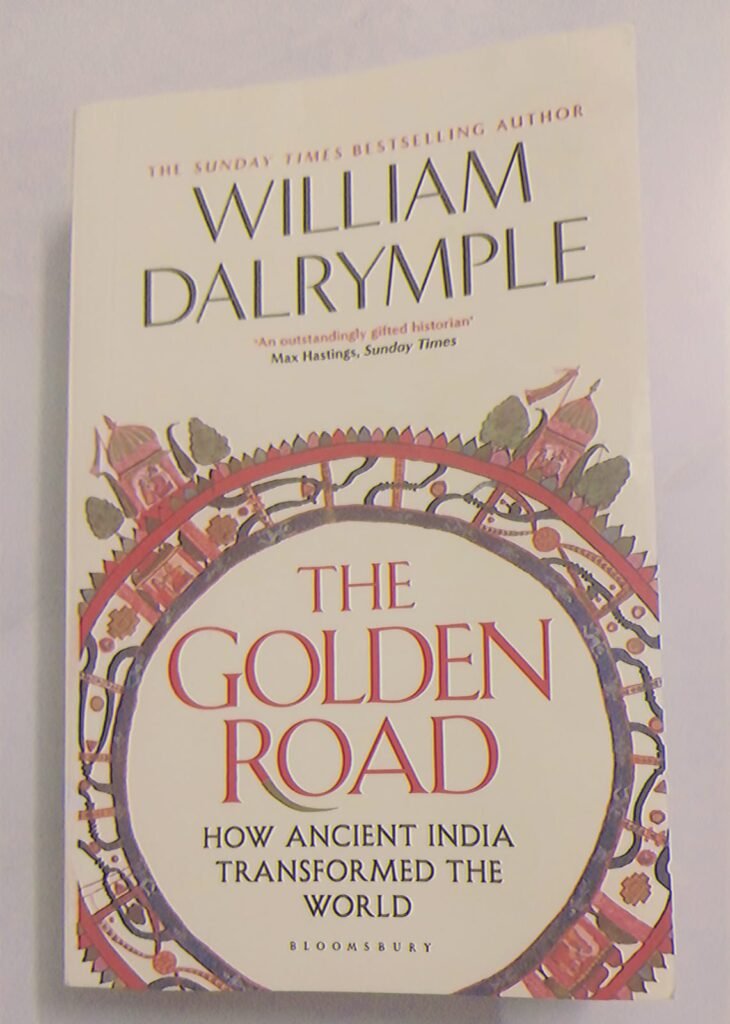
When I picked up The Golden Road: How Ancient India Transformed the World by William Dalrymple, I expected an exploration of India’s historical contributions. What I didn’t anticipate was the depth and richness with which Dalrymple weaves together art, religion, trade, and cultural exchange. This book transcends the boundaries of traditional history, bringing to life a vibrant, interconnected world where ideas and artistic expressions from ancient India shaped cultures across Asia and beyond. It’s a journey into an era when Indian Buddhist missionaries, sculptors, and scholars carried not only spiritual teachings but also intricate art forms to distant lands—from Gandharan sculptures with Greco-Roman influences to the delicate ink-wash paintings of Japan. Dalrymple’s narrative, filled with vivid descriptions of places like Nalanda University and the Ajanta caves, offers a compelling perspective on how art, intellect, and faith traveled alongside merchants and monks, leaving a lasting mark on global civilization. Here are ten reasons why I believe this book belongs on every art history enthusiast’s reading list. 10 Reasons Why Art History Lovers Should Read This Book A Rich Tapestry of Buddhist Art Dalrymple paints an evocative picture of how Buddhist art flourished, especially through the mesmerizing murals at the Ajanta Caves. These murals are not just visual art; they are a portal to ancient India’s spiritual and artistic heart. “The Ajanta murals relayed Buddhist stories in images of supreme elegance and grace… producing paintings of courtly life and ascetic renunciation that rank among the greatest masterpieces of any century.” page 29 Buddhism’s Artistic Influence Across Asia The book explores how Indian art spread with Buddhist missionaries, transforming cultural landscapes across China, Japan, and Southeast Asia. Seeing how Zen aesthetics took root in Japan, inspired by Indian thought, added a profound layer to my appreciation of this book. Iconic Monuments Brought to Life Dalrymple dives into the origins and significance of iconic structures like Borobudur in Java and Angkor Wat in Cambodia. Understanding how deeply these structures were influenced by Indian architecture makes me want to visit them in person. The Enchantment of Monasteries and Libraries The description of Nalanda, the world’s first great university, gave me chills. The vibrant intellectual life it hosted made me realize that India was once a beacon of knowledge for the world. “Nalanda’s library, known as the ‘Sea of Jewels,’ was a nine-story wonder where scholars from across Asia gathered to study texts on everything from medicine to mathematics.” Page 9 Art Beyond Borders: Indian Iconography in Asia The book traces how symbols like the Bodhisattvas Avalokitesvara and Vajrapani evolved as they traveled across Asia. This blending of styles offers art historians a deeper understanding of how cultural diffusion shapes artistic expression. Cultural Intermingling Through Art Dalrymple’s narrative emphasizes the beautiful fusion of Indian, Persian, and Hellenistic influences. This cross-pollination of styles is a reminder that art flourishes most when cultures come together. A Vivid Portrait of Ancient Life The Ajanta murals offer more than religious scenes—they depict lively court life, bustling markets, and vibrant communities. I found it fascinating to see monks and courtiers coexist in these paintings, blurring the line between spiritual and secular. “The murals show heavy-breasted dancers swaying to unheard music, while merchants and scholars gather in the same space—reminding us that life in ancient India was a harmonious blend of the spiritual and the sensual.” Page 11 A Personal Connection to Global History Reading about Xuanzang’s pilgrimage to India and his time at Nalanda struck a personal chord. His quest for knowledge mirrors the journey of any art lover seeking to uncover hidden connections in the world’s cultural history. Detailed on pages 12 and 7 Rediscovery of Forgotten Artistic Marvels The early murals of Ajanta’s Cave 10, which predate the others by 500 years, feel like a hidden gem within the book. Dalrymple’s narrative makes you appreciate how much art remains to be rediscovered and understood. Page 5 A Joy to Read for Any Art Enthusiast What sets this book apart is how Dalrymple turns a scholarly topic into an engaging, page-turning narrative. The writing flows effortlessly, and the insights are both enlightening and emotionally resonant. My Personal Verdict If I had to rate The Golden Road on a scale of 5, I’d confidently give it a 4.8 out of 5. This book is an absolute delight—rich in detail, beautifully written, and brimming with insights that linger long after you’ve turned the last page. Dalrymple’s ability to weave storytelling with meticulous scholarship is extraordinary. The only reason I’m holding back from a perfect 5 is that certain sections may feel a bit dense for readers unfamiliar with the nuances of Indian history. However, for anyone with an interest in art, culture, or history, this book is nothing short of a masterpiece. One standout feature is the inclusion of original photographs that bring the narrative to life. From the Ajanta murals to grand temple complexes like Borobudur and Angkor Wat, the visuals make the book even more immersive. These photographs complement the text beautifully, offering readers a glimpse into the artistic and architectural marvels discussed, almost as if you were seeing them firsthand. Ratings: 4.8/5
How Freelance Content Strategists Can Effectively Reach Diverse Audiences

As a freelancer, you may work with clients from various industries, each targeting different audience segments. Adopting a strategy that accommodates diversity helps you create effective content plans that resonate with multiple demographics, making your services more valuable. Top 5 Strategies to Effectively Reach Diverse Audiences Understand Your Clients’ Audience Segments Client-centric research: Each client will have unique target audiences. Invest time in understanding their audience demographics, preferences, and pain points to craft tailored content strategies. Flexible personas: Create audience personas for each client’s target market to ensure your content strategy aligns with their goals and customer profiles. Use Multichannel Approaches Channel expertise: As a freelancer, knowing which platforms work best for different audiences (social media, blogs, newsletters, etc.) is essential. Offering multichannel strategies enhances your value to clients. Content repurposing: Repurposing content for various platforms helps stretch your clients’ content budget and reach more diverse groups effectively. Inclusive and Accessible Content Cross-industry inclusivity: Freelancers often work with businesses across various sectors. By ensuring that content is inclusive and accessible, you demonstrate your versatility and professionalism, appealing to a broader clientele. Enhancing client credibility: Producing inclusive and accessible content helps your clients connect with wider audiences, making their brand more appealing and trustworthy. Personalization with Data Data-driven strategies: As a freelance content strategist, using client data to create segmented, personalized content plans adds immense value. It shows you’re not just creating generic content but one tailored to specific audiences based on actual behaviors and preferences. Customized content: Offering segmented email campaigns or targeted content strategies tailored to different customer personas can differentiate your services and showcase your expertise. Collaborate with Diverse Voices Freelancer flexibility: As a freelancer, you have the flexibility to collaborate with diverse voices or influencers who appeal to your clients’ target audiences. This collaboration can broaden your client’s brand reach and add credibility. Gauging The Content Impact as a Freelancer Track Client Metrics Track engagement: Measure your client’s content success through engagement metrics like shares, likes, and comments on each platform. Assess time on content: Track how long users interact with content to evaluate its relevance to different segments of your clients’ audiences. Analyze Client-Specific Conversions Track conversions: Freelancers can offer analytics services by measuring how each segment responds to calls-to-action. Demonstrating improvements in conversion rates makes you indispensable to your clients. A/B testing for clients: Offer to run A/B tests to see what content resonates best with different segments, giving you data to refine the strategy and demonstrate ROI to your clients. Monitor Audience Growth Client audience analysis: Regularly monitor your clients’ follower growth and engagement levels across platforms, ensuring the strategy is reaching new, diverse groups. Solicit Client Feedback Regular client communication: Gauge the success of your strategies by gathering feedback from your clients. Ask them how well they feel the content is resonating with their audience. Use Freelance-Friendly Analytics Tools Google Analytics and social media insights: Offering detailed analytics reports on how well content is performing gives your clients confidence in your work. Tools like Google Analytics, SEMrush, or Hootsuite can help provide this data. To Wrap Up As a freelance content strategist, reaching diverse audiences is essential to delivering value to your clients. Personalization, adaptability, and data-driven strategies are key to achieving results across different industries and platforms. By showing your clients how their content impacts various segments, you can solidify your role as a trusted partner in their growth.
Using British and American English Interchangeably in Travel Writing

When it comes to travel writing, the world is your oyster – and so is the language you choose. Whether you’re writing for an audience in London or Los Angeles, one of the key questions you might face is: Can you use British and American English interchangeably? The short answer is yes – but with a few considerations to keep your content clear, engaging, and relevant to your readers. Understanding the Basics of British and American English The differences between British and American English go beyond just spelling. It’s about vocabulary, grammar, and sometimes even meaning. For example, while Brits might pack their luggage before a holiday, Americans are preparing their baggage for a vacation. If you’re heading to the US, you might fill up your car with gas, but in the UK, you’ll need petrol. Using British and American Terms: Know Your Audience Before deciding how to blend the two, consider who you’re writing for. If your audience is primarily British, phrases like “lift” (elevator), “pavement” (sidewalk), and “roundabout” (traffic circle) will resonate more. Conversely, for an American audience, “elevator,” “sidewalk,” and “traffic circle” would feel more natural. However, what if your audience is global? Here’s where it gets interesting. Mixing British and American English can actually add a layer of authenticity to your travel writing, especially if you’re covering destinations from both regions. For example, when describing your layover (stopover) in New York and your car hire (rental) in London, using both terms shows respect for the local lingo while keeping it relatable for all readers. Consistency is Key in B2B Writing While it’s tempting to mix things up, consistency is essential, especially in business-to-business (B2B) travel writing. Imagine you’re creating content for a travel agency that caters to both British and American clients. In this case, it’s best to choose either British or American English and stick with it throughout the piece to maintain professionalism. For example, a British-based agency should refer to a “return ticket” instead of a “round-trip ticket.” Consistency ensures clarity and helps build trust with your audience. The last thing you want is for a reader to feel confused or think you’ve made a typo when you’re actually switching between English variants. Casual Writing? Get Creative! If you’re writing a blog, an article, or a social media post with a more casual tone, feel free to mix both forms of English. In fact, it can be a great way to add flavor to your content and connect with a wider audience. Here’s an example: “Planning a vacation (holiday) in the UK? After you touch down at Heathrow, grab a cab (taxi) and head to your hotel. Once you’ve checked in and taken the lift (elevator) to your room, unwind before your next adventure. And if you’re heading out to dinner, don’t forget to check the sidewalk (pavement) for a cozy pub to enjoy some local fare.” By using both British and American terms, you cater to readers from both sides of the pond and give your writing an international feel. Mind the SEO: Search Engines Love Consistency For content aimed at search engine optimization (SEO), choosing one form of English is usually best. Why? Because search engines like Google will recognize the consistency and align it with user searches. So, if your target audience is primarily in the US, stick to American spellings and vocabulary. If you’re aiming for the UK or global readers, British English might be more effective. That said, in blog content, using both versions (e.g., “vacation (holiday)” or “gasoline (petrol)”) can help ensure your content is picked up by a broader range of search queries without feeling redundant. Bridging the Language Divide in Travel Writing Mixing British and American English in your travel writing doesn’t have to be confusing. As long as you understand your audience and keep your messaging clear, you can seamlessly blend both forms of English, adding depth to your writing while appealing to a global audience. Whether you’re writing a guide for exploring the best highways (motorways) of America or a cozy blog about British holiday (vacation) destinations, using both types of English can make your content feel inclusive and accessible. So, the next time you’re writing about a subway (underground) ride in New York or a road trip through the countryside (countryside) in Scotland, feel free to mix and match. Just make sure you’re doing it intentionally and with your readers in mind. To Wrap Up The beauty of travel writing lies in its ability to bring people from different cultures together. And what better way to do that than by weaving together both British and American English? Just remember to keep things clear, consistent (where needed), and engaging. After all, your readers, no matter where they are, are looking for a journey—both in your writing and in the destinations you describe.
Ensuring Consistent Brand Messaging Across Platforms

As a freelance content writer, one of the key elements of any content strategy is ensuring brand consistency across platforms. It may sound simple at first, but achieving this level of uniformity while adapting to different audiences and platforms takes thoughtful consideration and a strategic approach. Let me share how I ensure this consistency while keeping the content engaging, humanized, and aligned with the brand’s identity. Understanding the Brand Voice and Values The first and most critical step is to thoroughly understand the brand’s voice, tone, and core values. This isn’t just about knowing the products or services; it’s about grasping the personality of the brand. Is the brand quirky and playful, or more professional and authoritative? Does it aim to educate, inspire, or entertain? These elements shape how I approach content for different platforms. For instance, I work with Organix Mantra, a brand rooted in natural and organic products. The voice is friendly, informative, and focused on delivering value to health-conscious consumers. Whether I’m writing for Instagram, a blog post, or an email newsletter, I ensure that the tone remains consistent—approachable yet authoritative, and always centered around the brand’s core values of purity, quality, and wellness. Tailoring the Message for Each Platform While maintaining a consistent voice is important, it’s equally crucial to tailor the message to suit the platform’s unique characteristics and audience. Every platform has its own vibe and user expectations. For example, Instagram is visually driven and requires bite-sized, engaging content, while blog posts can dive deeper into topics with a more informative tone. On Instagram, I might create a fun, quick post about the benefits of Epsom salts in a way that grabs attention immediately, often with a hook statement, emojis, and hashtags. Meanwhile, on the blog, I can take a more in-depth approach, explaining how Epsom salts contribute to muscle relaxation or plant health in a well-structured, informative article. Adapting content for each platform doesn’t mean changing the message entirely. Instead, I tweak the delivery while keeping the core of the message intact. Whether it’s a 30-second reel or a detailed blog post, the reader should always be able to identify the voice of the brand. Regular Review and Realignment Brands evolve over time, and their messaging often does too. This is why I make it a point to regularly review the content I produce. I go back and check whether it still aligns with the brand’s overall goals, especially if there have been recent changes or new products launched. For example, when Organix Mantra expanded its product range to include the FolliFuel Hair Growth Series, it was essential to align the new products’ messaging with the brand’s existing tone. The new series emphasized hair health with advanced ingredients, but I made sure the friendly, informative voice was still present in the messaging across all platforms. By conducting periodic reviews, I can ensure the content continues to serve the brand’s mission and tone, adjusting for any shifts while keeping the overall consistency intact. Collaboration with the Client Effective communication and collaboration with the client are essential to ensuring consistent brand messaging. I always make it a point to engage with my clients, discuss their vision for the brand, and gain clarity on any specific objectives they have for the content. This back-and-forth dialogue helps refine the messaging and ensures it stays true to their brand. For instance, with Organix Mantra, we collaborate regularly to discuss new campaigns or upcoming launches. Whether it’s creating content for a new skincare product or tweaking existing messages for better engagement, this collaboration helps maintain a unified voice across all channels. Adapting, Not Copying Consistency doesn’t mean copying the same content across platforms. It’s about adapting the message to the context and platform while keeping the brand voice unchanged. For instance, a detailed blog post on “The Benefits of Rosehip Oil for Hair and Skin” can be repurposed into several short, engaging Instagram captions, a few LinkedIn posts focusing on the business angle, and a concise, informative email newsletter. This strategy allows me to save time while still delivering fresh, platform-appropriate content. Each version of the content is adapted, but the core message, tone, and branding remain consistent. Adding a Human Touch Consistency is important, but so is connecting with the audience on a personal level. I strive to add a human touch to every piece of content I write. Whether it’s through a relatable story, a casual tone, or a humorous twist, making the content feel human helps foster a deeper connection between the brand and its audience. The brands that engage their audiences on a personal level tend to build stronger relationships. Whether it’s responding to user comments on Instagram or writing an email that feels like it’s coming from a friend, humanizing content while maintaining consistency helps build trust. To Wrap Up Ensuring brand consistency across platforms as a freelance content writer is both an art and a science. It requires a deep understanding of the brand, strategic adaptability for different platforms, regular reviews to align with evolving goals, and close collaboration with the client. By focusing on these aspects, I’m able to create a cohesive brand presence that resonates with the audience, regardless of where they engage with the content. The key is to remain adaptable but grounded in the brand’s identity, ensuring that no matter where the audience encounters the brand—whether on social media, a website, or through email—the message always feels like it’s coming from the same trusted source.
Brand Voice versus Brand Messaging

Brand Voice versus Brand Messaging Brand Voice versus Brand Messaging As a freelance content writer, one of the most important skills I’ve developed is the ability to distinguish between brand voice and brand messaging. These two elements may seem similar, but they play very different roles in how a brand communicates with its audience. Understanding these differences has helped me craft content that not only engages the reader but also stays true to the brand’s identity. In this article, I’ll walk you through what sets brand voice and brand messaging apart and how, as a freelance writer, you can use both to deliver content that resonates and drives results. What is Brand Voice? At its core, brand voice refers to the personality your brand conveys through its communication. It’s the distinct tone, style, and attitude a brand uses to connect with its audience. Think of brand voice as the way a brand “speaks.” Whether it’s playful and witty, authoritative and professional, or warm and compassionate, the brand voice remains consistent across all platforms and touchpoints. For example, Nike’s brand voice is motivational and empowering, while a company like Apple uses a minimalist, sleek, and sophisticated tone. In essence, brand voice helps establish a connection with your audience on a human level. It allows customers to feel like they’re interacting with a personality, not just a business. This personality should align with your brand’s core values and resonate with your target audience. What is Brand Messaging? On the other hand, brand messaging is the content of what your brand says. It encapsulates the key messages, themes, and value propositions you want to communicate to your audience. Brand messaging reflects the brand’s mission, vision, and the unique selling points (USPs) that differentiate it from competitors. While your brand voice stays consistent, brand messaging may vary depending on the context or the campaign. For instance, your messaging for a product launch might focus on innovation, while your sustainability campaign might emphasize eco-friendly practices. However, these messages should always align with your brand’s overall mission and values to maintain coherence. For example, Apple’s brand messaging often centers on innovation, simplicity, and creativity, whether they’re launching a new product or promoting a service. Their messaging focuses on delivering the idea that their products are user-friendly, groundbreaking, and designed for creative individuals. 3 Key Differences Between Brand Voice and Brand Messaging Now that we’ve defined brand voice and brand messaging, let’s break down the key differences between the two. Purpose: Brand voice is about how you communicate, while brand messaging is about what you communicate. Brand voice is the tone, personality, and style your brand uses across all its content. It remains constant and reflects the brand’s identity. Brand messaging changes based on the campaign or product but remains rooted in the brand’s mission, values, and key offerings. Consistency vs. Adaptability: Brand voice is consistent across all platforms. Whether you’re writing a social media post, a blog article, or an email newsletter, the tone of your brand should feel cohesive. Brand messaging, however, is adaptable. Depending on the context, audience, or campaign, the message can shift while still aligning with the brand’s overarching goals and values. Audience Impact: Brand voice establishes an emotional connection with the audience. It makes the brand relatable and human, helping to build trust and loyalty. Brand messaging focuses on conveying information. It tells the audience why they should care about the brand, its products, or services, and it outlines the specific benefits they’ll receive. How to Use Brand Voice and Brand Messaging Together Understanding the differences between brand voice and brand messaging is important, but using them together effectively is where the real magic happens. Here’s how you can align them in your branding strategy. Create a Brand Voice Guide To ensure consistency, create a detailed brand voice guide. This should outline the tone, vocabulary, and communication style that reflects your brand’s personality. Include examples of how your brand voice should sound in different contexts—formal vs. informal settings, customer service vs. marketing, etc. This guide will serve as a resource for everyone involved in content creation, ensuring the brand voice is always on point. Develop Key Brand Messages Once your voice is established, it’s time to craft the core messages you want to convey. Identify the key value propositions, mission statements, and benefits that your brand offers. These messages should be clear, concise, and aligned with your brand voice. For example, if your brand voice is friendly and conversational, avoid using overly technical jargon in your messaging. Tailor Messaging for Different Audiences and Campaigns While your brand voice remains the same, your messaging can and should adapt depending on the campaign or audience. For instance, you might use more technical messaging for a B2B audience while keeping it light and fun for a younger demographic on social media. Ensure that your messaging speaks to the audience’s needs and pain points while staying true to your brand’s values. Evaluate and Evolve Finally, regularly evaluate how your brand voice and messaging are performing. Are they resonating with your target audience? Is your messaging clear and consistent? Based on feedback and performance data, make adjustments as needed to keep your brand communication fresh and effective. Why Both Brand Voice and Messaging Matter for Freelance Content Writers As a freelance content writer, understanding the difference between brand voice and brand messaging is crucial for delivering content that truly resonates with your client’s audience. Your ability to differentiate between how a brand communicates (voice) and what it says (messaging) allows you to craft content that feels cohesive, professional, and aligned with the brand’s values. Mastering both elements helps you ensure that your writing not only connects emotionally with the audience through a consistent voice but also conveys the right message that drives results. By staying adaptable with your messaging and maintaining a clear, consistent voice, you create a powerful narrative that strengthens the brand’s identity, builds trust, and fosters audience loyalty. As a freelancer,
10 Compelling Reasons to Reread Books

10 Compelling Reasons to Reread Your Favorite Books 10 Compelling Reasons to Reread Your Favorite Books While randomly browsing for something interesting to read, I stumbled upon an article “Why we re-read a book” by Aruna Sankaranarayanan in The Hindu that sparked a deeper reflection on why so many of us feel drawn to rereading books. As someone who also has this habit, I often find myself revisiting old favorites like Woman of Substance by Barbara Bradford, The Faraway Magic Tree series by Enid Blyton, and Mahabharata by Kamala Subramaniam. I also enjoy going back to the wisdom found in Brian Tracy’s and Stephen Covey’s works. Rereading offers far more than just the comfort of familiarity. It’s a chance to reconnect with characters, rediscover hidden insights, and reflect on how much we’ve grown since our last read. Here are my top 10 reasons why I reread a book: New Perspectives Every Time – Even though I’ve read a book before, each time I come back to it, I notice something new. My experiences and mindset have changed, so I’m seeing the story through a fresh lens. Personal Growth – Rereading allows me to reflect on how I’ve grown. What resonated with me years ago might not hold the same weight today, and that shows me how much I’ve evolved as a person. Rediscovering Characters – It’s like meeting old friends who have changed just a little bit. Familiar characters may surprise me, and I can appreciate their complexities in a way I might have missed before. Comfort in the Familiar – Sometimes, life feels chaotic, and returning to a well-loved book brings a sense of comfort and security. I know what’s going to happen, but that predictability is calming. Timeless Lessons – Certain books, like The Colour Purple, offer timeless lessons on relationships and community. No matter how many times I read them, these themes remain relevant to my life. Creative Inspiration – Like Ya-Chieh Hsu’s experience with Big Magic, rereading certain non-fiction books can spark creativity in my own work. Some chapters remind me to be brave and take risks. Revisiting Marked Passages – In non-fiction, I often mark significant portions. When I reread, I can focus on those areas that had an impact, giving me a quick refresher without rereading the entire book. Re-experiencing Emotional Journeys – Fiction allows me to relive emotional experiences. Even though I know the story, the emotional highs and lows can still tug at my heart in a powerful way. Deepened Understanding – Rereading makes me go deeper. What might have seemed like a simple plot point on the first read now reveals more nuanced themes, and I’m able to grasp more of the writer’s intent. The Surprise Factor – Even when I know how the story ends, a skilled writer can still surprise me. I might catch subtle hints or foreshadowing that I missed the first time around, which adds layers to the experience. These are just a few reasons I find myself drawn to rereading, and each time, the journey feels both familiar and refreshingly new.