10 Mistakes Freelance Writers Make
Let’s be honest—freelance writing can feel like a juggling act. Between finding clients, meeting deadlines, and producing top-notch work, it’s easy to slip up. Whether it’s undervaluing your time or rushing through edits, every writer makes mistakes. But here’s the thing: those mistakes aren’t career-ending. They’re opportunities to learn and grow. If you’ve ever felt stuck or frustrated in your freelance writing journey, you’re not alone. Let’s unpack 10 common mistakes freelance writers make and how you can avoid them. 1. Saying Yes to Every Project Freelance writers often feel pressured to say “yes” to every opportunity, especially when starting out. But taking on every project can leave you overwhelmed, overworked, and, frankly, uninspired. Not every job will align with your skills or interests, and that’s okay. The solution? Take a step back and evaluate each opportunity. Does the project excite you? Does it pay fairly? If not, it’s better to politely decline than to burn out on work that doesn’t fulfill you. 2. Undercharging for Your Work Many freelance writers struggle with pricing their services. It’s tempting to lowball your rates to land a client, but that often backfires. Charging too little not only undervalues your expertise but can also leave you stressed about making ends meet. Instead, research what other writers in your niche charge and confidently set rates that reflect your skills. Remember, your time and talent are worth it. 3. Miscommunicating with Clients Clear communication is the backbone of any successful project. Without it, misunderstandings can crop up, leaving both you and your client frustrated. It’s easy to assume you know what the client wants, but assumptions often lead to mistakes. Always ask questions, clarify details, and provide updates throughout the project. Clients appreciate writers who take the time to get things right. 4. Missing Deadlines We’ve all been there—biting off more than we can chew and scrambling to finish on time. Missing deadlines, though, can harm your reputation and damage client trust. To avoid this, get real about how long a project will take. Use tools like Google Calendar to keep track of deadlines and break the work into manageable chunks. And if life throws you a curveball? Communicate with your client right away. They’ll value your honesty. 5. Skipping the Editing Phase You’ve just finished a draft, and the temptation to hit “send” is strong. But skipping the editing phase is one of the biggest mistakes a freelance writer can make. Even small typos can leave a bad impression. Make editing non-negotiable. Take a short break before revisiting your draft with fresh eyes, and use tools like Grammarly or Hemingway to catch errors. The extra effort goes a long way. 6. Avoiding Self-Promotion If promoting yourself feels awkward, you’re not alone. Many writers hesitate to market their skills, relying instead on job boards or word-of-mouth. But avoiding self-promotion limits your growth. A strong online presence—like a polished LinkedIn profile or a personal website—can showcase your expertise and attract the right clients. You don’t need to brag; just share your work and let it speak for itself. 7. Forgetting to Use Contracts Skipping contracts might save time upfront, but it can lead to headaches later. Without clear terms, you risk payment issues, scope creep, or even losing control of your work. Protect yourself and your clients by always using a simple contract. It doesn’t need to be fancy—just outline what you’re delivering, when, and for how much. 8. Trying to Be a Jack-of-All-Trades Many freelance writers try to cover every topic under the sun, thinking it will make them more marketable. But being a generalist often makes it harder to stand out. Clients look for specialists who understand their industry. Find a niche you’re passionate about—whether it’s tech, travel, or parenting content—and focus on building your expertise there. You’ll not only attract better-paying clients but also enjoy the work more. 9. Taking Feedback Personally Let’s face it—receiving feedback can sting. Writing is personal, and criticism can feel like a direct attack on your skills. But taking feedback personally only holds you back. Instead, view it as an opportunity to improve. Ask yourself, “What can I learn from this?” Applying constructive feedback helps you grow and build stronger client relationships. 10. Neglecting Professional Growth Freelance writing isn’t a “set it and forget it” career. Trends evolve, and clients expect writers to keep up. If you’re not actively improving your skills, you risk falling behind. Dedicate time to learning, whether it’s through online courses, books, or webinars. Staying curious and adaptable ensures you stay competitive in the industry. To Wrap Up Mistakes are a natural part of any journey, and freelance writing is no exception. What matters most is how you respond to them. By recognizing these common pitfalls and taking proactive steps to avoid them, you’ll set yourself up for long-term success. Remember, it’s okay to make mistakes—they’re opportunities to learn, grow, and become an even better writer. So, which mistake will you tackle first? Looking for a writer who can bring your brand’s voice to life? I’d love to help. Let’s talk about your project and create content that works as hard as you do!
What Makes Great Writing Truly Stand Out
Great writing goes beyond perfect grammar and clear structure. It creates an experience that lingers in the reader’s mind long after they’ve finished reading. While good writing serves its purpose by presenting information in a clear and polished manner, great writing does so much more—it connects, captivates, and leaves a lasting impact. Let’s uncover what sets exceptional writing apart and how you can craft work that truly resonates. The Difference Between Good and Great Writing At its core, good writing is dependable. It gets the point across, keeps the reader interested, and avoids unnecessary fluff. Think of good writing as the sturdy bridge that takes you from point A to point B without any hiccups. It’s the blog post that explains a concept clearly, the email that communicates effectively, or the story that entertains. Now, great writing? It’s the kind of bridge that makes you stop halfway, admire the view, and remember the journey forever. It doesn’t just deliver—it leaves an imprint. Great writing doesn’t settle for being understood; it aims to be felt. Here’s the breakdown. Good writing is functional: It informs, explains, or entertains. Great writing is emotional: It engages, inspires, and lingers in the mind. Good writing serves a purpose: It’s clear and concise. Great writing transcends purpose: It tells a story, creates a connection, and sparks thought. Simply put, good writing does its job well, but great writing transforms the ordinary into something unforgettable. Why the Difference Matters The digital landscape is overflowing with content, yet only a small fraction truly leaves a mark. The difference between good and great writing often becomes the tipping point for lasting impact. Readers aren’t just looking for information—they’re searching for authenticity, creativity, and a connection that feels real. Good writing can get you noticed. It might grab a moment of attention, perhaps even a nod of approval. But great writing? That’s what builds trust. It’s the kind of writing that stays with readers, earning their loyalty and inspiring action. It has the power to influence perspectives, spark conversations, and create lasting bonds. Think about the books, articles, or blogs you hold close to your heart. They weren’t just grammatically correct or well-structured—they spoke to you. They had that spark, that rare quality that moved you, made you think, or even changed your outlook. They were more than words; they were an experience. This is the essence of great writing. It challenges the writer to dig deeper, to bring their truest self into their work, and to create something that resonates. Every writer, no matter where they are in their journey, has the potential to close the gap between good and great. The question is: Are you ready to take that step? How to Transition from Good to Great Focus on Your Audience: Great writing starts with understanding who you’re writing for. What moves them? What do they value? Add Personality: Don’t just stick to the facts. Infuse your writing with your unique voice and perspective. Prioritize Emotion: Think beyond what your readers need to know—ask yourself what you want them to feel. Refine Relentlessly: Great writing often starts as good writing, shaped and polished through thoughtful editing. The Writer’s Journey Every writer has the potential to move from good to great. It takes curiosity, effort, and a willingness to push boundaries. Great writing isn’t just about the words on the page—it’s about the energy, emotion, and authenticity behind them. As you reflect on your own work, ask yourself: Is this just delivering information, or is it creating an experience? The answer to that question could be the first step in your journey to becoming the writer you’ve always wanted to be. Ready to Create Something Great? Great writing doesn’t just happen—it’s crafted with care and purpose. If you’re looking for content that connects, inspires, and drives results, let’s collaborate. Whether you need compelling blogs, engaging web copy, or content that speaks directly to your audience, I can help. Let’s create something unforgettable together! Let’s Talk Because the world is full of good writing. Let’s make yours great. Good writing informs; great writing transforms and lingers.
Tips to Write a Short Story in 1500 Words
Writing a short story in 1500 words is a challenge that tests your creativity and precision. The beauty of short fiction lies in its brevity—it captures a moment, an emotion, or a transformation in just a few pages. It’s like crafting a snapshot of life that resonates deeply, all while staying concise. But here’s the tricky part: how do you deliver an unforgettable story within such a tight limit? If you’ve ever felt stuck while trying to fit an entire world into a handful of paragraphs, you’re not alone. Many writers struggle with balancing detail and brevity, but with the right approach, you can create a masterpiece that stays with your readers long after the last word. This blogpost will walk you through actionable tips to write a compelling short story in 1500 words or less—without sacrificing creativity or impact. 1. Anchor Your Story with a Strong, Singular Concept Every great story starts with a compelling idea. The key to writing a short story is to keep your focus razor-sharp—there’s no room for sprawling plots or endless backstories. Zero in on One Theme or Event: Ask yourself, “What’s the essence of this story?” Whether it’s a moment of redemption, a life-changing decision, or an unexpected encounter, choose one central idea and build around it. Example: Instead of writing about a character’s entire journey, focus on the moment they decide to leave their small town or confront an old friend. Relatable Meets Unique: The best stories feel universal yet fresh. Tap into emotions your readers can connect with—love, loss, fear—but frame them in an unexpected way. Example: A story about unspoken love might center on a woman writing a letter she never intends to send. Your concept is the heart of the story. Once you have it, everything else will naturally fall into place. 2. Let Your Characters Speak Volumes with Fewer Words In a short story, your characters need to feel real and memorable—quickly. With limited space, every detail about them has to pull its weight. Focus on One or Two Key Characters: You don’t need an ensemble cast. A protagonist and maybe one supporting character are enough to drive your narrative. Show, Don’t Tell: Instead of saying, “John was shy,” let his actions reveal his personality. Maybe he hesitates before knocking on a door or avoids eye contact during a tense conversation.Details That Define: Use a single vivid detail to make a character come alive. A worn leather jacket, a nervous tick, or a tendency to hum under their breath can make them unforgettable. 3. Start in the Middle of the Action Readers don’t have time to wade through paragraphs of setup in a short story. Grab their attention from the very first line. In Media Res: This Latin phrase means “in the middle of things.” Drop your readers right into the story’s most interesting moment. Example: Instead of, “It was a rainy day, and Jane was feeling restless,” try, “The knife clattered to the floor as Jane slammed the door shut, her breath ragged.” Hook Them with the First Line: Your opening sentence is your chance to intrigue, shock, or delight your reader. A question, an action, or a bold statement works wonders. Example: “They always said the house was haunted, but no one told me it would laugh.” 4. Structure Your Plot for Maximum Impact Even in a short story, you need a clear beginning, middle, and end. But brevity means cutting straight to the core. Classic Story Arc: Stick to this framework: Setup: Introduce your protagonist and their world. Conflict: Present the problem or decision they must face. Climax: Deliver the emotional or narrative peak. Resolution: Wrap up the story with a sense of closure—or leave the reader wondering. Trim the Fat: Every scene should serve a purpose. If a paragraph doesn’t reveal something important about the character, setting, or plot, cut it. 5. Use Descriptive Language to Create Atmosphere Good descriptions don’t just paint a picture—they evoke emotion. In a short story, they also save space by doing double duty. Show More, Tell Less: Instead of saying, “The room was cold,” describe the frost on the windows or the character’s breath turning to mist. Lean on the Senses: What does the character see, hear, smell, or feel? Sensory details create vivid, immersive scenes. Example: “The coffee shop smelled of burnt toast and cinnamon, a strange comfort on a winter morning.” Be Concise but Evocative: Descriptive language should enrich the story, not weigh it down. A single metaphor can convey an entire mood. 6. Make Dialogue Work Harder Dialogue is a powerful tool in short stories, but it has to earn its place. Every word should reveal something important. Keep It Realistic: Your characters should sound like real people, but without the “um” and “uh” filler of actual conversations. Advance the Plot: Don’t let dialogue meander. Each line should add depth to the character, hint at backstory, or escalate tension. Example: Instead of “Hi, how are you?” try “I thought you’d never come back.” Use Subtext: Let your characters say one thing but mean another. It adds complexity and intrigue. Example: “It’s fine,” she said, her hand gripping the table edge until her knuckles turned white. 7. End with a Bang (or a Whisper) The ending is where your short story leaves its lasting mark. Aim for something memorable. Resolution Doesn’t Mean Closure: Your story can wrap up without answering every question. Sometimes, ambiguity keeps readers thinking. Example: “He watched her walk away, the letter still crumpled in his pocket.” Deliver an Emotional Punch: Whether it’s joy, sorrow, or surprise, the ending should resonate deeply. Consider a Twist or Revelation: A well-executed twist can elevate your story, but it should feel earned—not gimmicky. 8. Edit Like Your Story Depends on It (Because It Does) Once you’ve written your story, the real work begins: Cut Ruthlessly: Every sentence, word, and comma must serve a purpose. Tighten your prose until it feels lean and impactful. Read Aloud:
Make Your Strategy Better with a Simple Content Creation Framework

The 5 W’s and 1H technique is a proven framework that simplifies content creation while ensuring your work connects with your audience. Whether you’re crafting a blog, building a content strategy, or writing an email campaign, this timeless method can help you stay structured, focused, and creative. But let’s be honest—content creation isn’t always a smooth process. Sometimes you sit down to write, and the words just don’t come. Deadlines loom, and the pressure to create engaging, high-converting content can feel overwhelming. What if there was a simple, reliable tool to spark your creativity and guide you to success every time? The 5 W’s and 1H is a method that journalists have trusted for decades and that marketers and writers like you can easily adopt. Let’s explore how this structured yet flexible approach can help you craft high-converting content that not only informs but also inspires action. What Are the 5 W’s and H? The 5 W’s and H framework centers around six key questions that dig into the details of any topic: Who? What? When? Where? Why? How? Simple, right? But don’t underestimate its power. These questions can transform how you brainstorm, research, and write. They guide you to create content that resonates with your target audience and drives results. This framework has roots in Aristotle’s philosophy, evolved through journalism, and now serves as a reliable tool in fields ranging from marketing to business strategy. How the 5 W’s and H Create High-Converting Content The beauty of this method lies in its versatility. Whether you’re crafting a blog post, launching a content marketing strategy, or brainstorming an email sequence, these questions help you focus and refine your message. Let’s break it down step-by-step. 1. Who: Know Your Audience You’ve probably heard it before—know your audience. But this step is about more than identifying demographics. Ask yourself: Who will benefit the most from this content? Who are you writing for today? Understanding your audience helps you deliver value. Is your goal to inform professionals, engage small business owners, or inspire seasoned marketers? Use insights from surveys, feedback, or customer interactions to refine your approach. The better you know your audience, the more effectively you can craft content that solves their problems and meets their needs. 2. What: Define Your Goal What do you want your content to achieve? Are you looking to: Boost engagement? Drive traffic? Improve conversions? Be specific. Your goal will shape the tone and focus of your piece. For instance, if your aim is to drive traffic, your content should be optimized for high-value keywords like “crafting high-converting content” or “structured content strategy.” If it’s to build loyalty, your tone might lean more toward storytelling and empathy. 3. When: Choose the Right Timing Timing matters. Ask yourself: When is the best time to publish this content? Is this piece evergreen, or is it tied to a specific event or season? For instance, a guide on creating a content creation framework might perform well at the start of the year when businesses are planning their strategies. Understanding the “when” ensures your content lands at the right moment for maximum impact. 4. Where: Select Your Channels Where will your content have the most impact? This question is about distribution. Should you share it on your blog, send it via email, or post it on LinkedIn? If your target audience spends time on Instagram, you’ll tailor your message for visuals and quick reads. Knowing the best platforms for your audience ensures your hard work doesn’t go unnoticed. 5. Why: Understand the Purpose Why does this content matter? Both to you and your audience? Why are you creating this piece? Why will your audience care? When you answer these questions, you can clarify your mission. For example, if you’re addressing “why content marketing success depends on structure,” emphasize how your readers can save time and boost results by using the 5 W’s and H framework. 6. How: Execute with Precision How will you bring it all together? This step is about refining your strategy and ensuring nothing slips through the cracks. How can you make the content more engaging? How does it align with your overall goals? Revisit your work with a fresh perspective. Does it address all the effective content writing strategies you set out to cover? Have you sprinkled in keywords like “audience engagement tips” or “structured content strategy” to boost its reach? Fine-tune your content to maximize its impact. The Benefits of the 5 W’s and H for Content Creation Using this framework doesn’t just get you unstuck—it ensures every piece of content you create has a clear purpose and direction. By addressing each of these questions, you: Stay focused and eliminate guesswork. Create content that resonates with your audience. Build a content marketing success strategy with precision. Even if you don’t follow the framework step-by-step every time, keeping it in your toolkit ensures you have a reliable fallback whenever you’re stuck or need clarity. To Wrap Up Creating high-converting content doesn’t have to feel overwhelming. By using the 5 W’s and H framework, you can turn even the simplest idea into a structured, actionable, and impactful piece of work. Remember, the secret to effective content isn’t just creativity—it’s having a clear plan. So, next time you’re staring at a blank screen, ask yourself: Who, What, When, Where, Why, and How? These six simple questions will guide you to create content that engages your audience, meets their needs, and drives meaningful results. Now, take a deep breath, revisit your goals, and let the 5 W’s and H transform your content strategy. You’ve got this! A Shout Out to Businesses Struggling to make your content stand out and actually drive results? It doesn’t have to be that hard. Discover how the 5 W’s and 1 H framework can simplify your process and help you create content that connects, engages, and converts. Whether you’re looking to boost sales, grow your audience, or just tell your story better, this guide
The 5 E’s of Effective Content Writing

Content writing isn’t just about filling space with words—it’s about crafting experiences that stick, spark, and inspire. And at the heart of every impactful piece lies a simple yet powerful framework: the 5 E’s of Effective Content Writing. These aren’t just buzzwords—they’re the blueprint for creating content that connects, converts, and lingers in the mind long after the screen goes dark. Before delving into the 5 E’s you need to get a clear picture about what effective content writing is all about. What is Effective Content Writing Effective content writing is about creating content that captures attention, delivers value, and inspires action. It’s more than just putting words on a page; it’s about crafting a message that resonates with your audience and achieves a specific purpose. Understand Your Audience At its core, effective writing starts with understanding your audience. Identify what they need, care about, and how they consume information. Core Elements of Effective Writing: Clarity: Ensure your content is easy to understand and concise. Relevance: Address topics that matter to your audience and align with their interests. Creativity: Use unique ideas, storytelling, or analogies to make your content stand out. Structure for Impact: Start with a strong opening to grab attention. Provide compelling insights to maintain interest throughout. End with a clear call-to-action that guides the reader to take the next step. Optimized for Visibility: Incorporate keywords naturally to improve search rankings. Ensure optimization does not compromise a humanized tone. Balancing Key Elements: Combine valuable information with relatability. Use storytelling, analogies, or humor to keep readers engaged and invested. Ultimately, effective writing builds trust, establishes authority, and drives measurable results, whether it’s higher engagement, increased conversions, or a stronger connection with your audience. It’s the perfect blend of art and strategy, designed to leave a lasting impact. 5 E’s of Effective Content Writing Engage with Excellence Ever notice how some words grab you by the collar and pull you into their world? That’s the magic of engaging content. The first few seconds are a make-or-break moment, so don’t waste them. Start with a line that tugs at curiosity, challenges assumptions, or speaks to a universal truth. Consider this: “Your audience isn’t scrolling—they’re sprinting. If your content doesn’t stop them mid-stride, it’s already lost the race.” The best engaging content doesn’t just demand attention—it earns it. Use sharp insights, relatable anecdotes, and bold claims that make readers think, “I need to know more.” Educate Effortlessly We live in a world of information overload. People aren’t just searching for content—they’re searching for clarity. The hallmark of the 5 E’s of Effective Content Writing is the ability to simplify the complex without diluting its meaning. Think of yourself as a guide, not just a writer. Use analogies, step-by-step instructions, or real-world examples to turn abstract ideas into aha moments. For instance: “Writing a headline is like crafting a first impression—it’s not just what you say, but how you say it that leaves an impact.” Educational content doesn’t just inform—it empowers. When your audience walks away feeling smarter, they’ll come back for more. Entertain with Elegance Let’s face it—nobody wants to read boring content. But entertainment doesn’t have to mean over-the-top antics or endless jokes. It’s about weaving in elements that surprise, delight, or intrigue. Imagine saying: “SEO isn’t rocket science. Actually, scratch that—it might be harder, because at least rockets follow predictable laws!” A touch of humor, a clever metaphor, or a story that makes readers nod in recognition can transform dry information into memorable moments. The trick is balance: entertain without distracting, charm without overshadowing your core message. Empathize to Elevate Here’s the truth: your readers don’t care about what you write—until they see how it’s relevant to them. Empathy is the soul of the 5 E’s of Effective Content Writing. It’s the art of stepping into your audience’s shoes and writing with their challenges, goals, and emotions in mind. Ask yourself: What keeps your readers awake at night? What solutions are they searching for? Speak directly to their struggles: “Feeling stuck staring at a blank screen, wondering if the right words will ever come? You’re not alone—and yes, it happens to the best of us.” Empathy builds trust, and trust transforms casual readers into loyal followers. Effectiveness is Everything Let’s be honest—content that doesn’t drive action is just noise. The final “E” is about ensuring your words serve a purpose, whether it’s to educate, inspire, or convert. Every piece of effective content has three key ingredients: Clarity: Readers shouldn’t wonder what to do next. Structure: Ideas should flow naturally from start to finish. A Strong CTA: Lead readers toward the next step with confidence. For example: “Ready to better your writing? Let’s connect and turn your ideas into words that work.” Effectiveness isn’t about pushing; it’s about guiding. When your content delivers value and direction, it becomes a powerful tool for change. Why the 5 E’s of Content Writing Matter In a sea of sameness, the 5 E’s of Effective Content Writing are your life raft. They transform words into experiences, making your content more than just readable—it becomes irresistible. These principles aren’t just for blog writers or marketers—they’re for anyone who wants to create content that resonates, inspires, and leaves an impact. By engaging, educating, entertaining, empathizing, and ensuring effectiveness, you set yourself apart as a writer who doesn’t just fill pages but transforms lives. Putting the 5 E’s into Practice Content writing, at its core, is about connection. Every word is an opportunity to reach out, spark curiosity, and provide value. So next time you sit down to write, ask yourself: Is this engaging enough to stop someone mid-scroll? Does it educate in a way that feels fresh and actionable? Is it entertaining without feeling forced? Am I empathizing with my audience’s needs and concerns? Does it inspire action and deliver on its promise? When these questions guide your writing process, the results are undeniable. To Wrap Up The 5 E’s of Effective Content Writing aren’t just
5 Writing Challenges I’ve Conquered and What They Taught Me
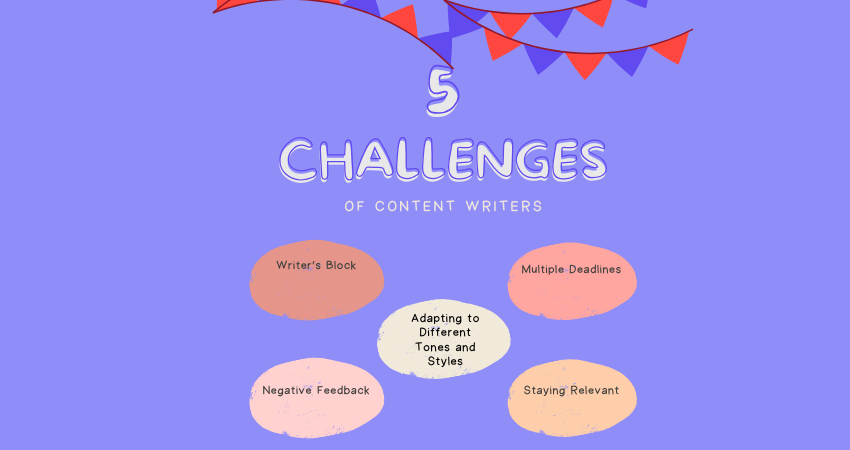
Writing is a journey filled with twists, turns, and the occasional roadblock. Over the years, I’ve faced challenges that tested my skills, pushed my limits, and taught me lessons I never expected. From battling writer’s block to juggling multiple deadlines, each hurdle shaped me into the writer I am today. In this blog, I’ll share five key challenges I’ve conquered and the invaluable insights they’ve given me—lessons that are just as relevant for aspiring writers, seasoned professionals, and businesses seeking to collaborate with experienced content creators. Let’s dive in! 1. Writer’s Block: The Unwelcome Visitor The Challenge There was a time when staring at a blank screen for hours felt like a routine. Writer’s block wasn’t just a phase; it was a frequent, unwelcome visitor. Deadlines loomed, and inspiration was nowhere to be found. What I Learned Writer’s block taught me the importance of creating a process rather than waiting for inspiration. Now, I swear by structured brainstorming and outlines. I dedicate time to jotting down all my ideas, even the terrible ones, knowing that gold often hides in a pile of rubble. Takeaway If you’re stuck, shift your environment or method. Walk away for a breather or free-write without judgment. Don’t wait for creativity to strike—build a system that invites it in. 2. The Overwhelm of Multiple Deadlines The Challenge Balancing multiple deadlines for different clients with unique requirements felt like juggling flaming torches. There was a time I missed a deadline because I miscalculated the time needed for a project. That sinking feeling stayed with me for days. What I Learned Time management is everything. I embraced tools like Trello and Google Calendar to organize tasks, set realistic deadlines, and allocate buffer time for unforeseen delays. I also learned to prioritize and say “no” when necessary—quality over quantity. Takeaway Efficiency doesn’t mean speed; it means clarity. Break down your work into bite-sized tasks and use tools to track your progress. Small business owners, this applies to you too—don’t overcommit; strategize your priorities. 3. Adapting to Different Tones and Styles The Challenge One day, I’d be writing for a luxury lifestyle brand, and the next, I’d be crafting technical content for a cybersecurity blog. Switching gears was exhausting, and I often second-guessed whether my tone matched the client’s brand voice. What I Learned Versatility is a writer’s superpower, but it doesn’t happen overnight. I began studying my clients’ existing content, researching their audiences, and creating a checklist for tone and style. Eventually, I became a chameleon, adapting my voice while staying authentic. Takeaway Understand your audience and their expectations. Aspiring writers, practice by mimicking different writing styles. Seasoned writers, keep refining your ability to adapt—it’s what makes you indispensable to clients. 4. Navigating Negative Feedback The Challenge Early in my career, I received scathing feedback on a project I had poured my heart into. It wasn’t just constructive criticism; it felt personal. My confidence plummeted, and I questioned my abilities. What I Learned Criticism, no matter how harsh, is an opportunity to grow. I learned to separate my work from my worth and view feedback as a gift. Now, I actively seek feedback, using it to sharpen my skills and build stronger client relationships. Takeaway Feedback is a mirror, not a verdict. Small business owners, listen to your audience. Writers, embrace feedback as a chance to improve—it’s not about you; it’s about delivering value. 5. Staying Relevant in a Changing Landscape The Challenge The writing world is in constant flux. SEO algorithms evolve, AI tools reshape content creation, and audience preferences shift. Keeping up felt like running a race with no finish line. What I Learned Staying relevant means being a lifelong learner. I started dedicating time to upskilling—whether it’s understanding new SEO strategies or exploring AI writing tools. The key is to embrace change rather than fear it. Takeaway Stay curious. Small business owners, follow trends in your industry to keep your content fresh. Writers, invest in learning—it’s the best way to future-proof your career. How These Challenges Made Me Better Looking back, these challenges were less about obstacles and more about growth. They forced me to adapt, refine, and improve. Each challenge taught me resilience and equipped me with strategies to not just survive but thrive in the ever-demanding world of writing. For business owners, this journey underscores the value of hiring writers who’ve been through the trenches and understand the nuances of crafting content that resonates. For aspiring writers, know that every struggle is a stepping stone. And for seasoned pros, remember—there’s always room to grow. Turning Challenges into Strengths The next time you face a writing challenge, don’t see it as a roadblock. See it as a chapter in your growth story. Whether it’s writer’s block, feedback, or adapting to a new trend, every challenge is a chance to refine your craft. What challenges have you faced in your writing journey? Let’s share, learn, and grow together. Looking for a content writer who’s mastered the art of overcoming challenges to deliver impactful, tailored content? Let’s work together to create content that resonates with your audience and drives results. Reach out today to discuss your project and see how my expertise can help your business shine.
Why Brand Messaging for Small Businesses Is the Key to Success

Brand messaging for small businesses isn’t just about catchy slogans or pretty logos; it’s the heartbeat of your connection with customers. Imagine standing in a crowded marketplace where every vendor is shouting for attention—how do you make people stop, listen, and choose you? A compelling brand message does just that. It gives your business a voice that resonates, values that align with your audience, and a story they can’t ignore. For small businesses, where every impression counts, your brand message could be the game-changer you’ve been looking for. 5 Reasons Brand Messaging Matters for Small Businesses. Differentiation: Standing Out in the Crowd In a saturated market, being different isn’t just a luxury—it’s a necessity. Your brand message helps carve out your unique identity. For instance: What makes your business special? How does your product or service address customer pain points better than competitors? A well-crafted brand message answers these questions succinctly and memorably. It ensures that when customers think of a need, your name comes to mind. Example: Instead of just selling organic skincare, your message could emphasize empowering individuals with sustainable, nature-driven choices that nurture both skin and soul. Emotional Connection: The Heart of Loyalty Customers don’t just buy products—they invest in values. When your messaging resonates with their beliefs, it transforms a transaction into a relationship. This emotional bond fosters customer loyalty, which is vital for small businesses relying on repeat customers and word-of-mouth referrals. How to create an emotional connection in branding: Highlight relatable stories (e.g., your business’s origin or the journey of a satisfied customer). Use language that speaks directly to your audience’s values, whether it’s sustainability, innovation, or affordability. Be authentic. Customers can sense when a message feels forced or insincere. Building Customer Trust with Consistent Branding Trust is the currency of any small business. A consistent message across your website, social media, email campaigns, and even offline touchpoints reassures customers of your reliability. Inconsistencies can lead to doubt, while consistent branding reinforces confidence. Tips for consistent messaging: Use the same tone and voice everywhere. For instance, if your brand is friendly and approachable, avoid overly formal language in legal documents or advertisements. Ensure your visuals, such as logos and colors, align with your messaging. A vibrant, cheerful tone pairs well with warm, welcoming design elements. Deliver on your promises. If your message centers on fast delivery or exceptional customer service, ensure those experiences are seamless. Establishing Authority and Credibility Small businesses often face skepticism, especially when competing with larger, more established names. Strong brand messaging allows you to establish authority by showcasing expertise and building credibility. Share testimonials and case studies that back your claims. Publish content that adds value to your audience—think blogs, guides, or even short tips on social media. Driving Long-Term Growth When your messaging is clear and compelling, it becomes the foundation for every marketing strategy you execute. From ad copy to email campaigns, a unified brand voice ensures every customer interaction reinforces your identity. Over time, this consistent reinforcement builds a powerful reputation that attracts new customers while retaining old ones. To Sum Up By leveraging a strong brand message, small businesses can build lasting relationships, inspire trust, and carve out a space that’s truly their own in even the most competitive markets. When done right, it’s not just about surviving—it’s about thrivin Transform Your Brand Message into a Powerful Growth Tool Ready to make your small business unforgettable? Start crafting a brand message that sets you apart, builds trust, and creates loyal connections. Let’s bring your story to life—schedule your free consultation today!
What is Brand Messaging?

Brand messaging is the heartbeat of any business—it’s how your audience understands who you are, what you stand for, and why you matter. Think of it as the language your brand speaks, the story it tells, and the values it embodies. It’s not just about catchy slogans or clever ads; it’s about creating a connection that resonates deeply with your audience. Whether it’s the subtle tone in an email or the bold promise on your website, every interaction contributes to how your brand is perceived. When done right, brand messaging builds trust, inspires loyalty, and makes your business unforgettable in the minds of your customers. Brand Messaging – What It Conveys Brand messaging is the articulation of your company’s unique value proposition, communicated consistently across all channels. It encompasses your core message, brand voice, and tone, working in tandem to create a memorable impression. When done well, it answers these fundamental questions for your audience: Who are you? What do you stand for? Why should they care? It’s not just about words; it’s about crafting an identity that resonates deeply with your target audience. Whether you’re a startup or an established enterprise, brand messaging aligns your marketing strategy with your business’s overarching purpose. The Core Components of Brand Messaging A compelling brand message is like a well-rehearsed orchestra, where every element plays its part in harmony. Here’s a breakdown of the key components: Core Message Your core message captures the essence of your business. It’s the “big idea” that sets you apart from competitors and tells your audience why they should choose you. For example, Apple’s core message revolves around innovation and user-centric design. Brand Voice Your brand voice is how you “sound” to your audience. Are you professional and authoritative, or friendly and conversational? Consistency in your brand voice builds trust, ensuring your audience recognizes you across platforms. Target Audience Effective messaging starts with understanding who you’re speaking to. Tailoring your message to your ideal customer’s needs, challenges, and aspirations ensures relevance. For instance, a cybersecurity brand targeting small businesses will focus on “small business cybersecurity” rather than jargon-heavy industry terms. Supporting Statements These are the specific benefits and solutions your brand offers. They serve to reinforce your core message. Supporting statements could include “advanced ransomware security” or “malware defense for enterprises,” depending on your niche. Why is Brand Messaging Important? Brand messaging isn’t just a buzzword—it’s the foundation of a successful business. Here’s why it matters: Builds Trust and Credibility Consistent branding across all touchpoints reassures your audience that your business is reliable and professional. When your messaging aligns with your actions, it fosters trust. Strengthens Emotional Connection Humans connect with stories, not sales pitches. By infusing your messaging with relatable narratives and values, you create a bond that goes beyond transactions. Drives Decision-Making Clear, persuasive messaging helps potential customers see how your products or services solve their problems. Whether it’s “ransomware attack prevention” or “business storytelling,” compelling messaging influences their buying decisions. Differentiates You from Competitors In a saturated market, your brand messaging becomes a key differentiator. It highlights why you’re the best choice, whether that’s because of your “endpoint protection” or your focus on empowering customers. How to Write Effective Brand Messaging Creating brand messaging that resonates requires a deep understanding of your business and audience. Here are the steps to get started: Identify Your Brand’s Core Values What principles guide your business? Are you committed to sustainability, innovation, or customer empowerment? Defining these values ensures your messaging is authentic and aligned with your brand identity. Understand Your Audience To create a message that sticks, you must know your audience inside out. What are their pain points? What motivates them? Use market research to pinpoint what they care about most and address these needs directly. Craft Your Unique Selling Proposition (USP) Your USP is the heart of your brand messaging. It’s the promise you make to your customers that no one else can. For example, “ransomware protection 2025” could be a core promise for a tech company focusing on advanced cybersecurity software. Develop a Consistent Brand Voice If your target audience is young and tech-savvy, you might adopt a conversational tone. If they’re corporate professionals, an authoritative voice may be more appropriate. Whichever you choose, consistency is key. Test and Refine Brand messaging isn’t static—it evolves as your business grows. Test your messaging with real audiences, gather feedback, and adjust to ensure it remains relevant and impactful. Examples of Memorable Brand Messaging Nike: “Just Do It” This simple yet powerful tagline communicates motivation, empowerment, and action—core values that resonate with athletes and non-athletes alike. Slack: “Be Less Busy” Slack’s messaging focuses on simplicity and productivity, appealing to professionals seeking efficient communication tools. Dove: “Real Beauty” Dove’s messaging promotes inclusivity and authenticity, creating a deep emotional connection with its audience. To Wrap Up Brand messaging isn’t just about what you say; it’s about how you make people feel. It’s the bridge between your business and your audience, connecting your mission to their needs and aspirations. When crafted thoughtfully, it becomes the driving force behind your marketing strategy, customer engagement, and long-term success. So, take the time to refine your brand message. Be authentic, consistent, and clear. Because in a world full of noise, your brand messaging is your megaphone. Let’s create content that truly speaks to your audience. Content that brings your brand messaging to life, that connects and converts! Then, let’s talk.
Top 6 AI Content Writing Tools for 2025 to Boost Efficiency and Creativity

As a content writer, I understand the daily challenges we face: writer’s block, pressure to create high-quality, SEO-optimized content, and the stress of managing multiple deadlines. Sometimes, it feels like there aren’t enough hours in the day to do it all. But with 2025 comes a new wave of content writing tools designed to make our lives easier. These aren’t just updates to old tools; they’re groundbreaking innovations that will change the way we write, research, and manage content. If you’ve ever wished for an assistant that could help you brainstorm ideas, optimize your SEO, or even suggest the perfect emotional trigger words to captivate your audience, these tools are the answer. In fact, studies show that content writers who leverage AI-powered tools experience a 30-50% boost in productivity. Let’s dive into these top six AI content writing tools for 2025 that will revolutionize your workflow. 6 AI-Powered Content Writing Tools For You to Explore In 2025, AI new content writing tools are reshaping the way we work, alongside existing technologies that continue to streamline our process. These advanced tools are designed to tackle common challenges, like overcoming writer’s block, optimizing content for search engines, and managing multiple projects efficiently. By leveraging these content writing tools, writers can transform their workflow, boost productivity, and focus on crafting engaging and impactful content. 1. ChatGPT How It Helps: ChatGPT, developed by OpenAI, has become an essential tool for content creators. It assists with brainstorming, writing drafts, and even refining content to match the desired tone and style. The latest 2025 version includes enhanced features for real-time collaboration and more accurate content generation. Pain Point Addressed: Writer’s block and lack of inspiration are common struggles. ChatGPT can generate content ideas and provide instant feedback, making the writing process smoother and faster. Statistics: With over 10 million daily users, ChatGPT has become a go-to tool for content creators, with many reporting a 40% increase in productivity. 2. NeuroFlash AI How It Helps: NeuroFlash AI isn’t your typical content writing tool. It leverages neuromarketing techniques to analyze the psychological impact of words and phrases. Whether you’re writing a call to action or an emotional story, NeuroFlash ensures your content connects with readers on a deep, subconscious level. Pain Point Addressed: Ever struggled to write persuasive content that truly converts? NeuroFlash uses psychological data to guide your writing, making your message more compelling and effective. Statistics: According to initial studies, content optimized with NeuroFlash has shown a 20% increase in engagement rates compared to traditional copy. Marketers are already seeing significant improvements in their conversion metrics. 3. INK for All 3.0 How It Helps: INK’s latest version, 3.0, is more than just an SEO tool. It offers predictive performance analytics, allowing writers to see how their content will rank and perform before hitting publish. It’s like having an SEO expert right by your side, offering real-time insights as you write. Pain Point Addressed: SEO can feel like a guessing game, but INK gives you a clear performance score, helping you craft content that ranks and resonates. You’ll never have to wonder if your keyword placement or readability is good enough. Statistics: Users of INK have reported a 35% improvement in organic traffic and a 15% decrease in bounce rates after optimizing their content with this tool. 4. Narrato AI Content Suite How It Helps: Narrato’s AI Content Suite is a dream come true for content teams. It covers the entire content lifecycle: planning, writing, collaborating, and analyzing. It also provides workflow automation and AI writing assistance, perfect for writers juggling multiple projects. Pain Point Addressed: Managing multiple content projects and coordinating with teams can be a logistical nightmare. Narrato streamlines everything, making it easy to keep track of deadlines, content performance, and team collaboration. Statistics: Companies using Narrato have seen a 40% boost in team productivity and report fewer missed deadlines thanks to its integrated project management features. 5. Copy.ai Smart Assistant How It Helps: Copy.ai’s new Smart Assistant for 2025 takes AI content generation to the next level. It uses conversational AI to brainstorm ideas, write drafts, and suggest variations in tone and style. This tool is perfect for those days when you’re stuck staring at a blank screen. Pain Point Addressed: We’ve all been there—struggling to get past the first few lines of a draft. Copy.ai can generate multiple writing samples and ideas, getting your creative juices flowing and making the drafting process a breeze. Statistics: Writers using Copy.ai have reported a 50% reduction in the time spent on first drafts and an improvement in overall writing efficiency. ContentForge 2025 How It Helps: ContentForge 2025 goes beyond content generation by offering deep user behavior insights. It can suggest content formats, recommend attention-grabbing headlines, and even optimize your calls to action based on audience preferences. Pain Point Addressed: Crafting content strategies that work can be challenging, but ContentForge takes the guesswork out of the equation. By analyzing audience data, it helps you tailor content that’s more likely to succeed. Statistics: Businesses utilizing ContentForge have experienced a 25% higher engagement rate and a 20% increase in content-driven sales compared to traditional methods. To Wrap Up The future of content writing in 2025 is looking brighter—and more efficient—thanks to these advanced tools. From overcoming writer’s block with ChatGPT to crafting persuasive content with NeuroFlash AI, these resources are designed to address the biggest pain points we face as writers. By incorporating these innovations into your daily routine, you’ll save time, boost productivity, and produce quality content that truly resonates with your audience. In a world where content is king, staying ahead means embracing these powerful tools. So, why not start experimenting with them and see how they can transform your writing game? Which of these tools are you most excited to try in 2025? Ready to transform your writing process? Looking to improve your content and make it work harder for your brand? Let’s chat! Reach out to me over email to see how I
Narayana Murthy’s 70-Hour Workweek Vision—Fair or Flawed?
Work hard, or work smart? It’s the age-old dilemma that’s sparked fresh debate across India, fueled by none other than Infosys co-founder Narayana Murthy. At the recent CNBC Global Leadership Summit, Murthy didn’t hold back. “I don’t believe in work-life balance,” he stated firmly. “I will take this belief to my grave.” His comments have reignited discussions about India’s work culture, especially as he referenced KV Kamath, the Independent Director and Non-Executive Chairman of Jio Financial Services. Kamath has previously asserted that India, a developing nation grappling with countless challenges, cannot afford the luxury of focusing on work-life balance. Murthy’s Vision: The Argument for Relentless Hard Work Murthy’s perspective isn’t without merit. His stance is rooted in a vision of national progress that prioritizes hard work as the driving force behind economic growth. For decades, he has been a vocal advocate of a tireless work ethic, drawing from his experiences building Infosys from a modest start-up to a global IT giant. From his perspective, India, as a developing nation, cannot afford to adopt a culture of complacency. The global economy is highly competitive, and Murthy believes that extraordinary challenges require extraordinary efforts. The basis of his argument stems from historical precedent: many developed nations have, at some point, undergone periods of rapid industrial and economic growth fueled by the hard work and sacrifices of their people. According to Murthy, if India wants to play on the world stage and catch up with global superpowers, then the nation’s young and vibrant workforce must be willing to go the extra mile. The demands of modern technology and global markets require a workforce that’s adaptable, determined, and committed to putting in the hours necessary to drive innovation and development. Murthy’s call for a 70-hour workweek is also a reminder of the ethos that built early Indian enterprises—an era when work-life balance wasn’t a consideration, but survival and scaling up were paramount. He envisions an India where individuals push their boundaries, echoing a mindset of resilience and grit that propelled the country’s IT boom in the 1990s and early 2000s. However, Murthy’s belief is more than just a nostalgic nod to the past. He sees it as a wake-up call for a generation that might be too comfortable in today’s environment. His argument implies that, in a world where technological disruption is the norm, only the hardest-working nations can lead and shape the future. For Murthy, economic growth is inextricably linked to a workforce that is relentless, focused, and unyielding in its pursuit of excellence. Counterarguments: The Case for Balance and Smarter Work However, as compelling as Murthy’s philosophy may sound, critics have raised significant concerns about the sustainability and effectiveness of such a work culture. Let’s dive deeper into the arguments against a 70-hour workweek: 1. The Importance of Work-Life Balance The idea that long hours equate to higher productivity is increasingly being challenged. Countries like Denmark and Sweden, which emphasize work-life balance, consistently rank high in both happiness and productivity. Studies show that employees who have time to rest and engage in personal pursuits are often more focused, creative, and effective at work. 2. Quality vs. Quantity: The Science of Productivity Several studies have debunked the myth that longer hours lead to better results. A Stanford University study revealed that productivity significantly declines after 50 hours per week, with a sharp drop after 55 hours. Employees working up to 70 hours a week produced no more than those working 55 hours, illustrating the law of diminishing returns. Consider the case of Microsoft Japan’s Four-Day Workweek Experiment (2019), where the company saw a 40% increase in productivity. Employees worked fewer hours but were more efficient, happier, and more engaged. The lesson? Focused, high-quality work can often yield far better results than prolonged periods of fatigue and stress. Additionally, cognitive research published in Psychological Bulletin emphasizes that our brains are wired for deep focus in short bursts. Sustained attention wanes after 90 to 120 minutes, making breaks essential for maintaining high performance. The takeaway is clear: More hours don’t necessarily mean better output. 3. The Aging Workforce, Productivity, and Health Concerns This is a point I feel strongly about. As we age, our productivity naturally declines. The intense energy and stamina we enjoyed in our twenties aren’t sustainable forever. Once we cross 45, the risks of lifestyle diseases like diabetes, hypertension, and cardiovascular issues increase. Prolonged stress and long hours only exacerbate these health risks, leading to long-term consequences. Neurological studies also reveal that cognitive functions such as memory, focus, and decision-making deteriorate with age. Forcing older employees into a 70-hour workweek could not only harm their well-being but also backfire on productivity. This doesn’t just affect individuals—it could strain healthcare resources and impact overall organizational efficiency. Is it really worth sacrificing the health and well-being of a significant portion of the workforce for short-term gains? Or should we consider more sustainable work practices that support longevity, well-being, and peak performance? The Future of Work: Finding a Middle Ground Murthy’s comments highlight a clash between traditional views of hard work and contemporary understandings of productivity and well-being. Can India achieve economic progress without sacrificing the health and balance of its workforce? Perhaps the answer lies in a hybrid model: one that celebrates hard work but also acknowledges the science behind rest, efficiency, and mental health. Work cultures around the world are shifting to emphasize flexible schedules, remote work options, and outcome-based performance. Maybe it’s time for India to consider a similar approach—where we work smarter, not just harder. Join the Conversation What do you think? Is Murthy right about needing a relentless work ethic for India’s growth, or is there a smarter way to move forward? Your insights are invaluable, and I’d love to hear your perspective. For more discussion and to participate in our poll, head over to our LinkedIn newsletter. Let’s shape this conversation together and explore what the future of work should look like in India. 👉 Join the debate