
Grammar Rules vs Grammar Guidelines: Knowing the Difference Makes All the Difference

Grammar is the scaffolding of clear communication. Within it, some structures are fixed—rules—and others more fluid—guidelines. While grammar rules are non-negotiable and ensure our language functions coherently, guidelines are open to interpretation and evolve with usage, tone, and context. Breaking a rule often disrupts clarity or comprehension. But breaking a guideline can be what gives your prose its rhythm and natural tone. It’s the difference between writing by the book and writing that connects with a modern, human audience. Who Will Benefit From This Article? If you’re wondering whether this article is relevant to you, consider the following: ✅ You’re a content writer or copywriter looking to sharpen your writing for clients. ✅ You’re a student aiming to write clearer essays and assignments. ✅ You’re an editor or proofreader who wants to distinguish between real errors and stylistic choices. ✅ You’re a blogger trying to sound natural without compromising grammar. ✅ You’re a non-native English speaker trying to understand the nuance between hard rules and flexible style. ✅ You’re a marketer or brand storyteller seeking to connect with a modern audience using natural tone. ✅ You’re a fiction or creative writer aiming to build authentic voices through intentional grammar choices. ✅ You’re an academic or researcher trying to refine your writing for formal publication. ✅ You’re a language trainer or ESL tutor searching for a relatable way to explain tricky grammar concepts. ✅ You’re simply a language enthusiast who wants to explore the logic behind what makes writing flow or falter.This article will help you navigate that grey area between right and wrong in writing—so you can make informed, confident choices. What Is a Grammar Rule? Grammar rules form the core framework of how we use language. They’re the foundations that make sure communication is clear and consistent. Breaking them usually leads to confusion or sentences that sound downright wrong. Example: We don’t say, “He have two phone” or “She go to work every day.” Instead, we say: ✔️ “He has two phones.” ✔️ “She goes to work every day.” Unless you’re crafting dialogue for a character still learning the language, these rules are non-negotiable. What Is a Grammar Guideline? Unlike rules, grammar guidelines are more like best practices. They’re conventional, widely accepted, and often taught as “rules,” but they’re not absolute. One well-known example is: Don’t begin a sentence with “and” or “but.” This is not a rule—it’s a stylistic choice. Many modern writers intentionally begin sentences this way for effect. Another classic is: Don’t end a sentence with a preposition. Again, not a rule. It’s often more natural to say, “What are you waiting for?” rather than the overly formal “For what are you waiting?” Why the Confusion? There are several reasons why grammar guidelines are so often mistaken for hard-and-fast rules: Taught as absolutes in schools: Many teachers present guidelines as rules for simplicity, leading students to believe they’re non-negotiable. Reinforced by outdated textbooks: Older grammar books don’t always reflect evolving usage, keeping outdated conventions alive. Inherited from traditional grammar systems: Prescriptive grammar norms passed down over generations are mistaken as unbreakable. Echoed by armchair grammarians: Online forums, social media, and casual editors often reinforce myths without verification. Mimicked from formal writing: Academic and legal writing often upholds stricter standards, creating confusion for general use. Overgeneralization in digital tools: Grammar checkers and editing apps sometimes flag stylistic choices as errors. Slow pace of linguistic change acceptance: Language evolves faster than formal acceptance by educational systems and publishers. Grammar is a collective agreement—something we’ve all bought into for mutual understanding. Still, as writing becomes more conversational and digital, what once was a “must-follow” rule may now be optional. Grammar Guidelines Often Mistaken for Rules Let’s unpack a few more examples of guidelines commonly confused with rules. Remember, these aren’t wrong to break—but proceed wisely. 1. Splitting Infinitives The traditional belief is that you shouldn’t split an infinitive with an adverb. For instance, you might be told to say “to carefully read” instead of “to read carefully.” But what about: ✔️ “She promised to always listen”? That sounds just right. Feel free to split when it helps the sentence flow. 2. Ending Sentences with Prepositions Instead of the awkward “From where did this come?”, it’s far more natural to write: ✔️ “Where did this come from?” There’s no confusion, no harm, and no rule being broken. 3. Turning Nouns into Verbs This is another guideline that stirs strong opinions. But turning a noun like “schedule” into a verb (“Let’s schedule a call”) is now common. As long as it doesn’t create redundancy or confusion, verbing a noun can keep language fresh. However, avoid inventing verbs when a perfectly usable one already exists. No need to say “calendarise” when “schedule” works just fine. 4. Starting with Conjunctions Traditionalists argue that you should never begin a sentence with a conjunction like “and,” “but,” or “yet.” But here’s the thing—it works. Example: ✔️ “He said he’d arrive on time. But he didn’t show up.” The second sentence adds emphasis. The break creates impact. That’s what good writing is all about. 5. Using Whom “Whom” is slowly fading into grammatical history. We rarely hear anyone say, “Whom are you calling?” It’s more natural to say: ✔️ “Who are you calling?” Unless you’re quoting Jane Austen, feel free to let “whom” rest in peace. 6. Using “They” as a Singular Pronoun Old-school grammar insisted on defaulting to “he” when referring to an unknown subject. But that’s exclusionary and outdated. Instead of: ❌ “If a student wants help, he should ask.” Use: ✔️ “If a student wants help, they should ask.” Or better yet, go plural: ✔️ “If students want help, they should ask.” It’s inclusive and accepted—even by many major style guides today. To Sum Up Follow grammar rules when clarity is at stake. Use guidelines as tools, not constraints. If a sentence reads better with a preposition at the end or a conjunction up front—go for it. Writing is about communication. And
How to Write Blogs That Actually Get Read
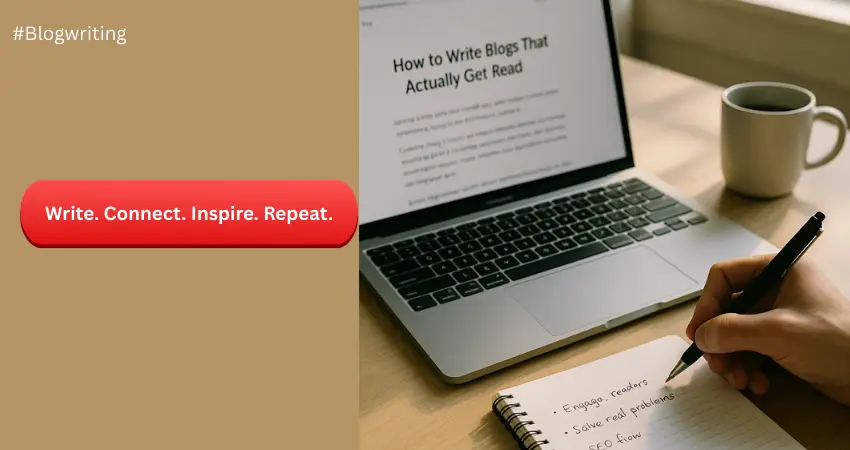
Blog writing today is no longer just a creative hobby — it’s a powerful skill that can build authority, drive traffic, and create real impact. Yet, with millions of new posts published daily, most blogs barely survive the scroll. If you’ve struggled to get eyes on your work, you’re not alone. But here’s the truth: mastering blog writing is not about writing more, it’s about writing smarter, deeper, and with more empathy for your reader. In this blueprint, you’ll learn the proven strategies that turn ordinary blog writing into unforgettable experiences readers want to share. Why Most Blogs Get Ignored (and How to Avoid It) With so much content competing for attention online, average blog writing struggles to stand out. Readers are craving: Genuine answers to their problems Clear action steps they can apply immediately A relatable, human voice behind the content If your blog writing doesn’t offer connection, depth, or relevance, it gets lost — no matter how well-formatted it looks. That’s why aligning your blog writing with experience, expertise, authority, and trust (EEAT) is now non-negotiable. In this article we cover 7 important points that will help you improve your blogging skills. Lets jump right in. 1. Know Exactly Who You Are Talking To Effective blog writing starts with intimacy — knowing exactly who you’re serving. Before writing, ask these questions: Who is my ideal reader? What are they worried about today? How can my blog writing genuinely help them?Successful blogs feel personal, not generic. They read like a letter from a mentor or a friend. Pro Tip: Create a simple persona. Imagine one real person reading your blog writing and focus only on solving their immediate problems. 2. Create Magnetic Headlines That Spark Curiosity Even the best blog writing can fail if your headline doesn’t stop the scroll. Your headline acts as the first handshake with your reader — it must create immediate interest, convey a clear benefit, and compel them to click. Winning headline techniques: Solve a clear pain point (“How to Improve Your Blog Writing Fast”) by offering an obvious benefit or shortcut. Create a curiosity gap (“You Won’t Believe How Easy Blog Writing Can Be”) by sparking intrigue without revealing everything upfront. Promise transformation (“From Invisible to Unstoppable: Blog Writing Mastery”) by showcasing the shift the reader can expect after reading your blog. Think of your headline as a promise you’re making. A strong headline sets accurate expectations for the value the reader will receive, while a weak one leads to disappointment and high bounce rates. SEO Tip: Place the term “blog writing” naturally within your headline to boost keyword relevance — but always prioritize clarity and emotional pull over robotic phrasing. 3. Write an Opening That Pulls Them In Instantly Your blog’s opening lines are critical because they decide whether the reader stays or clicks away. Strong blog writing hooks the audience emotionally, promises value, and makes them curious to continue. Weak openings cause readers to lose interest within seconds, no matter how valuable the rest of the content is. Effective blog writing opening sentence can: Ask a direct and compelling question Paint a vivid struggle the reader instantly recognizes Share a bold, unexpected fact or statistic Example: “Struggling to get your blog noticed? It’s not about luck — it’s about sharpening your blog writing craft in ways few bloggers talk about.” Remember: the goal is to make the reader feel understood — and hungry to read more. 4. Deliver Deep, Actionable Value (Not Just Surface Advice) Google’s AI search updates now reward blogs that demonstrate real experience. Shallow, generic blog writing gets buried quickly because it adds no new value to the reader’s journey. To build trust and genuine engagement through blog writing: Share real-world examples or personal anecdotes that show you have walked the path. Give practical, step-by-step actions that readers can immediately apply. Offer original frameworks or methods you’ve developed or successfully used yourself. EEAT Tip: Readers trust blog writing that is experience-backed and detail-oriented rather than generic. Example: Instead of vaguely advising, “write engaging introductions,” break down the actual process of how to craft an irresistible opening — starting with a hook, a problem statement, and a compelling reason to keep reading. 5. Structure Your Blog for Addictive Reading No one wants to read walls of text anymore. Successful blog writing today must deliver information in a visually appealing, digestible way that aligns with how readers scan content on mobile devices. When structuring your blog writing: Break long blocks of text into short, focused paragraphs (2–3 sentences each). Use clear, descriptive H2 and H3 headings to create natural stopping points and guide the reader’s eye. Introduce bullet points and numbered lists to simplify complex information. Include images, pull quotes, and generous white space to give the eyes breathing room. A clean structure doesn’t just improve readability; it keeps readers engaged longer, boosts SEO performance, and makes your blog writing more memorable. SEO Bonus: Use variations like “improve your blog writing” or “successful blog writing” in your subheadings to enhance topical relevance without sounding repetitive. 6. Build Instant Trust Through Authenticity Real blog writing builds genuine relationships between writer and reader. Readers today have finely tuned sensors for detecting insincerity, and polished corporate fluff no longer builds loyalty. To cultivate authentic trust through your blog writing: Be honest and transparent, even when admitting challenges or failures. Link to credible sources, reputable studies, and respected experts to strengthen your points. Maintain a conversational, empathetic tone that respects the reader’s intelligence and feelings.Authenticity isn’t about being perfect — it’s about being real, relatable, and reader-focused. Authority Tip: Interlink your blog writing across related posts to build a seamless, value-driven reader journey. Creating interconnected content strengthens your site’s topical authority signals and shows Google you are a credible expert in your niche. 7. End With a Clear, Motivating Call-to-Action (CTA) A strong blog writing strategy doesn’t just end with valuable information; it closes with
8 Content Writing Trends for 2025: What Writers and Businesses Must Know to Stay Ahead

Website Homepage Content Writing in 2025
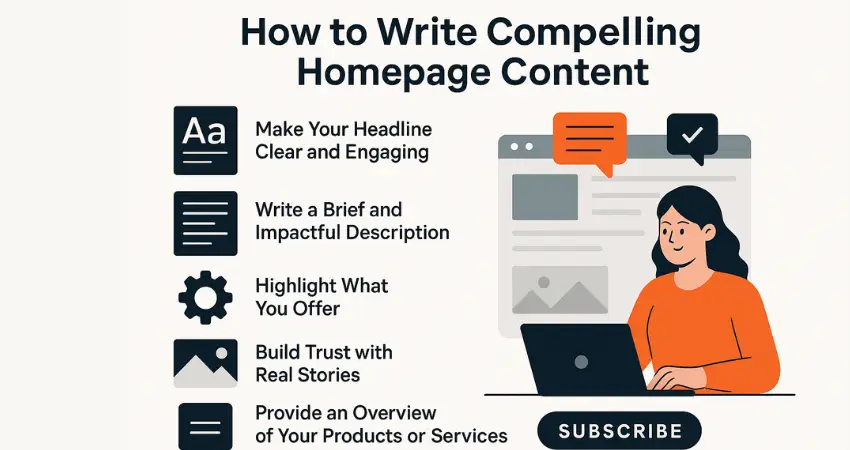
The homepage is often the most visited page on any website. It’s usually the first stop for visitors and sets the tone for how they perceive your brand. If it’s welcoming, clear, and easy to navigate, visitors are more likely to stick around and explore. Interestingly, research shows that how people experience a website (user experience or UX) is the biggest factor that sets a brand apart—even more than the actual product or price. This means having a well-thought-out, user-friendly homepage can really make a difference. Brands put a lot of effort into building trust and keeping customer loyalty. After investing so much in winning and retaining customers, it’s essential to know what will make your brand stand out. According to a marketing report, user experience (UX) has emerged as the top brand differentiator, with 28.6% of more than 1,000 marketing and branding professionals surveyed choosing it over other factors. Not only that, about 34.2% of respondents plan to focus on improving or optimizing UX to set their brand apart. While UX professionals are looking forward to integrating new trends like AI and voice interfaces in the coming years, they also face challenges. UX design has been a tricky area for some time, and many companies still experience a skills gap when it comes to creating effective UX strategies. Unfortunately, many brands find that visitors don’t go beyond the homepage. This often happens because the homepage doesn’t do enough to encourage visitors to explore the rest of the site. That’s why it’s so important to write homepage content that quickly grabs attention, clearly explains who you are, and shows how you can help. By crafting clear and engaging homepage content, you make sure visitors have a positive experience and are more likely to stick around. Let’s look at the key elements that make your homepage truly effective. Creating a homepage that draws people in and keeps them interested is essential. It’s like your website’s front door, the place where visitors decide whether to come in or move on. Here’s how to make your homepage content work for you. How to Writing Compelling Homepage Content Your homepage is the gateway to your brand. It’s the first place visitors land, and often, it’s where they decide whether to stay or move on. A well-crafted homepage not only grabs attention but also clearly communicates who you are, what you offer, and why it matters. Writing compelling homepage content requires a thoughtful balance between clear messaging, engaging visuals, and a strategic call to action. Let’s dive into how you can create a homepage that leaves a lasting impression. 1. Make Your Headline Clear and Engaging Your headline is the first thing people see. It should clearly explain what your brand offers and why it’s worth their time. Keep it simple and direct. Keep it short and to the point. Show what makes you different. Focus on how it helps your audience. A good homepage headline addresses a problem that your audience faces, offers a clear benefit, and keeps it simple. Think of it as a quick way to let visitors know they’re in the right place. For example, start by identifying a common pain point your audience has. Then, make a promise or offer a solution that directly addresses that problem. Finally, keep your wording concise and impactful—often, just a few words are enough to make your message clear. An effective headline follows three key steps: Address a common challenge your audience faces. Offer a solution or make a promise of improvement. Keep the wording simple and impactful, getting your point across without being wordy. A headline that combines these three elements is more likely to grab attention, keep visitors curious, and encourage them to explore your homepage further. Example: “Helping Small Businesses Grow with Proven Strategies.” 2. Write a Brief and Impactful Description After your headline, your description is the next thing visitors should see on your homepage. It’s a quick snapshot that helps them understand who you are and what you do. Since visitors often use this section to judge whether your brand is relevant to them, it’s crucial to make it clear and engaging. To follow the Z pattern and optimize for SEO, structure your description with the following points: Positioning: Place the description near the top of the page where it’s easily noticeable, as studies show visitors take just 2.6 seconds to focus on key areas. Content Clarity: Clearly state who your business serves and how you help. Avoid jargon and keep the language simple. Unique Value: Highlight what makes your brand different from the competition. Keyword Placement: Integrate primary keywords naturally within the description to improve search visibility. Engagement: Use actionable words to encourage readers to explore more. Example: “At [Your Brand], we help small businesses thrive by providing practical tools and resources like invoice generators and SEO tips.” 3. Highlight What You Offer Visitors come to your website because they’re looking for something specific. Usually, they either have a problem that needs solving or a goal they want to achieve—and they believe you can help them get there. That’s why it’s important to clearly showcase the features and benefits of your product or service on your homepage. It’s not just about listing what you offer but also explaining how those features translate into real benefits for your audience. If visitors can’t immediately see what they’ll gain from choosing you, they’re likely to move on to your competitors. Keep in mind that just listing features isn’t enough. You need to make it clear how those features make a difference in their lives or businesses. Benefit-driven content on your homepage can improve conversions by helping visitors see the value right away. Tips: Use icons or images to make points stand out. Clearly explain how each feature benefits the user. Make the content easy to skim. People want to know what’s in it for them. List your key offerings clearly so visitors can see the value right away. 4. Build
India World Happiness Report 2025: Are Indians Really Unhappy?

India ranks 118 in the World Happiness Report 2025. This piece explores what the data misses and how happiness in India is rooted in everyday life.
How to Optimize Amazon Product Titles for Higher Rankings and Visibility

If you’re not thinking about how to create canonical URL to optimize Amazon product titles for higher rankings and visibility, you’re leaving visibility and revenue on the table. Optimizing Amazon product titles for higher rankings and visibility isn’t just a best practice—it’s non-negotiable if you’re serious about scaling your Amazon business. With over 2.7 billion visitors each month, Amazon’s marketplace offers massive potential, but also brutal competition. Sellers who fine-tune their titles with the right keywords—and understand how those keywords influence the canonical URL—are the ones who actually get seen. Why Your Title Isn’t Just a Title Amazon’s A9 algorithm takes several cues from your product title to determine relevance. It’s one of the most important SEO elements on your listing, playing a direct role in both internal and external rankings. If your title lacks structure or is overloaded with filler terms, you’re effectively hiding your product from buyers. This is why structuring your title correctly is step one. As discussed in this guide on creating better visibility, the layout, word flow, and keyword order significantly affect how Amazon indexes your product. What is a Canonical URL Here’s where it gets really interesting—Amazon creates a canonical URL based on the first five words of your product title. This becomes the version of your URL that Google indexes. The format is shown below For example take a look at the url of the product that is highlight in the image below. https://www.amazon.in/Soulflower-Rosemary-Hair-Skin-15ml/dp/B078V9X189/ You will notice that it has the brand name followed by the product name and two keywords Hair and Skin, and the ASIN number. When a prospect searches rosemary for hair and skin in the google, one the links that will appear on the google search page would be that of the brand that is given as example. This means the first four to five words in your title are doing double duty: they affect both your Amazon ranking and your Google search visibility. And with 67% of all Google clicks going to the top five results, it makes sense to craft those words with precision. Many sellers skip over this concept because it feels too technical. But once you realize the first five words in your title determine how your listing performs beyond Amazon, it becomes impossible to ignore. Strategic Keyword Placement To get your canonical URL working in your favor, lead your title with your most valuable keywords—not your brand name or vague descriptors. For instance, a title like “Wireless Bluetooth Headphones Noise-Cancelling Over-Ear” is significantly more SEO-friendly than “XYZ Brand Premium Headphones with Case.” Keyword placement is especially crucial in the initial phase of publishing a listing. As suggested in this article on Amazon product title optimization, start with a clean, keyword-rich version of your title. Once your canonical URL is generated (and indexed), you can return to the listing and expand the title for readability, brand inclusion, or to highlight unique features. Hyphens, Filler Words, and SEO When writing for canonical URLs, hyphenated words become a secret weapon. Amazon treats them as one unit, allowing you to pack more meaning into less space. “Non-GMO,” “All-Natural,” or “Pet-Friendly” become single-count keywords that still retain semantic richness. At the same time, avoid using filler terms such as “with,” “for,” “the,” or “and” in your title’s opening line. They might look grammatically correct, but they dilute SEO value. It’s more effective to go straight to the terms buyers are searching for. This approach is echoed in this breakdown on improving rankings through title optimization, where precision and clarity are emphasized over fluff. How to View Your Canonical URL If you’re unsure what your canonical URL currently looks like: Open your product listing on Amazon. Right-click and choose “inspect.” Search (Ctrl+F or Command+F) for the term canonical. You’ll see the exact URL Google is indexing. If it doesn’t include your targeted keywords, consider reworking your title and reaching out to Seller Support to regenerate the URL. These images below can help you understand better. Lock the URL, Then Expand Another method to include keywords in the URL is to lock the URL and then expand. One effective tactic Amazon sellers often miss is staging the title in two parts. Initially publish your product with just the five core keywords you want reflected in the canonical URL. Once it’s locked in (usually within 24–48 hours), you can go back and expand the title to make it more buyer-friendly without affecting the URL. This tactic gives you full control over your external SEO presence while maintaining an appealing product display for Amazon customers. Titles That Rank and Sell It’s easy to default to overly descriptive or brand-heavy titles, especially when you’re trying to sound “professional.” But real performance comes from data-driven, keyword-optimized titles that speak Amazon’s language. Your product title sets the tone not just for SEO, but for buyer trust. A clean, informative title that matches search intent encourages more clicks, more conversions, and better organic ranking. It’s a balancing act between algorithmic relevance and human engagement—one that can make or break your listing. Need help writing titles that do all this? That’s where a skilled Amazon content writer steps in. Writing for the algorithm and the buyer at the same time is part technical, part creative—and all strategy. If you’re ready to optimize your listings the smart way, I’d love to help. 📌 Ready to stand out on Amazon? Let’s build product titles that rank and convert. 📌 Book a listing audit or content package today. Your product deserves better than generic.
How to Structure Your Amazon Product Title

Structure your Amazon product title to boost visibility and sales. Learn how to use keywords, benefits, and formatting to create a high-converting product title.
Best Practices to Optimize Amazon Product Title

Optimizing your Amazon product title is key to improving visibility and conversions. A well-structured, keyword-rich title helps attract the right buyers and boost sales. Here’s how to craft a compelling title that ranks well and drives clicks.
Why is Amazon Product Title Important

Optimize your Amazon product title for better visibility and sales. A well-crafted title with the right keywords can make all the difference.
How Daily Writing Transformed My Copywriting Skills

Mastering copywriting isn’t just about writing beautifully crafted sentences—it’s about connecting with readers and inspiring action. When I started my journey as a freelance long-copy writer, I struggled to balance creativity with strategic intent. But as I embraced daily writing and harsh editing, I learned the power of words to persuade, engage, and convert. This article shares my journey, lessons learned, and practical tips for mastering copywriting.