
What He Meant

“I don’t know what he meant when he said, ‘Keep the window open.’”My grandfather said those words often.Whenever I visited him during my school holidays, I would find him in his study, sitting beside the large window. It was the brightest spot in the room and his favorite place during winter, when the afternoon sun warmed the wooden floor. But during the windy monsoon days, it was the coldest corner of the house. He never liked curtains on that window.His old wooden rocking chair sat beside it, with a soft cotton cushion that had taken the shape of his back over the years. A short carpet lay beneath his feet to keep them warm on chilly mornings.From there, he could watch people pass by on the road. Sometimes, he would have a one-sided conversation with the neighborhood cat that lazed on the compound wall. On other days, he would fill the little birdbath with water and scatter a few grains beside it. Every now and then, a few sparrows would land on the window rail, stay for a while, and fly away.It was his favorite place in the house.“Why don’t you close it when it gets windy?” I once asked.He looked at me over his glasses.“Because a closed window keeps everything out.”I thought he was talking about fresh air.I was twelve then. I didn’t think much about what he said.Years passed.I grew up, moved to another city, got a job, and became busy with my own life. My visits to my grandparents became less frequent. Phone calls replaced long afternoons at their house.Grandfather never complained.Whenever I called, he would ask about my work, my friends, and whether I was eating properly.Then one summer, I had a silly argument with Anu, my closest friend since school. We had grown up together, shared secrets, celebrated birthdays, and stayed in touch even after I moved to another city.The argument was over something so small that I can’t remember what it was now. What I remember is that neither of us wanted to be the first to say sorry. A few days later, Anu called. I saw her name on my phone but let the call go unanswered. I thought about calling her back that evening. I didn’t. A week later, I typed a message, read it twice, and deleted it. Neither of us called again. I told myself that if she really cared, she would call again. She didn’t.Around the same time, Grandfather called one evening. We hadn’t spoken in a few weeks, so I was happy to hear his voice.“When are you coming home?”“Soon,” I said.“You’ve been saying that for months.”I laughed. “I’ll come next month. I have a few days off for Diwali.”“Good. I’ll hold you to that.”We spoke about a few things after that. He asked about my work, reminded me to take care of myself, and told me about the new plants he had put in the backyard.Just before we ended the call, he said, “And keep the window open.”I laughed.“You still say that?”“Always.”I didn’t ask what he meant. I had heard him say it so many times that I had stopped wondering about it.A few months later, Grandfather passed away.After the funeral, I stood outside his study for a long time. I had walked past that door several times, but I couldn’t bring myself to go in. It felt strange to think that he would never be sitting in that rocking chair again, calling me over to show me something he had found in the newspaper.Finally, I placed my hand on the doorknob and turned it. I pushed the door open slowly.Everything inside looked just as I remembered it. His books were still arranged on the shelves, their spines worn from years of use. His reading glasses rested on the desk beside the newspaper he had been reading that morning. His wooden rocking chair stood beside the window, the cotton cushion still holding its familiar shape, with the little carpet beneath it. For a moment, the room felt as though he had only stepped away and would return any minute. But the window was closed. I walked over and opened it. The room filled with a gentle breeze that carried the fragrance of the roses in full bloom outside. I stood there for a moment, taking in the familiar scent and looking out at the road where Grandfather had spent so many hours watching people pass by. I curled up in his rocking chair for a while, running my fingers over the worn cotton cushion. I remembered the many afternoons he had spent there, reading the newspaper, watching people pass by, or simply sitting quietly with his tea.Then I noticed that the drawer of the small table opposite the chair was slightly open. I pulled it out and found a small envelope tucked beneath his diary. My name was written on it in his familiar handwriting.I held the envelope in my hands for a moment. Somehow, I knew there was something inside that I wasn’t quite ready to read.Reluctantly, I opened it.My dear Maya,You once asked me why I always kept this window open. I gave you an answer, but I never told you the whole story.When I was young, your grand-uncle and I had a terrible argument. Neither of us was willing to apologize. I waited for him to come to me, and he waited for me to go to him. We let our pride get in the way. One year became five. Five became ten. Before we knew it, twenty years had passed.When we finally met again to put away our differences, we were happy to see each other, but we couldn’t get back those twenty years.I often wondered what might have happened if one of us had simply taken the first step.That is why I keep this window open. Not just for the breeze or the birds. It reminds me to leave a little space for people. People will disappoint us. We will disappoint them too.
Just In Case

The picture above took me back to a July afternoon in my mother’s garden in Trivandrum. My mother has a few coconut saplings in her backyard. One afternoon, we noticed something unusual about one of them. The tender leaves at the center looked disturbed, the leaves were curling, one of the leaves was wilting as if it is dehydrated and one was turning brown from its base.She called her man Friday and asked him to check the coconut sapling. She also told him to bring his tools when he came, as the hibiscus, camellia, and a few other flowering shrubs needed pruning.That evening, he came over and took a closer look at the sapling. He examined the tender leaves and the center of the plant and told my mother there are pest inside the sapling and it requires spraying.A couple of days later, he came with a garden sprayer. He filled it with a medicine meant for coconut trees and carefully sprayed it into the tender leaves.We stood there watching. A few moments later, we noticed something moving inside the plant. Then another one.To our surprise, two large beetles crawled out from between the tender leaves. They had been hiding there all along, quietly damaging the young coconut sapling.My mother watched the beetles emerge and then looked closely at the sprayer.”Where did you get that?” she asked.He gave her an answer that didn’t really answer the question. My mother wasn’t going to let that go.I mentioned the sprayer to my nephew, and he found a similar one online and ordered it for her. The sprayer her man Friday used was pink. The one my nephew ordered for my mother was teal.I was with her when the Amazon delivery arrived. She was delighted when she opened the box. I thought we had finally solved the garden-sprayer situation.Except we hadn’t.Even today, when her plants needed spraying, my mother still calls her man Friday and asks him to bring his pink sprayer.Naturally, we asked her why she didn’t use the teal one her grandson had bought for her.Her answer was simple.”I’ll keep this one safe just in case.”Just in case of what, we never quite figured out.But the teal sprayer was safely placed in the garden tool room, where it continues to wait patiently for its moment.
The Shoe Test

A woman shopping for running shoes witnesses an unusual customer testing pair after pair. What begins as an ordinary shopping trip ends with an unexpected lesson about honesty, trust, and what it truly means to help a customer.
Before the Day Grew Warm

Every morning, two strangers meet in the same garden. Their quiet conversations grow into an unexpected bond, but the garden holds a secret that changes everything. Before the Day Grew Warm is a short love story about connection, nature, and fleeting moments.
Four Hours for a Jar of Jam

This is a continuation of Five Mangoes and My Mother’s Summer Jam . If you haven’t read the first part yet, I hope you’ll stop by there before joining me in my mother’s cooking session. After banishing me from the kitchen, my mother got down to business.As expected, K’s face was worth watching when she saw the five mangoes waiting for her. On most days, she only has vegetables to chop. That day, she had to peel and grate five huge raw mangoes as well.By the time she was done, there was a large steel bowl full of grated mangoes sitting on the kitchen counter.My mother added some pink salt and freshly powdered pepper to it and mixed everything well with her hand. Then she covered the bowl and left it alone for about an hour.After an hour, she placed a sieve over another vessel and tipped the mango mixture into it. Taking a potato masher, she pressed down hard, squeezing out as much juice as possible.The juice wasn’t thrown away.”It will be good in rasam or sambhar,” she said, pouring it into a glass bottle and keeping it aside.The squeezed mangoes were then measured and transferred into a heavy-bottomed kadai.For every cup of grated mango, she added a cup of jaggery.She mixed the two with a wooden spoon until the jaggery was evenly distributed. And then, she did absolutely nothing for the next three whole hours.The kadai sat undisturbed on the counter. By the time my mother switched on the stove, a thick syrup had oozed out of the mixture. The aroma was hard to ignore, the tanginess of raw mango mixed with the sweetness of jaggery. I stood there inhaling deeply, wishing there was some way to bottle that smell and keep it for another day. This was the only part of the process that wouldn’t allow her to walk away. She stood by the stove, stirring continuously and keeping a close watch on the kadai. I sat at the dining table watching her. That’s how I know she stirred it for exactly seven minutes. At the end of the seventh minute, she switched off the flame. I don’t remember her looking at a clock even once. It was almost as if an invisible timer had gone off in her head. Exactly seven minutes. Not a second more.Only then did she add the powdered misri and dry ginger that had been waiting patiently since morning. I am fairly certain she had slipped in a few cardamom pods while powdering the misri because there was a gentle hint of cardamom lingering in the kitchen.She gave everything one final stir and left the jam to cool.By then, nearly four to five hours had gone by.Four to five hours, if one counts the hour K spent peeling and grating the mangoes, the hour the grated mango rested with salt and pepper, the three hours it sat with jaggery slowly drawing out its juices, and finally those seven minutes at the stove that my mother guarded so carefully.And then came the best part.The jam didn’t even last an hour.We spread it over chapathis, sandwiched generous spoonfuls between slices of bread, and tucked some inside buns.It was my daughter who suggested trying it over vanilla ice cream. During the summer months, there is almost always a family pack of Amul vanilla ice cream sitting in our freezer. We simply love it because its mild flavor goes well with almost anything.A spoonful of the jam over a scoop of ice cream turned out to be surprisingly good. The cold creaminess of the ice cream balanced the sweet, tangy jam beautifully.My mother sat quietly watching us eat.There wasn’t enough left to fill a proper jar.But she didn’t seem disappointed.She leaned back in her chair, looking immensely pleased with herself, grinning like a cat that had got its cream.Perhaps that was what she had wanted all along.Not rows of jam bottles lined up on a shelf.Just her family gathered around the table, happily eating something she had spent an entire afternoon making.
Five Mangoes and My Mother’s Summer Jam
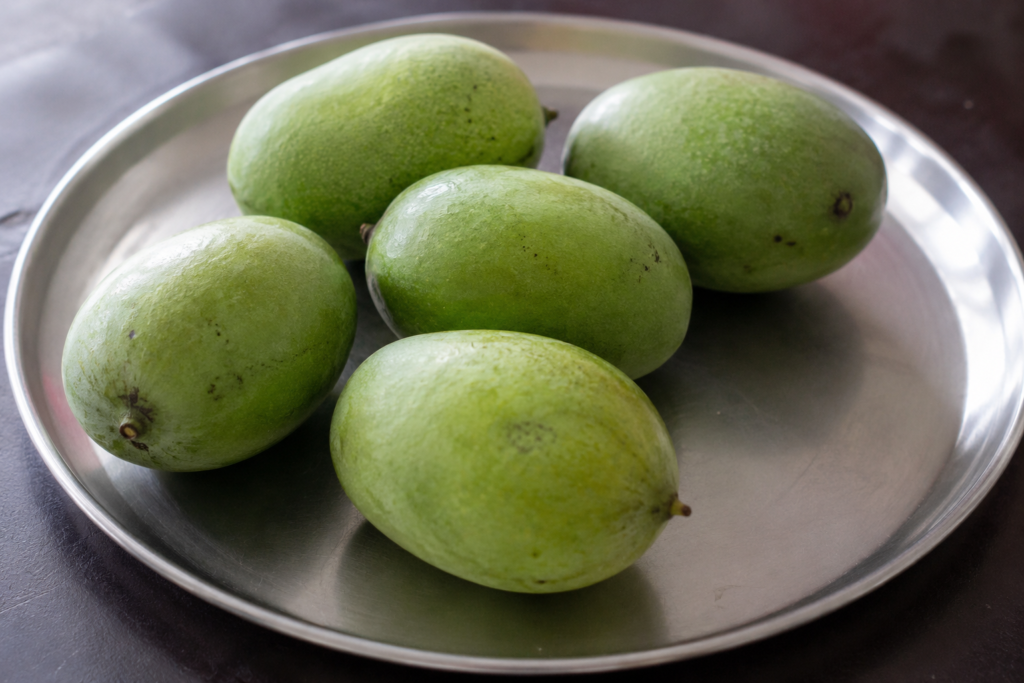
My mother arrived in Pune after a long train journey from Trivandrum. A kind gardener, five raw mangoes, and an old family recipe turned an ordinary summer into a memory worth preserving.
A Monday Morning Orange Cake
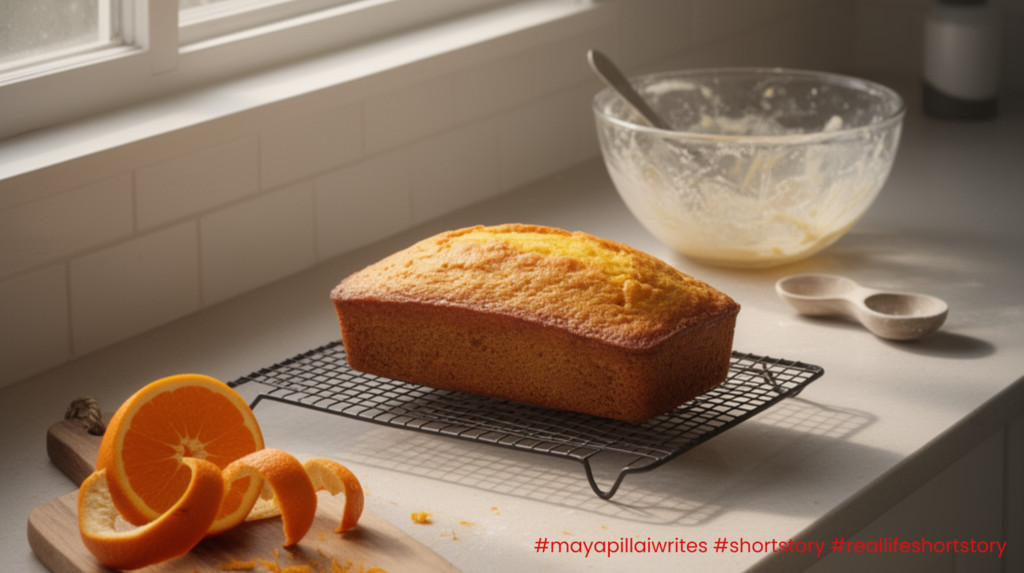
For weeks, the thought of baking an orange cake stayed with me like a small promise I kept postponing. I had already done the practical parts more than once. The flour was measured and kept aside, the other ingredients laid out on the counter, and then, without any clear reason, everything would go back into its place. It wasn’t about time or effort. It was more about a certain reluctance that settles in when you do not feel fully present. Some days, even gentle plans feel heavier than they should, and it is easier to delay them than to question why you are hesitating. This Monday morning, however, felt quieter and more forgiving. The house was still wrapped in early light, and there was no urgency pressing against the walls. I found myself in the kitchen before the day had a chance to become noisy. There was a calmness in moving slowly, in not rushing through familiar steps. I cut the orange into two-halves horizontally carefully, removed the seeds, gently extracted the white pith and cut them into small, bite-sized pieces. Instead of just using the juice, I decided to blend the whole orange with the peel. There was something comforting about not stripping the fruit down to only what was “necessary,” but allowing its bitterness and fragrance to become part of the cake. I am not a great baker, and I have never claimed to be one. I am comfortable with simple cakes and familiar recipes, and this orange cake was one of them. Still, I kept putting it off. Not because it was difficult, but because I tend to overthink even small things when I step into the kitchen. This time, I chose to stop waiting for the perfect mood and just begin. Recipe: Whole Orange Cake (With Peel) Ingredients 1½ cups all-purpose flour ¾ cup sugar 2 eggs ½ cup oil or melted butter 1 whole orange, seeds removed and cut into small pieces (use the peel) 1 tsp baking powder ½ tsp baking soda 1 tsp vanilla extract A pinch of salt Method Preheat the oven to 180°C (350°F) and grease a small baking tin. Add the orange pieces with peel, eggs, sugar, oil or melted butter, and vanilla extract to a blender. Blend until smooth. In a separate bowl, combine the flour, baking powder, baking soda, and salt. Gently fold the blended orange mixture into the dry ingredients until just combined. Do not overmix. Pour the batter into the prepared loaf tin and smooth the top lightly. Bake for 30 to 35 minutes, or until a toothpick inserted into the center comes out clean. Let the cake cool slightly before slicing. I set the timer and stepped away from the oven, telling myself I would not hover over it the way I usually do. The quiet ticking in the background became a soft reminder that something was in progress, even when I wasn’t actively doing anything. There was comfort in letting time do its work, in trusting that the cake would be ready when it was ready, without me checking every few minutes.Once the kitchen began to fill with a warm, citrus scent, the space felt different. The smell was not sharp or overpowering, but soft and steady, the kind that makes a home feel lived in, even on an ordinary weekday morning. I stood there for a while, not out of impatience, but because it felt good to be in that moment without rushing toward the next thing.When the cake was finally done, it came out with gentle cracks on the top and a softness that showed when I pressed lightly against it. It was not perfect, but it was honest, and that felt right for the morning I was having. Cutting into it while it was still warm, I felt a small but real sense of happiness. Not the kind that comes with big achievements, but the quieter kind that follows through on a small intention you had been carrying for a while.There are days when we wait for the right mood to arrive before we begin anything. We tell ourselves we will bake when we feel inspired, write when we feel motivated, and rest when we feel less guilty about resting.But this morning reminded me that the mood often follows the action, not the other way around. I did not wake up feeling especially enthusiastic about baking. I simply started. Somewhere between washing the orange and watching the cake rise in the oven, the heaviness eased. It did not fix everything, but it made the morning gentler. Sometimes, that small shift is all we need. FAQs Is this orange cake recipe beginner-friendly?Yes. The recipe is simple and works well even if you are not an experienced baker. It uses basic ingredients and does not require any advanced techniques.Can I make this orange cake without a blender?You can. If you do not have a blender, you can use fresh orange juice and finely grated zest instead of blending the whole orange. The texture will be slightly different, but the cake will still turn out soft and fragrant.Does using the orange peel make the cake bitter?Using the peel adds a gentle depth of flavor. If your oranges are very thick-skinned or bitter, you can remove part of the white pith to keep the taste balanced.What tin works best for this orange cake?A loaf tin works well for this recipe, but you can also use a small round cake tin. Baking time may vary slightly depending on the size and depth of the pan.How should I store the orange cake?Once cooled, you can store the cake in an airtight container at room temperature for a day or two. If you want it to last longer, keep it refrigerated and warm a slice before eating.
Two Ways of Waiting

At 6:15 p.m., the railway platform in the small coastal town hovered between day and night. The sky was brushed with orange, slowly thinning into pink. The evening train was late. Not dramatically late. Just late enough for people to check the time twice.A tea vendor stood beside his dented aluminum kettle, pouring steaming chai into paper cups. The announcement system crackled now and then but offered no real update. A stray dog slept beside a chipped blue bench, one ear twitching at distant sounds. From somewhere beyond the tracks, the sea sent in a faint smell of salt.Two people waited.They stood only a few feet apart.They were not in the same place at all. Arjun Arjun stood near the edge of the platform, backpack slung over one shoulder, phone in hand. 6:18 p.m. No signal. He lifted the phone higher, then lowered it. One bar flickered and vanished. He swallowed.Tomorrow morning was his interview. Final round. A real company. A steady salary. The kind that could change the tone of conversations at home.His father had called earlier that afternoon. “Reached safely?” Casual voice. Careful pause.His mother had added, “Keep your documents safely. And eat on time. Carry a bottle of water to the interview venue. Call once you reach your place of stay tonight. So we know you’re safe.” They hadn’t said, We’re counting on this.They didn’t have to.The tea vendor called out, “Chai! Hot chai!” The cheerfulness grated on him. How could someone sound that relaxed, thought Arjun. Arjun stepped closer to the tracks and stared down the long stretch of metal rails. Empty. Endless.The announcement system crackled. His heart jumped.A burst of static filled the platform, like a voice clearing its throat.He straightened unconsciously.Then nothing.The sound dissolved into silence.He exhaled sharply. He sat one of the weathered blue wooden benches and unzipped his backpack and pulled out his folder. Resume. Extra copies. ID proof. Passport-sized photos. He checked them one by one, even though he had already checked them before leaving home. His mind ran ahead of him.What if the train is delayed another hour?What if I miss the connecting bus?What if I reach late and they assume I’m careless?What if they ask something I don’t know?The digital clock above the ticket counter felt louder than everything else.6:24 p.m.A small metallic jingle made him turn. The stray dog had shifted, its collar making a faint sound. His shoulders tightened.He noticed other people around him talking about current affairs, happenings of the day.A couple sharing biscuits. A man laughing at something on his phone.How can they be so calm?He glanced at the sky. Orange fading into purple. He didn’t see color. He saw daylight slipping away.The breeze carried the smell of the sea.He barely noticed.The platform felt narrow. Measured in minutes. Meera Meera sat on the chipped blue bench with her cloth bag resting against her ankles. Her hands folded over her handbag on her lapInside the bag were exam papers, neatly stacked and tied with a rubber band. She had finished correcting them that afternoon at her sister’s house. Twenty-eight essays on “My Future Ambition.”Doctor. Engineer. Police officer. Business owner.One child had written that he wanted to open a tea stall near the beach because “people are always happy near the sea.”She had smiled at that line and circled it lightly.Meera taught English and history at a government school two towns away. Twenty-two years in the same classroom. Same cracked blackboard. Same wooden desk. Different faces every year.She had spent the weekend with her younger sister, helping her reorganize cupboards and listening to stories about neighbors she barely remembered. Now she was heading back to her own small apartment. The balcony plants would need watering. The newspaper from Saturday would still be folded at the door.Nothing urgent waited for her.She had arrived early on purpose.She liked being early. It gave her time to sit without being needed. The delay did not bother her. It felt like a small extension of evening. The orange sky reminded her of a sari her mother used to wear during temple festivals. She could almost hear the soft rustle of it moving from room to room.The tea vendor poured chai in a steady rhythm. Liquid meeting paper. Coins clinking. It felt dependable. The announcement system crackled again and faded. She smiled faintly.The stray dog near her bench stretched. She shifted her bag to give it more space.She noticed the young man near the edge of the platform. Restless. Checking his phone again and again. Looking down the tracks as if he could summon the train.She recognized that posture.Her students stood like that before exam results were announced.She wondered what he was walking toward.The breeze carried the scent of salt and something frying outside the station. She closed her eyes for a moment and let the air settle inside her lungs.For her, the platform was not an obstacle.It was simply a pause. The LightAt 6:32 p.m., a faint glow appeared far down the tracks. Arjun saw it first.His pulse quickened. He leaned forward to confirm it wasn’t a reflection. The glow grew brighter. The low hum of metal followed.He exhaled.Relief. Meera saw the same light a few seconds later. She gathered her bag slowly. The stillness was ending.The train entered the station with a rush of wind and a sharp metallic screech. The tea vendor called out one last time. The stray dog opened one eye, then settled again.People stood. Adjusted bags. Moved toward doors.Arjun boarded quickly and checked the coach number again, just to be sure. He moved down the aisle, counting the seat numbers until he found his.Window seat.He placed his backpack carefully on the rack above, then sat down, adjusting himself as if settling into something more than just a chair. The cushion dipped slightly under his weight. The air inside the coach felt cooler, contained.He wiped his palms against his jeans and pulled out his folder once more, though he didn’t open it. His reflection flickered faintly in
A Work Trip, a Broken Washing Machine, and a Borrowed Iron

In early 2018, I was in Chennai for a client visit and a short training program. It was one of those trips that looked neat on paper. Flights booked. Stay arranged. Schedule packed. Everything sorted.At least, that’s what I thought.I was put up in a service apartment close to the office. It felt like a sensible choice. More space than a hotel. A kitchen I didn’t use. Meals were made in the common kitchen and served upstairs in the apartment, or you could have it in the dining room. A sense of routine, even when you’re away from home. The apartment had a common washing machine, which sounded reassuring. I packed light weight shirts, trousers and salwar suits, assuming I could manage laundry easily.Little did I know that the washing machine didn’t work.Not temporarily. Not “we’ll fix it tomorrow.” It just didn’t work. After a long day of training sessions and client meetings, I found myself standing in the bathroom, staring at a bucket. I soaked my clothes before leaving for the office, scrubbed them by hand at night, and tried to convince myself that this was fine. That it was just one of those things. That I could manage.Eventually, I hired one of the cleaning staff to wash my clothes. It felt awkward. Not because they were unwilling, but because it wasn’t what I had signed up for. I wasn’t looking for a favor. I just wanted a working washing machine.The clothes came back clean enough. But then came the next problem. The cotton clothes needed to be starched and ironed to remove the wrinkles.There was no iron wala nearby.No corner shop. No roadside ironing setup. Nothing within walking distance. I asked around and was told I could borrow an iron box from one of the residents. So I did. I stood in the apartment, pressing my own clothes, hoping I wouldn’t burn a shirt I needed the next morning. None of this was dramatic. Nothing went terribly wrong. And yet, the experience stayed with me.Because travel discomforts are rarely about big failures. They’re about small frictions. The kind you don’t plan for. The kind that slowly chip away at your energy. Washing clothes in a bucket after a full workday. Borrowing an iron from a stranger. Feeling mildly frustrated but telling yourself to “adjust.”At the time, I didn’t have a name for what bothered me. I just knew I was unhappy with the whole thing. Not angry. Just tired.Looking back, I realize how much we normalize inconvenience, especially when we’re away from home. We accept broken systems because they’re “temporary.” We solve problems ourselves because it feels easier than complaining. We move on.But these small moments matter. They shape how we experience a place. How rested or drained we feel. How much mental space we have for the work we’re actually there to do.That Chennai trip taught me something simple. Comfort isn’t about luxury. It’s about things working the way they’re supposed to. Clean clothes without negotiation. Pressed clothes without favors. Systems that don’t make you improvise at the end of a long day.I didn’t write about this experience back then. It felt too ordinary. Too small.But years later, it stands out. Not because it was difficult, but because it wouldn’t happen the same way today.Now, laundry services are available at your fingertips. A few taps on your phone, and someone picks up your clothes, cleans them properly, irons them, and sends them back. No buckets. No borrowed irons. No awkward workarounds at the end of a long day.It’s easy to take that convenience for granted. But when I think back to that Chennai trip, I realize how much these small services quietly change how we travel, work, and rest.We may not remember every meeting we attend.But we surely remember the nights we stood in bathrooms with a bucket, wishing things were just a little easier.
The Orange Candy Jar

There once was a shop on a laneThat eased little heartaches and painWith an orange candy jar on a shelfFor days when you doubted yourselfOne sweet, wrapped in lightMade the heavy feel slightAnd you felt like a child, just yourself The little shop sat at the corner where the road bent slightly, as if even the street didn’t want to rush past it. It was small, old, and easy to miss. The paint on the wooden door had faded in to a color that couldn’t decide what it once was. The bell above the do or rang only when someone entered slowly, with purpose. People in a hurry rarely noticed it. Inside, the shelves were packed with ordinary things. Matchboxes stacked unevenly. Spools of sewing thread in various colors. Soap bars wrapped in thin paper. Candles for powercut nights tucked into newspaper bags. Pencils sharpened just enough. Glass jars of biscuits and other savories that smelled faintly of butter and caramelized sugar. In one corner, there was a small round table with a couple of chairs near a tea boiler. And beside the counter, placed where no one could ignore it, sat a clear glass jar filled with orange ridged candies shaped like small orange slices. They were wrapped in thin transparent paper that crinkled softly when touched. The color wasn’t loud. It looked like late afternoon sunlight, the kind that falls across floors and lingers before leaving. A small but clear handwritten note was taped to the jar. For bad days. Take one. No questions asked. The shopkeeper never explained it. He didn’t need to. Over time, the jar became part of the shop’s quiet, slow rhythm. People noticed it on ordinary days and reached for it on hard ones. The jar watched many kinds of days. Busy mornings, tired afternoons, lonely evenings. And it watched many kinds of people. Some were rushing. Some were weary. Some were simply lost in thought. The candies waited patiently for all of them. Each candy carried away a small worry, a little fear, or a tired thought. And every person who took one had a story of their own. Renu and the Missed Bus Renu walked in on a Wednesday that refused to go right and reached out to the jar. She had missed the bus by seconds. The painful kind of seconds that let you see the door closing. She had waved without hope, knowing it wouldn’t matter. Now she stood on the footpath with her bag slipping off her shoulder and her thoughts tumbling ahead to everything she would be late for. She entered the shop only because it was there. Her eyes burned, not enough for tears, but enough to hurt. She picked up 100 grams of biscuits she didn’t want and walked to the counter. That’s when she saw the jar. She read the note once. Then again. Her fingers hovered above the glass. Taking a candy felt childish. And yet, standing there feeling this tired also felt unfair. The shopkeeper glanced at her and nodded once, then turned to straighten a shelf that didn’t need fixing. She took one candy. The wrapper stuck slightly to her fingers. The smell reached her first. Sweet. Citrus. Familiar. The taste reminded her of school lunch breaks, sticky palms, and afternoons that had nowhere to be. Her problems didn’t disappear. She was still late. The bus was still gone. But her shoulders loosened. Her breathing slowed. When she stepped back outside, the road felt quieter. She felt calmer. Arjun and the Phone Call Arjun came in during the afternoon lull. He stood longer than necessary, pretending to read labels. His phone was still in his hand. The call had ended minutes ago, but the words clung stubbornly. “We’ve decided to go with someone else.” He wasn’t angry. That would have been easier. He felt hollow instead. The jar caught his eye because it didn’t belong with the rest of the shop. Everything else was for sale. This was an offer. He didn’t ask. He reached out and took candy. He didn’t eat it immediately. He rolled it between his fingers, then unwrapped it slowly. The taste didn’t change anything. But it reminded him that rejection wasn’t the end of the road. Just a bend. He placed a coin on the counter. The shopkeeper pushed it back. “For the cigarette,” Arjun said quietly. The shopkeeper nodded. Meena and the Quiet House Meena came in just before sunset. Her house had been quiet all day. The kind of quiet that presses against your ears. Her children had grown and moved away, and she was still learning how to live with space. She bought tea leaves every week, even though she drank less tea now. Habit filled the gaps. She noticed the jar and let out a small laugh, surprised by the sound of her own voice. “For bad days,” she read aloud. She took a candy. At home, she unwrapped the candy and let it rest on her tongue. The simple taste reminded her of lively nights, of laughter drifting through rooms, of sticky fingers and wrappers left behind in the garbage bin The loneliness didn’t leave. But it softened. That felt like enough. Kabir and the Torn Page Kabir was nine and upset in a way only nine-year-olds can be. He had torn a page from his notebook. The last clean page. His handwriting had gone crooked from panic. He entered the shop clutching exact change. Words spilled out of him. The page. The homework. The teacher who hated excuses. The shopkeeper listened without interrupting. Then he pointed to the jar. Kabir frowned. “I didn’t bring money for that.” The shopkeeper shook his head. Kabir took a candy, suspicious but hopeful. He ate it on the way home, orange sugar sticking to his fingers. That evening, he rewrote his work neatly. The teacher didn’t scold him. The day ended quietly. Years later, Kabir would forget the assignment. But he would remember