
How I Trained Myself to Write Daily (and Actually Enjoy It)
You’ll notice the title sounds quite impressive (at least, I hope it does!). But the great thing is that anyone can achieve this — and it’s not as daunting as it sounds. All these outcomes came from doing small, consistent actions every day over a long period. Cultivating a writing habit does not need perfect conditions. Actually, it begins with a tiny action of writing every day. Whatever I have achieved today is the outcome of the small but smart and regular actions that I have taken over a long period of time. I strongly believe that tiny habits have a way of evolving into life-changing patterns and writing is no different. Here are the four core principles I used to build lasting habits. Every time I wanted to improve, these four approaches worked without fail. Let’s go straight into the topic. 1. Start Small: Write for Just a Few Minutes a Day When I first focused on building my writing habits, the biggest mistake I made was to ask myself too much. I aimed too high out of excitement – I went from barely journaling once a month to setting goals like “ writing a full short story every week.” The gap between where I was and where I wanted to be was too wide. And I failed after a week. And each failure made it harder to even try the next day. As James Clear explains in Atomic Habits, habits are fundamentally about routines. He further goes on to explain that routines thrive when you focus on small wins and visible progress. And these routines build habits. The breakthrough came when I discovered the idea of starting tiny. Instead of expecting a polished blog post daily, I committed to writing just one small sentence a day. Quality over Quantity. Even one rough sentence counted as a win. This tiny commitment removed excuses. Once writing one sentence became second nature, I naturally started writing two…then a paragraph…then a page. Over time, these small, manageable actions built momentum without feeling overwhelming. Example: My Journey Daily Writing Habit: One sentence every evening before bed. Result: In the first year, I wrote three times more articles and finally completed a novella draft. Bonus: Writing became a stress-free, joyful part of my daily routine — not a chore. 2. Focus on One Habit at a Time One of the biggest challenges in habit-building is trying to change everything all at once. I wanted to improve my writing skills, exercise daily, meditate, and cook homemade meals; and all in the same month! Naturally, I failed at all of them. Here’s what I decided to do: I started focusing on one key habit; writing daily. Until that habit felt automatic — something I no longer had to push myself into — I didn’t add anything else. This made building the habit easier and the success, sustainable. When you give your full attention to just one habit, it grows stronger, faster. 3. Remove Barriers: Make Writing Easy and Accessible We tend to underestimate how small friction points can derail habits. Even something as simple as not knowing what to write about can become a roadblock. I made it easier by: Keeping a journal and pen on my bedside table Keeping a book with writing prompts bookmarked Pre-deciding when and where I would write (e.g., “After dinner, at my desk”) By eliminating decisions and setup effort, writing became almost automatic. If you reduce the number of choices and hurdles, showing up becomes the default. Tip: Create a writing space that feels welcoming. It doesn’t have to be fancy. Even a cleared-off corner with a cup of tea can signal “It’s time to write.” 4. Celebrate Small Wins Initially, finishing a paragraph felt underwhelming — “Is this even progress?” I thought. But learning to celebrate small victories made all the difference. Each finished page, each day I kept the streak alive, each story idea scribbled down; these were all wins worth noticing. Celebrating tiny milestones fuels your motivation. It builds confidence and reinforces the identity of “I’m someone who writes daily.” A small ritual, like ticking a calendar or giving yourself 5 minutes of guilt-free Instagram scrolling after writing, can anchor your brain to that success. To Sum UP The real secret to building a writing habit? Small steps, taken daily, with patience and celebration. If you show up consistently, even in the tiniest way, the results compound beautifully. By the end of the year, you won’t just be someone who “wants to write more” —you’ll be a writer.
Website Homepage Content Writing in 2025
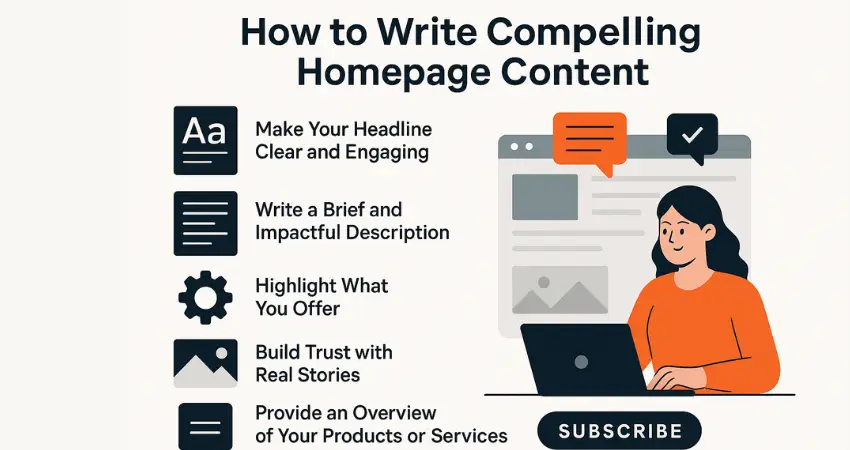
The homepage is often the most visited page on any website. It’s usually the first stop for visitors and sets the tone for how they perceive your brand. If it’s welcoming, clear, and easy to navigate, visitors are more likely to stick around and explore. Interestingly, research shows that how people experience a website (user experience or UX) is the biggest factor that sets a brand apart—even more than the actual product or price. This means having a well-thought-out, user-friendly homepage can really make a difference. Brands put a lot of effort into building trust and keeping customer loyalty. After investing so much in winning and retaining customers, it’s essential to know what will make your brand stand out. According to a marketing report, user experience (UX) has emerged as the top brand differentiator, with 28.6% of more than 1,000 marketing and branding professionals surveyed choosing it over other factors. Not only that, about 34.2% of respondents plan to focus on improving or optimizing UX to set their brand apart. While UX professionals are looking forward to integrating new trends like AI and voice interfaces in the coming years, they also face challenges. UX design has been a tricky area for some time, and many companies still experience a skills gap when it comes to creating effective UX strategies. Unfortunately, many brands find that visitors don’t go beyond the homepage. This often happens because the homepage doesn’t do enough to encourage visitors to explore the rest of the site. That’s why it’s so important to write homepage content that quickly grabs attention, clearly explains who you are, and shows how you can help. By crafting clear and engaging homepage content, you make sure visitors have a positive experience and are more likely to stick around. Let’s look at the key elements that make your homepage truly effective. Creating a homepage that draws people in and keeps them interested is essential. It’s like your website’s front door, the place where visitors decide whether to come in or move on. Here’s how to make your homepage content work for you. How to Writing Compelling Homepage Content Your homepage is the gateway to your brand. It’s the first place visitors land, and often, it’s where they decide whether to stay or move on. A well-crafted homepage not only grabs attention but also clearly communicates who you are, what you offer, and why it matters. Writing compelling homepage content requires a thoughtful balance between clear messaging, engaging visuals, and a strategic call to action. Let’s dive into how you can create a homepage that leaves a lasting impression. 1. Make Your Headline Clear and Engaging Your headline is the first thing people see. It should clearly explain what your brand offers and why it’s worth their time. Keep it simple and direct. Keep it short and to the point. Show what makes you different. Focus on how it helps your audience. A good homepage headline addresses a problem that your audience faces, offers a clear benefit, and keeps it simple. Think of it as a quick way to let visitors know they’re in the right place. For example, start by identifying a common pain point your audience has. Then, make a promise or offer a solution that directly addresses that problem. Finally, keep your wording concise and impactful—often, just a few words are enough to make your message clear. An effective headline follows three key steps: Address a common challenge your audience faces. Offer a solution or make a promise of improvement. Keep the wording simple and impactful, getting your point across without being wordy. A headline that combines these three elements is more likely to grab attention, keep visitors curious, and encourage them to explore your homepage further. Example: “Helping Small Businesses Grow with Proven Strategies.” 2. Write a Brief and Impactful Description After your headline, your description is the next thing visitors should see on your homepage. It’s a quick snapshot that helps them understand who you are and what you do. Since visitors often use this section to judge whether your brand is relevant to them, it’s crucial to make it clear and engaging. To follow the Z pattern and optimize for SEO, structure your description with the following points: Positioning: Place the description near the top of the page where it’s easily noticeable, as studies show visitors take just 2.6 seconds to focus on key areas. Content Clarity: Clearly state who your business serves and how you help. Avoid jargon and keep the language simple. Unique Value: Highlight what makes your brand different from the competition. Keyword Placement: Integrate primary keywords naturally within the description to improve search visibility. Engagement: Use actionable words to encourage readers to explore more. Example: “At [Your Brand], we help small businesses thrive by providing practical tools and resources like invoice generators and SEO tips.” 3. Highlight What You Offer Visitors come to your website because they’re looking for something specific. Usually, they either have a problem that needs solving or a goal they want to achieve—and they believe you can help them get there. That’s why it’s important to clearly showcase the features and benefits of your product or service on your homepage. It’s not just about listing what you offer but also explaining how those features translate into real benefits for your audience. If visitors can’t immediately see what they’ll gain from choosing you, they’re likely to move on to your competitors. Keep in mind that just listing features isn’t enough. You need to make it clear how those features make a difference in their lives or businesses. Benefit-driven content on your homepage can improve conversions by helping visitors see the value right away. Tips: Use icons or images to make points stand out. Clearly explain how each feature benefits the user. Make the content easy to skim. People want to know what’s in it for them. List your key offerings clearly so visitors can see the value right away. 4. Build
How to Structure Your Amazon Product Title

Structure your Amazon product title to boost visibility and sales. Learn how to use keywords, benefits, and formatting to create a high-converting product title.
Best Practices to Optimize Amazon Product Title

Optimizing your Amazon product title is key to improving visibility and conversions. A well-structured, keyword-rich title helps attract the right buyers and boost sales. Here’s how to craft a compelling title that ranks well and drives clicks.
Why is Amazon Product Title Important

Optimize your Amazon product title for better visibility and sales. A well-crafted title with the right keywords can make all the difference.
The Difference Between Some Time, Sometime, and At Times

Understanding the difference between some time, sometime, and at times is key for writers. This article breaks it down with examples to help you use them correctly.
Bata’s Branding Success: 10 Powerful Lessons for Global Brands

Bata’s success lies in blending global reach with local appeal. Discover 10 key branding lessons from its strategy of cultural adaptability and customer trust.
How to Tackle Long-form Content Writing using The Pomodoro Technique

Struggling with long-form content? Discover how the Pomodoro Technique can boost focus, improve productivity, and make writing effortless with structured work intervals and breaks.
5 ChatGPT Prompts to Create a Social Media Plan You’ll Actually Stick To

You started the year with big plans for social media—motivated and ready to be consistent. But then life got busy, and your strategy is now just another forgotten Google Doc. If showing up consistently feels like a struggle, you’re not alone. The good news? It doesn’t have to be this way. Using the right ChatGPT prompts, you can build a social media plan that feels natural and sustainable. No more random posts—just intentional, impactful content that connects with your audience.
Amazon Listing Optimization: 7 Best Practices to Maximize Sales in 2025

Struggling to boost sales on Amazon? Optimizing your product listings is the key to standing out in a crowded marketplace. This guide covers 7 best practices for Amazon listing optimization in 2025, from mastering keyword research to leveraging A+ Content. Learn how to enhance visibility, improve conversions, and stay ahead of the competition. Implement these expert-backed strategies to maximize your Amazon sales today!