
A Monday Morning Orange Cake
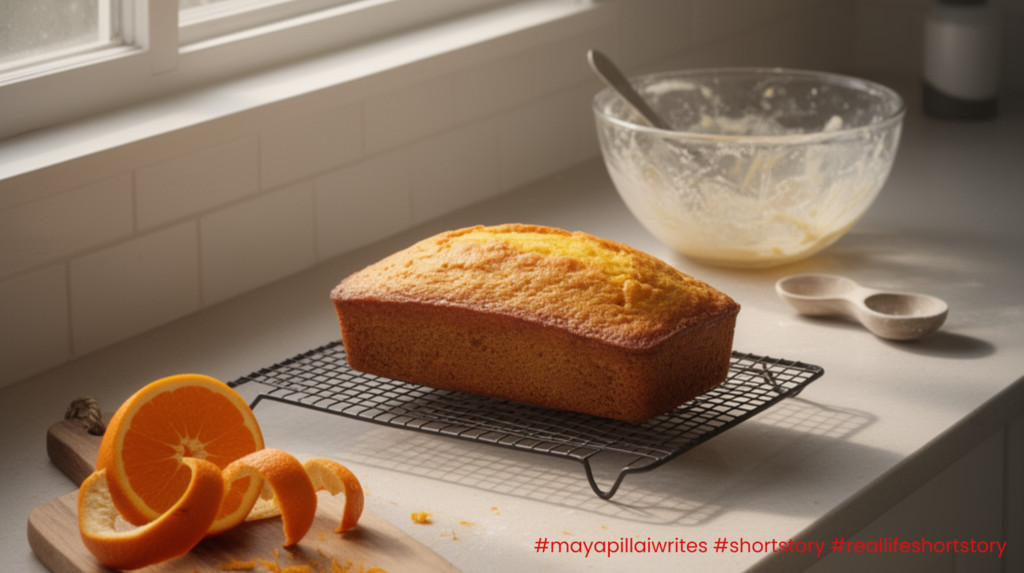
For weeks, the thought of baking an orange cake stayed with me like a small promise I kept postponing. I had already done the practical parts more than once. The flour was measured and kept aside, the other ingredients laid out on the counter, and then, without any clear reason, everything would go back into its place. It wasn’t about time or effort. It was more about a certain reluctance that settles in when you do not feel fully present. Some days, even gentle plans feel heavier than they should, and it is easier to delay them than to question why you are hesitating. This Monday morning, however, felt quieter and more forgiving. The house was still wrapped in early light, and there was no urgency pressing against the walls. I found myself in the kitchen before the day had a chance to become noisy. There was a calmness in moving slowly, in not rushing through familiar steps. I cut the orange into two-halves horizontally carefully, removed the seeds, gently extracted the white pith and cut them into small, bite-sized pieces. Instead of just using the juice, I decided to blend the whole orange with the peel. There was something comforting about not stripping the fruit down to only what was “necessary,” but allowing its bitterness and fragrance to become part of the cake. I am not a great baker, and I have never claimed to be one. I am comfortable with simple cakes and familiar recipes, and this orange cake was one of them. Still, I kept putting it off. Not because it was difficult, but because I tend to overthink even small things when I step into the kitchen. This time, I chose to stop waiting for the perfect mood and just begin. Recipe: Whole Orange Cake (With Peel) Ingredients 1½ cups all-purpose flour ¾ cup sugar 2 eggs ½ cup oil or melted butter 1 whole orange, seeds removed and cut into small pieces (use the peel) 1 tsp baking powder ½ tsp baking soda 1 tsp vanilla extract A pinch of salt Method Preheat the oven to 180°C (350°F) and grease a small baking tin. Add the orange pieces with peel, eggs, sugar, oil or melted butter, and vanilla extract to a blender. Blend until smooth. In a separate bowl, combine the flour, baking powder, baking soda, and salt. Gently fold the blended orange mixture into the dry ingredients until just combined. Do not overmix. Pour the batter into the prepared loaf tin and smooth the top lightly. Bake for 30 to 35 minutes, or until a toothpick inserted into the center comes out clean. Let the cake cool slightly before slicing. I set the timer and stepped away from the oven, telling myself I would not hover over it the way I usually do. The quiet ticking in the background became a soft reminder that something was in progress, even when I wasn’t actively doing anything. There was comfort in letting time do its work, in trusting that the cake would be ready when it was ready, without me checking every few minutes.Once the kitchen began to fill with a warm, citrus scent, the space felt different. The smell was not sharp or overpowering, but soft and steady, the kind that makes a home feel lived in, even on an ordinary weekday morning. I stood there for a while, not out of impatience, but because it felt good to be in that moment without rushing toward the next thing.When the cake was finally done, it came out with gentle cracks on the top and a softness that showed when I pressed lightly against it. It was not perfect, but it was honest, and that felt right for the morning I was having. Cutting into it while it was still warm, I felt a small but real sense of happiness. Not the kind that comes with big achievements, but the quieter kind that follows through on a small intention you had been carrying for a while.There are days when we wait for the right mood to arrive before we begin anything. We tell ourselves we will bake when we feel inspired, write when we feel motivated, and rest when we feel less guilty about resting.But this morning reminded me that the mood often follows the action, not the other way around. I did not wake up feeling especially enthusiastic about baking. I simply started. Somewhere between washing the orange and watching the cake rise in the oven, the heaviness eased. It did not fix everything, but it made the morning gentler. Sometimes, that small shift is all we need. FAQs Is this orange cake recipe beginner-friendly?Yes. The recipe is simple and works well even if you are not an experienced baker. It uses basic ingredients and does not require any advanced techniques.Can I make this orange cake without a blender?You can. If you do not have a blender, you can use fresh orange juice and finely grated zest instead of blending the whole orange. The texture will be slightly different, but the cake will still turn out soft and fragrant.Does using the orange peel make the cake bitter?Using the peel adds a gentle depth of flavor. If your oranges are very thick-skinned or bitter, you can remove part of the white pith to keep the taste balanced.What tin works best for this orange cake?A loaf tin works well for this recipe, but you can also use a small round cake tin. Baking time may vary slightly depending on the size and depth of the pan.How should I store the orange cake?Once cooled, you can store the cake in an airtight container at room temperature for a day or two. If you want it to last longer, keep it refrigerated and warm a slice before eating.
Two Ways of Waiting

At 6:15 p.m., the railway platform in the small coastal town hovered between day and night. The sky was brushed with orange, slowly thinning into pink. The evening train was late. Not dramatically late. Just late enough for people to check the time twice.A tea vendor stood beside his dented aluminum kettle, pouring steaming chai into paper cups. The announcement system crackled now and then but offered no real update. A stray dog slept beside a chipped blue bench, one ear twitching at distant sounds. From somewhere beyond the tracks, the sea sent in a faint smell of salt.Two people waited.They stood only a few feet apart.They were not in the same place at all. Arjun Arjun stood near the edge of the platform, backpack slung over one shoulder, phone in hand. 6:18 p.m. No signal. He lifted the phone higher, then lowered it. One bar flickered and vanished. He swallowed.Tomorrow morning was his interview. Final round. A real company. A steady salary. The kind that could change the tone of conversations at home.His father had called earlier that afternoon. “Reached safely?” Casual voice. Careful pause.His mother had added, “Keep your documents safely. And eat on time. Carry a bottle of water to the interview venue. Call once you reach your place of stay tonight. So we know you’re safe.” They hadn’t said, We’re counting on this.They didn’t have to.The tea vendor called out, “Chai! Hot chai!” The cheerfulness grated on him. How could someone sound that relaxed, thought Arjun. Arjun stepped closer to the tracks and stared down the long stretch of metal rails. Empty. Endless.The announcement system crackled. His heart jumped.A burst of static filled the platform, like a voice clearing its throat.He straightened unconsciously.Then nothing.The sound dissolved into silence.He exhaled sharply. He sat one of the weathered blue wooden benches and unzipped his backpack and pulled out his folder. Resume. Extra copies. ID proof. Passport-sized photos. He checked them one by one, even though he had already checked them before leaving home. His mind ran ahead of him.What if the train is delayed another hour?What if I miss the connecting bus?What if I reach late and they assume I’m careless?What if they ask something I don’t know?The digital clock above the ticket counter felt louder than everything else.6:24 p.m.A small metallic jingle made him turn. The stray dog had shifted, its collar making a faint sound. His shoulders tightened.He noticed other people around him talking about current affairs, happenings of the day.A couple sharing biscuits. A man laughing at something on his phone.How can they be so calm?He glanced at the sky. Orange fading into purple. He didn’t see color. He saw daylight slipping away.The breeze carried the smell of the sea.He barely noticed.The platform felt narrow. Measured in minutes. Meera Meera sat on the chipped blue bench with her cloth bag resting against her ankles. Her hands folded over her handbag on her lapInside the bag were exam papers, neatly stacked and tied with a rubber band. She had finished correcting them that afternoon at her sister’s house. Twenty-eight essays on “My Future Ambition.”Doctor. Engineer. Police officer. Business owner.One child had written that he wanted to open a tea stall near the beach because “people are always happy near the sea.”She had smiled at that line and circled it lightly.Meera taught English and history at a government school two towns away. Twenty-two years in the same classroom. Same cracked blackboard. Same wooden desk. Different faces every year.She had spent the weekend with her younger sister, helping her reorganize cupboards and listening to stories about neighbors she barely remembered. Now she was heading back to her own small apartment. The balcony plants would need watering. The newspaper from Saturday would still be folded at the door.Nothing urgent waited for her.She had arrived early on purpose.She liked being early. It gave her time to sit without being needed. The delay did not bother her. It felt like a small extension of evening. The orange sky reminded her of a sari her mother used to wear during temple festivals. She could almost hear the soft rustle of it moving from room to room.The tea vendor poured chai in a steady rhythm. Liquid meeting paper. Coins clinking. It felt dependable. The announcement system crackled again and faded. She smiled faintly.The stray dog near her bench stretched. She shifted her bag to give it more space.She noticed the young man near the edge of the platform. Restless. Checking his phone again and again. Looking down the tracks as if he could summon the train.She recognized that posture.Her students stood like that before exam results were announced.She wondered what he was walking toward.The breeze carried the scent of salt and something frying outside the station. She closed her eyes for a moment and let the air settle inside her lungs.For her, the platform was not an obstacle.It was simply a pause. The LightAt 6:32 p.m., a faint glow appeared far down the tracks. Arjun saw it first.His pulse quickened. He leaned forward to confirm it wasn’t a reflection. The glow grew brighter. The low hum of metal followed.He exhaled.Relief. Meera saw the same light a few seconds later. She gathered her bag slowly. The stillness was ending.The train entered the station with a rush of wind and a sharp metallic screech. The tea vendor called out one last time. The stray dog opened one eye, then settled again.People stood. Adjusted bags. Moved toward doors.Arjun boarded quickly and checked the coach number again, just to be sure. He moved down the aisle, counting the seat numbers until he found his.Window seat.He placed his backpack carefully on the rack above, then sat down, adjusting himself as if settling into something more than just a chair. The cushion dipped slightly under his weight. The air inside the coach felt cooler, contained.He wiped his palms against his jeans and pulled out his folder once more, though he didn’t open it. His reflection flickered faintly in
Why MayapillaiWrites.com Feels Different (and Better) Than Most Content Writing Agencies

Let’s be real — finding the right content writing agency today feels like looking for clarity in a fog of buzzwords and filler posts. There are thousands of websites promising “SEO-optimised,” “high-converting,” “engaging” content. But most of them sound the same. They use big words with little depth, and deliver content that feels flat, forgettable, or worse — like it was written by a robot. That’s exactly why I created MayapillaiWrites.com — a space where content gets back to what it’s meant to do: connect, inform, and make an impact. Here’s why it feels different from most content writing agencies out there. 1. It’s Not Just About Words. It’s About Voice Anyone can write 800 words and call it a blog. But content that works — the kind that your audience reads, saves, and remembers — is built around your brand’s voice. At MayapillaiWrites.com, I don’t use templates or AI content dumps. I listen to what you want to say, how your audience speaks, and write in a tone that sounds like you. Whether it’s a homepage rewrite, product page, SEO blog, or a founder’s story — it should feel like it was written by someone who knows your business inside-out. Because I take the time to. 2. You Work With a Real Writer — Not a Layered Team Here, there’s no content manager assigning your project to a junior writer you’ll never speak to. You work directly with me — Maya Pillai. I’ve been writing for over 20 years, with a background in computer applications and deep experience in technology, cybersecurity, business storytelling, and SEO. Every piece of content is either written or reviewed by me before it reaches you. It’s personal, not processed. 3. Human-First, AI Search Optimized SEO-Optimized Content That Performs Let’s talk about search engines. Yes, I understand SEO and AI Optimization search — I’ve helped blogs rank, even in competitive niches. But here’s the difference: I never write for just Google. Your content is crafted to: Be found in search Be enjoyed by people Be remembered for your brand voice That’s what real SEO content writing should do — attract, engage, and retain. 4. It’s Not Just for Clients. It’s a Place for Writers, Too I regularly share: Writing tips that come from real-world experience Free resources and templates Insights on freelancing, branding, and storytelling This is an ecosystem, not just a service. 5. No Gimmicks. No Vanity Metrics. Just Content That Works. You won’t find “limited time offers” or “1,000 words in 24 hours” packages here. What you will find is: Writing that’s clear, clean, and compelling Process that’s collaborative Results that last beyond a post going live Because at the end of the day, good content is about clarity. Not clutter. So, Why Choose MayapillaiWrites.com? Here’s the short version: ✅ 20+ years of experience in content and strategy ✅ Direct, one-on-one collaboration ✅ SEO-optimized but human-first writing ✅ Personalised tone and structured storytelling ✅ Content for both businesses and writers ✅ No fluff. Just results. Let’s Make Your Content Matter Whether you’re building your brand, launching a product, or just need someone who can turn your thoughts into words that work — I’m here. 📌 Visit MayapillaiWrites.com 📌 Check out the blog 📌 Or reach out to start a conversation You bring the ideas. I’ll help bring them to life — one line at a time.
Grammar Rules vs Grammar Guidelines: Knowing the Difference Makes All the Difference

Grammar is the scaffolding of clear communication. Within it, some structures are fixed—rules—and others more fluid—guidelines. While grammar rules are non-negotiable and ensure our language functions coherently, guidelines are open to interpretation and evolve with usage, tone, and context. Breaking a rule often disrupts clarity or comprehension. But breaking a guideline can be what gives your prose its rhythm and natural tone. It’s the difference between writing by the book and writing that connects with a modern, human audience. Who Will Benefit From This Article? If you’re wondering whether this article is relevant to you, consider the following: ✅ You’re a content writer or copywriter looking to sharpen your writing for clients. ✅ You’re a student aiming to write clearer essays and assignments. ✅ You’re an editor or proofreader who wants to distinguish between real errors and stylistic choices. ✅ You’re a blogger trying to sound natural without compromising grammar. ✅ You’re a non-native English speaker trying to understand the nuance between hard rules and flexible style. ✅ You’re a marketer or brand storyteller seeking to connect with a modern audience using natural tone. ✅ You’re a fiction or creative writer aiming to build authentic voices through intentional grammar choices. ✅ You’re an academic or researcher trying to refine your writing for formal publication. ✅ You’re a language trainer or ESL tutor searching for a relatable way to explain tricky grammar concepts. ✅ You’re simply a language enthusiast who wants to explore the logic behind what makes writing flow or falter.This article will help you navigate that grey area between right and wrong in writing—so you can make informed, confident choices. What Is a Grammar Rule? Grammar rules form the core framework of how we use language. They’re the foundations that make sure communication is clear and consistent. Breaking them usually leads to confusion or sentences that sound downright wrong. Example: We don’t say, “He have two phone” or “She go to work every day.” Instead, we say: ✔️ “He has two phones.” ✔️ “She goes to work every day.” Unless you’re crafting dialogue for a character still learning the language, these rules are non-negotiable. What Is a Grammar Guideline? Unlike rules, grammar guidelines are more like best practices. They’re conventional, widely accepted, and often taught as “rules,” but they’re not absolute. One well-known example is: Don’t begin a sentence with “and” or “but.” This is not a rule—it’s a stylistic choice. Many modern writers intentionally begin sentences this way for effect. Another classic is: Don’t end a sentence with a preposition. Again, not a rule. It’s often more natural to say, “What are you waiting for?” rather than the overly formal “For what are you waiting?” Why the Confusion? There are several reasons why grammar guidelines are so often mistaken for hard-and-fast rules: Taught as absolutes in schools: Many teachers present guidelines as rules for simplicity, leading students to believe they’re non-negotiable. Reinforced by outdated textbooks: Older grammar books don’t always reflect evolving usage, keeping outdated conventions alive. Inherited from traditional grammar systems: Prescriptive grammar norms passed down over generations are mistaken as unbreakable. Echoed by armchair grammarians: Online forums, social media, and casual editors often reinforce myths without verification. Mimicked from formal writing: Academic and legal writing often upholds stricter standards, creating confusion for general use. Overgeneralization in digital tools: Grammar checkers and editing apps sometimes flag stylistic choices as errors. Slow pace of linguistic change acceptance: Language evolves faster than formal acceptance by educational systems and publishers. Grammar is a collective agreement—something we’ve all bought into for mutual understanding. Still, as writing becomes more conversational and digital, what once was a “must-follow” rule may now be optional. Grammar Guidelines Often Mistaken for Rules Let’s unpack a few more examples of guidelines commonly confused with rules. Remember, these aren’t wrong to break—but proceed wisely. 1. Splitting Infinitives The traditional belief is that you shouldn’t split an infinitive with an adverb. For instance, you might be told to say “to carefully read” instead of “to read carefully.” But what about: ✔️ “She promised to always listen”? That sounds just right. Feel free to split when it helps the sentence flow. 2. Ending Sentences with Prepositions Instead of the awkward “From where did this come?”, it’s far more natural to write: ✔️ “Where did this come from?” There’s no confusion, no harm, and no rule being broken. 3. Turning Nouns into Verbs This is another guideline that stirs strong opinions. But turning a noun like “schedule” into a verb (“Let’s schedule a call”) is now common. As long as it doesn’t create redundancy or confusion, verbing a noun can keep language fresh. However, avoid inventing verbs when a perfectly usable one already exists. No need to say “calendarise” when “schedule” works just fine. 4. Starting with Conjunctions Traditionalists argue that you should never begin a sentence with a conjunction like “and,” “but,” or “yet.” But here’s the thing—it works. Example: ✔️ “He said he’d arrive on time. But he didn’t show up.” The second sentence adds emphasis. The break creates impact. That’s what good writing is all about. 5. Using Whom “Whom” is slowly fading into grammatical history. We rarely hear anyone say, “Whom are you calling?” It’s more natural to say: ✔️ “Who are you calling?” Unless you’re quoting Jane Austen, feel free to let “whom” rest in peace. 6. Using “They” as a Singular Pronoun Old-school grammar insisted on defaulting to “he” when referring to an unknown subject. But that’s exclusionary and outdated. Instead of: ❌ “If a student wants help, he should ask.” Use: ✔️ “If a student wants help, they should ask.” Or better yet, go plural: ✔️ “If students want help, they should ask.” It’s inclusive and accepted—even by many major style guides today. To Sum Up Follow grammar rules when clarity is at stake. Use guidelines as tools, not constraints. If a sentence reads better with a preposition at the end or a conjunction up front—go for it. Writing is about communication. And
Website Homepage Content Writing in 2025
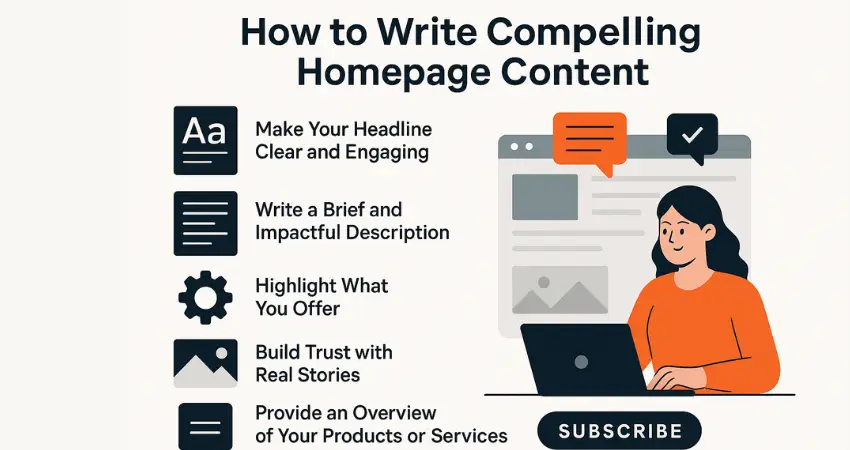
The homepage is often the most visited page on any website. It’s usually the first stop for visitors and sets the tone for how they perceive your brand. If it’s welcoming, clear, and easy to navigate, visitors are more likely to stick around and explore. Interestingly, research shows that how people experience a website (user experience or UX) is the biggest factor that sets a brand apart—even more than the actual product or price. This means having a well-thought-out, user-friendly homepage can really make a difference. Brands put a lot of effort into building trust and keeping customer loyalty. After investing so much in winning and retaining customers, it’s essential to know what will make your brand stand out. According to a marketing report, user experience (UX) has emerged as the top brand differentiator, with 28.6% of more than 1,000 marketing and branding professionals surveyed choosing it over other factors. Not only that, about 34.2% of respondents plan to focus on improving or optimizing UX to set their brand apart. While UX professionals are looking forward to integrating new trends like AI and voice interfaces in the coming years, they also face challenges. UX design has been a tricky area for some time, and many companies still experience a skills gap when it comes to creating effective UX strategies. Unfortunately, many brands find that visitors don’t go beyond the homepage. This often happens because the homepage doesn’t do enough to encourage visitors to explore the rest of the site. That’s why it’s so important to write homepage content that quickly grabs attention, clearly explains who you are, and shows how you can help. By crafting clear and engaging homepage content, you make sure visitors have a positive experience and are more likely to stick around. Let’s look at the key elements that make your homepage truly effective. Creating a homepage that draws people in and keeps them interested is essential. It’s like your website’s front door, the place where visitors decide whether to come in or move on. Here’s how to make your homepage content work for you. How to Writing Compelling Homepage Content Your homepage is the gateway to your brand. It’s the first place visitors land, and often, it’s where they decide whether to stay or move on. A well-crafted homepage not only grabs attention but also clearly communicates who you are, what you offer, and why it matters. Writing compelling homepage content requires a thoughtful balance between clear messaging, engaging visuals, and a strategic call to action. Let’s dive into how you can create a homepage that leaves a lasting impression. 1. Make Your Headline Clear and Engaging Your headline is the first thing people see. It should clearly explain what your brand offers and why it’s worth their time. Keep it simple and direct. Keep it short and to the point. Show what makes you different. Focus on how it helps your audience. A good homepage headline addresses a problem that your audience faces, offers a clear benefit, and keeps it simple. Think of it as a quick way to let visitors know they’re in the right place. For example, start by identifying a common pain point your audience has. Then, make a promise or offer a solution that directly addresses that problem. Finally, keep your wording concise and impactful—often, just a few words are enough to make your message clear. An effective headline follows three key steps: Address a common challenge your audience faces. Offer a solution or make a promise of improvement. Keep the wording simple and impactful, getting your point across without being wordy. A headline that combines these three elements is more likely to grab attention, keep visitors curious, and encourage them to explore your homepage further. Example: “Helping Small Businesses Grow with Proven Strategies.” 2. Write a Brief and Impactful Description After your headline, your description is the next thing visitors should see on your homepage. It’s a quick snapshot that helps them understand who you are and what you do. Since visitors often use this section to judge whether your brand is relevant to them, it’s crucial to make it clear and engaging. To follow the Z pattern and optimize for SEO, structure your description with the following points: Positioning: Place the description near the top of the page where it’s easily noticeable, as studies show visitors take just 2.6 seconds to focus on key areas. Content Clarity: Clearly state who your business serves and how you help. Avoid jargon and keep the language simple. Unique Value: Highlight what makes your brand different from the competition. Keyword Placement: Integrate primary keywords naturally within the description to improve search visibility. Engagement: Use actionable words to encourage readers to explore more. Example: “At [Your Brand], we help small businesses thrive by providing practical tools and resources like invoice generators and SEO tips.” 3. Highlight What You Offer Visitors come to your website because they’re looking for something specific. Usually, they either have a problem that needs solving or a goal they want to achieve—and they believe you can help them get there. That’s why it’s important to clearly showcase the features and benefits of your product or service on your homepage. It’s not just about listing what you offer but also explaining how those features translate into real benefits for your audience. If visitors can’t immediately see what they’ll gain from choosing you, they’re likely to move on to your competitors. Keep in mind that just listing features isn’t enough. You need to make it clear how those features make a difference in their lives or businesses. Benefit-driven content on your homepage can improve conversions by helping visitors see the value right away. Tips: Use icons or images to make points stand out. Clearly explain how each feature benefits the user. Make the content easy to skim. People want to know what’s in it for them. List your key offerings clearly so visitors can see the value right away. 4. Build
Holding On vs. Letting Go: The Silent Struggle We All Face

Letting go isn’t just about giving things away—it’s about releasing the weight we place on them.
When my yoga instructor tells me to let go after a posture, I do it effortlessly. But when my mother suggests giving away books I no longer read, I hesitate. Why is it so easy to release tension in my body but so hard to release the past?
The DOSE Effect: Boost Writing Productivity with Science-Backed Habits
Boost writing productivity with the DOSE Effect, a science-backed strategy that uses Dopamine, Oxytocin, Serotonin, and Endorphins to transform your writing habits into a fulfilling and rewarding experience.
Timeless Writing Advice from C.S. Lewis That Still Inspires Today

Great writing isn’t just about stringing words together—it’s about clarity, rhythm, and authenticity. Decades ago, C.S. Lewis shared simple yet profound advice that still resonates today. From silencing distractions to writing with passion and precision, his words serve as a timeless guide for anyone looking to sharpen their craft. Whether you’re drafting your next LinkedIn post or penning your first book, Lewis’s wisdom reminds us that writing well is an art—and it all starts with the fundamentals.
Caught in the Creative Crossfire: How to Nail Tone and Style Amidst Differing Opinions

Mastering tone and style in copywriting is the secret weapon every writer needs to craft content that resonates, inspires, and commands attention. Picture this: you’re deep in a virtual brainstorming session, where ideas clash like waves in a storm. The designer is pushing for a playful tone, the strategist demands precision and authority, and the client insists on keeping things formal. And then there’s you—the copywriter—standing at the intersection of creativity and strategy, tasked with weaving these divergent visions into a seamless narrative. It’s not just about keeping the peace; it’s about creating something that genuinely connects. If you’ve ever found yourself in this creative crossfire, you’re not alone. The real magic lies in striking that perfect balance—an art that transforms good writing into unforgettable content. Tone and Style: Your Copywriting Superpowers As a copywriter, your words are more than just text on a page—they’re your handshake, your smile, and your voice to the reader. Tone and style are what give those words personality and purpose. They’re your creative superpowers, turning ideas into emotions and emotions into action. Let’s break it down. Tone is how your writing feels. Imagine it as the vibe of a conversation. Are you the supportive friend cheering someone on? The trusted advisor offering calm, steady guidance? Or maybe the witty storyteller making people laugh? Tone is what shapes the emotional connection between you and your audience. It’s why a fitness brand might use a high-energy, encouraging tone to motivate readers, while a healthcare provider leans into a compassionate, reassuring voice to build trust. Style, though, is the craft—it’s how you write. It’s in the rhythm of your sentences, the words you choose, and the way your ideas flow. Think of it as your signature—your creative fingerprint. A conversational style might feel like a chat over coffee: light, natural, and engaging. A formal style, on the other hand, carries authority, precision, and structure, like a keynote speech delivered to professionals. But here’s the truth: tone and style aren’t just tools; they’re how you connect with people. They’re what make your audience pause, think, and feel understood. Imagine this: you’re writing an email for a startup targeting eco-conscious millennials. The tone might be playful, optimistic, and relatable—“Hey there, tree hugger!”—and the style might be short and snappy, like an exciting announcement from a close friend. Now switch gears. You’re crafting a white paper for a cybersecurity firm. The tone shifts to authoritative and insightful, and the style becomes polished and data-driven, showing readers you mean business. See how different that feels? Your tone and style allow you to adapt, like a chameleon, to meet your audience where they are. And when done right, they can: Spark Emotion: The right tone and style make people feel something—joy, trust, curiosity—and that feeling keeps them engaged. Build Trust: When your words match what your audience needs to hear, they feel understood. And trust? It’s the foundation of loyalty. Drive Action: Whether it’s clicking a link, signing up, or sharing your content, tone and style guide your reader toward taking the next step. Here’s the thing: tone and style aren’t just about what you say—they’re about how your words make someone feel. And that feeling is what stays with them long after they’ve closed the tab or scrolled past your post. So, take a moment the next time you sit down to write. Ask yourself, “How do I want my reader to feel when they read this? What’s the experience I want to create?” Because when you answer those questions, you’re not just writing—you’re connecting. And in today’s world, connection is your real superpower. Start with the Human at the Other End Here’s the golden rule of writing compelling content: tone and style are never about you or even the brand—they’re about the human consuming your words. If your audience doesn’t feel understood, they’ll scroll past, click away, or ignore your message entirely. And as copywriters, our superpower lies in stepping into their world and delivering words that feel personal, timely, and valuable. Picture this: you’re writing for a millennial entrepreneur juggling two side hustles. She’s bootstrapping her business, working late nights, and scrolling through advice blogs in her precious moments of downtime. What does she need? Not industry jargon, not vague platitudes, and definitely not a long-winded essay. She needs practical advice in bite-sized, relatable chunks that show you respect her time. Your tone here might be friendly, approachable, and motivational, with a conversational style that feels like talking to a mentor who’s rooting for her success. Now, shift perspectives. You’re writing for a corporate executive. He’s a decision-maker, navigating a high-stakes environment, and what he values most is clarity and precision. He doesn’t want fluff or anecdotes—he wants data-driven insights and actionable takeaways. Your tone becomes polished and confident, while your style leans toward structured, professional, and to the point. Here’s the truth: these are two entirely different audiences, but your job is the same—connect with them on a human level. How Do You Get This Right? Understanding your audience isn’t just about demographics; it’s about empathy. It’s about stepping into their shoes and seeing the world from their perspective. Here’s how to start: 1. Walk in Their Shoes Spend time where your audience spends time. Dive into the forums they frequent, the social media posts they like, and even the memes they share. Their digital footprint tells a story—what makes them laugh, what frustrates them, and what inspires them. If you’re writing for eco-conscious consumers, check out the conversations happening in sustainability groups. If your audience is tech-savvy developers, explore their Reddit threads or GitHub discussions. These spaces reveal their language, their pain points, and their values. The more you immerse yourself, the better you can reflect their world in your writing. 2. Test Their Attention Span Let’s be honest—attention spans are short, and your audience’s time is precious. Ask yourself, “Would I read this if I were in their shoes?” If the answer is no, then
Your Brand, Your Rules: Crafting an Authentic Brand Voice

An authentic brand voice is more than just a marketing buzzword; it’s the lifeblood of how your business connects with the world. According to a study published by OneScreen.ai on Business Wire, 80% of consumers say they made a purchase influenced by the messages they encountered. For startups navigating crowded markets, standing out isn’t a luxury—it’s a necessity. And standing out authentically? That’s your ticket to trust and loyalty. But here’s the catch: crafting an authentic voice isn’t about mimicking what’s trendy. It’s about uncovering what makes your brand uniquely you. Let’s explore how to do just that. Why Authenticity Matters in Branding Today’s consumers are more discerning than ever. They’re not just looking for products; they’re looking for brands they can believe in. An authentic voice does more than sell; it connects, resonates, and builds relationships. Imagine scrolling through your social media feed and seeing two ads for eco-friendly products. One says, “We care about the planet,” while the other tells a heartfelt story about how a founder started their journey to reduce plastic waste after a personal encounter with pollution. Which one feels more genuine? That’s the power of authenticity. When your voice reflects your values and speaks directly to your audience’s hearts, it not only builds trust but also creates lifelong advocates for your brand. Conversely, inauthenticity—no matter how polished—is a one-way street to disconnection. Understanding Your Brand’s Core Identity Before your brand can speak authentically, you need to know what it stands for. This isn’t just an exercise in introspection; it’s the foundation for every message you’ll ever craft. Let’s break this down: 1. Define Your Core Values What principles guide your brand? Is it sustainability, innovation, or community empowerment? Think about the bigger picture: Why does your business exist beyond making a profit? Let these values guide your messaging. For example, a startup focused on eco-friendly products might adopt a tone that’s passionate, hopeful, and informative, highlighting their commitment to the planet in every interaction. 2. Analyze Your Mission Statement Your mission statement should articulate your purpose. But here’s the twist: It should also inspire. If your mission statement feels bland or generic, rework it to reflect your passion and aspirations. 3. Pinpoint Your Unique Selling Proposition (USP) Your USP is your differentiator. Maybe it’s your cutting-edge technology, your heartfelt customer service, or your founder’s unique journey. This should be a thread running through every message you craft. 4. Know Your Audience Authenticity is a two-way conversation. While your voice reflects who you are, it also needs to resonate with your audience. Spend time understanding their values, challenges, and preferences. What problems are they trying to solve? How can your voice make them feel understood? 5. Reflect on Your Brand’s Personality Imagine your brand as a person. Are they warm and approachable? Bold and visionary? Define this personality and let it guide your tone. For instance, a financial tech startup aiming to democratize investing might use a voice that’s empowering, clear, and a bit playful. 6. Observe Competitors (But Don’t Imitate) Look at how competitors communicate, but avoid becoming a copycat. Instead, identify gaps or opportunities to stand out with your unique perspective. 7. Document Your Identity Create a concise guide summarizing your brand’s values, personality, tone, and audience insights. This will serve as a compass for consistent and authentic messaging. Steps to Crafting an Authentic Brand Voice Now that you’ve laid the groundwork, it’s time to bring your voice to life. If you’re an early startup, consider looking at your competitors for reference ideas, especially if you haven’t yet started on your content. This can give you a sense of what works and what doesn’t in your industry. For established startups, take a closer look at your existing materials to identify areas that need adjustments or alignments with your brand’s evolving voice. Both early and established startups can benefit from collaborating with an expert content writer to refine their messaging and ensure it resonates with their audience. Here’s how: 1. Audit Your Current Content Look at your existing materials: website copy, social media posts, emails, and more. Ask yourself: Does the tone feel consistent? Does it align with your brand values? Does it feel authentic or forced? Highlight what resonates and identify areas needing improvement. 2. Build a Brand Voice Framework Consistency is key. A brand voice framework ensures your team speaks with one voice, no matter the platform. Include: Tone Guidelines: Is your voice formal or casual? Inspirational or humorous? Tailor it to fit your brand’s personality. Preferred Vocabulary: Identify words and phrases that align with your values. For instance, a wellness startup might favor words like “holistic,” “empower,” or “journey.” What to Avoid: Define what your brand isn’t. A mental health startup, for example, might avoid overly technical jargon or dismissive language. 3. Embrace Storytelling Stories build connections. Share: How your founder’s vision came to life. Challenges your team overcame. Customer success stories that reflect your brand’s impact. These narratives make your brand relatable and trustworthy. Remember, people connect with people—not faceless entities. 4. Test and Iterate Your voice isn’t static; it evolves. Gather feedback through surveys, comments, and engagement metrics. Pay attention to what resonates and adjust accordingly. Tips to Overcome Common Challenges Struggling to Differentiate: Start by leaning into your unique story. Your brand’s journey, values, and perspectives are unlike anyone else’s. For example, if your startup began as a solution to a personal challenge, share that story. It adds a layer of authenticity that no competitor can replicate. Inconsistent Messaging: Inconsistencies often arise when different team members contribute content without a unified guide. Train your team using a comprehensive brand voice framework that includes tone, vocabulary, and style guidelines. Conduct regular reviews to ensure alignment across all platforms, from social media to email campaigns. Fear of Being “Too Different”: Many startups hesitate to stand out, fearing they might alienate potential customers. However, authenticity thrives on uniqueness. Highlight the quirks, values, or approaches that make your brand distinctive. Trust