Word of the Day: Credible
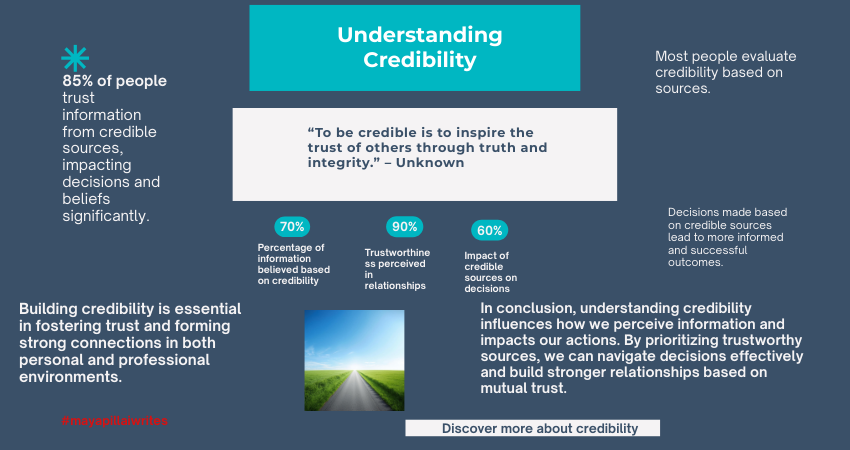
Synopsis Some words quietly carry trust. Credible is one of them. It doesn’t promise perfection or certainty, but it signals that something is believable, reliable, and worthy of attention. In writing, journalism, and everyday communication, credibility often determines whether a message is accepted or ignored. Word of the Day Credible Word of the Day Meaning Credible means able to be believed or trusted. It describes information, sources, arguments, or people that appear reliable because they are supported by evidence, consistency, or expertise. Word of the Day Pronunciation Guide KRED-uh-buhl Word of the Day: Origin and Etymology The word credible comes from the Latin credibilis, meaning “worthy of belief,” which itself comes from credere, meaning “to believe” or “to trust.” This root is shared with words such as credit and creed, all connected to belief and trust. Historically, credible was used to describe testimony or claims that deserved acceptance. Over time, its usage expanded to include people, institutions, media sources, and even ideas that demonstrate reliability through consistency and evidence. Credible: Synonyms and Antonyms Synonyms:Believable, trustworthy, reliable, convincing, dependable Antonyms:Unreliable, doubtful, implausible, questionable, untrustworthy Word of the Day Usage in Sentences: Across Genres In Journalism:The report relied on credible sources and verified data. In Political Analysis:The opposition failed to present a credible alternative policy. In Academic Writing:Only credible studies were included in the literature review. In Literature:Her fear felt credible, grounded in the reality she knew. In Travel Writing:A credible local guide made the experience safer and richer. In Legal Commentary:The court found the witness to be credible based on consistent testimony. Why “Credible” Is Worth Knowing Credible is a practical word because it helps distinguish between information that deserves attention and information that does not. Instead of dismissing something as wrong or misleading, calling it not credible points to a lack of trustworthiness without exaggeration. For writers, credibility is foundational. Style and voice matter, but credibility determines whether readers stay. Claims supported by evidence, clear sourcing, and consistent reasoning help establish a credible tone. Without it, even well-written content can fall flat. In editorial and professional writing, credible is often preferred over stronger terms because it allows space for evaluation rather than judgment. Credible in Modern Context In the modern information landscape, credible has gained renewed importance. With the volume of content available online, readers constantly assess whether information can be trusted. Credibility is now linked not only to authority, but also to transparency, accountability, and consistency. In professional spaces, being credible often means showing your work, acknowledging limitations, and avoiding overstatement. In creative and personal writing, credibility comes from emotional honesty and coherence rather than facts alone. As audiences become more discerning, credibility is no longer assumed. It is built gradually, through repetition, clarity, and care. FAQs Is credible the same as true?Not exactly. Credible means believable or trustworthy, while true means factually correct. Something can appear credible and still be proven wrong later. Can credible describe people as well as information?Yes. People are often described as credible when they are seen as reliable and consistent. What is the difference between credible and reliable?Credible focuses on believability and trust, while reliable emphasizes consistency over time. If you need help with long-form writing, blog content, or editorial pieces, I write at a pace that values thought over haste. Connect with me.