
What He Meant
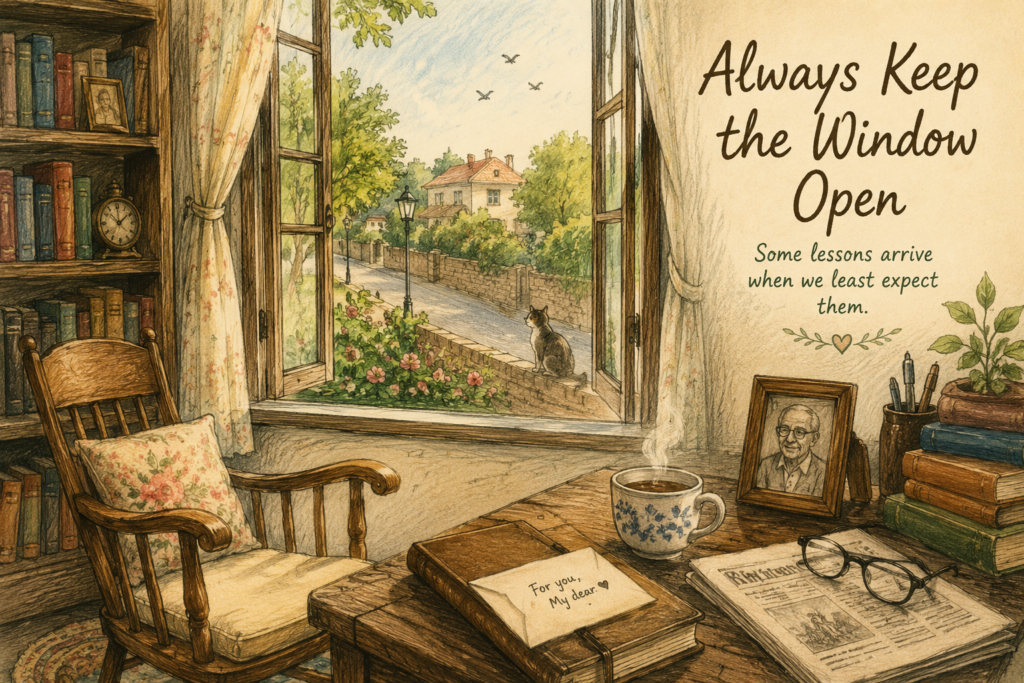
“I don’t know what he meant when he said, ‘Keep the window open.’”My grandfather said those words often.Whenever I visited him during my school holidays, I would find him in his study, sitting beside the large window. It was the brightest spot in the room and his favorite place during winter, when the afternoon sun warmed the wooden floor. But during the windy monsoon days, it was the coldest corner of the house. He never liked curtains on that window.His old wooden rocking chair sat beside it, with a soft cotton cushion that had taken the shape of his back over the years. A short carpet lay beneath his feet to keep them warm on chilly mornings.From there, he could watch people pass by on the road. Sometimes, he would have a one-sided conversation with the neighborhood cat that lazed on the compound wall. On other days, he would fill the little birdbath with water and scatter a few grains beside it. Every now and then, a few sparrows would land on the window rail, stay for a while, and fly away.It was his favorite place in the house.“Why don’t you close it when it gets windy?” I once asked.He looked at me over his glasses.“Because a closed window keeps everything out.”I thought he was talking about fresh air.I was twelve then. I didn’t think much about what he said.Years passed.I grew up, moved to another city, got a job, and became busy with my own life. My visits to my grandparents became less frequent. Phone calls replaced long afternoons at their house.Grandfather never complained.Whenever I called, he would ask about my work, my friends, and whether I was eating properly.Then one summer, I had a silly argument with Anu, my closest friend since school. We had grown up together, shared secrets, celebrated birthdays, and stayed in touch even after I moved to another city.The argument was over something so small that I can’t remember what it was now. What I remember is that neither of us wanted to be the first to say sorry. A few days later, Anu called. I saw her name on my phone but let the call go unanswered. I thought about calling her back that evening. I didn’t. A week later, I typed a message, read it twice, and deleted it. Neither of us called again. I told myself that if she really cared, she would call again. She didn’t.Around the same time, Grandfather called one evening. We hadn’t spoken in a few weeks, so I was happy to hear his voice.“When are you coming home?”“Soon,” I said.“You’ve been saying that for months.”I laughed. “I’ll come next month. I have a few days off for Diwali.”“Good. I’ll hold you to that.”We spoke about a few things after that. He asked about my work, reminded me to take care of myself, and told me about the new plants he had put in the backyard.Just before we ended the call, he said, “And keep the window open.”I laughed.“You still say that?”“Always.”I didn’t ask what he meant. I had heard him say it so many times that I had stopped wondering about it.A few months later, Grandfather passed away.After the funeral, I stood outside his study for a long time. I had walked past that door several times, but I couldn’t bring myself to go in. It felt strange to think that he would never be sitting in that rocking chair again, calling me over to show me something he had found in the newspaper.Finally, I placed my hand on the doorknob and turned it. I pushed the door open slowly.Everything inside looked just as I remembered it. His books were still arranged on the shelves, their spines worn from years of use. His reading glasses rested on the desk beside the newspaper he had been reading that morning. His wooden rocking chair stood beside the window, the cotton cushion still holding its familiar shape, with the little carpet beneath it. For a moment, the room felt as though he had only stepped away and would return any minute. But the window was closed. I walked over and opened it. The room filled with a gentle breeze that carried the fragrance of the roses in full bloom outside. I stood there for a moment, taking in the familiar scent and looking out at the road where Grandfather had spent so many hours watching people pass by. I curled up in his rocking chair for a while, running my fingers over the worn cotton cushion. I remembered the many afternoons he had spent there, reading the newspaper, watching people pass by, or simply sitting quietly with his tea.Then I noticed that the drawer of the small table opposite the chair was slightly open. I pulled it out and found a small envelope tucked beneath his diary. My name was written on it in his familiar handwriting.I held the envelope in my hands for a moment. Somehow, I knew there was something inside that I wasn’t quite ready to read.Reluctantly, I opened it.My dear Maya,You once asked me why I always kept this window open. I gave you an answer, but I never told you the whole story.When I was young, your grand-uncle and I had a terrible argument. Neither of us was willing to apologize. I waited for him to come to me, and he waited for me to go to him. We let our pride get in the way. One year became five. Five became ten. Before we knew it, twenty years had passed.When we finally met again to put away our differences, we were happy to see each other, but we couldn’t get back those twenty years.I often wondered what might have happened if one of us had simply taken the first step.That is why I keep this window open. Not just for the breeze or the birds. It reminds me to leave a little space for people. People will disappoint us. We will disappoint them too.
5 Tips for Writing Digital-Era Crime Fiction That Feels Real
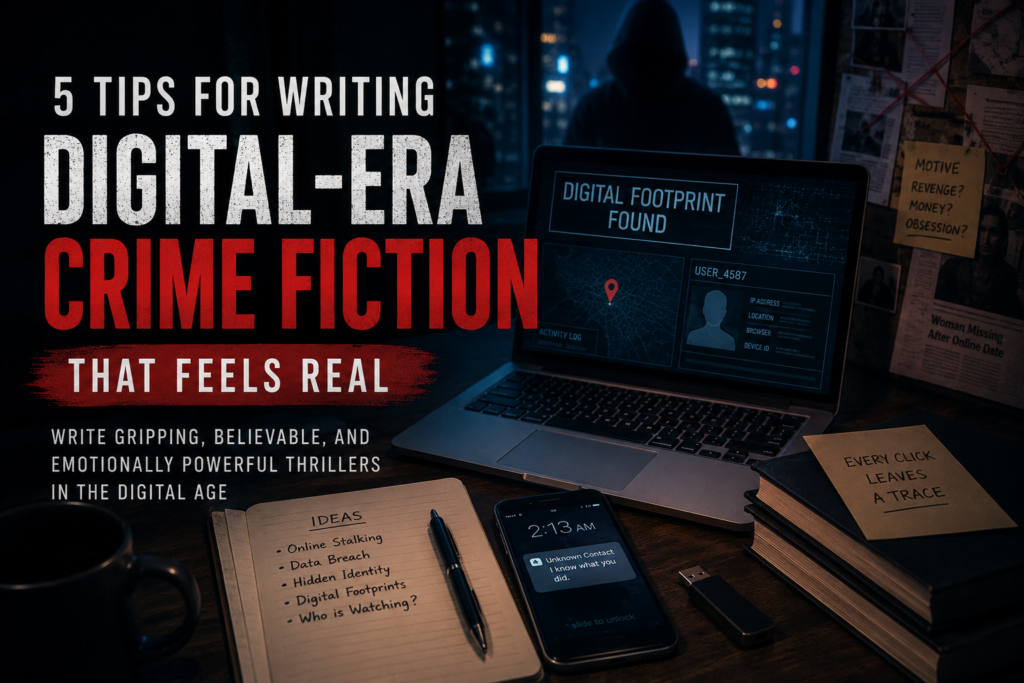
Crime fiction has always evolved with the times. Once upon a time, detectives solved crimes using handwritten letters, cigarette ash, and overheard conversations in smoky bars. Today, people leave behind different kinds of evidence, location history, deleted chats, dating app profiles, cloud backups, Reddit posts, food delivery records, and late-night Google searches they thought nobody would ever see. And that changes how crime stories work. The problem is, a lot of modern digital thrillers either become too technical or too unrealistic. Some stories read like software manuals. Others make hacking look like magic. Readers notice both. The best digital-age crime fiction feels human first, technical second. If you’re trying to write a cyber thriller, an online stalking story, or a modern detective novel, here are a few things that make the story feel believable and emotionally gripping. TL;DR Writing digital-era crime fiction isn’t about showing off technical knowledge. It’s about using technology to deepen suspense, reveal human behavior, and create believable emotional tension. The strongest cyber thrillers focus less on gadgets and more on fear, obsession, secrecy, and vulnerability in online spaces. Use Technology Like a Tool, Not a Superpower One mistake many writers make is treating technology as an instant solution. The detective taps a keyboard furiously for ten seconds and suddenly gains access to everything, passwords, CCTV feeds, deleted messages, bank records. It works in movies because the scene moves quickly. On paper, though, it often feels lazy. Real digital investigations are messy. Sometimes the phone is locked.Sometimes the footage is blurry.Sometimes the suspect used a burner account that leads nowhere. And honestly, those limitations make stories more interesting. Imagine this: A missing woman’s Instagram account suddenly becomes active at 2:13 a.m. after three months of silence. Her family believes she’s alive. But the investigator notices something odd, the captions don’t sound like her anymore. The emojis are different. The grammar is cleaner. Someone else may be using the account. That’s far more chilling than a dramatic hacking scene. Technology should raise questions, not immediately answer them. Focus on Human Behavior Online Good digital crime fiction isn’t really about computers. It’s about people behind screens. Think about how differently people behave online compared to real life. Someone quiet in public may become aggressive online. Someone lonely may build fake identities. Someone obsessed may track another person’s activity for years without ever speaking to them. Digital spaces expose habits, insecurities, and emotional patterns. A character’s browsing history can reveal fear.A deleted message can reveal regret.A fake account can reveal obsession. And often, what characters hide says more than what they openly confess. For example: A husband reports his wife missing. During the investigation, police discover he has been reading old Reddit threads about “how long phone records are stored” and “how to permanently delete cloud backups.” He hasn’t technically confessed to anything.But readers instantly feel something is wrong. That’s where tension comes from. Don’t Drown Readers in Technical Language A lot of writers think complexity equals realism. It doesn’t. Readers don’t need long explanations about malware architecture or encryption protocols unless those details directly matter to the plot. Too much jargon creates distance between the story and the reader. Most people read thrillers for emotional momentum, suspense, and atmosphere. Simple details often work better. Instead of writing: “He initiated a packet interception attack through an unsecured router vulnerability.” You could write: “He sat outside the café for two hours because he knew people trusted free Wi-Fi too easily.” The second line feels visual. Human. Cinematic. That’s the difference. You don’t need to prove you’re technically smart. You need readers to stay emotionally invested. Digital Fear Works Best When It Feels Personal The scariest thing about modern technology isn’t always surveillance. It’s exposure. People store entire lives online now, conversations, secrets, relationships, financial records, private photos, voice notes, search history. Losing control over that information feels deeply personal. That’s why digital-age thrillers work best when they tap into emotional vulnerability. A woman receives photographs taken inside her apartment, but her curtains were closed.A teenager realizes someone has been editing his old social media posts.A journalist discovers her smart speaker recorded conversations she never knew existed. None of these scenes require violence.But they still feel disturbing. Readers connect with these fears because they already live with technology every day. The danger feels possible. And believable fear is always stronger than exaggerated drama. Remember That Crime Fiction Is Still About Emotion Technology changes methods. It doesn’t change motives. People still commit crimes because of jealousy, revenge, shame, greed, desperation, loneliness, or obsession. Even the most modern cybercrime story needs emotional depth underneath the technical layer. A hacker stealing financial data for money is predictable. But a hacker targeting one specific person because of an unresolved betrayal from ten years ago? That feels human. Messy. Real. Readers may remember the technology for a moment.But they remember emotional conflict for years. Think about some of the most memorable thrillers people talk about. Usually, it isn’t because the software was accurate. It’s because the characters felt believable. The emotional core always matters more. To Sum Up A good digital crime thriller doesn’t depend on flashy hacking scenes or complicated tech language. It depends on tension, believable characters, and the uncomfortable feeling that something hidden is happening behind ordinary screens. The strongest stories understand one simple thing, technology may change the way crimes happen, but people remain the same. Fear, obsession, revenge, loneliness, greed, and guilt still sit at the center of every crime story. So while writing, don’t focus only on devices, apps, or cyber tools. Focus on what your characters are trying to hide, what they’re afraid of losing, and how technology exposes parts of them they never wanted anyone to see. That’s what makes a digital-era crime thriller feel real. And that’s what keeps readers turning pages long after the story ends. Key Takeaways Technology should complicate the story, not solve everything instantly Human behavior online matters more than technical jargon Digital
How I’m Preparing to Write My First 2500-Word Thriller Short Story
When I decided to write my first 2500-word thriller short story, I realized something quickly. I’ve read thrillers. I’ve enjoyed them. I’ve admired how they create unease without shouting. But I had never paused to understand how they actually work. So before writing a single line, I did some research. And what I discovered surprised me. A 2500-word thriller short story isn’t about dramatic twists or shocking endings. It’s about control. It’s about tension that builds slowly and tightens with purpose. It’s about knowing what to say and what to leave unsaid. If you’re new to writing thriller short stories like I am, here’s what I’ve learned so far and how I’m planning to approach mine. Open With a Disturbance, Not a Warm-Up My natural instinct was to begin gently. Introduce the character. Describe their daily routine. Build context. That felt safe. But thrillers don’t thrive on comfort. They thrive on disruption. In a 2500-word thriller short story, you don’t have space to slowly ease the reader in. You need tension in the first few paragraphs. Something must feel wrong before the reader even understands why. The goal is not drama. It’s unease. I learned that the opening should raise a question. That question becomes the engine of the story. If readers are asking, “Why is this happening?” they’ll keep reading. You can create this disturbance by breaking a routine, introducing knowledge that shouldn’t exist, or letting a small detail feel off. Example Weak opening: Rhea lived alone and worked long hours. She liked quiet evenings and herbal tea. Stronger opening: The front door was unlocked.Rhea was certain she had locked it. The second version creates tension immediately without over-explaining. Keep the Cast Small and Focused When I first imagined my story, I added multiple characters. A friend. A sibling. A neighbor. A colleague. It felt realistic. But in a 2500-word thriller short story, too many characters weaken tension. The reader needs one emotional anchor. When focus spreads too wide, the suspense softens. Short thrillers work best when they feel contained. Almost claustrophobic. I’m limiting myself to one clear protagonist, one meaningful secondary character, and one threat. That’s enough to create depth without confusion. Example Overcrowded: Rhea called her sister, her neighbor, her colleague, and then the building manager. Focused: Rhea called Arjun. He didn’t answer. The second version keeps the emotional intensity intact. Make the Stakes Deeply Personal One of the biggest lessons I learned is that danger alone isn’t enough. The threat must matter personally to the protagonist. If the conflict feels random, readers won’t feel emotionally invested. In a 2500-word thriller short story, emotional stakes often carry more weight than physical danger. I now ask myself: What does my protagonist stand to lose? What secret are they protecting? What past mistake could return? When the threat connects to guilt, shame, fear, or loss, tension becomes personal. Example Flat stakes: Someone was following her, and she felt uneasy. Personal stakes: The message mentioned the accident. The one no one else knew about. Now the fear carries emotional weight. Follow a Clear Structure As someone new to writing thriller short stories, structure gives me direction. Without it, I know I’ll wander in the middle. A simple three-part structure works well for a 2500-word thriller short story. First, establish and disrupt. Then escalate. Finally, deliver a shift. The beginning introduces the protagonist and the disturbance. The middle increases pressure through consequences. The ending changes the reader’s understanding. Each section should raise the stakes. Example Unstructured middle: She kept thinking about the message. She tried to distract herself. Escalated middle: Another message arrived. This one included a photo. Taken from outside her window. Escalation keeps the tension alive. Build Suspense Through Small, Precise Details Before researching, I believed thrillers required dramatic scenes. But subtle details often create deeper suspense. Instead of stating emotions directly, I learned to show them through behavior. Physical reactions, pauses in dialogue, and small inconsistencies often reveal more than emotional labels. Silence can be more powerful than explanation. Example Overstated: She was terrified. Precise: She typed a reply. Deleted it. Locked the phone and placed it face down. The emotion is visible without being named. Control Information With Discipline Thrillers depend on timing. If I reveal too much too soon, the tension collapses. If I hide everything, the reader feels lost. I realized I need to decide who knows what and when. Sometimes the reader should know slightly more than the protagonist. Sometimes less. What matters is consistency and gradual revelation. Each scene in a 2500-word thriller short story should uncover something small but meaningful. Example Over-explained: The messages were from Vikram, who blamed her for the accident. Layered reveal: The third message ended with a single word. Brake. The second version invites the reader to connect the dots. Keep the Timeline Compressed Short thrillers benefit from urgency. When a story unfolds over months, tension fades. A 2500-word thriller short story works best when events occur within a short time frame. One night. One journey. A few intense hours. Time pressure forces decisions. It reduces space for comfort. Example Loose timeline: Over the next few weeks, the messages continued. Compressed timeline: By midnight, there were seven messages. The shorter timeline feels more urgent. Avoid Over-Explaining and Emotional Overload As a beginner, I often feel the need to explain everything clearly. Motives. Backstory. Emotions. But thrillers thrive on restraint. If I over-explain, the mystery disappears. If I repeat emotional labels, the impact weakens. I’m learning to trust implication. If a character steps back from a door instead of opening it, readers understand fear without being told. Example Over-explained: He was terrified because he knew the man outside wanted revenge. Restrained: The knock came again. He stepped back from the door. Restraint creates tension. End With a Shift, Not Noise The ending of a 2500-word thriller short story does not need explosions. It needs a shift in understanding. Readers should look back at earlier moments and see them