How to Make Grammar Part of Your Daily Life
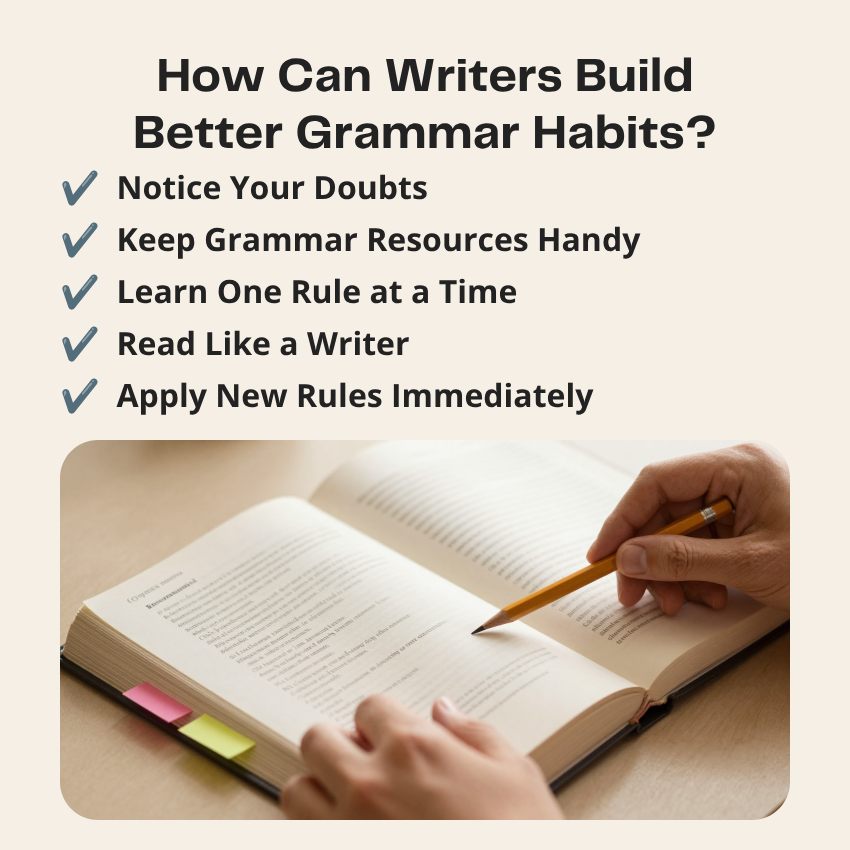
I recently started learning how to bake bread after a long hiatus. Not that I ever really learned how to bake properly in the first place, so in many ways, I’m still very much a beginner. And some days, it frustrates me. I want the measurements to be right. I want the dough to feel right in my hands. I want that smooth elasticity that experienced bakers seem to achieve without even thinking about it. Instead, I find myself adding too much flour, too little water, kneading too much, or perhaps not enough. And then there is the shoulder pain. Nobody tells you that bread making can be hard work. Kneading dough repeatedly for ten or fifteen minutes can leave your shoulders protesting long before the dough is ready. But I keep trying. Because somewhere between the sticky dough and the imperfect loaves, I know I’m learning something. Writing and grammar work much the same way. When we first start writing seriously, grammar can feel like an obstacle course. There are commas to worry about, sentence structures to remember, and rules that seem to have exceptions just when we think we finally understand them. Sometimes it feels easier to ignore grammar altogether and simply write. But grammar is not the enemy of good writing. It is one of the tools that helps good writing reach the reader. Why Grammar is Important Can people communicate without perfect grammar? Absolutely. We’ve all read messages filled with spelling mistakes and missing punctuation and still understood what the writer meant. But understanding and clarity are not always the same thing. Good grammar removes distractions. It allows readers to focus on your ideas instead of trying to interpret your sentences. It gives your writing rhythm, structure, and confidence. For freelance writers, it also builds trust. Clients may forgive the occasional typo, but consistent grammar mistakes can make even excellent ideas look careless. Nobody Truly Finishes Learning Grammar One of the biggest surprises I discovered as a writer was that experienced writers still look things up. They still debate commas. They still question whether a sentence should end with a preposition. They still open style guides and grammar references when something doesn’t feel quite right. Grammar isn’t a destination you eventually arrive at. It’s a skill you continue sharpening throughout your writing life. The same is true of vocabulary and usage. Even experienced writers occasionally pause to check whether two words mean exactly the same thing or carry slightly different shades of meaning. Take “finish” and “complete,” for example. They are often used interchangeably, yet context can make one a better choice than the other. Those small distinctions are part of what makes writing both challenging and rewarding, and they remind us that learning the craft never really stops. How Can Writers Build Better Grammar Habits? The good news is that grammar doesn’t require hours of study. Small habits often make the biggest difference. Pay Attention to the Moments of Doubt Every writer has moments when a sentence doesn’t quite feel right. Maybe the punctuation looks awkward. Perhaps you’re unsure whether a word should be hyphenated or whether you’ve used the correct tense. Sometimes you read a sentence three times and still can’t decide if it works. Don’t ignore that feeling. Those moments of uncertainty are often the best opportunities to learn. Instead of making your best guess and moving on, take a minute to look it up. Check a grammar guide, search for examples, or consult a trusted resource. More often than not, you’ll remember the answer because it was connected to a real writing problem you were trying to solve. Over time, these small moments of curiosity begin to add up. The grammar rule you looked up for a blog post today becomes something you remember for an article next month or a client project next year. Learning grammar rarely happens in one big leap. More often, it happens one question, one doubt, and one discovery at a time. Keep reference material close Every writer should have a trusted grammar reference or style guide within easy reach. Professional writers use them all the time. The good news is that you don’t have to invest in shelves full of grammar books to get started. There are plenty of reliable online resources that can help clear your doubts in minutes. If you’re unsure about commas, citation styles, sentence structure, or grammar rules, look them up. Over time, those quick searches become knowledge that stays with you. Even experienced writers regularly consult reference materials. Looking something up isn’t a sign that you’re inexperienced. It’s a sign that you care about getting it right. Learn one thing at a time Trying to master grammar on a weekend is like trying to master bread baking in a single afternoon. You wouldn’t expect to understand hydration ratios, gluten development, fermentation, shaping, and scoring all at once. Most bakers learn one technique at a time and build on it gradually. Grammar works the same way. Don’t try to memorize every rule, exception, and punctuation mark in one sitting. Start with one concept, perhaps commas, subject-verb agreement, or the difference between “its” and “it’s.” Use it in your writing until it begins to feel natural. Then move on to the next concept. Small improvements made consistently often lead to bigger results than trying to learn everything at once. A year from now, you probably won’t remember the afternoon you spent learning a grammar rule, but you’ll notice how much more confident and effortless your writing has become. Read with a writer’s eye Reading is one of the easiest ways to improve your grammar without feeling as though you’re studying. The next time you read a book, a blog post, or a magazine article, pay attention to how experienced writers structure their sentences, use punctuation, and guide readers from one idea to the next. Notice where they use short sentences for emphasis and longer ones to develop an idea. Observe how commas
Word of the Day: Scrutiny

Synopsis Some words slow things down on purpose. Scrutiny is one of them. It suggests careful attention, close observation, and a willingness to look beyond surface-level claims. In writing, research, and public discourse, scrutiny is what separates assumption from understanding. Word of the Day Scrutiny Word of the Day Meaning Scrutiny refers to close, detailed examination or inspection. It implies careful and critical attention, often applied to information, actions, decisions, or claims that require verification or evaluation. Word of the Day Pronunciation Guide SKROO-tuh-nee Word of the Day: Origin and Etymology The word scrutiny comes from the Latin scrutinium, meaning “a searching examination” or “inquiry.” It is derived from scrutari, which means “to search” or “to examine thoroughly.” The original sense of the word emphasized investigation rather than judgment. As the word entered English, scrutiny retained its association with careful examination, especially in formal, legal, and intellectual contexts. Over time, it became closely linked with accountability and evaluation. Word of the Day: Synonyms and Antonyms Synonyms Examination Inspection Analysis Review Assessment Antonyms Neglect Oversight Inattention Disregard Carelessness Word of the Day Usage in Sentences: Across Genres In Journalism The report came under intense scrutiny after new details emerged. In Political Analysis The proposal faced public scrutiny before being approved. In Academic Writing All data was subjected to rigorous scrutiny before publication. In Literature She felt his scrutiny linger longer than words could explain. In Travel Writing The glossy brochure promised luxury, but the details did not stand up to close scrutiny. In Legal Commentary The evidence was placed under judicial scrutiny. Why “Scrutiny” Is Worth Knowing Scrutiny is an important word because it frames attention as deliberate and careful. Instead of implying suspicion or hostility, it emphasizes responsibility. In writing, using scrutiny signals that claims are being examined thoughtfully, not dismissed casually. For writers and researchers, scrutiny is essential. It shapes how sources are evaluated, arguments are tested, and conclusions are reached. Without scrutiny, information remains unchecked. With it, clarity and credibility emerge. In editorial work, scrutiny often strengthens trust. Readers respond to writing that demonstrates care in how facts, language, and assumptions are handled. Word of the Day in Modern Context Today, scrutiny is everywhere. News stories, public decisions, and information shared online are often examined closely by people who want honesty and clear answers. But scrutiny isn’t limited to public debates or headlines. It shows up in performance reviews at work, academic research, and even the choices we make in our daily lives. Sometimes it helps improve quality and accountability. At other times, it can create pressure to get every detail right. For writers and creators, scrutiny serves an important purpose. It encourages careful thinking, fact-checking, and attention to detail. More importantly, it helps build and maintain the trust of readers. FAQs 1. What does scrutiny mean? Scrutiny means looking at something carefully and in detail to understand it better or check its accuracy, quality, or truthfulness. 2. Does scrutiny always have a negative meaning? No. Scrutiny simply refers to close examination. It can be neutral, positive, or critical depending on the context. 3. What is the difference between scrutiny and criticism? Scrutiny focuses on careful observation and examination, while criticism involves forming an opinion or judgment about something. 4. How do you use scrutiny in a sentence? Example: The research paper underwent careful scrutiny before it was published. 5. What does the phrase “under scrutiny” mean? “Under scrutiny” means being closely watched, examined, or evaluated by others.