
Voice Search Optimization for Content Writers
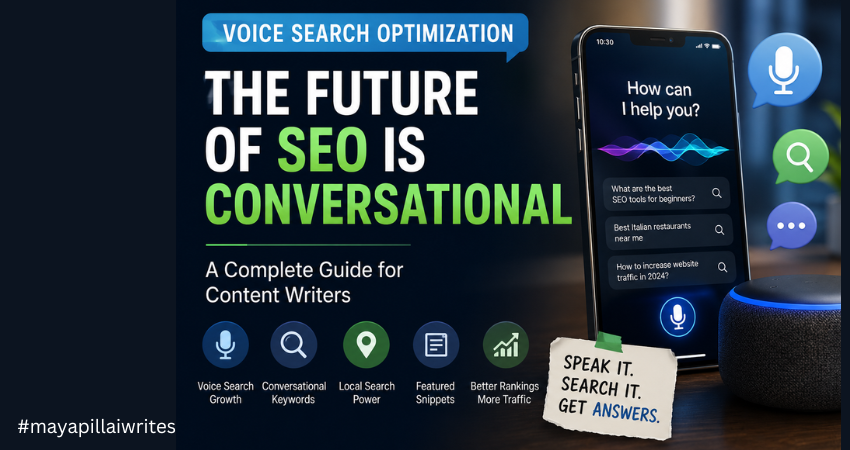
Search behavior has changed significantly over the last few years. People no longer rely only on typed searches to find information online. Instead, they increasingly use voice assistants and smart devices to ask questions naturally and conversationally. Whether someone is asking for nearby restaurants, product recommendations, weather updates, or detailed explanations, voice search has become part of everyday digital behavior. Devices powered by Amazon Alexa, Apple Siri, and Google Assistant have changed how users interact with search engines. Instead of typing fragmented keywords like “best headphones under 5000,” users now ask complete questions such as, “What are the best wireless headphones under ₹5000 for daily use?” This shift has changed modern SEO. Content writers can no longer rely only on traditional keyword placement and search engine optimization tactics. They now need to understand conversational search behavior, user intent, and natural language patterns. This is where voice search optimization becomes essential. Voice search optimization is not simply another SEO trend. It reflects a broader change in how search engines understand language, context, and user expectations. Writers who adapt early can improve content visibility, user engagement, and search rankings while building stronger topical authority in their niche. This guide explains everything content writers need to know about voice search SEO, including conversational content strategies, long-tail keywords, featured snippets, search intent, mobile optimization, local SEO, and AI-driven search behavior. TL;DR Voice search optimization is changing how content ranks in search engines. Modern voice search SEO focuses more on conversational language, user intent, long-tail keywords, and direct answers instead of traditional keyword-heavy strategies. For content writers, optimizing content for voice search now means creating natural, user-focused, and mobile-friendly content that aligns with how people actually speak and search online. What Is Voice Search Optimization? Voice Search Optimization is the process of creating and structuring content so it performs better for spoken search queries made through voice assistants, smartphones, smart speakers, and AI-powered devices. Traditional SEO mainly focused on short typed queries. Voice search SEO focuses more on conversational phrasing, natural speech patterns, and direct answers. For example, a typed query may look like this: “best SEO tools” A voice search query is more likely to sound like this: “What are the best SEO tools for small businesses?” This difference may appear small, but it changes how search engines process intent and rank content. Modern search engines now rely heavily on natural language processing and semantic search to understand the meaning behind queries rather than simply matching keywords. Because of this, optimizing content for voice search requires writers to think more about user behavior and less about keyword stuffing. Why Voice Search Is Growing Rapidly Voice search adoption continues to grow because of convenience, accessibility, and improvements in AI technology. According to a 2023 study by PwC, 71% of users prefer using voice search for simple tasks. This indicates a major behavioral shift in how people interact with search engines and digital platforms. Several factors are driving this growth. Four important ones are listed below. Smart Devices Have Become Mainstream Voice-enabled devices are now common in homes, workplaces, smartphones, cars, and wearable technology. Users rely on voice assistants for tasks such as: checking weather updates finding nearby businesses setting reminders controlling smart home devices searching for information making online purchases As smart devices continue expanding globally, voice search usage is expected to grow alongside them. Voice Search Is Faster and More Convenient Most people can speak significantly faster than they type on a mobile keyboard. Voice search allows users to multitask while driving, cooking, walking, or working. This convenience makes spoken queries more practical for everyday use. For mobile users especially, voice search reduces friction and improves accessibility. AI and Natural Language Processing Have Improved Search engines now understand conversational queries more accurately than before. Advancements in natural language processing help search systems interpret: user intent context conversational phrasing follow-up questions semantic relationships between words This allows search engines to provide more relevant answers instead of relying only on exact keyword matches. Mobile Usage Continues to Dominate Most voice searches happen on smartphones. Since mobile browsing already dominates internet usage globally, voice search naturally continues to grow within mobile-first experiences. This connection between mobile SEO and voice search optimization makes responsive design and page speed increasingly important. How Voice Search Is Changing SEO Voice search is changing both user behavior and the way search engines understand content. Earlier SEO strategies focused mainly on exact-match keywords and short typed queries. Today, users interact with search engines more conversationally through voice assistants and smart devices. Instead of typing fragmented phrases, people now ask complete questions in natural language. Because of this shift, search engines have become more focused on understanding user intent, context, relevance, and content quality rather than simply matching keywords. Modern voice search SEO now prioritizes conversational content, direct answers, mobile-friendly experiences, and user-focused information that solves queries quickly and clearly. It has also increased the importance of long-tail keywords, featured snippets, local SEO, and natural language optimization. For content writers, this means SEO is no longer just about inserting keywords into articles. It now involves understanding how users speak, what information they expect, and how search engines interpret conversational queries to deliver accurate and relevant results. Conversational Search Has Replaced Fragmented Keywords One of the biggest changes in modern SEO is the shift from fragmented keyword searches to conversational search behavior. Earlier, users typically typed short and incomplete phrases into search engines because search algorithms relied heavily on keyword matching. Searches often looked like this: “cheap hotels Goa” “best laptop students” “SEO company Bangalore” Today, voice assistants and AI-powered search engines understand natural language much better. As a result, users now search in a more conversational and human way. Instead of typing isolated keywords, they ask complete questions such as: “What are the best affordable hotels in Goa for families?” This shift has changed how content should be written and optimized. Search engines are now focused more on understanding context, search intent,
How to Get Mentioned in AI Search

AI search is changing how content gets discovered online. Tools like Google Search, ChatGPT, Perplexity AI, and Microsoft Copilot are moving beyond classic search result lists. Instead of showing links, they generate answers by synthesizing information from multiple sources. This shift means that traditional SEO — ranking for keywords and earning page views — isn’t the only measure of visibility anymore. You can rank well on page one and still not be cited in AI answers. That’s because AI search tools extract information based on clarity, structure, authority, and contextual relevance. For independent writers and creators, that change brings opportunity and challenge. Opportunity because clear, thoughtful content can be extracted and shared with a wider audience. Challenge because visibility now depends on how confidently an AI system can reference your work. This guide walks you through how to get mentioned in AI search in a way that emphasizes thoughtful writing, real insight, and long-term credibility. What Getting Mentioned in AI Search Really Means When we talk about getting mentioned in AI search, we mean more than ranking well. It means your content is: Cited as a source in AI-generated responses Summarized in a way that includes your ideas Used to answer real user questions directly AI tools don’t just look at keywords or backlinks. They evaluate how useful a piece of content is for answering a specific question. That means context, structure, and authority matter more than ever. Rank Math’s research shows AI systems increasingly prioritize trust signals like reputation, mentions across platforms, and clear topical context rather than pure ranking metrics. This is especially important for independent voices because AI looks for real signals of credibility — not just keyword matches. 1. Write Around Real Questions Readers Ask AI search is built on natural language queries. Users ask full questions like: How can I get my content cited in AI search results? Why isn’t my blog showing up in AI assistant responses? What’s the difference between ranking and being cited by AI? Structure your blog with headings that reflect these real questions. Use H2 and H3 headings that echo what users might type or speak into a search bar. Under each heading, answer directly. AI systems scan for relevance near the top of each section, so honesty and clarity matter. This approach benefits both readers and AI extraction. It makes your content easier to navigate and more likely to be referenced. 2. Define Key Terms Early Writers often enjoy narrative introductions. That’s great for engagement, but AI systems look for clear, extractable facts early in the text. For example: AI search visibility refers to the likelihood that your content will be cited or referenced inside AI-generated answers. That sentence alone can be pulled and used to answer a broader question. Avoid burying definitions deep in the article. Place clear explanations near the beginning of relevant sections so they can be easily extracted. 3. Build Topical Depth, Not Isolated Posts One deep article on AI search may help a little. A cluster of related articles helps a lot. AI systems build patterns. They recognize subject depth when related posts are interlinked and cover multiple angles of the same topic. For example, if you write: A guide on AI search for writers A piece on structuring content for AI extraction A comparison of traditional SEO and AI search visibility A case study of how AI answered a question using your content Internal linking between these posts reinforces topical authority. AI systems interpret that cluster as a signal that your website has comprehensive coverage. That makes it easier for them to cite your work confidently. 4. Use Structured Formatting That Supports Extraction AI tools extract well-organized blocks of text first. These elements increase the likelihood of being cited: Clear H2 and H3 headings Bullet points that break down processes Tables or lists summarizing key points A brief TL;DR at the top or end FAQ sections with precise answers For example, when explaining why your content isn’t cited, you might list the reasons: Lack of clear definitions Weak topical authority Limited external mentions Unstructured format Vague language Lists like this are easy for both humans and AI to scan. 5. Add Specific Data and Verifiable Context Generic statements like “AI search is important” don’t help AI systems extract reliable answers. Specific, verifiable context does. Use real examples, data, or clear comparisons. Quote research where possible. Attribute sources responsibly. For example, instead of saying “AI affects traffic,” you might explain how answer-based search reduces click-through on certain informational queries. That level of detail increases credibility and makes the content more useful as a referenced source. 6. Strengthen Your Credibility Signals AI systems weigh credibility signals heavily. This goes beyond backlinks. It includes: Mentions of your name or brand in other blogs or articles Quotes in expert roundups Active participation in relevant forums and communities Social proof like reviews or endorsements Rank Math’s analysis notes that brand mentions have become a more meaningful trust indicator than pure link counts. For independent writers, this means you can build visibility even without massive domain authority — as long as your name and work are referenced in credible, context-rich settings. Participate in conversations, contribute to publications in your niche, and make your author identity clear and consistent across platforms. 7. Optimize for Natural but Precise Language Writing for AI search doesn’t mean dumbed-down language. It means writing with clarity and intent. Avoid vague generalizations. Be specific. Explain processes step by step. Use real examples when possible. Craft sentences that humans appreciate and AI can parse. Balanced language increases trust and improves both reader experience and AI extraction potential. 8. Include a Focused FAQ Section FAQ sections work well because they mirror genuine user intent. AI systems often pull answers from these blocks when responding to direct questions. Good FAQ practice includes: Addressing real questions users might ask Keeping answers concise and specific Avoiding repetition from earlier sections Using self-contained sentences that make sense alone A strong FAQ