
What He Meant
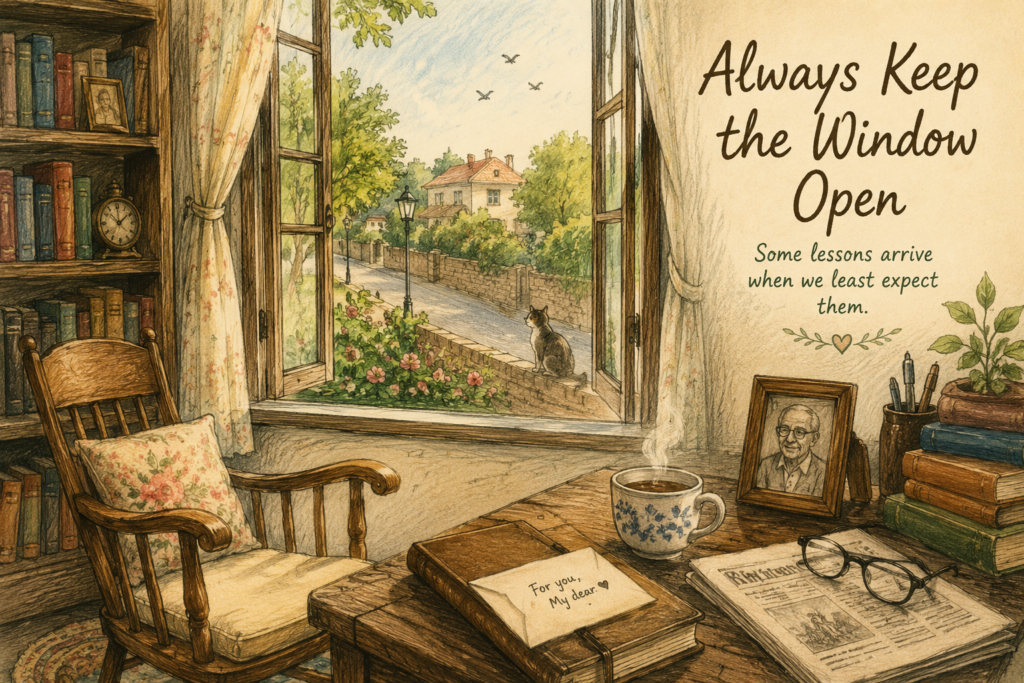
“I don’t know what he meant when he said, ‘Keep the window open.’”My grandfather said those words often.Whenever I visited him during my school holidays, I would find him in his study, sitting beside the large window. It was the brightest spot in the room and his favorite place during winter, when the afternoon sun warmed the wooden floor. But during the windy monsoon days, it was the coldest corner of the house. He never liked curtains on that window.His old wooden rocking chair sat beside it, with a soft cotton cushion that had taken the shape of his back over the years. A short carpet lay beneath his feet to keep them warm on chilly mornings.From there, he could watch people pass by on the road. Sometimes, he would have a one-sided conversation with the neighborhood cat that lazed on the compound wall. On other days, he would fill the little birdbath with water and scatter a few grains beside it. Every now and then, a few sparrows would land on the window rail, stay for a while, and fly away.It was his favorite place in the house.“Why don’t you close it when it gets windy?” I once asked.He looked at me over his glasses.“Because a closed window keeps everything out.”I thought he was talking about fresh air.I was twelve then. I didn’t think much about what he said.Years passed.I grew up, moved to another city, got a job, and became busy with my own life. My visits to my grandparents became less frequent. Phone calls replaced long afternoons at their house.Grandfather never complained.Whenever I called, he would ask about my work, my friends, and whether I was eating properly.Then one summer, I had a silly argument with Anu, my closest friend since school. We had grown up together, shared secrets, celebrated birthdays, and stayed in touch even after I moved to another city.The argument was over something so small that I can’t remember what it was now. What I remember is that neither of us wanted to be the first to say sorry. A few days later, Anu called. I saw her name on my phone but let the call go unanswered. I thought about calling her back that evening. I didn’t. A week later, I typed a message, read it twice, and deleted it. Neither of us called again. I told myself that if she really cared, she would call again. She didn’t.Around the same time, Grandfather called one evening. We hadn’t spoken in a few weeks, so I was happy to hear his voice.“When are you coming home?”“Soon,” I said.“You’ve been saying that for months.”I laughed. “I’ll come next month. I have a few days off for Diwali.”“Good. I’ll hold you to that.”We spoke about a few things after that. He asked about my work, reminded me to take care of myself, and told me about the new plants he had put in the backyard.Just before we ended the call, he said, “And keep the window open.”I laughed.“You still say that?”“Always.”I didn’t ask what he meant. I had heard him say it so many times that I had stopped wondering about it.A few months later, Grandfather passed away.After the funeral, I stood outside his study for a long time. I had walked past that door several times, but I couldn’t bring myself to go in. It felt strange to think that he would never be sitting in that rocking chair again, calling me over to show me something he had found in the newspaper.Finally, I placed my hand on the doorknob and turned it. I pushed the door open slowly.Everything inside looked just as I remembered it. His books were still arranged on the shelves, their spines worn from years of use. His reading glasses rested on the desk beside the newspaper he had been reading that morning. His wooden rocking chair stood beside the window, the cotton cushion still holding its familiar shape, with the little carpet beneath it. For a moment, the room felt as though he had only stepped away and would return any minute. But the window was closed. I walked over and opened it. The room filled with a gentle breeze that carried the fragrance of the roses in full bloom outside. I stood there for a moment, taking in the familiar scent and looking out at the road where Grandfather had spent so many hours watching people pass by. I curled up in his rocking chair for a while, running my fingers over the worn cotton cushion. I remembered the many afternoons he had spent there, reading the newspaper, watching people pass by, or simply sitting quietly with his tea.Then I noticed that the drawer of the small table opposite the chair was slightly open. I pulled it out and found a small envelope tucked beneath his diary. My name was written on it in his familiar handwriting.I held the envelope in my hands for a moment. Somehow, I knew there was something inside that I wasn’t quite ready to read.Reluctantly, I opened it.My dear Maya,You once asked me why I always kept this window open. I gave you an answer, but I never told you the whole story.When I was young, your grand-uncle and I had a terrible argument. Neither of us was willing to apologize. I waited for him to come to me, and he waited for me to go to him. We let our pride get in the way. One year became five. Five became ten. Before we knew it, twenty years had passed.When we finally met again to put away our differences, we were happy to see each other, but we couldn’t get back those twenty years.I often wondered what might have happened if one of us had simply taken the first step.That is why I keep this window open. Not just for the breeze or the birds. It reminds me to leave a little space for people. People will disappoint us. We will disappoint them too.
Before You Write That Raksha Bandhan Story, Read This

Every year, as Raksha Bandhan approaches, writing communities begin sharing story prompts. Anthology announcements appear on social media, writers start discussing ideas, and before long, the same themes begin to surface. A loving brother. A caring sister. A beautifully decorated thali. A heartfelt promise of protection. While there’s nothing wrong with these stories, many of them end up sounding alike because they begin with the festival instead of the people. Over the years, I’ve realized that festivals don’t create memorable stories. Relationships do. I don’t have a brother, so I don’t have childhood memories of tying a Rakhi or waiting excitedly for a gift. In Kerala, Raksha Bandhan is not celebrated. Yet I’ve always been drawn to stories about siblings. Perhaps that’s because affection between siblings has very little to do with rituals. It’s found in everyday moments that most people hardly notice. A sister quietly packs an extra snack because she knows her brother will forget his lunch. A brother pretending not to care, yet waiting outside his sister’s examination hall until she finishes. The teasing, the arguments, the unspoken understanding, and the comfort of knowing someone has known you since childhood. Those are the moments that stay with us. And that’s exactly where a good Raksha Bandhan story begins. When I read stories written around festivals, I rarely remember how beautifully the rituals were described. What I remember are the characters. I remember the elderly brother who travelled overnight just to spend a few hours with his sister. I remember the woman who found an old Rakhi while cleaning a cupboard after her mother’s passing. I remember the child who carefully saved pocket money for weeks to buy the simplest gift. None of these memories stayed with me because of the festival. They stayed because they felt like they could have belonged to someone I knew. As writers, I think we sometimes put too much pressure on ourselves to come up with an unusual plot. We spend hours wondering what unexpected twist we can add, when perhaps we should be asking a different question altogether. What relationship am I trying to capture? Once you answer that honestly, the story usually finds its own direction. One thing I’ve noticed while observing families is that siblings rarely express affection in obvious ways. They interrupt each other, argue over the smallest things, borrow belongings without permission, and somehow still become each other’s strongest support during difficult times. That contradiction is what makes sibling relationships interesting. If every conversation between your characters is warm and affectionate, readers may admire them, but they probably won’t believe them. The stories that touch us are usually the ones that allow their characters to be imperfect. A brother may forget an important date but remember exactly how his sister likes her tea. A sister may spend half the day complaining about her brother, yet be the first person he calls when life falls apart. These little contradictions make characters feel human because that’s how most of us are. I’ve also learned that ordinary objects often carry more emotion than dramatic scenes. Whenever I’m searching for the heart of a story, I find myself thinking about things people hold on to rather than the events themselves. An old greeting card. A faded photograph. A train ticket. A lunch box. Even a pencil box with a forgotten Rakhi tucked inside. Objects quietly collect memories over the years. They become witnesses to lives being lived, and sometimes they tell a story without a single line of dialogue. Readers notice these details because they’ve experienced something similar in their own lives. Most of us have opened an old drawer looking for one thing and unexpectedly found another that transported us back in time. That feeling is difficult to manufacture, but when it appears naturally in a story, it creates an instant connection. Another mistake I often see is giving too much importance to the festival itself. We don’t need several paragraphs explaining how the thali was decorated or how every ritual was performed unless those details move the story forward. Your readers already know what Raksha Bandhan looks like. What they don’t know is how your characters will change because of that day. Perhaps a brother returns home after years of working abroad. Perhaps two siblings meet after an argument that lasted longer than either of them expected. Perhaps an elderly woman ties a Rakhi to an old photograph because the brother she misses is no longer there. The festival becomes meaningful because of what it awakens in the characters, not because of the rituals themselves. If there’s one piece of advice I’d offer any writer working on a Raksha Bandhan story, it’s this. Spend less time thinking about the festival and more time observing people. Listen to conversations at family gatherings. Watch how siblings tease each other across a dining table. Notice the little gestures that often go unnoticed. Someone serving food before being asked. Someone carrying an extra umbrella because they know the other person never remembers one. These moments may seem ordinary, but they often become the foundation of unforgettable stories. I also believe we don’t talk enough about the many forms sibling relationships can take today. Not every Raksha Bandhan story has to revolve around a biological brother and sister. Some cousins grow up like siblings. Some sisters become each other’s greatest protectors. Some people celebrate the festival with friends who have become family over the years. And there are those who celebrate quietly through memories because the person they once tied a Rakhi to is no longer with them. These stories deserve to be told because they reflect the world we live in today. Whenever I finish writing a story, I don’t ask myself whether readers will cry. Instead, I ask whether they’ll remember it. Those are two very different things. A story doesn’t have to be heartbreaking to stay with someone. Sometimes it only needs one honest moment, one familiar memory, or one
5 Tips for Writing Digital-Era Crime Fiction That Feels Real
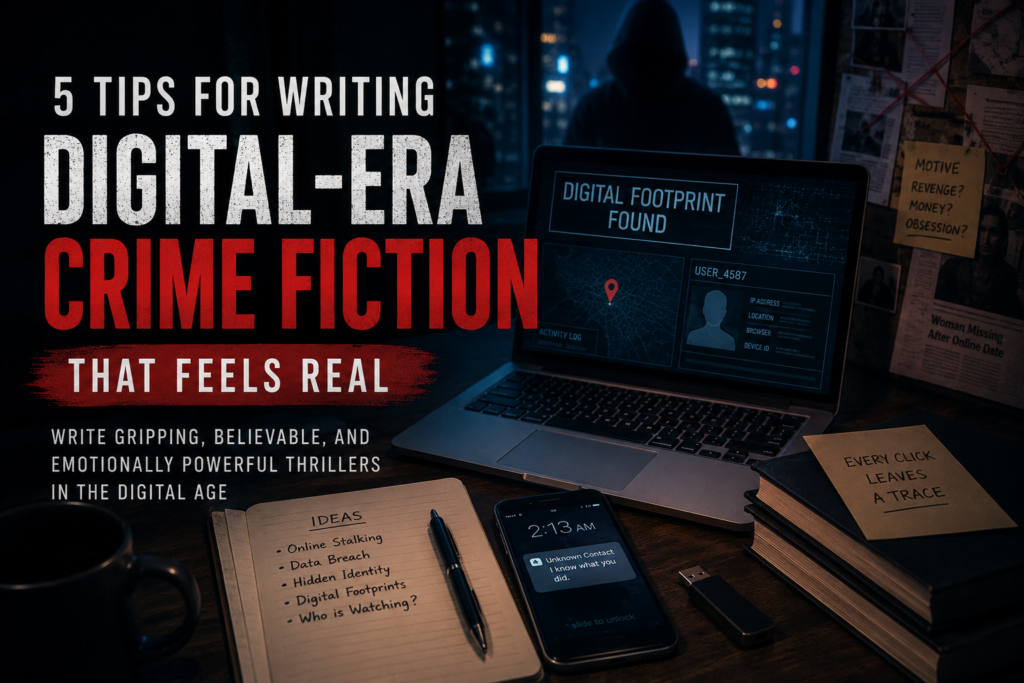
Crime fiction has always evolved with the times. Once upon a time, detectives solved crimes using handwritten letters, cigarette ash, and overheard conversations in smoky bars. Today, people leave behind different kinds of evidence, location history, deleted chats, dating app profiles, cloud backups, Reddit posts, food delivery records, and late-night Google searches they thought nobody would ever see. And that changes how crime stories work. The problem is, a lot of modern digital thrillers either become too technical or too unrealistic. Some stories read like software manuals. Others make hacking look like magic. Readers notice both. The best digital-age crime fiction feels human first, technical second. If you’re trying to write a cyber thriller, an online stalking story, or a modern detective novel, here are a few things that make the story feel believable and emotionally gripping. TL;DR Writing digital-era crime fiction isn’t about showing off technical knowledge. It’s about using technology to deepen suspense, reveal human behavior, and create believable emotional tension. The strongest cyber thrillers focus less on gadgets and more on fear, obsession, secrecy, and vulnerability in online spaces. Use Technology Like a Tool, Not a Superpower One mistake many writers make is treating technology as an instant solution. The detective taps a keyboard furiously for ten seconds and suddenly gains access to everything, passwords, CCTV feeds, deleted messages, bank records. It works in movies because the scene moves quickly. On paper, though, it often feels lazy. Real digital investigations are messy. Sometimes the phone is locked.Sometimes the footage is blurry.Sometimes the suspect used a burner account that leads nowhere. And honestly, those limitations make stories more interesting. Imagine this: A missing woman’s Instagram account suddenly becomes active at 2:13 a.m. after three months of silence. Her family believes she’s alive. But the investigator notices something odd, the captions don’t sound like her anymore. The emojis are different. The grammar is cleaner. Someone else may be using the account. That’s far more chilling than a dramatic hacking scene. Technology should raise questions, not immediately answer them. Focus on Human Behavior Online Good digital crime fiction isn’t really about computers. It’s about people behind screens. Think about how differently people behave online compared to real life. Someone quiet in public may become aggressive online. Someone lonely may build fake identities. Someone obsessed may track another person’s activity for years without ever speaking to them. Digital spaces expose habits, insecurities, and emotional patterns. A character’s browsing history can reveal fear.A deleted message can reveal regret.A fake account can reveal obsession. And often, what characters hide says more than what they openly confess. For example: A husband reports his wife missing. During the investigation, police discover he has been reading old Reddit threads about “how long phone records are stored” and “how to permanently delete cloud backups.” He hasn’t technically confessed to anything.But readers instantly feel something is wrong. That’s where tension comes from. Don’t Drown Readers in Technical Language A lot of writers think complexity equals realism. It doesn’t. Readers don’t need long explanations about malware architecture or encryption protocols unless those details directly matter to the plot. Too much jargon creates distance between the story and the reader. Most people read thrillers for emotional momentum, suspense, and atmosphere. Simple details often work better. Instead of writing: “He initiated a packet interception attack through an unsecured router vulnerability.” You could write: “He sat outside the café for two hours because he knew people trusted free Wi-Fi too easily.” The second line feels visual. Human. Cinematic. That’s the difference. You don’t need to prove you’re technically smart. You need readers to stay emotionally invested. Digital Fear Works Best When It Feels Personal The scariest thing about modern technology isn’t always surveillance. It’s exposure. People store entire lives online now, conversations, secrets, relationships, financial records, private photos, voice notes, search history. Losing control over that information feels deeply personal. That’s why digital-age thrillers work best when they tap into emotional vulnerability. A woman receives photographs taken inside her apartment, but her curtains were closed.A teenager realizes someone has been editing his old social media posts.A journalist discovers her smart speaker recorded conversations she never knew existed. None of these scenes require violence.But they still feel disturbing. Readers connect with these fears because they already live with technology every day. The danger feels possible. And believable fear is always stronger than exaggerated drama. Remember That Crime Fiction Is Still About Emotion Technology changes methods. It doesn’t change motives. People still commit crimes because of jealousy, revenge, shame, greed, desperation, loneliness, or obsession. Even the most modern cybercrime story needs emotional depth underneath the technical layer. A hacker stealing financial data for money is predictable. But a hacker targeting one specific person because of an unresolved betrayal from ten years ago? That feels human. Messy. Real. Readers may remember the technology for a moment.But they remember emotional conflict for years. Think about some of the most memorable thrillers people talk about. Usually, it isn’t because the software was accurate. It’s because the characters felt believable. The emotional core always matters more. To Sum Up A good digital crime thriller doesn’t depend on flashy hacking scenes or complicated tech language. It depends on tension, believable characters, and the uncomfortable feeling that something hidden is happening behind ordinary screens. The strongest stories understand one simple thing, technology may change the way crimes happen, but people remain the same. Fear, obsession, revenge, loneliness, greed, and guilt still sit at the center of every crime story. So while writing, don’t focus only on devices, apps, or cyber tools. Focus on what your characters are trying to hide, what they’re afraid of losing, and how technology exposes parts of them they never wanted anyone to see. That’s what makes a digital-era crime thriller feel real. And that’s what keeps readers turning pages long after the story ends. Key Takeaways Technology should complicate the story, not solve everything instantly Human behavior online matters more than technical jargon Digital
Timeless Writing Advice from C.S. Lewis That Still Inspires Today

Great writing isn’t just about stringing words together—it’s about clarity, rhythm, and authenticity. Decades ago, C.S. Lewis shared simple yet profound advice that still resonates today. From silencing distractions to writing with passion and precision, his words serve as a timeless guide for anyone looking to sharpen their craft. Whether you’re drafting your next LinkedIn post or penning your first book, Lewis’s wisdom reminds us that writing well is an art—and it all starts with the fundamentals.
Tips to Write a Short Story in 1500 Words
Writing a short story in 1500 words is a challenge that tests your creativity and precision. The beauty of short fiction lies in its brevity—it captures a moment, an emotion, or a transformation in just a few pages. It’s like crafting a snapshot of life that resonates deeply, all while staying concise. But here’s the tricky part: how do you deliver an unforgettable story within such a tight limit? If you’ve ever felt stuck while trying to fit an entire world into a handful of paragraphs, you’re not alone. Many writers struggle with balancing detail and brevity, but with the right approach, you can create a masterpiece that stays with your readers long after the last word. This blogpost will walk you through actionable tips to write a compelling short story in 1500 words or less—without sacrificing creativity or impact. 1. Anchor Your Story with a Strong, Singular Concept Every great story starts with a compelling idea. The key to writing a short story is to keep your focus razor-sharp—there’s no room for sprawling plots or endless backstories. Zero in on One Theme or Event: Ask yourself, “What’s the essence of this story?” Whether it’s a moment of redemption, a life-changing decision, or an unexpected encounter, choose one central idea and build around it. Example: Instead of writing about a character’s entire journey, focus on the moment they decide to leave their small town or confront an old friend. Relatable Meets Unique: The best stories feel universal yet fresh. Tap into emotions your readers can connect with—love, loss, fear—but frame them in an unexpected way. Example: A story about unspoken love might center on a woman writing a letter she never intends to send. Your concept is the heart of the story. Once you have it, everything else will naturally fall into place. 2. Let Your Characters Speak Volumes with Fewer Words In a short story, your characters need to feel real and memorable—quickly. With limited space, every detail about them has to pull its weight. Focus on One or Two Key Characters: You don’t need an ensemble cast. A protagonist and maybe one supporting character are enough to drive your narrative. Show, Don’t Tell: Instead of saying, “John was shy,” let his actions reveal his personality. Maybe he hesitates before knocking on a door or avoids eye contact during a tense conversation.Details That Define: Use a single vivid detail to make a character come alive. A worn leather jacket, a nervous tick, or a tendency to hum under their breath can make them unforgettable. 3. Start in the Middle of the Action Readers don’t have time to wade through paragraphs of setup in a short story. Grab their attention from the very first line. In Media Res: This Latin phrase means “in the middle of things.” Drop your readers right into the story’s most interesting moment. Example: Instead of, “It was a rainy day, and Jane was feeling restless,” try, “The knife clattered to the floor as Jane slammed the door shut, her breath ragged.” Hook Them with the First Line: Your opening sentence is your chance to intrigue, shock, or delight your reader. A question, an action, or a bold statement works wonders. Example: “They always said the house was haunted, but no one told me it would laugh.” 4. Structure Your Plot for Maximum Impact Even in a short story, you need a clear beginning, middle, and end. But brevity means cutting straight to the core. Classic Story Arc: Stick to this framework: Setup: Introduce your protagonist and their world. Conflict: Present the problem or decision they must face. Climax: Deliver the emotional or narrative peak. Resolution: Wrap up the story with a sense of closure—or leave the reader wondering. Trim the Fat: Every scene should serve a purpose. If a paragraph doesn’t reveal something important about the character, setting, or plot, cut it. 5. Use Descriptive Language to Create Atmosphere Good descriptions don’t just paint a picture—they evoke emotion. In a short story, they also save space by doing double duty. Show More, Tell Less: Instead of saying, “The room was cold,” describe the frost on the windows or the character’s breath turning to mist. Lean on the Senses: What does the character see, hear, smell, or feel? Sensory details create vivid, immersive scenes. Example: “The coffee shop smelled of burnt toast and cinnamon, a strange comfort on a winter morning.” Be Concise but Evocative: Descriptive language should enrich the story, not weigh it down. A single metaphor can convey an entire mood. 6. Make Dialogue Work Harder Dialogue is a powerful tool in short stories, but it has to earn its place. Every word should reveal something important. Keep It Realistic: Your characters should sound like real people, but without the “um” and “uh” filler of actual conversations. Advance the Plot: Don’t let dialogue meander. Each line should add depth to the character, hint at backstory, or escalate tension. Example: Instead of “Hi, how are you?” try “I thought you’d never come back.” Use Subtext: Let your characters say one thing but mean another. It adds complexity and intrigue. Example: “It’s fine,” she said, her hand gripping the table edge until her knuckles turned white. 7. End with a Bang (or a Whisper) The ending is where your short story leaves its lasting mark. Aim for something memorable. Resolution Doesn’t Mean Closure: Your story can wrap up without answering every question. Sometimes, ambiguity keeps readers thinking. Example: “He watched her walk away, the letter still crumpled in his pocket.” Deliver an Emotional Punch: Whether it’s joy, sorrow, or surprise, the ending should resonate deeply. Consider a Twist or Revelation: A well-executed twist can elevate your story, but it should feel earned—not gimmicky. 8. Edit Like Your Story Depends on It (Because It Does) Once you’ve written your story, the real work begins: Cut Ruthlessly: Every sentence, word, and comma must serve a purpose. Tighten your prose until it feels lean and impactful. Read Aloud:
How to Use Storytelling to Write Engaging Instagram Captions

Imagine scrolling through your social media feed and pausing at a post that doesn’t just inform but resonates deeply, evoking emotions and sparking a connection. This is the power of storytelling captions. Unlike regular captions that merely present facts, storytelling captions weave narratives that engage your audience on a personal level, transforming passive scrollers into active participants in your brand’s journey. Crafting compelling storytelling captions doesn’t require an advanced degree or mastery of language. Storytelling is a powerful tool to authentically connect with your audience on platforms like Instagram, Threads, and others, allowing you to share your message without appearing overly promotional. By the end of this article, you’ll have the tools to create storytelling captions that resonate with your followers, driving engagement and enhancing your brand’s presence. Understanding the Difference Between Storytelling Captions vs. Regular Captions The key distinction between storytelling captions and regular ones lies in their immersiveness. Regular captions typically present facts and highlight pain points to prompt action. Storytelling offers a more empathetic and ethical approach to addressing challenges, helping readers envision solutions and inspiring them to take action. Purpose and Engagement: Regular Captions: Primarily convey information or describe the accompanying image or video. Storytelling Captions: Aim to evoke emotions, share experiences, or narrate a story, fostering a deeper connection with the audience. Content Depth: Regular Captions: Often brief and straightforward, providing essential details without much elaboration. Storytelling Captions: Offer more depth by sharing personal anecdotes, insights, or narratives that add context to the visual content. Emotional Appeal: Regular Captions: Focus on factual information, which may not elicit a strong emotional response. Storytelling Captions: Designed to tap into the reader’s emotions, making the content more memorable and impactful. Audience Connection: Regular Captions: Provide necessary information but may not engage the audience on a personal level. Storytelling Captions: Encourage readers to relate to the content, fostering a sense of community and shared experience. Call to Action (CTA): Regular Captions: May include direct CTAs, prompting immediate actions like clicking a link or making a purchase. Storytelling Captions: Incorporate subtle CTAs, inviting readers to reflect, share their own stories, or engage in a conversation. Brand Voice and Personality: Regular Captions: Maintain a consistent tone aligned with the brand but may lack personal flair. Storytelling Captions: Allow the brand’s personality to shine through, showcasing authenticity and building trust. By integrating storytelling into your captions, you can create more engaging and relatable content that resonates with your audience, encouraging interaction and fostering loyalty. Tips for Writing Impactful Storytelling Captions Creating an engaging caption isn’t about length; it’s about capturing the emotional essence of the story. Here are some actionable tips to craft concise yet compelling storytelling captions: Embrace Brevity Social media users often scroll quickly, so keep your captions short and simple. Focus on the pivotal moment or transformation that will resonate most with your audience. Highlight the Emotional Core Instead of detailing an entire client success story, concentrate on the “aha” moment or the feeling of transformation. Example: “Imagine never worrying about an algorithm update affecting your engagement again. My client, Susie, describes it in one word: ‘Peaceful.’ Just a few months ago, she felt overwhelmed…” Incorporate Sensory Details Describing physical sensations associated with emotions (e.g., “My chest tightens with anxiety”) helps readers connect more deeply, making the story immersive and relatable. Enhance Readability Use short paragraphs and vary sentence lengths to improve readability. Include pauses, such as “…” to build suspense, and consider using emojis to add visual interest. Three Storytelling Frameworks for Instagram Captions You don’t need to be a wordsmith to create engaging storytelling captions. Here are three versatile frameworks to enhance your storytelling across various formats, including captions, newsletters, and video scripts. 1. SOAR (Situation, Obstacle, Action, Result) The SOAR framework is effective for highlighting how you or a client overcame a challenge, focusing on transformation. Situation: Describe the context. Obstacle: Identify the challenge. Action: Explain the steps taken. Result: Share the positive outcome. Example: “I used to spend hours creating content that felt flat and uninspired. I wasn’t connecting with my audience. Then, I shifted to storytelling. I shared personal anecdotes, client successes, and behind-the-scenes insights. Engagement soared, and my audience resonated with my message like never before.” 2. Before-After-Bridge (BAB) The BAB framework is ideal for illustrating transformation, showing readers how your approach can make a difference. Before: Describe the challenge or situation. After: Paint a picture of life after the transformation. Bridge: Explain how your approach or service facilitated the change. Example: “I used to feel overwhelmed by the constant changes in social media algorithms. It seemed impossible to keep up. Now, I confidently create content that engages my audience, regardless of algorithm shifts. The turning point was adopting a storytelling approach that focuses on authentic connection.” 3. Star, Chain, Solution (SCS) The SCS framework is effective for creating intrigue and guiding the reader toward your solution. Star: Start with an attention-grabbing statement or anecdote. Chain: Connect this with a relevant challenge or pain point. Solution: Introduce your product or service as the solution. Example: “This morning, I received a message from a client saying, ‘Your content strategy has transformed our engagement rates!’ Many businesses struggle to connect with their audience in a meaningful way. That’s why I specialize in crafting storytelling content that resonates and drives results.” By implementing these frameworks and tips, you can create storytelling captions that not only engage your audience but also subtly highlight the value of your services. Remember, storytelling is more than a marketing tactic; it’s a way to build genuine connections and inspire action. Ready to Make Your Story Connect with your Audience? The frameworks and tips shared here are just the beginning. Storytelling in marketing extends far beyond crafting captions. Perhaps you’re struggling to articulate your value proposition in a way that resonates. Or you’re uncertain about which stories to share and whether they’ll captivate your audience. Rest assured, you’re in the right place to discover and convey the narratives that