Word of the Day: Pragmatic
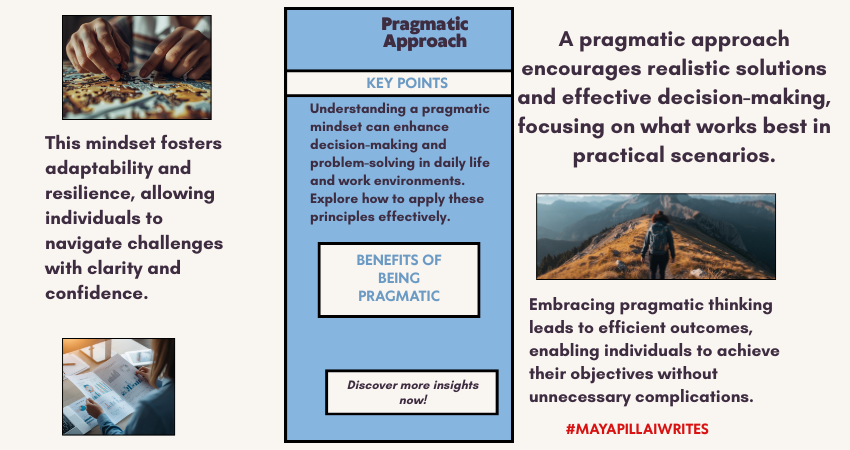
Synopsis Some words value usefulness over elegance. Pragmatic is one of them. It describes an approach that prioritizes what works over what sounds ideal. In writing, decision-making, and everyday problem-solving, this word signals a shift away from theory and toward action. Word of the Day Pragmatic Word of the Day Meaning Pragmatic refers to dealing with things sensibly and realistically, based on practical considerations rather than ideals, emotions, or abstract theories. Word of the Day Pronunciation Guide prag-MAT-ik Word of the Day: Origin and Etymology The word pragmatic comes from the Greek pragmatikos, meaning “fit for action,” which in turn comes from pragma, meaning “deed” or “act.” The original sense of the word was closely tied to action and practical involvement rather than speculation. Over time, pragmatic entered English to describe approaches that focus on results and workable solutions. Today, it is commonly used in professional, political, academic, and everyday contexts to describe decisions grounded in reality rather than ideals alone. Pragmatic: Synonyms and Antonyms Synonyms:Practical, realistic, sensible, down-to-earth, functional Antonyms:Idealistic, theoretical, impractical, unrealistic, abstract Word of the Day Usage in Sentences: Across Genres In Journalism:The report called for a pragmatic response to rising costs. In Political Analysis:A pragmatic compromise helped move the legislation forward. In Academic Writing:The study adopts a pragmatic framework focused on real-world outcomes. In Literature:She took a pragmatic view of life, shaped by experience rather than hope. In Travel Writing:A pragmatic packing list made the journey easier. In Legal Commentary:The court favored a pragmatic interpretation of the law. Why “Pragmatic” Is Worth Knowing Pragmatic is useful because it offers clarity without judgment. It doesn’t dismiss ideals, but it recognizes limitations. For writers, this word is especially valuable when discussing decision-making, strategy, or problem-solving without sounding dismissive or cynical. In editorial writing, pragmatic helps frame choices as thoughtful rather than cold. It signals consideration of constraints such as time, resources, or risk. Used carefully, it adds balance to arguments that might otherwise feel overly theoretical. Pragmatic in Modern Context In modern usage, pragmatic appears frequently in discussions around leadership, policy, work culture, and personal boundaries. It is often used to describe people who adapt expectations to circumstances rather than insisting on perfect outcomes. In professional settings, being pragmatic is increasingly seen as a strength. It reflects adaptability, maturity, and an understanding of trade-offs. In creative and freelance work, a pragmatic approach often means choosing sustainability over short-term idealism. Pragmatic thinking does not reject ambition. It simply asks what can be done now, with what is available, and moves forward from there. FAQs Is pragmatic always a positive word?Usually, yes. Pragmatic often suggests sensible and realistic thinking, though it can sound dismissive if used carelessly. Can pragmatic be used in academic or professional writing?Yes. It is commonly used in research, policy analysis, business writing, and legal commentary. What is the difference between pragmatic and practical?Practical focuses on usefulness, while pragmatic emphasizes decision-making based on real-world conditions and outcomes. If you need help with long-form writing, blog content, or editorial pieces, I write at a pace that values thought over haste.