Two Ways of Waiting
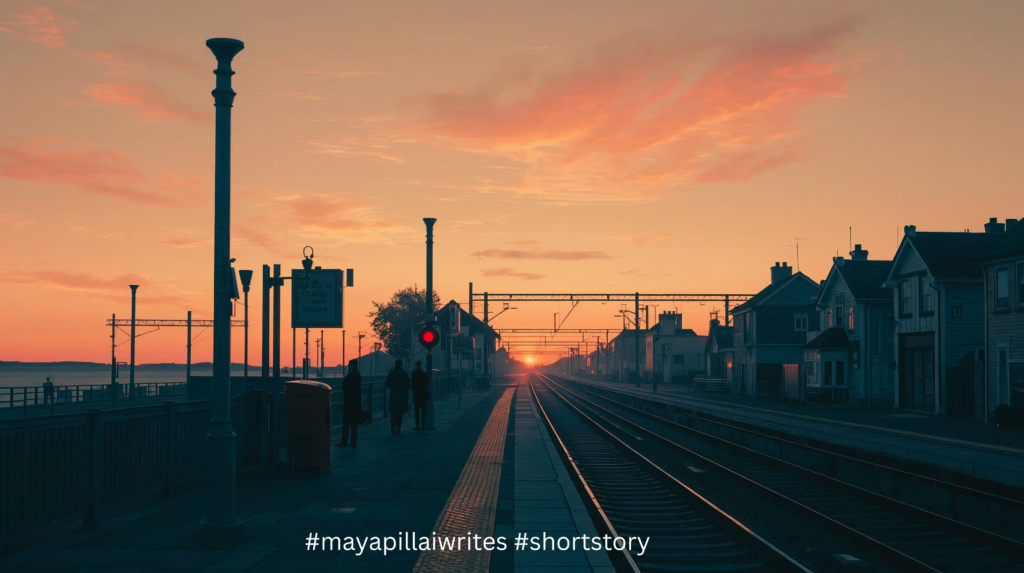
At 6:15 p.m., the railway platform in the small coastal town hovered between day and night. The sky was brushed with orange, slowly thinning into pink. The evening train was late. Not dramatically late. Just late enough for people to check the time twice.A tea vendor stood beside his dented aluminum kettle, pouring steaming chai into paper cups. The announcement system crackled now and then but offered no real update. A stray dog slept beside a chipped blue bench, one ear twitching at distant sounds. From somewhere beyond the tracks, the sea sent in a faint smell of salt.Two people waited.They stood only a few feet apart.They were not in the same place at all. Arjun Arjun stood near the edge of the platform, backpack slung over one shoulder, phone in hand. 6:18 p.m. No signal. He lifted the phone higher, then lowered it. One bar flickered and vanished. He swallowed.Tomorrow morning was his interview. Final round. A real company. A steady salary. The kind that could change the tone of conversations at home.His father had called earlier that afternoon. “Reached safely?” Casual voice. Careful pause.His mother had added, “Keep your documents safely. And eat on time. Carry a bottle of water to the interview venue. Call once you reach your place of stay tonight. So we know you’re safe.” They hadn’t said, We’re counting on this.They didn’t have to.The tea vendor called out, “Chai! Hot chai!” The cheerfulness grated on him. How could someone sound that relaxed, thought Arjun. Arjun stepped closer to the tracks and stared down the long stretch of metal rails. Empty. Endless.The announcement system crackled. His heart jumped.A burst of static filled the platform, like a voice clearing its throat.He straightened unconsciously.Then nothing.The sound dissolved into silence.He exhaled sharply. He sat one of the weathered blue wooden benches and unzipped his backpack and pulled out his folder. Resume. Extra copies. ID proof. Passport-sized photos. He checked them one by one, even though he had already checked them before leaving home. His mind ran ahead of him.What if the train is delayed another hour?What if I miss the connecting bus?What if I reach late and they assume I’m careless?What if they ask something I don’t know?The digital clock above the ticket counter felt louder than everything else.6:24 p.m.A small metallic jingle made him turn. The stray dog had shifted, its collar making a faint sound. His shoulders tightened.He noticed other people around him talking about current affairs, happenings of the day.A couple sharing biscuits. A man laughing at something on his phone.How can they be so calm?He glanced at the sky. Orange fading into purple. He didn’t see color. He saw daylight slipping away.The breeze carried the smell of the sea.He barely noticed.The platform felt narrow. Measured in minutes. Meera Meera sat on the chipped blue bench with her cloth bag resting against her ankles. Her hands folded over her handbag on her lapInside the bag were exam papers, neatly stacked and tied with a rubber band. She had finished correcting them that afternoon at her sister’s house. Twenty-eight essays on “My Future Ambition.”Doctor. Engineer. Police officer. Business owner.One child had written that he wanted to open a tea stall near the beach because “people are always happy near the sea.”She had smiled at that line and circled it lightly.Meera taught English and history at a government school two towns away. Twenty-two years in the same classroom. Same cracked blackboard. Same wooden desk. Different faces every year.She had spent the weekend with her younger sister, helping her reorganize cupboards and listening to stories about neighbors she barely remembered. Now she was heading back to her own small apartment. The balcony plants would need watering. The newspaper from Saturday would still be folded at the door.Nothing urgent waited for her.She had arrived early on purpose.She liked being early. It gave her time to sit without being needed. The delay did not bother her. It felt like a small extension of evening. The orange sky reminded her of a sari her mother used to wear during temple festivals. She could almost hear the soft rustle of it moving from room to room.The tea vendor poured chai in a steady rhythm. Liquid meeting paper. Coins clinking. It felt dependable. The announcement system crackled again and faded. She smiled faintly.The stray dog near her bench stretched. She shifted her bag to give it more space.She noticed the young man near the edge of the platform. Restless. Checking his phone again and again. Looking down the tracks as if he could summon the train.She recognized that posture.Her students stood like that before exam results were announced.She wondered what he was walking toward.The breeze carried the scent of salt and something frying outside the station. She closed her eyes for a moment and let the air settle inside her lungs.For her, the platform was not an obstacle.It was simply a pause. The LightAt 6:32 p.m., a faint glow appeared far down the tracks. Arjun saw it first.His pulse quickened. He leaned forward to confirm it wasn’t a reflection. The glow grew brighter. The low hum of metal followed.He exhaled.Relief. Meera saw the same light a few seconds later. She gathered her bag slowly. The stillness was ending.The train entered the station with a rush of wind and a sharp metallic screech. The tea vendor called out one last time. The stray dog opened one eye, then settled again.People stood. Adjusted bags. Moved toward doors.Arjun boarded quickly and checked the coach number again, just to be sure. He moved down the aisle, counting the seat numbers until he found his.Window seat.He placed his backpack carefully on the rack above, then sat down, adjusting himself as if settling into something more than just a chair. The cushion dipped slightly under his weight. The air inside the coach felt cooler, contained.He wiped his palms against his jeans and pulled out his folder once more, though he didn’t open it. His reflection flickered faintly in
A Work Trip, a Broken Washing Machine, and a Borrowed Iron

In early 2018, I was in Chennai for a client visit and a short training program. It was one of those trips that looked neat on paper. Flights booked. Stay arranged. Schedule packed. Everything sorted.At least, that’s what I thought.I was put up in a service apartment close to the office. It felt like a sensible choice. More space than a hotel. A kitchen I didn’t use. Meals were made in the common kitchen and served upstairs in the apartment, or you could have it in the dining room. A sense of routine, even when you’re away from home. The apartment had a common washing machine, which sounded reassuring. I packed light weight shirts, trousers and salwar suits, assuming I could manage laundry easily.Little did I know that the washing machine didn’t work.Not temporarily. Not “we’ll fix it tomorrow.” It just didn’t work. After a long day of training sessions and client meetings, I found myself standing in the bathroom, staring at a bucket. I soaked my clothes before leaving for the office, scrubbed them by hand at night, and tried to convince myself that this was fine. That it was just one of those things. That I could manage.Eventually, I hired one of the cleaning staff to wash my clothes. It felt awkward. Not because they were unwilling, but because it wasn’t what I had signed up for. I wasn’t looking for a favor. I just wanted a working washing machine.The clothes came back clean enough. But then came the next problem. The cotton clothes needed to be starched and ironed to remove the wrinkles.There was no iron wala nearby.No corner shop. No roadside ironing setup. Nothing within walking distance. I asked around and was told I could borrow an iron box from one of the residents. So I did. I stood in the apartment, pressing my own clothes, hoping I wouldn’t burn a shirt I needed the next morning. None of this was dramatic. Nothing went terribly wrong. And yet, the experience stayed with me.Because travel discomforts are rarely about big failures. They’re about small frictions. The kind you don’t plan for. The kind that slowly chip away at your energy. Washing clothes in a bucket after a full workday. Borrowing an iron from a stranger. Feeling mildly frustrated but telling yourself to “adjust.”At the time, I didn’t have a name for what bothered me. I just knew I was unhappy with the whole thing. Not angry. Just tired.Looking back, I realize how much we normalize inconvenience, especially when we’re away from home. We accept broken systems because they’re “temporary.” We solve problems ourselves because it feels easier than complaining. We move on.But these small moments matter. They shape how we experience a place. How rested or drained we feel. How much mental space we have for the work we’re actually there to do.That Chennai trip taught me something simple. Comfort isn’t about luxury. It’s about things working the way they’re supposed to. Clean clothes without negotiation. Pressed clothes without favors. Systems that don’t make you improvise at the end of a long day.I didn’t write about this experience back then. It felt too ordinary. Too small.But years later, it stands out. Not because it was difficult, but because it wouldn’t happen the same way today.Now, laundry services are available at your fingertips. A few taps on your phone, and someone picks up your clothes, cleans them properly, irons them, and sends them back. No buckets. No borrowed irons. No awkward workarounds at the end of a long day.It’s easy to take that convenience for granted. But when I think back to that Chennai trip, I realize how much these small services quietly change how we travel, work, and rest.We may not remember every meeting we attend.But we surely remember the nights we stood in bathrooms with a bucket, wishing things were just a little easier.
Is Content Writing Still a Good Career in 2026?
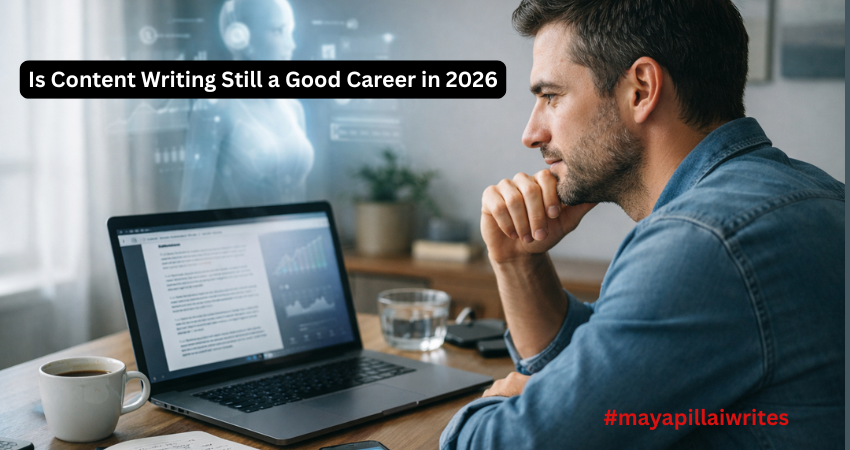
I get asked this question often: is content writing still worth it? With AI tools everywhere and competition rising, many writers feel unsure. I’ve been in this field long enough to see trends change. And I can say this clearly, a content writing career in 2026 is still a real opportunity. But it’s not the same career it was five years ago. Key Points A content writing career in 2026 is evolving, not disappearing. AI has changed workflows, not replaced skilled writers. Specialized writers earn more than general writers. SEO, strategy, and research skills matter more than ever. Freelance and remote roles are still growing. The Industry Has Changed, Not Died When people ask about a content writing career in 2026, they’re usually worried about AI. I understand that fear. AI can draft blog posts, product descriptions, even newsletters. But here’s what I’ve noticed: clients don’t just want words. They want thinking. Businesses want writers who understand audience psychology, search intent, SEO structure, and brand voice. Tools can generate text. They can’t replace insight, lived experience, or strategic thinking. The future of content writing belongs to writers who go beyond typing. It belongs to those who research, edit, refine, and align content with business goals. Demand Is Still There The demand for content writers in 2026 hasn’t disappeared. It has shifted. Companies still need: SEO blog posts Website landing pages Email sequences LinkedIn thought leadership Technical and cybersecurity content Industry reports and case studies The content writing industry trends show one clear pattern. Generic writing pays less. Specialized writing pays more. If you’re writing about health tech, cybersecurity, fintech, SaaS, or legal topics, you’re not competing with everyone. You’re competing with a smaller pool. That’s where income grows. So yes, a content writing career in 2026 still has scope. But you need direction. AI and Content Writing Careers Let’s talk honestly about AI and content writing careers. AI can speed up research. It can create drafts. It can help structure outlines. I use tools too. But I don’t rely on them blindly. The difference between average and high-paying writers now is editing skill. Clients are tired of robotic content. They want clarity. They want experience. They want human tone. If you learn to: Use AI as a support tool Add personal insight Improve structure and readability Align content with SEO You stay relevant. A content writing career in 2026 isn’t about competing with AI. It’s about working smarter with it. Income Potential in 2026 Many people worry about freelance content writing income. Is it still stable? It depends on positioning. Writers who charge per word for generic blogs struggle. Writers who package services as strategy, SEO content writing, or brand voice consulting earn more. High-paying content writing niches include: Cybersecurity B2B SaaS Finance Healthcare Technical documentation Remote content writing jobs are still available. Many companies now prefer remote teams. That opens global opportunities. A content writing career in 2026 can be financially stable if you move from “writer” to “content partner.” Is Content Writing Saturated? Yes and no. There are many beginners entering the market. That makes entry-level rates competitive. But quality writers who understand search intent, content structure, and analytics are fewer than you think. Clients want writers who can: Interpret keyword data Understand user intent Write for Google and humans Structure long-form content clearly Update and optimize old content If you learn these skills required for content writers today, saturation becomes less of a problem. A content writing career in 2026 rewards depth, not volume. Skills That Matter Now If someone asks me how to start content writing in 2026, I tell them this: learn strategy first. Here are the core skills that matter: SEO fundamentals Keyword research Search intent analysis Editing and rewriting Industry research Basic analytics Content writing vs copywriting also matters. Content writing builds authority and long-term traffic. Copywriting drives direct sales. Many writers combine both and increase income. If you want long-term career growth, build expertise in one industry and one format. For example, long-form SEO blogs for cybersecurity startups. That clarity makes you easier to hire. A content writing career in 2026 favors focused professionals. Freelance vs Full-Time Content writing jobs in 2026 exist in both freelance and full-time formats. Freelancing offers flexibility. But it requires: Outreach Networking Personal branding Consistent learning Full-time roles offer stability. But competition is higher. Many writers combine both. They keep a steady retainer client and take freelance projects. The content writing career prospects are not limited. They’re flexible. What I’ve Personally Observed From my experience, clients today are more careful with budgets. They expect performance. They ask for measurable results. That means: Your content must rank Your writing must convert Your structure must hold attention I’ve seen writers panic and quit. I’ve also seen writers adapt and double their income. A content writing career in 2026 is not easy. But it’s possible. And for those who love research, writing, and thinking, it’s still deeply rewarding. So, Is It Still a Good Career? Yes. But only if you treat it like a business. If you: Keep learning Choose a niche Understand SEO Build authority Use AI wisely Then a content writing career in 2026 can grow steadily. If you expect quick money without skill development, it will feel frustrating. The industry is maturing. And serious writers are rising. FAQs 1. Is content writing still a good career choice in 2026?Yes. A content writing career in 2026 is still viable, especially for writers who specialize and understand SEO and strategy.2. Has AI replaced content writers?No. AI assists with drafting and research. Skilled writers who edit, refine, and add insight remain in demand.3. What are the highest-paying niches in content writing?Cybersecurity, SaaS, fintech, healthcare, and technical writing currently offer strong income potential.4. Is freelance content writing income stable?It can be stable if you build long-term clients and offer strategic services instead of basic per-word writing.5. How do I start a content writing career in 2026?Learn SEO basics, choose a
Word of the Day: Credible
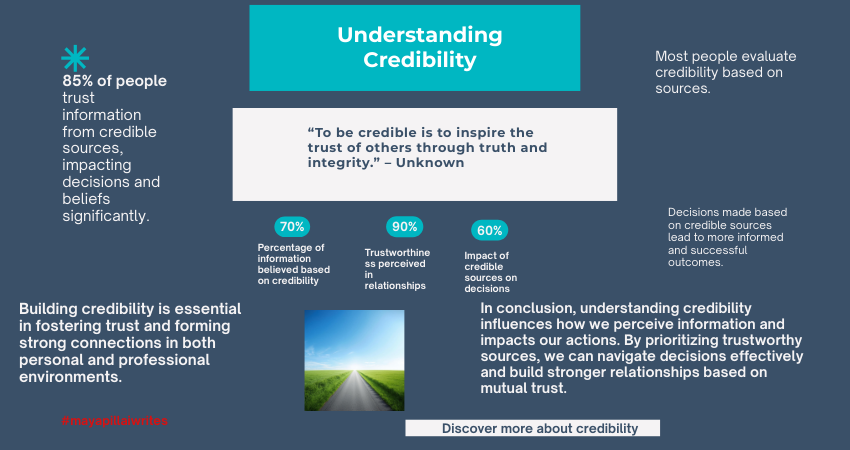
Synopsis Some words quietly carry trust. Credible is one of them. It doesn’t promise perfection or certainty, but it signals that something is believable, reliable, and worthy of attention. In writing, journalism, and everyday communication, credibility often determines whether a message is accepted or ignored. Word of the Day Credible Word of the Day Meaning Credible means able to be believed or trusted. It describes information, sources, arguments, or people that appear reliable because they are supported by evidence, consistency, or expertise. Word of the Day Pronunciation Guide KRED-uh-buhl Word of the Day: Origin and Etymology The word credible comes from the Latin credibilis, meaning “worthy of belief,” which itself comes from credere, meaning “to believe” or “to trust.” This root is shared with words such as credit and creed, all connected to belief and trust. Historically, credible was used to describe testimony or claims that deserved acceptance. Over time, its usage expanded to include people, institutions, media sources, and even ideas that demonstrate reliability through consistency and evidence. Credible: Synonyms and Antonyms Synonyms:Believable, trustworthy, reliable, convincing, dependable Antonyms:Unreliable, doubtful, implausible, questionable, untrustworthy Word of the Day Usage in Sentences: Across Genres In Journalism:The report relied on credible sources and verified data. In Political Analysis:The opposition failed to present a credible alternative policy. In Academic Writing:Only credible studies were included in the literature review. In Literature:Her fear felt credible, grounded in the reality she knew. In Travel Writing:A credible local guide made the experience safer and richer. In Legal Commentary:The court found the witness to be credible based on consistent testimony. Why “Credible” Is Worth Knowing Credible is a practical word because it helps distinguish between information that deserves attention and information that does not. Instead of dismissing something as wrong or misleading, calling it not credible points to a lack of trustworthiness without exaggeration. For writers, credibility is foundational. Style and voice matter, but credibility determines whether readers stay. Claims supported by evidence, clear sourcing, and consistent reasoning help establish a credible tone. Without it, even well-written content can fall flat. In editorial and professional writing, credible is often preferred over stronger terms because it allows space for evaluation rather than judgment. Credible in Modern Context In the modern information landscape, credible has gained renewed importance. With the volume of content available online, readers constantly assess whether information can be trusted. Credibility is now linked not only to authority, but also to transparency, accountability, and consistency. In professional spaces, being credible often means showing your work, acknowledging limitations, and avoiding overstatement. In creative and personal writing, credibility comes from emotional honesty and coherence rather than facts alone. As audiences become more discerning, credibility is no longer assumed. It is built gradually, through repetition, clarity, and care. FAQs Is credible the same as true?Not exactly. Credible means believable or trustworthy, while true means factually correct. Something can appear credible and still be proven wrong later. Can credible describe people as well as information?Yes. People are often described as credible when they are seen as reliable and consistent. What is the difference between credible and reliable?Credible focuses on believability and trust, while reliable emphasizes consistency over time. If you need help with long-form writing, blog content, or editorial pieces, I write at a pace that values thought over haste. Connect with me.
What Not to Write in Listicles
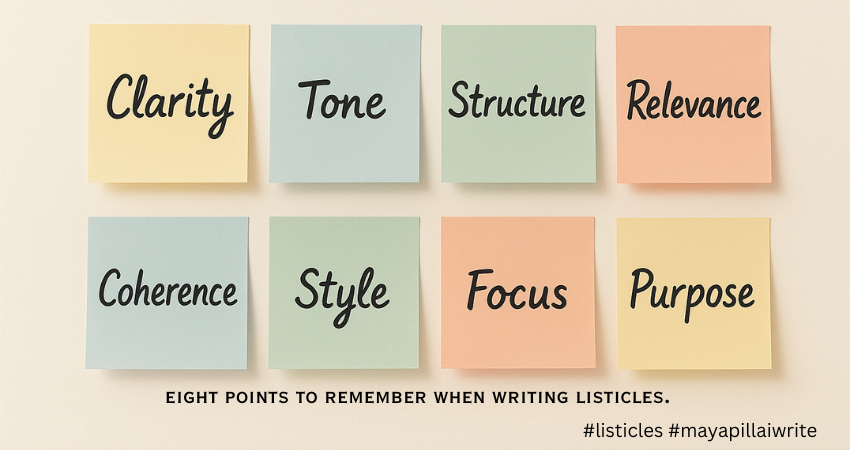
Writing listicles isn’t just about numbering ideas. It’s about structure, clarity, and value. This guide covers eight simple things to remember when writing listicles so your content stays readable, engaging, and relevant — without the fluff or repetition that turns readers away.
How to Optimize Anchor Text for SEO
If you write online, you’ve probably added links to your articles. But the words you choose for those links — known as anchor text — matter more than most you realize. Anchor text is the clickable part of a hyperlink, and it tells both readers and search engines what to expect on the other side. When done right, anchor text improves SEO, makes your writing more reader-friendly, and helps your content rank. When done poorly, it can confuse readers and even lower your site’s visibility. In this article, you’ll learn how to optimize anchor text for SEO in a way that feels natural and easy to apply to your writing. This article is written from the writer’s perspective than from that of a SEO person. TLDR Anchor text is the clickable text in a link, and optimizing it improves SEO, readability, and user experience. Use descriptive and natural phrases, vary your wording, and link contextually within your content. Internal linking optimization keeps your site connected, while backlink anchor text builds authority. Regular anchor text audits ensure balance, and scaling practices help writers maintain consistency. Importance of an Anchor Text Anchor text SEO isn’t about tricking Google. It’s about being clear and helpful. If you use vague anchors like “click here” or “read more,” readers don’t know what they’re clicking on. If you stuff keywords into every link, it looks spammy and unnatural. If you use descriptive, natural anchor text, readers get value and search engines understand your content better. For writers, anchor text SEO is a skill that makes your work look more professional and improves discoverability. Internal Linking Optimization Internal linking optimization is linking between your own blog posts, portfolio pieces, or website pages. It keeps readers exploring your work and helps search engines connect your content. Match the anchor to the page topic If you wrote a guide on building a freelance portfolio, don’t just link with “portfolio.” Instead, use how to create a freelance writing portfolio. It signals exactly what the reader will get. Be descriptive, not vague Instead of “read more,” write anchors like learn how to optimize anchor text. Descriptive anchors improve trust and clicks. Use natural variations If you always link with the same phrase, it feels robotic. For example, mix backlink anchor text, anchor text for backlinks, and how backlinks work. Variations make your writing more natural. Spread anchors across your site Don’t always use the same anchor for one post. Use different but related phrases so your content captures multiple search terms. Link from stronger posts If one of your articles ranks well, link from it to a new post using optimized anchor text. This passes authority and helps the new post grow. Keep links in-context A link inside a paragraph is more powerful than one in a sidebar or footer. Always link within sentences that flow naturally. Backlink Anchor Text Backlink anchor text is what other sites use when they link to you. As a writer, you can’t fully control this, but you can guide it. Don’t over-optimize If too many sites link to you with the exact phrase anchor text SEO, it looks unnatural. Balance it with branded and partial matches. Suggest variations when guest posting If you’re writing a guest blog, suggest multiple anchor options. For example: internal linking optimization tips, backlink anchor text explained, or anchor text SEO guide. Blend brand and keyword anchors For your own site, try combining your name or brand with keywords, like Maya Pillai’s guide to anchor text SEO. It makes the link authentic. Avoid spammy anchors Low-quality sites may link with irrelevant words. These can hurt your profile. If possible, ask for changes or ignore them. Closing Paragraph Optimizing anchor text isn’t about following rigid SEO tricks; it’s about writing with clarity and intention. As a writer, you’re already choosing words carefully for your audience. Anchor text SEO is simply another layer of that craft. When you use descriptive, natural anchors and apply internal linking optimization consistently, your writing not only flows better but also gains visibility. Over time, this small habit can turn into a powerful strategy that strengthens your content and helps you stand out online. FAQs What is anchor text SEO? Anchor text SEO is the practice of using clear, descriptive words for hyperlinks so that both readers and search engines understand the linked page. How to optimize anchor text without keyword stuffing? Focus on natural language. Use variations like partial matches, branded anchors, and related terms instead of repeating the same keyword every time. Why is internal linking optimization important for writers? Internal linking optimization connects your articles, helps readers explore your content, and passes authority to key pages, which boosts rankings. What is backlink anchor text and why does it matter? Backlink anchor text is the clickable text used by other websites when linking to your content. Natural and varied backlink anchors strengthen your SEO profile. How often should I do an anchor text audit? Running an anchor text audit every few months helps you spot overuse, irrelevant anchors, or spammy links. This keeps your profile balanced and trustworthy.
How to Write Engaging Blogs in 2025
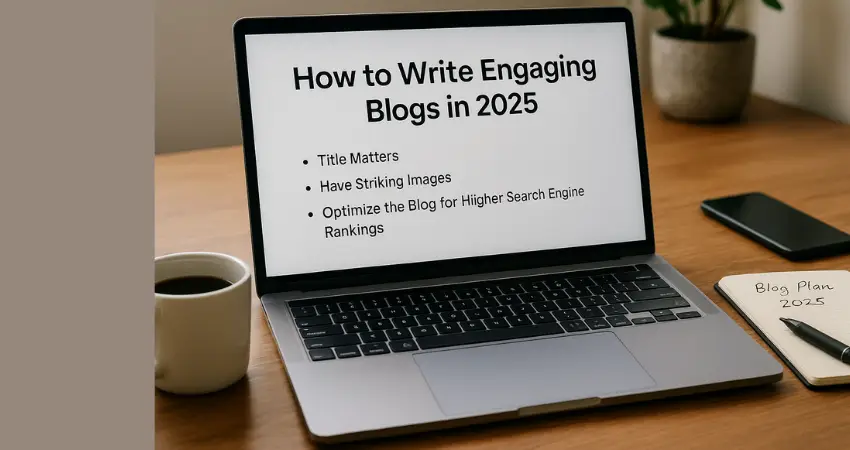
Engaging blogs are written for different purposes. Some write it to share knowledge. Others to make money or to pour out their thoughts. But all blogs are not equal. Some are popular while many are ignored. We look at how to write engaging blogs this year. Title Matters The first thing is to have an interesting or catchy title. For your information, people are looking for different things. Some are looking for knowledge. Certain folk want to do research for a purchasing decision. Some want to find out the best product/service which they will eventually acquire. Put yourself in the reader’s shoes and brainstorm what they need as well as want. This will shorten the timespan to choose the right title and the appropriate content for it. Have Striking Images Including images makes a blog look good and easy to read. You can source your images from free sites. If you can afford it, go for paid sites. In general, paid sites have a wider variety of images and have better quality images than free sites. Do not make the mistake of selecting the first image you come across. Allocate time to go through and shortlist the appropriate and best image for your blog. Optimize the Blog for Higher Search Engine Rankings One important factor is fast loading of the blog. Readers will not wait to read blogs that take too much time to load. Make sure that your blog is responsive. To put it simply the blog should look good as well as easy to read across multiple devices. Today most people use their respective smartphones to do various activities including reading blogs. Avoid keyword stuffing. The blog should have a title that is high in demand. The focus keyword should be included in the title, sub-headings, a few times within the blog as well as in the meta description. Use a quality hosting platform for your website. The reason being your blog will load faster and there will be minimal downtime. Other advantages of using a quality hosting platform are stellar customer support and ease of publishing the blog. Also, you can edit the blog conveniently with little or no technical knowledge. Ease of Readability Do not use bombastic language and obscure words. Use simple words known to most readers. Offer translation to cater to readers familiar with languages other than the one the blog is written in. Have relevant sub-headings for paragraphs that readers can scan and decide whether to read that particular paragraph or not. Use short as well as simple sentences. It is a good practice to use active voice instead of passive voice in the blog. Each paragraph should be short and not too big. Organizing the content will surely help readability and scale up popularity. Edit Well Use tools such as Grammarly to spot and rectify spelling mistakes, grammatical errors as well as incorrect punctuation. It is a good practice to proofread the blog at least twice to make sure the blog quality is satisfactory. Have a fresh pair of eyes to examine the content. This is because another person will have a different perspective and catch errors you have missed or overlooked. Have both Internal Links and External Links Include a few internal links in the blog. The links could offer additional information or in-depth explanations. Do not have too many links as this will make the blog look cluttered and confuse the reader. Include a few external links to authoritative sites. This will boost credibility as well as ramp up search engine rankings for the blog. A Final Note Make sure your blog delivers real value, is easy to read, and visually appealing. Once it’s live, promote it across platforms, respond to comments, and give credit where it’s due. Consistency, quality, and engagement are what turn a casual reader into a loyal follower. Need help? We are there—whether it’s refining your content, optimizing for SEO, or brainstorming ideas. Start writing with purpose, publish with confidence, and watch your blog grow in 2025.
Understanding Tone of Voice in UX Writing: The 4 Dimensions Every Writer Needs to Master
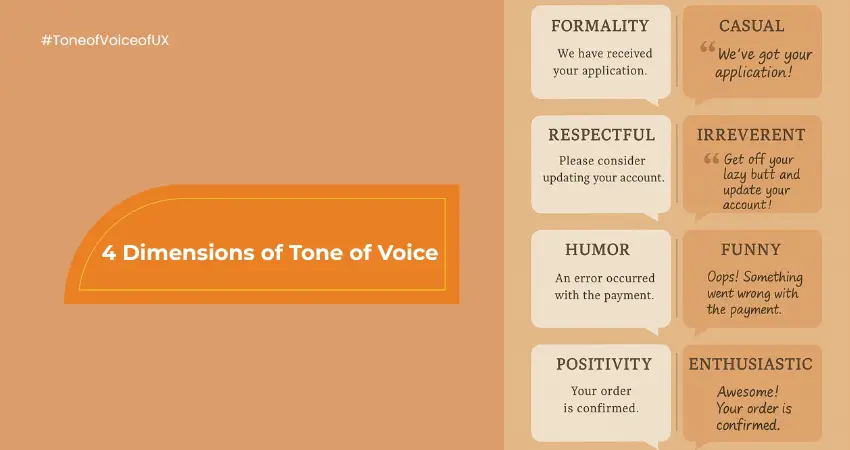
Tone of voice in UX writing is more than just personality—it’s a powerful UX design principle that influences user trust, clarity, and connection. And in an online environment where users are constantly scanning and judging with limited attention spans, tone becomes the invisible bridge between design and human experience. Whether you’re writing a 404 error message, onboarding flow, or chatbot script, your tone of voice determines how the message lands—emotionally and cognitively. This article breaks down the four essential tone of voice dimensions—developed through usability research—and shows how content writers and UX professionals can use them to craft accessible, consistent, and compelling microcopy. Why Tone of Voice in UX Writing Isn’t Optional Anymore Tone of voice is often dismissed as something you sprinkle at the end of the content process. That’s a mistake. Here’s why it deserves a front-row seat in every UX writing strategy: It builds trust. A consistent and relatable tone builds credibility and emotional comfort. It reduces cognitive load. Familiar and human-centred language is easier to process, especially in high-stress moments like error handling or payments. It reflects brand integrity. Your product’s tone should echo your values. If you’re a brand that promotes simplicity and empowerment, your copy should too. It shapes user behavior. Tone can nudge users toward taking action or provide the reassurance they need to continue a task. Tone isn’t an overlay—it’s part of the UX architecture. The 4 Dimensions of Tone of Voice (and How to Use Them) The tone of your writing can be broken down into four sliders or spectrums. These allow teams to visualise, define, and apply voice in a more systemised way. 1. Formal vs Casual Formality sets the tone for how professional or conversational your writing feels. A formal tone is structured, respectful, and restrained. It minimises contractions and slang and is best suited for sensitive, legal, financial, or high-stakes content. A casual tone mirrors everyday speech. It uses contractions and informal phrases. This style humanises the interface and makes it approachable. Deeper Insight: A formal tone may signal authority but can also create distance. A casual tone feels warm but may lose precision. Balance based on the user journey stage. Tip for writers: If you’re writing across multiple touchpoints (e.g., FAQs, landing pages, chat support), define a tone range rather than a single point. Formal: “Your credentials have been verified.” Casual: “All set! You’re good to go.” 2. Funny vs Serious Humour in UX writing is powerful—but it’s not always welcome. A humorous tone introduces playfulness and charm. It’s ideal for light-hearted products, creative industries, or gamified user experiences. A serious tone is neutral, direct, and no-nonsense. It’s crucial during tasks that involve user stress, confusion, or critical data. Deeper Insight: Humour is cultural, contextual, and highly subjective. What works in a Gen Z fintech app may fall flat in an enterprise SaaS dashboard. Tip for writers: Always user-test humour. One misplaced joke can erode brand trust more than a typo. Funny: “Oops! We messed up. We’re fixing it faster than you can say ‘debug’.” Serious: “An unexpected error occurred. Please try again.” 3. Respectful vs Irreverent This dimension speaks to how seriously the brand takes the user’s emotions, expectations, and boundaries. A respectful tone communicates empathy, support, and user-centric thinking. It avoids assumptions, sarcasm, and flippant responses. An irreverent tone is bold, edgy, and sometimes provocative. It deliberately challenges norms to stand out and appeal to a specific, loyal user base. Deeper Insight: This spectrum often aligns with your brand’s broader values. Are you inclusive and careful, or do you want to push boundaries and be noticed? Tip for writers: Irreverence is not the absence of respect—it’s a calculated tone strategy. If you’re targeting niche audiences, irreverence can be magnetic. Respectful: “Would you like to turn on reminders?” Irreverent: “Want us to nag you with helpful reminders? You know you love it.” 4. Enthusiastic vs Matter-of-Fact This spectrum deals with energy—how much enthusiasm or emotional weight your writing carries. Enthusiastic writing radiates positivity and excitement. Use it for moments of achievement, onboarding, or promotions. A matter-of-fact tone is neutral and direct. It’s suitable for documentation, transactions, and backend processes. Deeper Insight: High enthusiasm during error messages can feel tone-deaf. Similarly, a flat tone during user success moments may undercut momentum. Tip for writers: Treat tone like a thermostat. Dial it up during emotionally positive touchpoints; lower it during serious or instructional content. Enthusiastic: “Hooray! You’ve unlocked your next milestone!” Neutral: “Your progress has been updated.” How to Build a Scalable Tone of Voice Strategy Too often, tone is inconsistent because teams write in silos. Here’s how to build a shared framework: Create a Tone of Voice Grid Plot your product’s default tone across the four dimensions. Use examples of what to say and what not to say to build clarity. Map Tone to Journey Stages Define how tone shifts across onboarding, support, transactions, empty states, and celebrations. For example: Onboarding = Casual + Enthusiastic Error message = Formal + Serious CTA = Casual + Confident Use Voice Principles to Train Teams Go beyond do’s and don’ts. Create a tone principle like “We speak like a friendly expert—approachable but precise.” Let this drive how content is shaped. Test, Analyse, Iterate Use tone testing frameworks like pairwise tone comparison, heatmaps, and task completion rates. UX writing is UX. Track how tone affects performance metrics. To Sum Up Tone of voice in UX writing is not the finishing touch—it’s part of the interface. It guides, reassures, persuades, and sometimes even entertains. By understanding and applying the four tone dimensions—formality, humour, respectfulness, and enthusiasm—you build more human-centred, credible, and persuasive experiences. In an era where users are bombarded by apps, notifications, and messages, tone becomes your differentiator.
Grammar Rules vs Grammar Guidelines: Knowing the Difference Makes All the Difference

Grammar is the scaffolding of clear communication. Within it, some structures are fixed—rules—and others more fluid—guidelines. While grammar rules are non-negotiable and ensure our language functions coherently, guidelines are open to interpretation and evolve with usage, tone, and context. Breaking a rule often disrupts clarity or comprehension. But breaking a guideline can be what gives your prose its rhythm and natural tone. It’s the difference between writing by the book and writing that connects with a modern, human audience. Who Will Benefit From This Article? If you’re wondering whether this article is relevant to you, consider the following: ✅ You’re a content writer or copywriter looking to sharpen your writing for clients. ✅ You’re a student aiming to write clearer essays and assignments. ✅ You’re an editor or proofreader who wants to distinguish between real errors and stylistic choices. ✅ You’re a blogger trying to sound natural without compromising grammar. ✅ You’re a non-native English speaker trying to understand the nuance between hard rules and flexible style. ✅ You’re a marketer or brand storyteller seeking to connect with a modern audience using natural tone. ✅ You’re a fiction or creative writer aiming to build authentic voices through intentional grammar choices. ✅ You’re an academic or researcher trying to refine your writing for formal publication. ✅ You’re a language trainer or ESL tutor searching for a relatable way to explain tricky grammar concepts. ✅ You’re simply a language enthusiast who wants to explore the logic behind what makes writing flow or falter.This article will help you navigate that grey area between right and wrong in writing—so you can make informed, confident choices. What Is a Grammar Rule? Grammar rules form the core framework of how we use language. They’re the foundations that make sure communication is clear and consistent. Breaking them usually leads to confusion or sentences that sound downright wrong. Example: We don’t say, “He have two phone” or “She go to work every day.” Instead, we say: ✔️ “He has two phones.” ✔️ “She goes to work every day.” Unless you’re crafting dialogue for a character still learning the language, these rules are non-negotiable. What Is a Grammar Guideline? Unlike rules, grammar guidelines are more like best practices. They’re conventional, widely accepted, and often taught as “rules,” but they’re not absolute. One well-known example is: Don’t begin a sentence with “and” or “but.” This is not a rule—it’s a stylistic choice. Many modern writers intentionally begin sentences this way for effect. Another classic is: Don’t end a sentence with a preposition. Again, not a rule. It’s often more natural to say, “What are you waiting for?” rather than the overly formal “For what are you waiting?” Why the Confusion? There are several reasons why grammar guidelines are so often mistaken for hard-and-fast rules: Taught as absolutes in schools: Many teachers present guidelines as rules for simplicity, leading students to believe they’re non-negotiable. Reinforced by outdated textbooks: Older grammar books don’t always reflect evolving usage, keeping outdated conventions alive. Inherited from traditional grammar systems: Prescriptive grammar norms passed down over generations are mistaken as unbreakable. Echoed by armchair grammarians: Online forums, social media, and casual editors often reinforce myths without verification. Mimicked from formal writing: Academic and legal writing often upholds stricter standards, creating confusion for general use. Overgeneralization in digital tools: Grammar checkers and editing apps sometimes flag stylistic choices as errors. Slow pace of linguistic change acceptance: Language evolves faster than formal acceptance by educational systems and publishers. Grammar is a collective agreement—something we’ve all bought into for mutual understanding. Still, as writing becomes more conversational and digital, what once was a “must-follow” rule may now be optional. Grammar Guidelines Often Mistaken for Rules Let’s unpack a few more examples of guidelines commonly confused with rules. Remember, these aren’t wrong to break—but proceed wisely. 1. Splitting Infinitives The traditional belief is that you shouldn’t split an infinitive with an adverb. For instance, you might be told to say “to carefully read” instead of “to read carefully.” But what about: ✔️ “She promised to always listen”? That sounds just right. Feel free to split when it helps the sentence flow. 2. Ending Sentences with Prepositions Instead of the awkward “From where did this come?”, it’s far more natural to write: ✔️ “Where did this come from?” There’s no confusion, no harm, and no rule being broken. 3. Turning Nouns into Verbs This is another guideline that stirs strong opinions. But turning a noun like “schedule” into a verb (“Let’s schedule a call”) is now common. As long as it doesn’t create redundancy or confusion, verbing a noun can keep language fresh. However, avoid inventing verbs when a perfectly usable one already exists. No need to say “calendarise” when “schedule” works just fine. 4. Starting with Conjunctions Traditionalists argue that you should never begin a sentence with a conjunction like “and,” “but,” or “yet.” But here’s the thing—it works. Example: ✔️ “He said he’d arrive on time. But he didn’t show up.” The second sentence adds emphasis. The break creates impact. That’s what good writing is all about. 5. Using Whom “Whom” is slowly fading into grammatical history. We rarely hear anyone say, “Whom are you calling?” It’s more natural to say: ✔️ “Who are you calling?” Unless you’re quoting Jane Austen, feel free to let “whom” rest in peace. 6. Using “They” as a Singular Pronoun Old-school grammar insisted on defaulting to “he” when referring to an unknown subject. But that’s exclusionary and outdated. Instead of: ❌ “If a student wants help, he should ask.” Use: ✔️ “If a student wants help, they should ask.” Or better yet, go plural: ✔️ “If students want help, they should ask.” It’s inclusive and accepted—even by many major style guides today. To Sum Up Follow grammar rules when clarity is at stake. Use guidelines as tools, not constraints. If a sentence reads better with a preposition at the end or a conjunction up front—go for it. Writing is about communication. And
How I Trained Myself to Write Daily (and Actually Enjoy It)
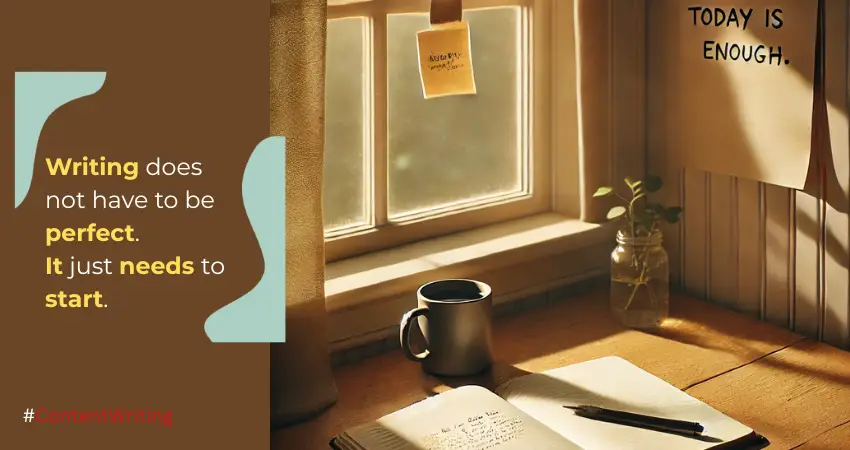
You’ll notice the title sounds quite impressive (at least, I hope it does!). But the great thing is that anyone can achieve this — and it’s not as daunting as it sounds. All these outcomes came from doing small, consistent actions every day over a long period. Cultivating a writing habit does not need perfect conditions. Actually, it begins with a tiny action of writing every day. Whatever I have achieved today is the outcome of the small but smart and regular actions that I have taken over a long period of time. I strongly believe that tiny habits have a way of evolving into life-changing patterns and writing is no different. Here are the four core principles I used to build lasting habits. Every time I wanted to improve, these four approaches worked without fail. Let’s go straight into the topic. 1. Start Small: Write for Just a Few Minutes a Day When I first focused on building my writing habits, the biggest mistake I made was to ask myself too much. I aimed too high out of excitement – I went from barely journaling once a month to setting goals like “ writing a full short story every week.” The gap between where I was and where I wanted to be was too wide. And I failed after a week. And each failure made it harder to even try the next day. As James Clear explains in Atomic Habits, habits are fundamentally about routines. He further goes on to explain that routines thrive when you focus on small wins and visible progress. And these routines build habits. The breakthrough came when I discovered the idea of starting tiny. Instead of expecting a polished blog post daily, I committed to writing just one small sentence a day. Quality over Quantity. Even one rough sentence counted as a win. This tiny commitment removed excuses. Once writing one sentence became second nature, I naturally started writing two…then a paragraph…then a page. Over time, these small, manageable actions built momentum without feeling overwhelming. Example: My Journey Daily Writing Habit: One sentence every evening before bed. Result: In the first year, I wrote three times more articles and finally completed a novella draft. Bonus: Writing became a stress-free, joyful part of my daily routine — not a chore. 2. Focus on One Habit at a Time One of the biggest challenges in habit-building is trying to change everything all at once. I wanted to improve my writing skills, exercise daily, meditate, and cook homemade meals; and all in the same month! Naturally, I failed at all of them. Here’s what I decided to do: I started focusing on one key habit; writing daily. Until that habit felt automatic — something I no longer had to push myself into — I didn’t add anything else. This made building the habit easier and the success, sustainable. When you give your full attention to just one habit, it grows stronger, faster. 3. Remove Barriers: Make Writing Easy and Accessible We tend to underestimate how small friction points can derail habits. Even something as simple as not knowing what to write about can become a roadblock. I made it easier by: Keeping a journal and pen on my bedside table Keeping a book with writing prompts bookmarked Pre-deciding when and where I would write (e.g., “After dinner, at my desk”) By eliminating decisions and setup effort, writing became almost automatic. If you reduce the number of choices and hurdles, showing up becomes the default. Tip: Create a writing space that feels welcoming. It doesn’t have to be fancy. Even a cleared-off corner with a cup of tea can signal “It’s time to write.” 4. Celebrate Small Wins Initially, finishing a paragraph felt underwhelming — “Is this even progress?” I thought. But learning to celebrate small victories made all the difference. Each finished page, each day I kept the streak alive, each story idea scribbled down; these were all wins worth noticing. Celebrating tiny milestones fuels your motivation. It builds confidence and reinforces the identity of “I’m someone who writes daily.” A small ritual, like ticking a calendar or giving yourself 5 minutes of guilt-free Instagram scrolling after writing, can anchor your brain to that success. To Sum UP The real secret to building a writing habit? Small steps, taken daily, with patience and celebration. If you show up consistently, even in the tiniest way, the results compound beautifully. By the end of the year, you won’t just be someone who “wants to write more” —you’ll be a writer.