
The little shop sat at the corner where the road bent slightly, as if even the street didn’t want to rush past it. It was small, old, and easy to miss. The paint on the wooden door had faded in to a color that couldn’t decide what it once was. The bell above the do or rang only when someone entered slowly, with purpose. People in a hurry rarely noticed it.
Inside, the shelves were packed with ordinary things. Matchboxes stacked unevenly. Spools of sewing thread in various colors. Soap bars wrapped in thin paper. Candles for powercut nights tucked into newspaper bags. Pencils sharpened just enough. Glass jars of biscuits and other savories that smelled faintly of butter and caramelized sugar. In one corner, there was a small round table with a couple of chairs near a tea boiler.
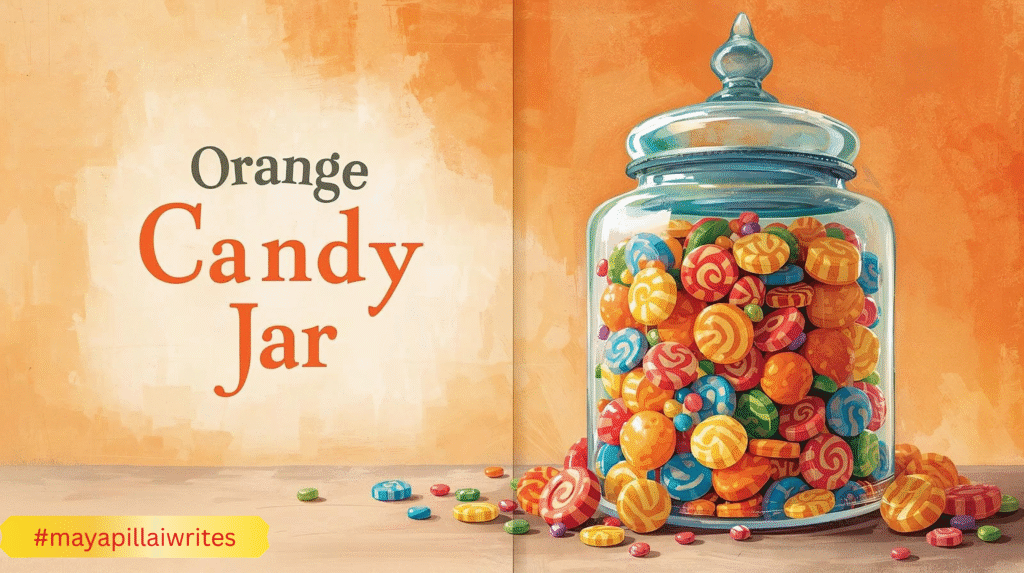
And beside the counter, placed where no one could ignore it, sat a clear glass jar filled with orange ridged candies shaped like small orange slices.

They were wrapped in thin transparent paper that crinkled softly when touched. The color wasn’t loud. It looked like late afternoon sunlight, the kind that falls across floors and lingers before leaving.
A small but clear handwritten note was taped to the jar.
For bad days. Take one. No questions asked.
The shopkeeper never explained it. He didn’t need to.
Over time, the jar became part of the shop’s quiet, slow rhythm. People noticed it on ordinary days and reached for it on hard ones. The jar watched many kinds of days. Busy mornings, tired afternoons, lonely evenings. And it watched many kinds of people.
Some were rushing. Some were weary. Some were simply lost in thought.
The candies waited patiently for all of them. Each candy carried away a small worry, a little fear, or a tired thought. And every person who took one had a story of their own.
Renu and the Missed Bus
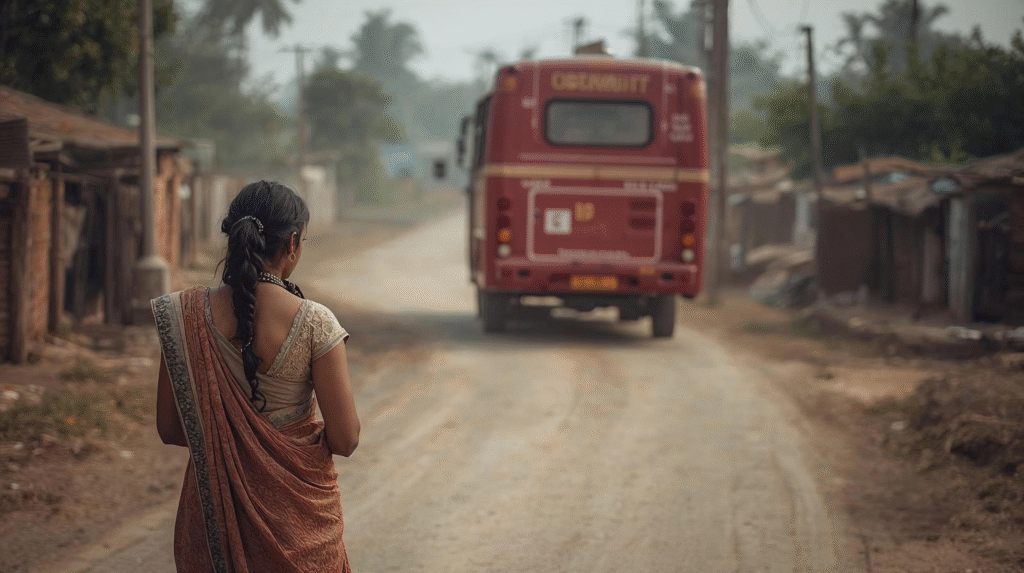
Renu walked in on a Wednesday that refused to go right and reached out to the jar.
She had missed the bus by seconds. The painful kind of seconds that let you see the door closing. She had waved without hope, knowing it wouldn’t matter. Now she stood on the footpath with her bag slipping off her shoulder and her thoughts tumbling ahead to everything she would be late for.
She entered the shop only because it was there.
Her eyes burned, not enough for tears, but enough to hurt. She picked up 100 grams of biscuits she didn’t want and walked to the counter.
That’s when she saw the jar.
She read the note once. Then again.
Her fingers hovered above the glass. Taking a candy felt childish. And yet, standing there feeling this tired also felt unfair.
The shopkeeper glanced at her and nodded once, then turned to straighten a shelf that didn’t need fixing.
She took one candy.
The wrapper stuck slightly to her fingers. The smell reached her first. Sweet. Citrus. Familiar. The taste reminded her of school lunch breaks, sticky palms, and afternoons that had nowhere to be.
Her problems didn’t disappear. She was still late. The bus was still gone.
But her shoulders loosened. Her breathing slowed.
When she stepped back outside, the road felt quieter. She felt calmer.
Meena and the Quiet House
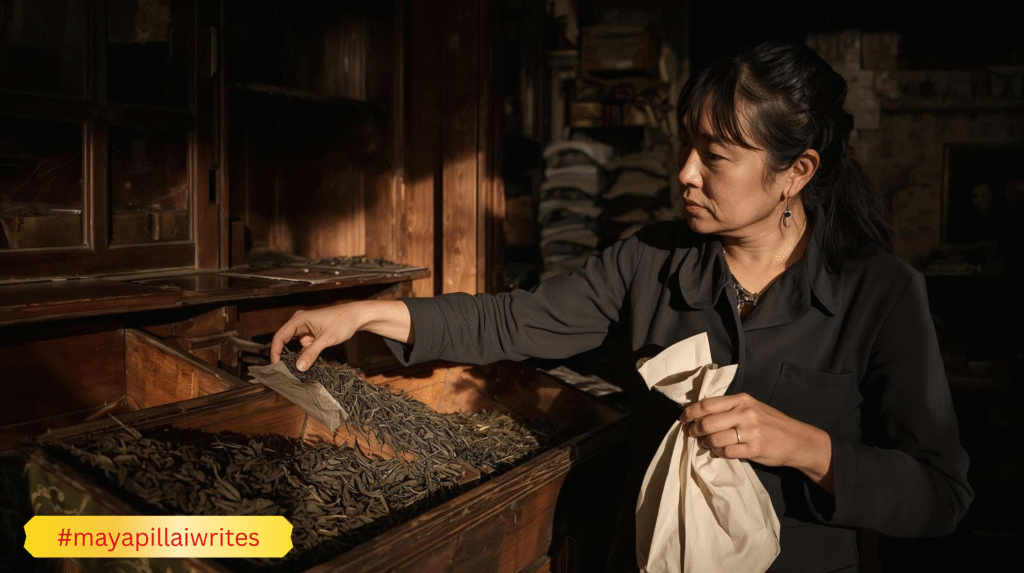
Meena came in just before sunset.
Her house had been quiet all day. The kind of quiet that presses against your ears. Her children had grown and moved away, and she was still learning how to live with space.
She bought tea leaves every week, even though she drank less tea now. Habit filled the gaps.
She noticed the jar and let out a small laugh, surprised by the sound of her own voice.
“For bad days,” she read aloud.
She took a candy.
At home, she unwrapped the candy and let it rest on her tongue. The simple taste reminded her of lively nights, of laughter drifting through rooms, of sticky fingers and wrappers left behind in the garbage bin
The loneliness didn’t leave. But it softened.
That felt like enough.
A Small Hope

One evening, a woman stopped in front of the jar and hesitated.
“Does it really help?” she asked.
The shopkeeper smiled, just a little.
“It doesn’t fix things,” he said. “But it reminds you that you’re allowed to pause.”
She took a candy.
Outside, the sky turned orange, almost the same shade.
The shop remained. The jar stayed where it belonged.
And bad days came and went, a little softer than before.