How to Make Grammar Part of Your Daily Life
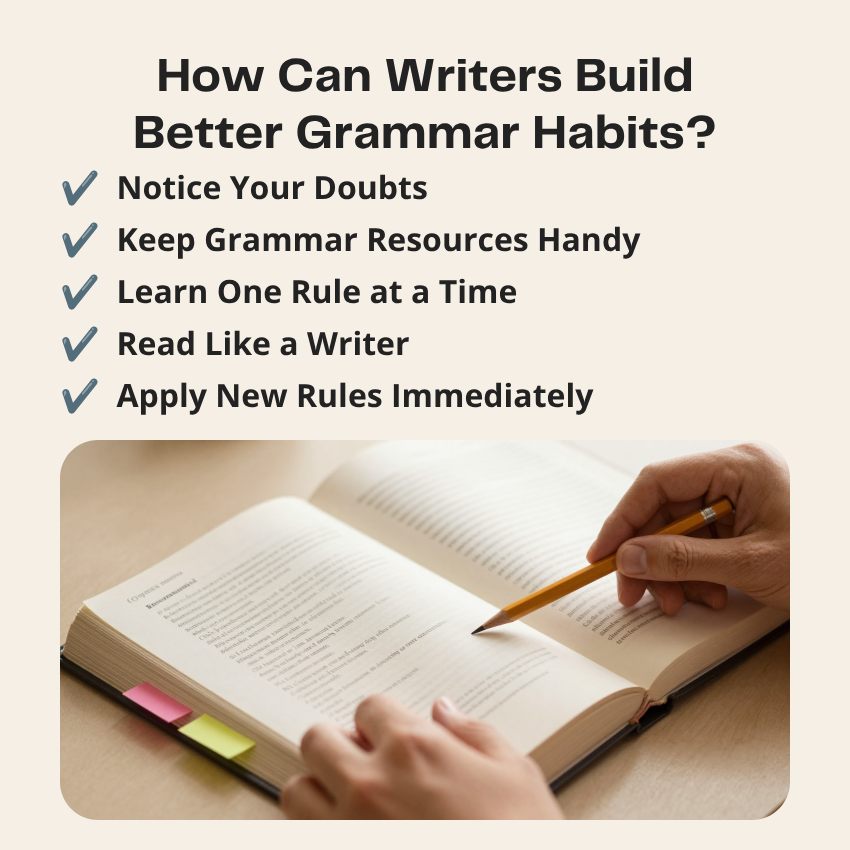
I recently started learning how to bake bread after a long hiatus. Not that I ever really learned how to bake properly in the first place, so in many ways, I’m still very much a beginner. And some days, it frustrates me. I want the measurements to be right. I want the dough to feel right in my hands. I want that smooth elasticity that experienced bakers seem to achieve without even thinking about it. Instead, I find myself adding too much flour, too little water, kneading too much, or perhaps not enough. And then there is the shoulder pain. Nobody tells you that bread making can be hard work. Kneading dough repeatedly for ten or fifteen minutes can leave your shoulders protesting long before the dough is ready. But I keep trying. Because somewhere between the sticky dough and the imperfect loaves, I know I’m learning something. Writing and grammar work much the same way. When we first start writing seriously, grammar can feel like an obstacle course. There are commas to worry about, sentence structures to remember, and rules that seem to have exceptions just when we think we finally understand them. Sometimes it feels easier to ignore grammar altogether and simply write. But grammar is not the enemy of good writing. It is one of the tools that helps good writing reach the reader. Why Grammar is Important Can people communicate without perfect grammar? Absolutely. We’ve all read messages filled with spelling mistakes and missing punctuation and still understood what the writer meant. But understanding and clarity are not always the same thing. Good grammar removes distractions. It allows readers to focus on your ideas instead of trying to interpret your sentences. It gives your writing rhythm, structure, and confidence. For freelance writers, it also builds trust. Clients may forgive the occasional typo, but consistent grammar mistakes can make even excellent ideas look careless. Nobody Truly Finishes Learning Grammar One of the biggest surprises I discovered as a writer was that experienced writers still look things up. They still debate commas. They still question whether a sentence should end with a preposition. They still open style guides and grammar references when something doesn’t feel quite right. Grammar isn’t a destination you eventually arrive at. It’s a skill you continue sharpening throughout your writing life. The same is true of vocabulary and usage. Even experienced writers occasionally pause to check whether two words mean exactly the same thing or carry slightly different shades of meaning. Take “finish” and “complete,” for example. They are often used interchangeably, yet context can make one a better choice than the other. Those small distinctions are part of what makes writing both challenging and rewarding, and they remind us that learning the craft never really stops. How Can Writers Build Better Grammar Habits? The good news is that grammar doesn’t require hours of study. Small habits often make the biggest difference. Pay Attention to the Moments of Doubt Every writer has moments when a sentence doesn’t quite feel right. Maybe the punctuation looks awkward. Perhaps you’re unsure whether a word should be hyphenated or whether you’ve used the correct tense. Sometimes you read a sentence three times and still can’t decide if it works. Don’t ignore that feeling. Those moments of uncertainty are often the best opportunities to learn. Instead of making your best guess and moving on, take a minute to look it up. Check a grammar guide, search for examples, or consult a trusted resource. More often than not, you’ll remember the answer because it was connected to a real writing problem you were trying to solve. Over time, these small moments of curiosity begin to add up. The grammar rule you looked up for a blog post today becomes something you remember for an article next month or a client project next year. Learning grammar rarely happens in one big leap. More often, it happens one question, one doubt, and one discovery at a time. Keep reference material close Every writer should have a trusted grammar reference or style guide within easy reach. Professional writers use them all the time. The good news is that you don’t have to invest in shelves full of grammar books to get started. There are plenty of reliable online resources that can help clear your doubts in minutes. If you’re unsure about commas, citation styles, sentence structure, or grammar rules, look them up. Over time, those quick searches become knowledge that stays with you. Even experienced writers regularly consult reference materials. Looking something up isn’t a sign that you’re inexperienced. It’s a sign that you care about getting it right. Learn one thing at a time Trying to master grammar on a weekend is like trying to master bread baking in a single afternoon. You wouldn’t expect to understand hydration ratios, gluten development, fermentation, shaping, and scoring all at once. Most bakers learn one technique at a time and build on it gradually. Grammar works the same way. Don’t try to memorize every rule, exception, and punctuation mark in one sitting. Start with one concept, perhaps commas, subject-verb agreement, or the difference between “its” and “it’s.” Use it in your writing until it begins to feel natural. Then move on to the next concept. Small improvements made consistently often lead to bigger results than trying to learn everything at once. A year from now, you probably won’t remember the afternoon you spent learning a grammar rule, but you’ll notice how much more confident and effortless your writing has become. Read with a writer’s eye Reading is one of the easiest ways to improve your grammar without feeling as though you’re studying. The next time you read a book, a blog post, or a magazine article, pay attention to how experienced writers structure their sentences, use punctuation, and guide readers from one idea to the next. Notice where they use short sentences for emphasis and longer ones to develop an idea. Observe how commas
10 Mistakes Freelance Writers Make
Let’s be honest—freelance writing can feel like a juggling act. Between finding clients, meeting deadlines, and producing top-notch work, it’s easy to slip up. Whether it’s undervaluing your time or rushing through edits, every writer makes mistakes. But here’s the thing: those mistakes aren’t career-ending. They’re opportunities to learn and grow. If you’ve ever felt stuck or frustrated in your freelance writing journey, you’re not alone. Let’s unpack 10 common mistakes freelance writers make and how you can avoid them. 1. Saying Yes to Every Project Freelance writers often feel pressured to say “yes” to every opportunity, especially when starting out. But taking on every project can leave you overwhelmed, overworked, and, frankly, uninspired. Not every job will align with your skills or interests, and that’s okay. The solution? Take a step back and evaluate each opportunity. Does the project excite you? Does it pay fairly? If not, it’s better to politely decline than to burn out on work that doesn’t fulfill you. 2. Undercharging for Your Work Many freelance writers struggle with pricing their services. It’s tempting to lowball your rates to land a client, but that often backfires. Charging too little not only undervalues your expertise but can also leave you stressed about making ends meet. Instead, research what other writers in your niche charge and confidently set rates that reflect your skills. Remember, your time and talent are worth it. 3. Miscommunicating with Clients Clear communication is the backbone of any successful project. Without it, misunderstandings can crop up, leaving both you and your client frustrated. It’s easy to assume you know what the client wants, but assumptions often lead to mistakes. Always ask questions, clarify details, and provide updates throughout the project. Clients appreciate writers who take the time to get things right. 4. Missing Deadlines We’ve all been there—biting off more than we can chew and scrambling to finish on time. Missing deadlines, though, can harm your reputation and damage client trust. To avoid this, get real about how long a project will take. Use tools like Google Calendar to keep track of deadlines and break the work into manageable chunks. And if life throws you a curveball? Communicate with your client right away. They’ll value your honesty. 5. Skipping the Editing Phase You’ve just finished a draft, and the temptation to hit “send” is strong. But skipping the editing phase is one of the biggest mistakes a freelance writer can make. Even small typos can leave a bad impression. Make editing non-negotiable. Take a short break before revisiting your draft with fresh eyes, and use tools like Grammarly or Hemingway to catch errors. The extra effort goes a long way. 6. Avoiding Self-Promotion If promoting yourself feels awkward, you’re not alone. Many writers hesitate to market their skills, relying instead on job boards or word-of-mouth. But avoiding self-promotion limits your growth. A strong online presence—like a polished LinkedIn profile or a personal website—can showcase your expertise and attract the right clients. You don’t need to brag; just share your work and let it speak for itself. 7. Forgetting to Use Contracts Skipping contracts might save time upfront, but it can lead to headaches later. Without clear terms, you risk payment issues, scope creep, or even losing control of your work. Protect yourself and your clients by always using a simple contract. It doesn’t need to be fancy—just outline what you’re delivering, when, and for how much. 8. Trying to Be a Jack-of-All-Trades Many freelance writers try to cover every topic under the sun, thinking it will make them more marketable. But being a generalist often makes it harder to stand out. Clients look for specialists who understand their industry. Find a niche you’re passionate about—whether it’s tech, travel, or parenting content—and focus on building your expertise there. You’ll not only attract better-paying clients but also enjoy the work more. 9. Taking Feedback Personally Let’s face it—receiving feedback can sting. Writing is personal, and criticism can feel like a direct attack on your skills. But taking feedback personally only holds you back. Instead, view it as an opportunity to improve. Ask yourself, “What can I learn from this?” Applying constructive feedback helps you grow and build stronger client relationships. 10. Neglecting Professional Growth Freelance writing isn’t a “set it and forget it” career. Trends evolve, and clients expect writers to keep up. If you’re not actively improving your skills, you risk falling behind. Dedicate time to learning, whether it’s through online courses, books, or webinars. Staying curious and adaptable ensures you stay competitive in the industry. To Wrap Up Mistakes are a natural part of any journey, and freelance writing is no exception. What matters most is how you respond to them. By recognizing these common pitfalls and taking proactive steps to avoid them, you’ll set yourself up for long-term success. Remember, it’s okay to make mistakes—they’re opportunities to learn, grow, and become an even better writer. So, which mistake will you tackle first? Looking for a writer who can bring your brand’s voice to life? I’d love to help. Let’s talk about your project and create content that works as hard as you do!