
Why Long-Tail Keywords Matter in Voice Search SEO
I first noticed this change when I watched my daughter use voice search. She didn’t type a few keywords into Google. Instead, she picked up my phone and asked a complete question, just as she would ask another person. That’s when I realized that that people no longer search the way they used to. With voice assistants like Alexa, Siri, and Google Assistant becoming part of everyday life, the way people search has changed. Instead of typing a few words into a search engine, people ask complete questions and expect quick, accurate answers. This shift has made long-tail keywords in voice search SEO more important than ever. Think about the last time you used voice search. You probably didn’t say, “content writing” or “voice search SEO.” Instead, you asked something like, “How do I optimize my blog for voice search?” or “What are the best content writing tips for beginners?” People don’t speak in keywords. They speak naturally. Search engines have adapted to that behavior, and your content needs to do the same. Long-tail keywords help search engines understand user intent and connect your content with the questions people actually ask. If you want your content to appear in voice search results, AI-powered search, and featured snippets, long-tail keywords should become a key part of your SEO strategy. Therefore, you should be familiar with writing in conversational style so you rank in voice search What Are Long-Tail Keywords? Long-tail keywords are search phrases that contain three or more words. They are more specific than broad keywords and usually reflect a clear question, need, or intention. Although they may receive fewer searches than popular one or two-word keywords, they often attract people who are looking for a particular answer. Take the keyword voice search as an example. It tells you very little about what the user wants. They could be looking for a definition, examples, tools, or optimization techniques. Now compare it with a search such as How do I optimize my website for voice search? The second query leaves little room for guesswork. It tells search engines exactly what information the user expects to find. Short-Tail Keyword Long-Tail Keyword Voice search How do I optimize my website for voice search? Content writing How can I become a freelance content writer? SEO tools What are the best SEO tools for beginners? Antivirus Which antivirus software is best for small businesses? Long-tail keywords give search engines more context. They also help writers create focused content that answers a specific question instead of covering a broad topic without direction. Why Content Writers Should Focus on Long-Tail Keywords Many writers begin keyword research by looking for the highest search volume. While search volume is important, it should never be the only factor when choosing a topic. A better approach is to identify the questions your audience asks most often and build content around those questions. Each question can become a separate article that supports a broader pillar page. Over time, these articles create topical authority and strengthen your website’s overall SEO. For example, a pillar article about voice search optimization could link to supporting articles on conversational content, FAQ optimization, schema markup, voice search mistakes, and long-tail keywords. Each article answers one topic thoroughly while strengthening the others through internal links. This strategy benefits both readers and search engines. Readers find related information more easily, and search engines gain a better understanding of your website’s expertise. Why Voice Search Relies on Long-Tail Keywords Voice search has changed the way people interact with search engines. When people type, they often shorten their searches to save time. A typed search might look like voice search SEO or best laptop. The same person is more likely to ask, How do I improve my website for voice search? or Which laptop is best for graphic designers? when using a voice assistant. This difference matters because voice assistants are designed to understand natural conversations. They don’t simply match individual keywords. They analyze the complete question, understand the context, and identify the user’s intent before providing an answer. As a content writer, your goal should be to match the way people speak rather than the way they type. That doesn’t mean filling your article with random questions. It means anticipating the questions your audience is likely to ask and answering them clearly. When your content reflects natural speech, search engines can understand its relevance more easily, and voice assistants have a better chance of selecting it as a response. Long-Tail Keywords Reveal User Intent Understanding user intent is one of the most important parts of modern SEO. Search engines no longer rank pages simply because they contain a keyword. They want to know whether the page satisfies the reason behind the search. Imagine someone searches for content writing. That search could mean almost anything. The person might be looking for writing services, freelance jobs, online courses, salary information, or examples of good content. Now consider a search such as How do I start content writing with no experience? The intention is obvious. The user wants practical advice for beginners. The same principle applies across every industry. A search for cybersecurity is broad and open to interpretation. A search like How can a small business protect itself from phishing attacks? tells you exactly what the reader wants. Long-tail keywords reduce ambiguity. They help writers create content with a clear purpose, and they help search engines deliver results that closely match the user’s expectations. Long-Tail Keywords Are Easier to Rank For Every website wants to rank for broad keywords such as SEO, marketing, or content writing. Unfortunately, those keywords are also the most competitive. Large websites with years of authority, thousands of backlinks, and extensive content libraries often dominate those search results. Long-tail keywords offer a more realistic opportunity, especially for newer websites and independent bloggers. Instead of competing for voice search, you could target phrases such as How to write conversational content for voice search or Voice search SEO tips
How to Write Conversational Content for Voice Search
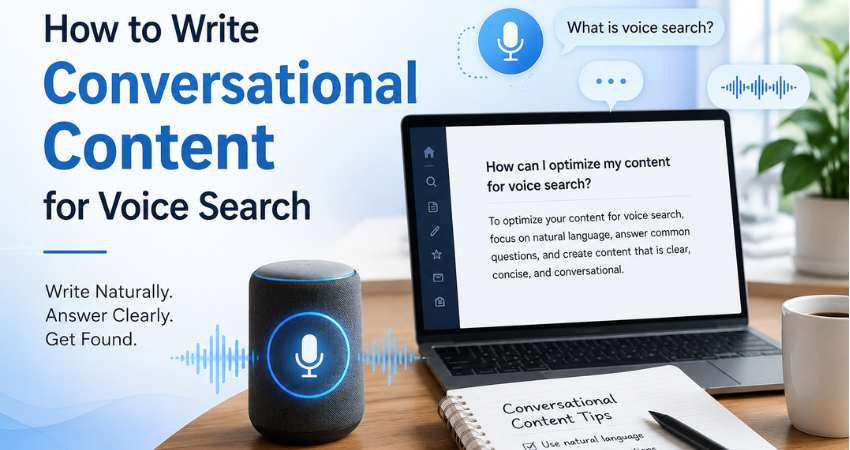
The growth of voice-enabled devices has changed the way people search for information online. Consumers no longer rely exclusively on short, keyword-driven searches typed into a search engine. Instead, they speak to their devices in the same way they would speak to another person. This shift has created a greater demand for conversational content, content that reflects natural speech patterns while maintaining accuracy, authority, and clarity. For professional content writers, copywriters, and small business owners, understanding this change is no longer optional. Voice search is influencing how search engines interpret intent, evaluate relevance, and select content for featured snippets and spoken responses. Businesses that continue to write solely for traditional search behavior risk missing opportunities to connect with users who increasingly prefer spoken queries. The challenge for writers is not simply to insert more questions into their content. The challenge is to produce conversational content that sounds natural, addresses user intent directly, and still reflects professional expertise. Why Voice Search Requires a Different Writing Approach Traditional search behavior encouraged writers to optimize for short and often fragmented keywords. A user might type “content marketing tips” or “best accounting software” into a search engine because typing long phrases was inconvenient. Voice search has removed that limitation. Users now ask complete questions such as: “What are the best content marketing strategies for a small business?” “Which accounting software is suitable for freelancers managing multiple clients?” “How can I improve my website’s visibility in voice search results?” These searches reveal far more about user intent than traditional keywords ever could. Search engines have evolved to understand context, relationships between words, and the purpose behind a search query. As a result, content that mirrors natural speech patterns often performs better in voice search environments than content written solely around keyword placement. This is where conversational content becomes particularly valuable. It aligns with the way people ask questions and the way search engines interpret those questions. Understanding What Conversational Content Really Means Many writers mistakenly assume that conversational writing requires an informal tone or excessive use of casual language. In reality, professional conversational content is neither overly formal nor overly casual. A useful way to think about it is this: conversational writing should resemble the way an experienced professional explains a subject to a client or colleague during a meeting. The language should be: Clear and direct. Easy to understand. Free from unnecessary jargon. Structured around the reader’s questions. Supported by examples and practical context. The objective is not to simplify ideas to the point of losing accuracy. The objective is to remove barriers that prevent readers from understanding those ideas quickly. A cybersecurity consultant explaining ransomware to a small business owner does not rely on technical terminology simply to demonstrate expertise. An experienced consultant explains the issue in language that allows the client to understand both the risk and the solution. Content writers should approach voice search in the same manner. Begin With the Questions Your Audience Is Already Asking The foundation of effective conversational content lies in understanding audience language. Many writers begin with keywords and then attempt to build content around them. Voice search often requires the opposite approach. Writers should begin with questions and then identify the keywords embedded within those questions. Several sources provide valuable insight into audience language: Customer emails and inquiries. Frequently asked questions received by sales teams. Customer support conversations. Social media discussions. Industry forums and communities. Google’s “People Also Ask” section. For example, a traditional SEO keyword may be: Freelance writing rates However, a voice search user is more likely to ask: “How much should a freelance writer charge for a 1500-word article?” The second query provides context, intent, and a clear expectation of the information required. Professional writers who study audience questions carefully will naturally produce stronger conversational content because they are responding to genuine concerns rather than hypothetical search terms. Write the Way People Speak, Not the Way Textbooks Read One of the habits many writers struggle to overcome is the tendency to sound overly academic or unnecessarily formal.Consider the following example. Formal corporate language: “Organizations should implement comprehensive cybersecurity frameworks to mitigate vulnerabilities and enhance digital resilience.” Natural professional language: “Businesses should strengthen their cybersecurity practices before attackers can exploit weaknesses in their systems.” Both statements communicate the same idea. The difference is that the second example sounds closer to the language used during a professional consultation or client meeting. Experienced writers understand that authority does not come from complicated vocabulary. Authority comes from clarity, relevance, and accuracy. When developing conversational content, writers should ask themselves whether the sentence sounds like something they would comfortably say during a presentation or workshop. If the answer is no, the sentence may require revision. Use Questions as Structural Elements Within the Article Voice search is fundamentally question-driven. As a result, question-based headings often perform exceptionally well because they align closely with search behavior. Instead of using generic headings such as: Pricing Models Local SEO Content Distribution Consider headings such as: How Should Freelance Writers Price Their Services? How Can Local Businesses Improve Their Visibility in Voice Search? Which Distribution Channels Deliver the Best Results for Long-Form Content? Question-based headings provide several advantages: They mirror real search behavior. They improve topical relevance. They support featured snippet opportunities. They help readers navigate the article more easily. This structure also strengthens conversational content because it creates the feeling of a dialogue between the writer and the reader. Provide the Answer Before Expanding the Discussion One of the defining characteristics of successful voice search content is immediacy. When users ask a question through a voice assistant, they expect an answer quickly. Search engines respond to this expectation by favoring content that addresses the query directly. For example, if the heading asks: What Is Voice Search Optimization? The opening sentence should answer the question immediately. Voice search optimization is the process of creating content that matches the natural language patterns people use when speaking to voice-enabled devices. Once the answer has been established, the writer can introduce examples,
Content Strategy Explained: The Modern Guide for Writers, Freelancers, and Small Businesses

There was a time when publishing regularly was enough. A writer could publish a few blog posts each month, add a handful of keywords, share the articles on social media, and expect some results. Small businesses could post whenever they found the time and still attract attention online.That approach doesn’t work as well anymore. Today, AI can produce articles, emails, social media captions, product descriptions, and website copy in minutes. The internet is filling up with content faster than ever before, which means that creating content is no longer the challenge it once was. The real challenge is creating content that serves a purpose. This is where content strategy becomes important. Content strategy isn’t reserved for large companies with marketing departments and six-figure budgets. In many ways, it matters even more to the freelance writer building a portfolio, the startup founder juggling multiple roles, and the small business owner trying to grow without hiring a full marketing team. Many businesses now rely on a combination of freelancers, AI tools, and lean teams rather than dedicated content departments. At the same time, writers are increasingly expected to contribute far more than words on a page. Clients want help with audience research, topic selection, search intent, content planning, and distribution. The role of the writer is changing along with the expectations placed on content professionals. Businesses are no longer looking only for someone who can write an article. They are looking for someone who understands why that article should exist, who it is meant to help, and what business outcome it should support. For writers willing to develop those skills, that shift represents an opportunity rather than a threat. Writers who understand content strategy can move beyond charging for words and start charging for outcomes. Small businesses that understand content strategy can compete with larger organizations without matching their budgets, headcount, or advertising spend. The rise of AI hasn’t reduced the importance of strategy. If anything, it has enhanced it. AI can help create content faster, but it cannot decide which customer questions deserve attention, which topics support business growth, or which experiences make a business worth trusting. Those decisions still belong to people. This guide was written for writers who want to become more valuable, freelancers who want to offer more than content creation, and small businesses that need every piece of content to work harder. If you’ve ever wondered what content strategy actually means, how it fits into the age of AI, or how to apply it without a marketing department, this guide will walk you through it. Who This Guide Is For This guide is designed for: New content writers who want to understand the thinking behind successful content rather than simply learn how to write articles. Freelance writers who want to offer higher-value services and move beyond charging by the word. Experienced writers who want to move into content strategy or consulting roles. Small business owners who handle their own content because hiring an in-house marketing team isn’t realistic. Startup founders, solopreneurs, and one-person marketing teams trying to make every piece of content count. Professionals trying to understand how content strategy fits into a world increasingly shaped by AI tools and AI search experiences. You don’t need expensive software, a marketing degree, or a large team to build an effective content strategy. What you do need is a clear understanding of your audience, a plan for helping them, and a way to ensure that your content contributes to something larger than filling an editorial calendar. What Is Content Strategy? Ask ten people to define content strategy and you’ll probably hear ten different answers.Some will say it’s SEO. Others will describe it as a content calendar, while some assume it means publishing consistently on LinkedIn or posting a certain number of blog articles every month. Those activities may form part of a content strategy, but they are not the strategy itself.At its simplest, content strategy is the process of planning, creating, distributing, and improving content so that it helps both the audience and the business achieve a specific goal. Every piece of content should have a job to do.That job may be attracting potential customers, building trust, generating leads, educating buyers, answering common questions, or helping someone move closer to making a decision. If content exists simply because there was an empty slot on the publishing calendar, it may keep a website active, but it is unlikely to move the business forward in any meaningful way. One of the most widely accepted definitions comes from content strategist Kristina Halvorson, who described content strategy as:”The creation, publication, and governance of useful, usable content.”It remains one of the clearest definitions available. Useful content solves a genuine problem. Usable content is easy to understand and act upon, while governance ensures that content decisions are guided by a process rather than a series of disconnected publishing efforts. Content Strategy Is Not a Content Calendar One of the biggest misconceptions about content strategy is that it is simply a spreadsheet filled with article titles and publishing dates.However, It isn’t. A content calendar answers operational questions such as what will be published this month, who will create it, when it will go live, and which channels will be used to distribute it. Those questions matter, but they come much later in the process.Content strategy asks larger questions about the audience the business wants to serve, the problems those people are trying to solve, the information they need before they trust a business, and the actions they should take after consuming the content. For example, a calendar may include an article on AI writing tools scheduled for Friday morning. Content strategy asks whether that topic attracts the right audience, answers a meaningful question, and supports a larger objective such as generating leads, building authority, or growing a newsletter audience. This is where many freelancers and small businesses get stuck. The calendar gets filled because something needs to be published. One week the topic is AI because everyone is talking about AI. The following week the focus shifts to SEO
Voice Search Optimization for Content Writers
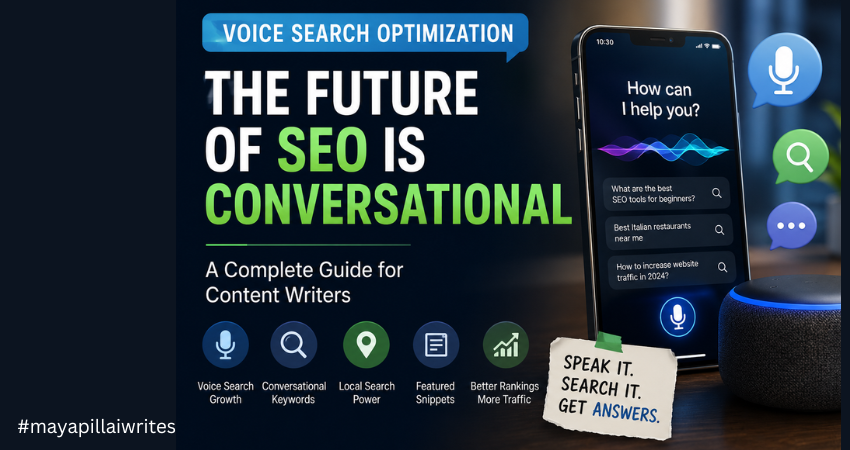
Search behavior has changed significantly over the last few years. People no longer rely only on typed searches to find information online. Instead, they increasingly use voice assistants and smart devices to ask questions naturally and conversationally. Whether someone is asking for nearby restaurants, product recommendations, weather updates, or detailed explanations, voice search has become part of everyday digital behavior. Devices powered by Amazon Alexa, Apple Siri, and Google Assistant have changed how users interact with search engines. Instead of typing fragmented keywords like “best headphones under 5000,” users now ask complete questions such as, “What are the best wireless headphones under ₹5000 for daily use?” This shift has changed modern SEO. Content writers can no longer rely only on traditional keyword placement and search engine optimization tactics. They now need to understand conversational search behavior, user intent, and natural language patterns. This is where voice search optimization becomes essential. Voice search optimization is not simply another SEO trend. It reflects a broader change in how search engines understand language, context, and user expectations. Writers who adapt early can improve content visibility, user engagement, and search rankings while building stronger topical authority in their niche. This guide explains everything content writers need to know about voice search SEO, including conversational content strategies, long-tail keywords, featured snippets, search intent, mobile optimization, local SEO, and AI-driven search behavior. TL;DR Voice search optimization is changing how content ranks in search engines. Modern voice search SEO focuses more on conversational language, user intent, long-tail keywords, and direct answers instead of traditional keyword-heavy strategies. For content writers, optimizing content for voice search now means creating natural, user-focused, and mobile-friendly content that aligns with how people actually speak and search online. What Is Voice Search Optimization? Voice Search Optimization is the process of creating and structuring content so it performs better for spoken search queries made through voice assistants, smartphones, smart speakers, and AI-powered devices. Traditional SEO mainly focused on short typed queries. Voice search SEO focuses more on conversational phrasing, natural speech patterns, and direct answers. For example, a typed query may look like this: “best SEO tools” A voice search query is more likely to sound like this: “What are the best SEO tools for small businesses?” This difference may appear small, but it changes how search engines process intent and rank content. Modern search engines now rely heavily on natural language processing and semantic search to understand the meaning behind queries rather than simply matching keywords. Because of this, optimizing content for voice search requires writers to think more about user behavior and less about keyword stuffing. Why Voice Search Is Growing Rapidly Voice search adoption continues to grow because of convenience, accessibility, and improvements in AI technology. According to a 2023 study by PwC, 71% of users prefer using voice search for simple tasks. This indicates a major behavioral shift in how people interact with search engines and digital platforms. Several factors are driving this growth. Four important ones are listed below. Smart Devices Have Become Mainstream Voice-enabled devices are now common in homes, workplaces, smartphones, cars, and wearable technology. Users rely on voice assistants for tasks such as: checking weather updates finding nearby businesses setting reminders controlling smart home devices searching for information making online purchases As smart devices continue expanding globally, voice search usage is expected to grow alongside them. Voice Search Is Faster and More Convenient Most people can speak significantly faster than they type on a mobile keyboard. Voice search allows users to multitask while driving, cooking, walking, or working. This convenience makes spoken queries more practical for everyday use. For mobile users especially, voice search reduces friction and improves accessibility. AI and Natural Language Processing Have Improved Search engines now understand conversational queries more accurately than before. Advancements in natural language processing help search systems interpret: user intent context conversational phrasing follow-up questions semantic relationships between words This allows search engines to provide more relevant answers instead of relying only on exact keyword matches. Mobile Usage Continues to Dominate Most voice searches happen on smartphones. Since mobile browsing already dominates internet usage globally, voice search naturally continues to grow within mobile-first experiences. This connection between mobile SEO and voice search optimization makes responsive design and page speed increasingly important. How Voice Search Is Changing SEO Voice search is changing both user behavior and the way search engines understand content. Earlier SEO strategies focused mainly on exact-match keywords and short typed queries. Today, users interact with search engines more conversationally through voice assistants and smart devices. Instead of typing fragmented phrases, people now ask complete questions in natural language. Because of this shift, search engines have become more focused on understanding user intent, context, relevance, and content quality rather than simply matching keywords. Modern voice search SEO now prioritizes conversational content, direct answers, mobile-friendly experiences, and user-focused information that solves queries quickly and clearly. It has also increased the importance of long-tail keywords, featured snippets, local SEO, and natural language optimization. For content writers, this means SEO is no longer just about inserting keywords into articles. It now involves understanding how users speak, what information they expect, and how search engines interpret conversational queries to deliver accurate and relevant results. Conversational Search Has Replaced Fragmented Keywords One of the biggest changes in modern SEO is the shift from fragmented keyword searches to conversational search behavior. Earlier, users typically typed short and incomplete phrases into search engines because search algorithms relied heavily on keyword matching. Searches often looked like this: “cheap hotels Goa” “best laptop students” “SEO company Bangalore” Today, voice assistants and AI-powered search engines understand natural language much better. As a result, users now search in a more conversational and human way. Instead of typing isolated keywords, they ask complete questions such as: “What are the best affordable hotels in Goa for families?” This shift has changed how content should be written and optimized. Search engines are now focused more on understanding context, search intent,
Best Editorial Calendar Tools for a Small Blog Team

In the early days of running a blog, everything feels under control. There are only a few posts in the pipeline. A shared document seems enough. A quick WhatsApp message replaces a status update. Someone says, “I’ll publish it tomorrow,” and everyone trusts that it will happen. Then consistency kicks in. You start publishing regularly. Ideas multiply. Drafts pile up. One post is waiting for edits, another is missing keywords, and someone realizes two writers are working on almost the same topic. Deadlines begin to blur. SEO details get added at the last minute. And suddenly, what once felt simple starts feeling chaotic. This is the point where blogging shifts from a creative hobby to an operational system. And that shift is uncomfortable if you’re not prepared for it. For a blog team of 1 to 10 members, structure isn’t about bureaucracy. It’s about clarity. You don’t need complicated software. You need a tool that keeps everyone aligned without slowing them down. A system that shows what’s planned, what’s in progress, and what’s ready to go live. Before choosing any tool, it’s important to understand why having one changes everything. TL;DR If your blog team is growing and publishing consistently, managing content through chats and shared documents won’t work for long. An editorial calendar tool brings structure, visibility, and accountability to your workflow. It helps track deadlines, avoid duplicate topics, manage SEO details, and keep everyone aligned. The right tool doesn’t need to be complex, it just needs to support consistent publishing without confusion. Why a Tool Is Important for Editorial Calendar Management An editorial calendar tool brings structure to your content process. Without one, planning often lives in scattered emails, chat messages, and memory. That works for a short time. But once publishing becomes consistent, confusion follows. A tool centralizes everything in one place, including topics, deadlines, ownership, and status. Everyone can see what’s being written, what’s under review, and what’s ready to publish. That visibility reduces delays and prevents duplicated effort. It also strengthens accountability. When each post has a clear owner and a defined deadline, responsibility becomes visible. A proper tool makes it easier to track progress, manage revisions, and avoid last-minute stress. For blog teams that care about SEO, it helps ensure keywords, metadata, and internal links aren’t forgotten. Over time, this consistency improves quality and builds authority. A tool doesn’t replace discipline, but it supports it. And for any team that wants reliable publishing, that structure makes a real difference. A proper tool gives you: A centralized publishing schedule Clear ownership of each blog post Visibility into draft, edit, and publish stages Keyword and SEO tracking Better deadline discipline Reduced communication gaps In small teams, confusion spreads quickly because everyone handles multiple roles. A writer may also edit. An editor may also upload to WordPress. Without a structured system, small misses turn into bigger delays. Now let’s look at the top tools for blog-only teams and break down detailed advantages and disadvantages. 1. Notion Notion works well for blog teams that want flexibility and control. You can build a custom editorial calendar with fields for keywords, publish dates, authors, and status updates. It allows you to keep briefs, outlines, and drafts in one place. For small teams that like organizing content their own way, it offers a clean and adaptable structure. It does require discipline to keep everything organized. Advantages Fully customizable databases for blog posts Multiple views including calendar, Kanban, and list Can store content briefs, outlines, and drafts in one place Custom SEO fields such as focus keyword, meta title, internal links Easy collaboration with comments and mentions Affordable for small teams Works well for both planning and documentation Clean interface once structured properly Disadvantages Requires careful setup at the beginning No built-in advanced analytics for performance tracking Can become cluttered if naming conventions are inconsistent Large databases may slow down Limited automation compared to advanced project tools Notion works best when someone on the team maintains structure. 2. Trello Trello uses a simple board system.Trello is ideal for blog teams that prefer a visual workflow. Each blog post moves across columns such as Idea, Draft, Review, and Published. It’s simple to learn and easy to maintain. For teams that don’t want complex dashboards or setup time, Trello keeps things straightforward. However, it may feel limited if you need detailed SEO tracking. Advantages Extremely easy to learn Visual workflow using drag-and-drop cards Quick onboarding for new team members Clear status tracking at a glance Lightweight and not overwhelming Integration options through Power-Ups Good for teams that prefer visual progress tracking Disadvantages Limited SEO field customization unless upgraded No deep reporting or performance dashboards Can feel cluttered as blog volume increases Less suitable for detailed documentation storage Not ideal for managing multiple content categories at scale Trello is strong for straightforward blog workflows without complex requirements. 3. ClickUp ClickUp suits blog teams that are growing and need more structure. It allows custom fields for SEO, clear task ownership, and timeline views. If your blog involves multiple writers, editors, and strict deadlines, ClickUp gives stronger workflow control. It can feel complex at first, but it offers scalability if your content operation expands. Advantages Multiple views including calendar, list, and timeline Custom fields for SEO tracking Task dependencies for structured workflows Built-in documentation Automation options for reminders and status changes Strong reporting dashboards Scales well as blog output increases Workload view for managing writer capacity Disadvantages Steeper learning curve Interface can feel overwhelming for small teams Setup takes time and planning Too many features for very simple blog workflows Paid plans required for advanced features ClickUp suits blog teams closer to 8–10 members who need more control. 4. Asana Asana is helpful when deadlines and accountability are priorities. It clearly assigns tasks and tracks progress through timelines and milestones. For blog teams that follow structured approval processes, it keeps responsibilities visible. While it isn’t built specifically for long-form draft storage, it works well for managing
How to Choose a Topic for a Listicle
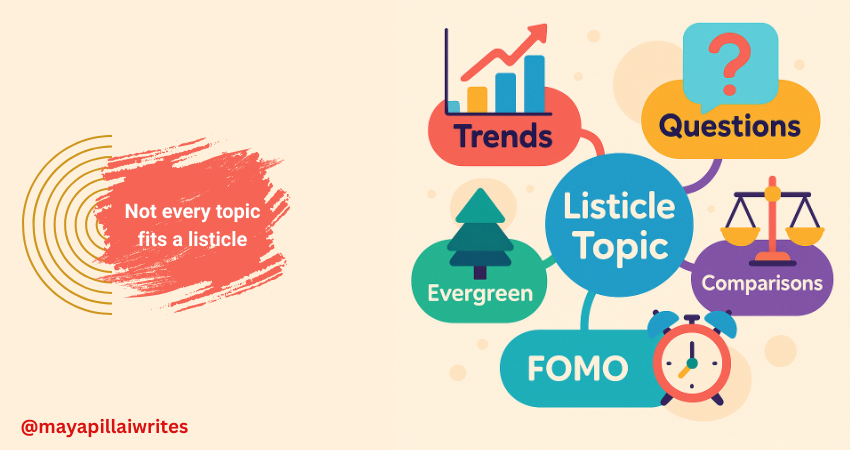
Creating listicles is one of the most effective ways to capture attention online, but not every subject makes sense in a numbered format. If you’ve ever wondered how to choose a topic for a listicle, the key lies in audience demand, search intent, and whether your idea can be broken into clear, valuable points. Listicles remain popular because they’re scannable, shareable, and rank well in search engines. But in 2025, with AI-driven search (Google SGE, ChatGPT results, and voice queries) influencing visibility, writers need smarter ways to pick the right topics. TL; DR The best listicle topics are audience-driven, data-supported, and trend-aware. Choose subjects that can be broken into steps, mistakes, or comparisons, then test them against what people are searching for right now. Titles with numbers, FOMO-driven hooks, or problem-solving angles perform best in search engines and AI summaries. Key Takeaways Great listicle topics are data-driven, trend-aware, and easy to split into points. Audience questions and Google SERPs are the best places to find winning ideas. FOMO-driven, comparison-based, and mobile-first topics perform especially well. Balance evergreen and timely content to maximize reach. Test titles before writing to confirm demand. Read: How Listicles Improve Readability – mayapillaiwrites.com 10 Proven Tips for 2025 1. Start With Real Questions From Your Audience The strongest listicle ideas come directly from what your audience is asking. Instead of brainstorming in isolation, pay attention to recurring questions on platforms like Reddit, Quora, YouTube comments, Slack groups, or niche forums. When the same pain point keeps showing up, that’s your signal. For example, if multiple users are asking “How do I protect my crypto from AI scams?”, that’s a natural fit for a listicle like “7 Ways to Protect Your Crypto From AI-Powered Scams in 2025.” By starting with questions, you guarantee relevance and avoid generic topics that won’t resonate. 2. Spot FOMO Topics (Fear of Missing Out) Readers don’t want to fall behind. That’s why listicles around trends, risks, and new opportunities often get more clicks and shares than evergreen content. In fast-moving industries like cybersecurity, marketing, or AI, people scan listicles to quickly catch up on what’s changing. Example: “10 AI Tools Every Freelancer Should Try in 2025” or “5 Cybersecurity Threats Businesses Aren’t Ready For This Year.” These create urgency, which boosts engagement and SEO performance. 3. Use Search Data, Not Just Intuition It’s tempting to pick listicle topics based on instinct, but SEO thrives on data. Use tools like: Google Trends to spot rising interest. AnswerThePublic to identify long-tail, list-friendly questions. Google Autocomplete to see what phrases like “best,” “top,” and “ways to” bring up in your niche. If the first page of Google shows list-based results for your keyword, it’s proof that the listicle format matches search intent. 4. Ask: Can It Be Broken Into “Chunks”? Not every topic works as a listicle. A strong candidate is one you can break into steps, mistakes, tools, or examples. If the subject can’t be divided neatly, it’s better suited for an essay or thought piece. ✅ Good: “8 Mistakes New Writers Make on LinkedIn.” ❌ Weak: “Why Content Writing Is Important.” Breaking into chunks makes your post easier to skim, which is both reader-friendly and SEO-friendly. 5. Think Mobile-First Over 70% of readers access content on their phones, which means mobile readability is non-negotiable. When choosing a topic, ask: “Would this listicle work as a quick-scroll read?” ✅ Works: “10 Free Grammar Tools Writers Can Use on the Go.” ❌ Doesn’t Work: “History of Grammar Tools.” Scannable, benefit-driven content performs better in mobile-first indexing and AI search summaries. 6. Focus on Comparison and Decision-Making Decision-driven queries are where listicles shine. When people search for “best tools,” “top platforms,” or “alternatives to,” they want a quick comparison before making a choice. Examples: “7 Cold Wallets Compared: Which One Should You Use in 2025?” “5 Freelance Platforms Writers Can Trust This Year.” These listicles help readers act quickly — and Google rewards that with higher rankings. 7. Balance Evergreen and Timely Topics Don’t rely only on trending ideas. A good strategy is to create both: Evergreen listicles stay relevant year after year (“10 Simple Tips to Improve Your Writing”). Timely listicles capture attention fast but may fade (“5 AI Tools Changing Content Creation in 2025”). Balancing both ensures you get immediate visibility + long-term search traffic. 8. Add Your Unique Angle Before You Write The internet is saturated with listicles. What makes yours click-worthy is the angle. Don’t just write “10 Productivity Tools.” Add a differentiator like “Tested by Writers in 2025” or “That Are Actually Free.” Readers — and search engines — reward originality. Unique angles can also earn backlinks from others who cite your work. 9. Test Your Title Early Your title is your hook. Before writing, test it on LinkedIn, Twitter, or even a private Slack group. Post two versions of your headline and see which sparks interest. If “10 SEO Tools for Beginners” gets less traction than “10 SEO Tools That Save Writers Time in 2025”, you know which one to use. This small step ensures your chosen topic has demand. 10. Apply the “Quick Filters” Rule Before finalizing, run every topic through these quick filters: Can it be split into 5–15 clear points? Does it solve a problem or answer a trending question? Is interest rising on Google Trends? Can you frame it with a unique perspective? Would you personally click on this headline? If the answer is yes to most, you’ve found your listicle winner. To Sum Up Choosing the right topic for a listicle in 2025 is about balancing audience needs, search demand, and format suitability. A good listicle topic answers real questions, solves a problem, or helps readers make quick decisions. By focusing on data-driven research (Google Trends, autocomplete, AnswerThePublic), spotting FOMO-driven trends, and ensuring your subject can be broken into clear, scannable points, you’ll create listicles that are both SEO-friendly and reader-friendly. The most successful listicles today combine evergreen relevance with timely hooks, carry unique
How to Create Your Unique Brand Voice (Beyond Clichés and Stand Out)

Craft a brand voice that stands out—ditch clichés, embrace authenticity, and break industry norms to make your brand memorable and recognizable.
5 Ways ChatGPT Can Revolutionize Content Writing for Small Businesses and Writers in 2025

Discover how ChatGPT for content creation is transforming the writing landscape for small businesses and writers alike. From generating fresh blog ideas to polishing drafts into perfection, this AI-powered tool saves time, boosts creativity, and delivers professional results. Learn five practical ways ChatGPT can revolutionize your content strategy and help you stay ahead in the competitive world of content marketing.
Brand Voice vs. Brand Tone: 10 Key Differences Every Marketer Needs to Know

Your brand’s voice is the soul, while its tone sets the mood for every interaction. Together, they create a powerful emotional connection with your audience. In this article, we’ll explore the subtle yet significant differences between brand voice and brand tone, and how mastering both can captivate your audience and enhance your brand’s identity.
Content Writing vs. Copywriting: Understanding the Differences and Opportunities

As a writer, I’ve often found myself caught between content writing and copywriting. At first, they felt like two sides of the same coin—just words on a page, right? But then I noticed how some words made people feel informed and inspired, while others had them ready to click that “Buy Now” button. If you’ve ever wondered why that is, you’re not alone. Content writing vs copywriting serve very different purposes, yet both are essential in today’s digital landscape. Let’s dive into what makes each unique—and how understanding the difference could unlock new opportunities for you or your business. What is Content Writing? Content writing is about creating informative and engaging content meant to educate, entertain, or inspire readers. The primary goal is to provide value and build a long-term relationship with an audience. Content writing vs copywriting can take many forms, including: Blog posts Articles Social media content E-books and whitepapers How-to guides and tutorials Good content writing focuses on quality, relevance, and delivering information that resonates with the audience. It often incorporates SEO (Search Engine Optimization) practices to improve visibility and drive organic traffic to a website. The tone of content writing can vary, but it generally leans towards being informative, engaging, and authentic. Example of Content Writing: A blog post titled “10 Tips for Writing Engaging Instagram Captions” offers practical tips and strategies to help readers enhance their social media game. What is Copywriting? Copywriting, on the other hand, is about persuasion. It aims to get readers to take immediate action, such as making a purchase, signing up for a newsletter, or clicking a link. It’s short, punchy, and emotionally compelling, often found in: Ad copy Sales pages Email marketing campaigns Product descriptions Landing pages Copywriters are experts at crafting words that sell. They understand human psychology and how to trigger emotions to influence behavior. Unlike content writing, which educates or entertains, copywriting is purely results-driven. Example of Copywriting: An email subject line that reads, “Unlock 20% Off Your First Order—Today Only!” encourages readers to take advantage of a limited-time offer. Key Differences Between Content Writing and Copywriting Purpose: Content writing informs, educates, or engages to build trust and brand authority over time. Copywriting persuades and drives readers to take immediate action, like making a purchase or signing up. Tone and Style: Content writing is generally longer and more informative, with a focus on delivering value. Copywriting is concise, punchy, and emotionally engaging. SEO and Marketing: Content writers often work on SEO strategies to improve a website’s organic search ranking. Copywriters focus on creating high-converting text for ads, landing pages, and email campaigns. Audience Engagement: Content writing aims for engagement and interaction over the long term. Copywriting seeks to provoke an immediate response from the audience. Opportunities for Writers Understanding the differences between content writing vs copywriting opens up diverse opportunities for writers. Here’s how: Diversify Your Skills: Mastering both disciplines can make you a more versatile writer, able to take on a wider range of projects. Increased Earning Potential: Copywriting, especially, is a lucrative skill due to its direct impact on sales and conversions. Many businesses are willing to invest heavily in persuasive copy that drives results. Work with a Variety of Clients: Content writing can lead to long-term gigs, while copywriting often brings high-value, short-term projects. Both can be rewarding in their own ways. Explore Different Industries: From tech startups to lifestyle brands, both writing types are needed across various sectors, giving writers endless possibilities to explore their interests. Opportunities for Businesses For businesses, understanding these differences can help allocate resources more effectively. If the goal is brand awareness and education, invest in content writing. A well-written blog strategy or thought leadership article can drive consistent traffic and establish authority in your niche. If the aim is to boost sales or lead generation, focus on copywriting. Compelling ad campaigns and landing pages with a clear call-to-action (CTA) are critical for converting leads into customers. To Wrap Up Both content writing and copywriting are powerful tools in the digital landscape, but they serve different roles. While content writing builds trust and long-term relationships, copywriting drives action and sales. By understanding these nuances, writers can refine their craft, and businesses can harness the power of words more effectively. Whether you’re a writer seeking to expand your portfolio or a business owner deciding on your marketing strategy, recognizing the strengths of each type can lead to better outcomes. So, which one will you focus on next?. Ready to Make Your Words Work for You? The insights shared in this article are only the tip of the iceberg when it comes to mastering the art of content writing vs copywriting. As a writer or business owner, you might be searching for that secret formula that makes words stick—whether your aim is to engage, educate, or drive sales. Maybe you’ve been struggling to distinguish between content that builds long-term trust and copy that drives immediate action. Or perhaps you’re unsure which approach will best serve your brand’s goals and connect with your audience on a deeper level. Here’s the good news: You’re in the right place to unpack the power of words and how they can transform your brand presence. Content writing vs copywriting isn’t just a choice; it’s a strategic decision that can: Build meaningful relationships with readers who find value in what you share. Compel prospects to take action, whether that means subscribing, purchasing, or joining your community. Elevate your brand by blending information with emotion, making your message memorable. Whether you want to use content to establish authority or persuasive copy to boost conversions, understanding both is crucial. Ready to level up your communication game and get your words to work harder for you? Let’s craft writing that doesn’t just inform but engages, persuades, and drives results. Get in touch, and together, we’ll ensure your content or copy hits the mark every time.