What He Meant
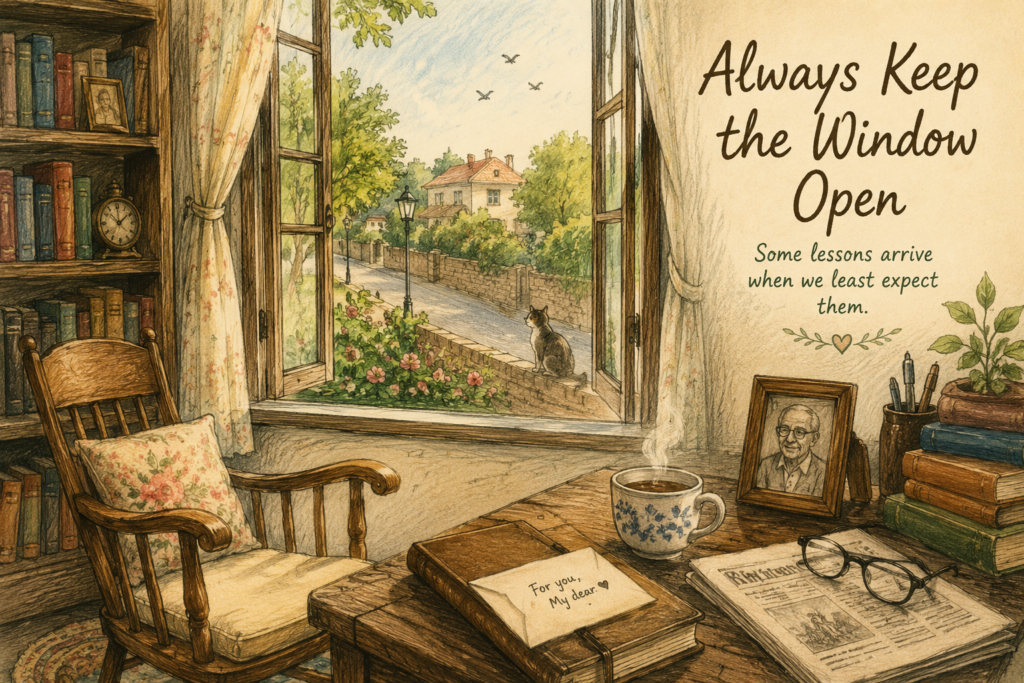
“I don’t know what he meant when he said, ‘Keep the window open.’”My grandfather said those words often.Whenever I visited him during my school holidays, I would find him in his study, sitting beside the large window. It was the brightest spot in the room and his favorite place during winter, when the afternoon sun warmed the wooden floor. But during the windy monsoon days, it was the coldest corner of the house. He never liked curtains on that window.His old wooden rocking chair sat beside it, with a soft cotton cushion that had taken the shape of his back over the years. A short carpet lay beneath his feet to keep them warm on chilly mornings.From there, he could watch people pass by on the road. Sometimes, he would have a one-sided conversation with the neighborhood cat that lazed on the compound wall. On other days, he would fill the little birdbath with water and scatter a few grains beside it. Every now and then, a few sparrows would land on the window rail, stay for a while, and fly away.It was his favorite place in the house.“Why don’t you close it when it gets windy?” I once asked.He looked at me over his glasses.“Because a closed window keeps everything out.”I thought he was talking about fresh air.I was twelve then. I didn’t think much about what he said.Years passed.I grew up, moved to another city, got a job, and became busy with my own life. My visits to my grandparents became less frequent. Phone calls replaced long afternoons at their house.Grandfather never complained.Whenever I called, he would ask about my work, my friends, and whether I was eating properly.Then one summer, I had a silly argument with Anu, my closest friend since school. We had grown up together, shared secrets, celebrated birthdays, and stayed in touch even after I moved to another city.The argument was over something so small that I can’t remember what it was now. What I remember is that neither of us wanted to be the first to say sorry. A few days later, Anu called. I saw her name on my phone but let the call go unanswered. I thought about calling her back that evening. I didn’t. A week later, I typed a message, read it twice, and deleted it. Neither of us called again. I told myself that if she really cared, she would call again. She didn’t.Around the same time, Grandfather called one evening. We hadn’t spoken in a few weeks, so I was happy to hear his voice.“When are you coming home?”“Soon,” I said.“You’ve been saying that for months.”I laughed. “I’ll come next month. I have a few days off for Diwali.”“Good. I’ll hold you to that.”We spoke about a few things after that. He asked about my work, reminded me to take care of myself, and told me about the new plants he had put in the backyard.Just before we ended the call, he said, “And keep the window open.”I laughed.“You still say that?”“Always.”I didn’t ask what he meant. I had heard him say it so many times that I had stopped wondering about it.A few months later, Grandfather passed away.After the funeral, I stood outside his study for a long time. I had walked past that door several times, but I couldn’t bring myself to go in. It felt strange to think that he would never be sitting in that rocking chair again, calling me over to show me something he had found in the newspaper.Finally, I placed my hand on the doorknob and turned it. I pushed the door open slowly.Everything inside looked just as I remembered it. His books were still arranged on the shelves, their spines worn from years of use. His reading glasses rested on the desk beside the newspaper he had been reading that morning. His wooden rocking chair stood beside the window, the cotton cushion still holding its familiar shape, with the little carpet beneath it. For a moment, the room felt as though he had only stepped away and would return any minute. But the window was closed. I walked over and opened it. The room filled with a gentle breeze that carried the fragrance of the roses in full bloom outside. I stood there for a moment, taking in the familiar scent and looking out at the road where Grandfather had spent so many hours watching people pass by. I curled up in his rocking chair for a while, running my fingers over the worn cotton cushion. I remembered the many afternoons he had spent there, reading the newspaper, watching people pass by, or simply sitting quietly with his tea.Then I noticed that the drawer of the small table opposite the chair was slightly open. I pulled it out and found a small envelope tucked beneath his diary. My name was written on it in his familiar handwriting.I held the envelope in my hands for a moment. Somehow, I knew there was something inside that I wasn’t quite ready to read.Reluctantly, I opened it.My dear Maya,You once asked me why I always kept this window open. I gave you an answer, but I never told you the whole story.When I was young, your grand-uncle and I had a terrible argument. Neither of us was willing to apologize. I waited for him to come to me, and he waited for me to go to him. We let our pride get in the way. One year became five. Five became ten. Before we knew it, twenty years had passed.When we finally met again to put away our differences, we were happy to see each other, but we couldn’t get back those twenty years.I often wondered what might have happened if one of us had simply taken the first step.That is why I keep this window open. Not just for the breeze or the birds. It reminds me to leave a little space for people. People will disappoint us. We will disappoint them too.
How to Make Grammar Part of Your Daily Life
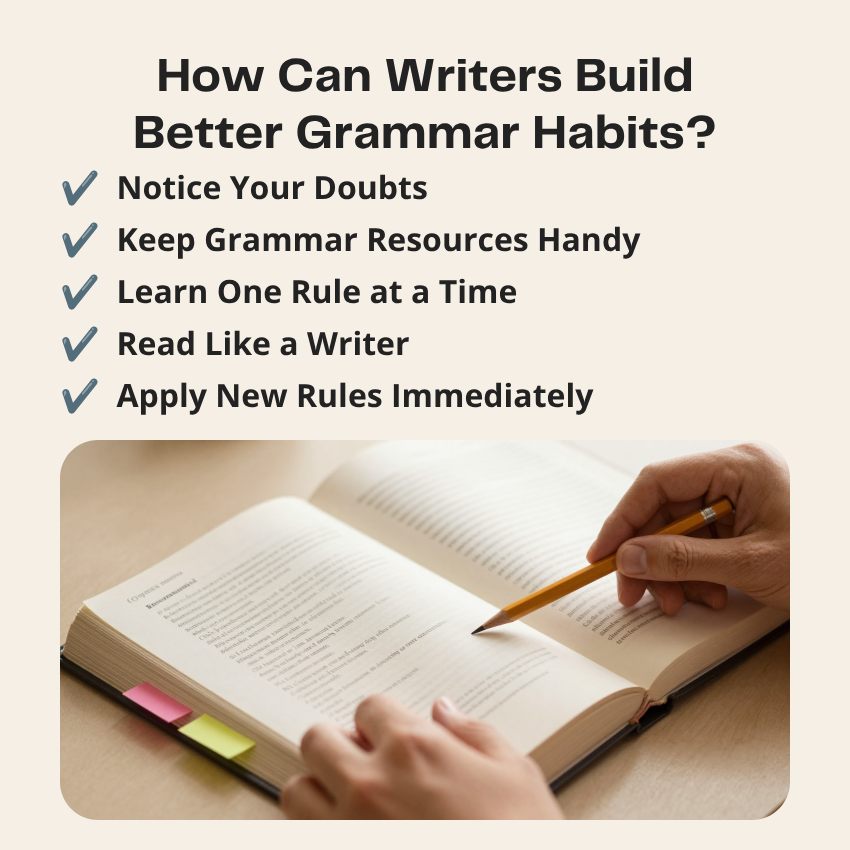
I recently started learning how to bake bread after a long hiatus. Not that I ever really learned how to bake properly in the first place, so in many ways, I’m still very much a beginner. And some days, it frustrates me. I want the measurements to be right. I want the dough to feel right in my hands. I want that smooth elasticity that experienced bakers seem to achieve without even thinking about it. Instead, I find myself adding too much flour, too little water, kneading too much, or perhaps not enough. And then there is the shoulder pain. Nobody tells you that bread making can be hard work. Kneading dough repeatedly for ten or fifteen minutes can leave your shoulders protesting long before the dough is ready. But I keep trying. Because somewhere between the sticky dough and the imperfect loaves, I know I’m learning something. Writing and grammar work much the same way. When we first start writing seriously, grammar can feel like an obstacle course. There are commas to worry about, sentence structures to remember, and rules that seem to have exceptions just when we think we finally understand them. Sometimes it feels easier to ignore grammar altogether and simply write. But grammar is not the enemy of good writing. It is one of the tools that helps good writing reach the reader. Why Grammar is Important Can people communicate without perfect grammar? Absolutely. We’ve all read messages filled with spelling mistakes and missing punctuation and still understood what the writer meant. But understanding and clarity are not always the same thing. Good grammar removes distractions. It allows readers to focus on your ideas instead of trying to interpret your sentences. It gives your writing rhythm, structure, and confidence. For freelance writers, it also builds trust. Clients may forgive the occasional typo, but consistent grammar mistakes can make even excellent ideas look careless. Nobody Truly Finishes Learning Grammar One of the biggest surprises I discovered as a writer was that experienced writers still look things up. They still debate commas. They still question whether a sentence should end with a preposition. They still open style guides and grammar references when something doesn’t feel quite right. Grammar isn’t a destination you eventually arrive at. It’s a skill you continue sharpening throughout your writing life. The same is true of vocabulary and usage. Even experienced writers occasionally pause to check whether two words mean exactly the same thing or carry slightly different shades of meaning. Take “finish” and “complete,” for example. They are often used interchangeably, yet context can make one a better choice than the other. Those small distinctions are part of what makes writing both challenging and rewarding, and they remind us that learning the craft never really stops. How Can Writers Build Better Grammar Habits? The good news is that grammar doesn’t require hours of study. Small habits often make the biggest difference. Pay Attention to the Moments of Doubt Every writer has moments when a sentence doesn’t quite feel right. Maybe the punctuation looks awkward. Perhaps you’re unsure whether a word should be hyphenated or whether you’ve used the correct tense. Sometimes you read a sentence three times and still can’t decide if it works. Don’t ignore that feeling. Those moments of uncertainty are often the best opportunities to learn. Instead of making your best guess and moving on, take a minute to look it up. Check a grammar guide, search for examples, or consult a trusted resource. More often than not, you’ll remember the answer because it was connected to a real writing problem you were trying to solve. Over time, these small moments of curiosity begin to add up. The grammar rule you looked up for a blog post today becomes something you remember for an article next month or a client project next year. Learning grammar rarely happens in one big leap. More often, it happens one question, one doubt, and one discovery at a time. Keep reference material close Every writer should have a trusted grammar reference or style guide within easy reach. Professional writers use them all the time. The good news is that you don’t have to invest in shelves full of grammar books to get started. There are plenty of reliable online resources that can help clear your doubts in minutes. If you’re unsure about commas, citation styles, sentence structure, or grammar rules, look them up. Over time, those quick searches become knowledge that stays with you. Even experienced writers regularly consult reference materials. Looking something up isn’t a sign that you’re inexperienced. It’s a sign that you care about getting it right. Learn one thing at a time Trying to master grammar on a weekend is like trying to master bread baking in a single afternoon. You wouldn’t expect to understand hydration ratios, gluten development, fermentation, shaping, and scoring all at once. Most bakers learn one technique at a time and build on it gradually. Grammar works the same way. Don’t try to memorize every rule, exception, and punctuation mark in one sitting. Start with one concept, perhaps commas, subject-verb agreement, or the difference between “its” and “it’s.” Use it in your writing until it begins to feel natural. Then move on to the next concept. Small improvements made consistently often lead to bigger results than trying to learn everything at once. A year from now, you probably won’t remember the afternoon you spent learning a grammar rule, but you’ll notice how much more confident and effortless your writing has become. Read with a writer’s eye Reading is one of the easiest ways to improve your grammar without feeling as though you’re studying. The next time you read a book, a blog post, or a magazine article, pay attention to how experienced writers structure their sentences, use punctuation, and guide readers from one idea to the next. Notice where they use short sentences for emphasis and longer ones to develop an idea. Observe how commas
Word of the Day: Scrutiny

Synopsis Some words slow things down on purpose. Scrutiny is one of them. It suggests careful attention, close observation, and a willingness to look beyond surface-level claims. In writing, research, and public discourse, scrutiny is what separates assumption from understanding. Word of the Day Scrutiny Word of the Day Meaning Scrutiny refers to close, detailed examination or inspection. It implies careful and critical attention, often applied to information, actions, decisions, or claims that require verification or evaluation. Word of the Day Pronunciation Guide SKROO-tuh-nee Word of the Day: Origin and Etymology The word scrutiny comes from the Latin scrutinium, meaning “a searching examination” or “inquiry.” It is derived from scrutari, which means “to search” or “to examine thoroughly.” The original sense of the word emphasized investigation rather than judgment. As the word entered English, scrutiny retained its association with careful examination, especially in formal, legal, and intellectual contexts. Over time, it became closely linked with accountability and evaluation. Word of the Day: Synonyms and Antonyms Synonyms Examination Inspection Analysis Review Assessment Antonyms Neglect Oversight Inattention Disregard Carelessness Word of the Day Usage in Sentences: Across Genres In Journalism The report came under intense scrutiny after new details emerged. In Political Analysis The proposal faced public scrutiny before being approved. In Academic Writing All data was subjected to rigorous scrutiny before publication. In Literature She felt his scrutiny linger longer than words could explain. In Travel Writing The glossy brochure promised luxury, but the details did not stand up to close scrutiny. In Legal Commentary The evidence was placed under judicial scrutiny. Why “Scrutiny” Is Worth Knowing Scrutiny is an important word because it frames attention as deliberate and careful. Instead of implying suspicion or hostility, it emphasizes responsibility. In writing, using scrutiny signals that claims are being examined thoughtfully, not dismissed casually. For writers and researchers, scrutiny is essential. It shapes how sources are evaluated, arguments are tested, and conclusions are reached. Without scrutiny, information remains unchecked. With it, clarity and credibility emerge. In editorial work, scrutiny often strengthens trust. Readers respond to writing that demonstrates care in how facts, language, and assumptions are handled. Word of the Day in Modern Context Today, scrutiny is everywhere. News stories, public decisions, and information shared online are often examined closely by people who want honesty and clear answers. But scrutiny isn’t limited to public debates or headlines. It shows up in performance reviews at work, academic research, and even the choices we make in our daily lives. Sometimes it helps improve quality and accountability. At other times, it can create pressure to get every detail right. For writers and creators, scrutiny serves an important purpose. It encourages careful thinking, fact-checking, and attention to detail. More importantly, it helps build and maintain the trust of readers. FAQs 1. What does scrutiny mean? Scrutiny means looking at something carefully and in detail to understand it better or check its accuracy, quality, or truthfulness. 2. Does scrutiny always have a negative meaning? No. Scrutiny simply refers to close examination. It can be neutral, positive, or critical depending on the context. 3. What is the difference between scrutiny and criticism? Scrutiny focuses on careful observation and examination, while criticism involves forming an opinion or judgment about something. 4. How do you use scrutiny in a sentence? Example: The research paper underwent careful scrutiny before it was published. 5. What does the phrase “under scrutiny” mean? “Under scrutiny” means being closely watched, examined, or evaluated by others.
5 Tips for Writing Digital-Era Crime Fiction That Feels Real
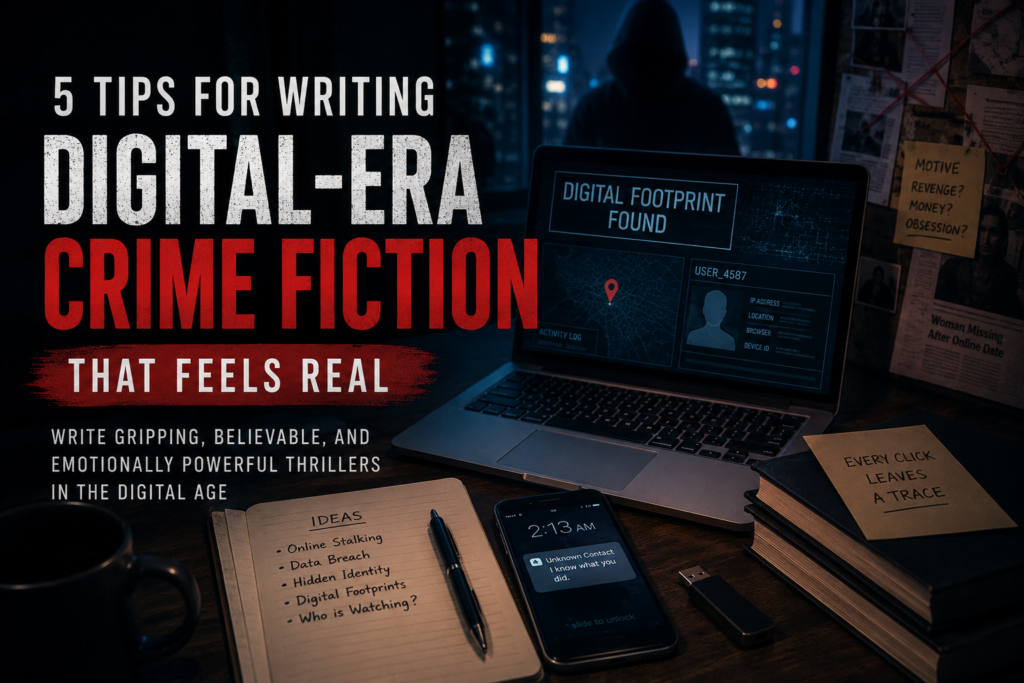
Crime fiction has always evolved with the times. Once upon a time, detectives solved crimes using handwritten letters, cigarette ash, and overheard conversations in smoky bars. Today, people leave behind different kinds of evidence, location history, deleted chats, dating app profiles, cloud backups, Reddit posts, food delivery records, and late-night Google searches they thought nobody would ever see. And that changes how crime stories work. The problem is, a lot of modern digital thrillers either become too technical or too unrealistic. Some stories read like software manuals. Others make hacking look like magic. Readers notice both. The best digital-age crime fiction feels human first, technical second. If you’re trying to write a cyber thriller, an online stalking story, or a modern detective novel, here are a few things that make the story feel believable and emotionally gripping. TL;DR Writing digital-era crime fiction isn’t about showing off technical knowledge. It’s about using technology to deepen suspense, reveal human behavior, and create believable emotional tension. The strongest cyber thrillers focus less on gadgets and more on fear, obsession, secrecy, and vulnerability in online spaces. Use Technology Like a Tool, Not a Superpower One mistake many writers make is treating technology as an instant solution. The detective taps a keyboard furiously for ten seconds and suddenly gains access to everything, passwords, CCTV feeds, deleted messages, bank records. It works in movies because the scene moves quickly. On paper, though, it often feels lazy. Real digital investigations are messy. Sometimes the phone is locked.Sometimes the footage is blurry.Sometimes the suspect used a burner account that leads nowhere. And honestly, those limitations make stories more interesting. Imagine this: A missing woman’s Instagram account suddenly becomes active at 2:13 a.m. after three months of silence. Her family believes she’s alive. But the investigator notices something odd, the captions don’t sound like her anymore. The emojis are different. The grammar is cleaner. Someone else may be using the account. That’s far more chilling than a dramatic hacking scene. Technology should raise questions, not immediately answer them. Focus on Human Behavior Online Good digital crime fiction isn’t really about computers. It’s about people behind screens. Think about how differently people behave online compared to real life. Someone quiet in public may become aggressive online. Someone lonely may build fake identities. Someone obsessed may track another person’s activity for years without ever speaking to them. Digital spaces expose habits, insecurities, and emotional patterns. A character’s browsing history can reveal fear.A deleted message can reveal regret.A fake account can reveal obsession. And often, what characters hide says more than what they openly confess. For example: A husband reports his wife missing. During the investigation, police discover he has been reading old Reddit threads about “how long phone records are stored” and “how to permanently delete cloud backups.” He hasn’t technically confessed to anything.But readers instantly feel something is wrong. That’s where tension comes from. Don’t Drown Readers in Technical Language A lot of writers think complexity equals realism. It doesn’t. Readers don’t need long explanations about malware architecture or encryption protocols unless those details directly matter to the plot. Too much jargon creates distance between the story and the reader. Most people read thrillers for emotional momentum, suspense, and atmosphere. Simple details often work better. Instead of writing: “He initiated a packet interception attack through an unsecured router vulnerability.” You could write: “He sat outside the café for two hours because he knew people trusted free Wi-Fi too easily.” The second line feels visual. Human. Cinematic. That’s the difference. You don’t need to prove you’re technically smart. You need readers to stay emotionally invested. Digital Fear Works Best When It Feels Personal The scariest thing about modern technology isn’t always surveillance. It’s exposure. People store entire lives online now, conversations, secrets, relationships, financial records, private photos, voice notes, search history. Losing control over that information feels deeply personal. That’s why digital-age thrillers work best when they tap into emotional vulnerability. A woman receives photographs taken inside her apartment, but her curtains were closed.A teenager realizes someone has been editing his old social media posts.A journalist discovers her smart speaker recorded conversations she never knew existed. None of these scenes require violence.But they still feel disturbing. Readers connect with these fears because they already live with technology every day. The danger feels possible. And believable fear is always stronger than exaggerated drama. Remember That Crime Fiction Is Still About Emotion Technology changes methods. It doesn’t change motives. People still commit crimes because of jealousy, revenge, shame, greed, desperation, loneliness, or obsession. Even the most modern cybercrime story needs emotional depth underneath the technical layer. A hacker stealing financial data for money is predictable. But a hacker targeting one specific person because of an unresolved betrayal from ten years ago? That feels human. Messy. Real. Readers may remember the technology for a moment.But they remember emotional conflict for years. Think about some of the most memorable thrillers people talk about. Usually, it isn’t because the software was accurate. It’s because the characters felt believable. The emotional core always matters more. To Sum Up A good digital crime thriller doesn’t depend on flashy hacking scenes or complicated tech language. It depends on tension, believable characters, and the uncomfortable feeling that something hidden is happening behind ordinary screens. The strongest stories understand one simple thing, technology may change the way crimes happen, but people remain the same. Fear, obsession, revenge, loneliness, greed, and guilt still sit at the center of every crime story. So while writing, don’t focus only on devices, apps, or cyber tools. Focus on what your characters are trying to hide, what they’re afraid of losing, and how technology exposes parts of them they never wanted anyone to see. That’s what makes a digital-era crime thriller feel real. And that’s what keeps readers turning pages long after the story ends. Key Takeaways Technology should complicate the story, not solve everything instantly Human behavior online matters more than technical jargon Digital
Content Writing Trends 2026: How User Intent Shapes the Future of Writing
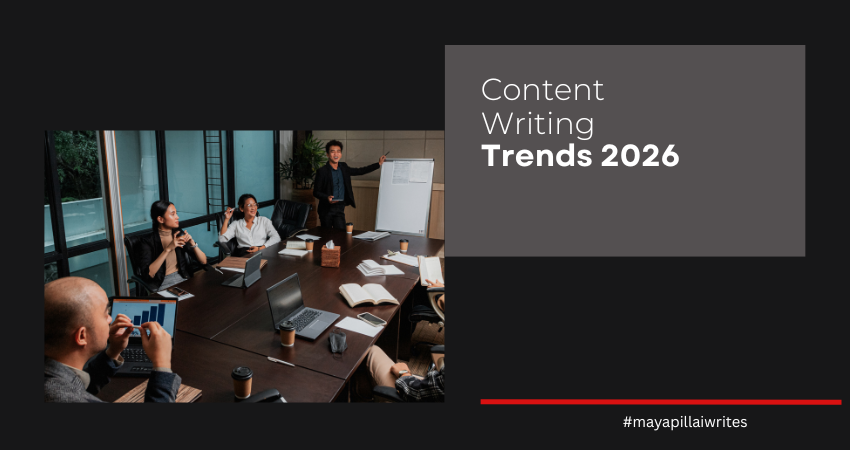
In 2026, content writing is no longer about stuffing keywords or chasing algorithms. The real shift lies in understanding user intent and search intent. These two ideas define how readers find, read, and trust your work. The top content writing trends 2026 focus on writing with purpose, clarity, and empathy while adapting to AI-driven search results and generative summaries. Who This Article Is For This article is for freelance writers, bloggers, content strategists, and digital marketers who want to stay ahead in 2026. If you write blogs, plan content calendars, or manage SEO, this guide will help you understand how intent-driven writing can improve visibility, engagement, and credibility. Reading this will help you learn how to match what people search for with what they actually want to read — the core of future-ready content. The future of content writing in 2026 revolves around understanding user intent, adapting to AI-driven search, and blending creativity with data. Writers who focus on why readers search, not just what they search, will stand out. The Shift: From Keywords to Intent For years, SEO revolved around keywords. Writers optimized headlines and meta tags to match search phrases. But 2026 marks a shift — search intent and user intent now matter more than keyword frequency. Search engines and AI models understand the “why” behind a query. Are users seeking quick information, comparison, or an in-depth answer? Writers who match that intent create content that not only ranks but also gets surfaced in Generative Search Experiences (GSE). If someone searches “best AI writing tools,” their intent might be transactional (ready to buy) or informational (looking to compare). Recognizing this difference changes how you write the intro, tone, and structure. What Are User Intent and Search Intent User intent is the reason someone types a query into a search engine. It answers why they’re searching — to learn, compare, solve, or buy something. Search intent is how that purpose appears in search behavior. It’s what Google or an AI engine interprets when showing results. For example: “What is content writing” shows informational intent — the user wants to understand. “Best freelance content writers near me” shows transactional intent — the user is ready to take action. Understanding both helps writers shape tone, format, and structure. A post written for informational intent should teach clearly. A post for transactional intent should include solutions, pricing, or calls to action. When your content matches intent, it not only ranks higher but also keeps readers on your page longer — which boosts credibility and SEO. 8 Content Trends to Lookout For in 2026 Writing for Intent, Not Just Traffic In 2026, good writing means anticipating reader expectations. Each piece must serve a purpose; solve a problem, answer a question, or guide a decision. Three main types of intent: Informational: Users want to learn (example: “What is Generative Engine Optimization?”). Navigational: They’re finding a brand or website (example: “Maya Pillai Writes blog”). Transactional: They’re ready to take action (example: “Hire a freelance content writer in India”). Before writing, define which intent your post serves. Then structure your headings, tone, and CTAs around it. AI as a Writing Partner AI is an incredible co-writer in 2026, helping writers understand search patterns and intent gaps. It can suggest structure and keywords, but human creativity still leads. Writers use AI tools to analyze which topics match real user needs and then write with empathy and voice. AI helps with clarity; you bring the context. Use it for: Draft outlines from intent-based prompts (“write a guide for beginners” vs “write comparison for experts”). Summaries optimized for voice search or generative snippets. Generative Engine Optimization (GEO) GEO is the evolution of SEO. Instead of ranking high on search pages, you’re aiming to be cited or summarized in AI-powered search responses. To succeed in GEO, content must be clear, structured, and aligned with intent. A simple, human explanation often performs better than keyword-heavy text. When someone asks “how to write for user intent,” AI search tools will quote concise, trustworthy paragraphs that sound conversational. What helps: Direct answers under subheadings Bullet points for clarity Questions as headers for AI comprehension Dual Content Format: Deep vs Quick Readers have split attention. They want instant answers and deeper insights. That means balancing short-form content for discovery with long-form for authority. Short posts capture curiosity. Long-form builds expertise and trust. A content writer who can write both is more valuable than one who focuses only on one format. Create layered content — a quick summary on social media that leads to an in-depth post on your blog. Personalization Based on Intent Personalization now depends on where the user is in their journey, not just demographics. Someone exploring a topic for the first time doesn’t need expert jargon. Write for stages: Awareness: Keep it simple, relatable, and educational. Consideration: Add comparisons, statistics, and credibility. Decision: Include examples, testimonials, or CTAs. This approach improves user engagement and matches search engine expectations for high-intent relevance. Thought Leadership: The Return of the Human Voice In a sea of AI-generated content, an authentic voice stands out. Readers can sense when something is written with experience versus algorithmic filler. Share what you’ve learned. Use real examples. Admit mistakes. That’s how trust builds — especially in niches like content strategy or cybersecurity where credibility matters. Multi-Format Content for Search Diversity 2026 rewards content that exists in multiple forms — articles, videos, podcasts, and carousels. Voice search and visual summaries are driving visibility. Writers need to repurpose intelligently: Blog → audio summary → LinkedIn carousel Long-form → newsletter takeaway → 30-second reel Each version can serve a different user intent. For example, someone scrolling social media might just want a tip, not a full tutorial. Transparency Builds Trust Readers want to know how content is made. Being open about using AI tools or referencing data creates credibility. Include short disclosures like “AI-assisted, human-edited.” Use citations, add author bios, and list your sources. Trust signals now impact ranking and reader
Timeless Writing Advice from C.S. Lewis That Still Inspires Today

Great writing isn’t just about stringing words together—it’s about clarity, rhythm, and authenticity. Decades ago, C.S. Lewis shared simple yet profound advice that still resonates today. From silencing distractions to writing with passion and precision, his words serve as a timeless guide for anyone looking to sharpen their craft. Whether you’re drafting your next LinkedIn post or penning your first book, Lewis’s wisdom reminds us that writing well is an art—and it all starts with the fundamentals.
10 Mistakes Freelance Writers Make
Let’s be honest—freelance writing can feel like a juggling act. Between finding clients, meeting deadlines, and producing top-notch work, it’s easy to slip up. Whether it’s undervaluing your time or rushing through edits, every writer makes mistakes. But here’s the thing: those mistakes aren’t career-ending. They’re opportunities to learn and grow. If you’ve ever felt stuck or frustrated in your freelance writing journey, you’re not alone. Let’s unpack 10 common mistakes freelance writers make and how you can avoid them. 1. Saying Yes to Every Project Freelance writers often feel pressured to say “yes” to every opportunity, especially when starting out. But taking on every project can leave you overwhelmed, overworked, and, frankly, uninspired. Not every job will align with your skills or interests, and that’s okay. The solution? Take a step back and evaluate each opportunity. Does the project excite you? Does it pay fairly? If not, it’s better to politely decline than to burn out on work that doesn’t fulfill you. 2. Undercharging for Your Work Many freelance writers struggle with pricing their services. It’s tempting to lowball your rates to land a client, but that often backfires. Charging too little not only undervalues your expertise but can also leave you stressed about making ends meet. Instead, research what other writers in your niche charge and confidently set rates that reflect your skills. Remember, your time and talent are worth it. 3. Miscommunicating with Clients Clear communication is the backbone of any successful project. Without it, misunderstandings can crop up, leaving both you and your client frustrated. It’s easy to assume you know what the client wants, but assumptions often lead to mistakes. Always ask questions, clarify details, and provide updates throughout the project. Clients appreciate writers who take the time to get things right. 4. Missing Deadlines We’ve all been there—biting off more than we can chew and scrambling to finish on time. Missing deadlines, though, can harm your reputation and damage client trust. To avoid this, get real about how long a project will take. Use tools like Google Calendar to keep track of deadlines and break the work into manageable chunks. And if life throws you a curveball? Communicate with your client right away. They’ll value your honesty. 5. Skipping the Editing Phase You’ve just finished a draft, and the temptation to hit “send” is strong. But skipping the editing phase is one of the biggest mistakes a freelance writer can make. Even small typos can leave a bad impression. Make editing non-negotiable. Take a short break before revisiting your draft with fresh eyes, and use tools like Grammarly or Hemingway to catch errors. The extra effort goes a long way. 6. Avoiding Self-Promotion If promoting yourself feels awkward, you’re not alone. Many writers hesitate to market their skills, relying instead on job boards or word-of-mouth. But avoiding self-promotion limits your growth. A strong online presence—like a polished LinkedIn profile or a personal website—can showcase your expertise and attract the right clients. You don’t need to brag; just share your work and let it speak for itself. 7. Forgetting to Use Contracts Skipping contracts might save time upfront, but it can lead to headaches later. Without clear terms, you risk payment issues, scope creep, or even losing control of your work. Protect yourself and your clients by always using a simple contract. It doesn’t need to be fancy—just outline what you’re delivering, when, and for how much. 8. Trying to Be a Jack-of-All-Trades Many freelance writers try to cover every topic under the sun, thinking it will make them more marketable. But being a generalist often makes it harder to stand out. Clients look for specialists who understand their industry. Find a niche you’re passionate about—whether it’s tech, travel, or parenting content—and focus on building your expertise there. You’ll not only attract better-paying clients but also enjoy the work more. 9. Taking Feedback Personally Let’s face it—receiving feedback can sting. Writing is personal, and criticism can feel like a direct attack on your skills. But taking feedback personally only holds you back. Instead, view it as an opportunity to improve. Ask yourself, “What can I learn from this?” Applying constructive feedback helps you grow and build stronger client relationships. 10. Neglecting Professional Growth Freelance writing isn’t a “set it and forget it” career. Trends evolve, and clients expect writers to keep up. If you’re not actively improving your skills, you risk falling behind. Dedicate time to learning, whether it’s through online courses, books, or webinars. Staying curious and adaptable ensures you stay competitive in the industry. To Wrap Up Mistakes are a natural part of any journey, and freelance writing is no exception. What matters most is how you respond to them. By recognizing these common pitfalls and taking proactive steps to avoid them, you’ll set yourself up for long-term success. Remember, it’s okay to make mistakes—they’re opportunities to learn, grow, and become an even better writer. So, which mistake will you tackle first? Looking for a writer who can bring your brand’s voice to life? I’d love to help. Let’s talk about your project and create content that works as hard as you do!
Tips to Write a Short Story in 1500 Words
Writing a short story in 1500 words is a challenge that tests your creativity and precision. The beauty of short fiction lies in its brevity—it captures a moment, an emotion, or a transformation in just a few pages. It’s like crafting a snapshot of life that resonates deeply, all while staying concise. But here’s the tricky part: how do you deliver an unforgettable story within such a tight limit? If you’ve ever felt stuck while trying to fit an entire world into a handful of paragraphs, you’re not alone. Many writers struggle with balancing detail and brevity, but with the right approach, you can create a masterpiece that stays with your readers long after the last word. This blogpost will walk you through actionable tips to write a compelling short story in 1500 words or less—without sacrificing creativity or impact. 1. Anchor Your Story with a Strong, Singular Concept Every great story starts with a compelling idea. The key to writing a short story is to keep your focus razor-sharp—there’s no room for sprawling plots or endless backstories. Zero in on One Theme or Event: Ask yourself, “What’s the essence of this story?” Whether it’s a moment of redemption, a life-changing decision, or an unexpected encounter, choose one central idea and build around it. Example: Instead of writing about a character’s entire journey, focus on the moment they decide to leave their small town or confront an old friend. Relatable Meets Unique: The best stories feel universal yet fresh. Tap into emotions your readers can connect with—love, loss, fear—but frame them in an unexpected way. Example: A story about unspoken love might center on a woman writing a letter she never intends to send. Your concept is the heart of the story. Once you have it, everything else will naturally fall into place. 2. Let Your Characters Speak Volumes with Fewer Words In a short story, your characters need to feel real and memorable—quickly. With limited space, every detail about them has to pull its weight. Focus on One or Two Key Characters: You don’t need an ensemble cast. A protagonist and maybe one supporting character are enough to drive your narrative. Show, Don’t Tell: Instead of saying, “John was shy,” let his actions reveal his personality. Maybe he hesitates before knocking on a door or avoids eye contact during a tense conversation.Details That Define: Use a single vivid detail to make a character come alive. A worn leather jacket, a nervous tick, or a tendency to hum under their breath can make them unforgettable. 3. Start in the Middle of the Action Readers don’t have time to wade through paragraphs of setup in a short story. Grab their attention from the very first line. In Media Res: This Latin phrase means “in the middle of things.” Drop your readers right into the story’s most interesting moment. Example: Instead of, “It was a rainy day, and Jane was feeling restless,” try, “The knife clattered to the floor as Jane slammed the door shut, her breath ragged.” Hook Them with the First Line: Your opening sentence is your chance to intrigue, shock, or delight your reader. A question, an action, or a bold statement works wonders. Example: “They always said the house was haunted, but no one told me it would laugh.” 4. Structure Your Plot for Maximum Impact Even in a short story, you need a clear beginning, middle, and end. But brevity means cutting straight to the core. Classic Story Arc: Stick to this framework: Setup: Introduce your protagonist and their world. Conflict: Present the problem or decision they must face. Climax: Deliver the emotional or narrative peak. Resolution: Wrap up the story with a sense of closure—or leave the reader wondering. Trim the Fat: Every scene should serve a purpose. If a paragraph doesn’t reveal something important about the character, setting, or plot, cut it. 5. Use Descriptive Language to Create Atmosphere Good descriptions don’t just paint a picture—they evoke emotion. In a short story, they also save space by doing double duty. Show More, Tell Less: Instead of saying, “The room was cold,” describe the frost on the windows or the character’s breath turning to mist. Lean on the Senses: What does the character see, hear, smell, or feel? Sensory details create vivid, immersive scenes. Example: “The coffee shop smelled of burnt toast and cinnamon, a strange comfort on a winter morning.” Be Concise but Evocative: Descriptive language should enrich the story, not weigh it down. A single metaphor can convey an entire mood. 6. Make Dialogue Work Harder Dialogue is a powerful tool in short stories, but it has to earn its place. Every word should reveal something important. Keep It Realistic: Your characters should sound like real people, but without the “um” and “uh” filler of actual conversations. Advance the Plot: Don’t let dialogue meander. Each line should add depth to the character, hint at backstory, or escalate tension. Example: Instead of “Hi, how are you?” try “I thought you’d never come back.” Use Subtext: Let your characters say one thing but mean another. It adds complexity and intrigue. Example: “It’s fine,” she said, her hand gripping the table edge until her knuckles turned white. 7. End with a Bang (or a Whisper) The ending is where your short story leaves its lasting mark. Aim for something memorable. Resolution Doesn’t Mean Closure: Your story can wrap up without answering every question. Sometimes, ambiguity keeps readers thinking. Example: “He watched her walk away, the letter still crumpled in his pocket.” Deliver an Emotional Punch: Whether it’s joy, sorrow, or surprise, the ending should resonate deeply. Consider a Twist or Revelation: A well-executed twist can elevate your story, but it should feel earned—not gimmicky. 8. Edit Like Your Story Depends on It (Because It Does) Once you’ve written your story, the real work begins: Cut Ruthlessly: Every sentence, word, and comma must serve a purpose. Tighten your prose until it feels lean and impactful. Read Aloud: