
10 Things to Know Before Writing a Listicle (With Examples)

Listicles are popular for a reason. They help readers get the point quickly. Whether it’s “5 Ways to Grow on LinkedIn” or “10 Freelance Writing Tips That Actually Work,” listicles break complex ideas into clear, digestible steps. But writing a good listicle isn’t just about listing things. It’s about structuring your content to add real value — not just take up space on the internet. I’ve written all kinds of blog posts — tutorials, explainers, case studies. But listicles? They’re one of the easiest formats to write well and one of the easiest to mess up. A listicle is more than just a bunch of bullet points. When done right, it gives your reader a clear path, real takeaways, and a reason to keep scrolling. Here’s how to write one that works. Key Takeaways A listicle is a blog post or article structured as a list. Each item should offer practical value — no filler. Use examples, order points logically, and format consistently. A strong title and internal linking improve reach and credibility. Best for readers who prefer skimmable, high-utility content. 1. Make Sure Your Content Makes Sense in a List Format Start with the topic. Ask: Can this be broken into clear, stand-alone points? If yes, it’s a good fit for a listicle. For example, “Tips to Improve Blog Headlines” makes sense as a list — each tip can stand alone but still build toward the goal. But “My Journey as a Writer” doesn’t benefit from being in numbered format. That’s a personal story, not a list. Tip: If you feel the need to keep adding context between list items, it may not be a listicle-worthy topic 2. Include Valuable Takeaways — No Fluff! Every point should offer something useful. Don’t just repeat what everyone else is saying. Ask: What does the reader get out of this? Can they apply it right away? Avoid filler like “Be consistent.” Instead, say how to stay consistent — use a content calendar, write at the same time daily, or batch your posts weekly. If it doesn’t teach, guide, or help, cut it. 3. Link to More In-Depth Information When Necessary Listicles aren’t meant to explain everything in detail. But they should point readers to where they can learn more. Add internal links to your own blogs or trustworthy external sources. Example: If one point in your list says “Use a strong CTA,” link to a full blog that breaks down CTA writing techniques with examples. This not only adds SEO value but keeps your content useful even for advanced readers. 4. Explain List Items Using Relatable Examples People remember examples more than abstract advice. Instead of saying, “Write short sentences,” show a before-and-after version: Before: Despite the fact that it was raining, she still went out. After: It was raining. She still went out. Examples make your advice feel real. They also show that you’ve used the tip yourself or thought it through, which builds credibility. 5. Number Your Items Readers love numbers. They signal structure. And in a sea of content, they help people decide whether they have time to read your post. Odd numbers often perform better (e.g., 7 or 11 instead of 10 or 20), but that’s not a rule. What matters more is that the number matches the value you’re offering. Don’t add fluff just to hit a number. Bonus Tip: Mention the number in the title. Example: “7 Ways to Make Your Writing Stronger” 6. Include an Appropriate Number of List Items Too few, and your post feels incomplete. Too many, and your reader may bounce. For most educational blogs, 6–12 items work best. If you go beyond 15, make sure each item still delivers something new. Repetition weakens trust. Quality always beats quantity. Readers will thank you for cutting what isn’t essential. 7. Use Category Buckets for Longer Lists If your list goes beyond 12–15 items, break them into sections with mini-headings. It gives visual breaks and improves readability. Example: In “21 Tools Every Writer Needs,” you might divide them like this: Writing & Editing Visual & Design SEO & Analytics Category buckets also help you avoid repeating similar tools or tips. 8. Logically Order Each Step There are three ways to order list items: Chronologically (for how-to guides or tutorials) By priority (start with the most impactful) By category (if you’re grouping items) Avoid random order unless it truly doesn’t matter. Structure helps people follow your logic and feel guided — even when skimming. 9. Make Sure Your Listicle Is Consistent Consistency in tone, format, and length improves trust and makes the post easier to read. If one point is a sentence and the next is four paragraphs, it feels jarring. Likewise, switching tone from formal to casual can confuse the reader. Keep sentence structures similar. Start each item with an action verb if you’re giving tips. For example: Avoid jargon Write shorter intros Show, don’t tell 10. Have a Clear and Catchy Title Your title should grab attention without misleading the reader. Start with a number, include your main topic, and hint at the value inside. Examples: “10 Ways to Hook Readers With Your Opening Line” “7 Signs Your Freelance Pitch Needs Work” Avoid vague titles like “Writing Tips You Should Know.” They don’t stand out — and they don’t tell readers what they’ll learn. Final Thought Listicles aren’t lazy writing. When structured right, they deliver focused value, reduce reader fatigue, and boost engagement. They’re a smart format for writers who want to share practical advice without overwhelming their audience. Whether you’re creating content for brands or building your own writing blog, learning to write a clean, useful listicle is a skill worth having. Need help turning your ideas into high-performing content?I write SEO-friendly blog posts, listicles, and web content that connect with real readers — and drive results.Work with me or drop a message to see how I can support your brand’s content goals.
Why MayapillaiWrites.com Feels Different (and Better) Than Most Content Writing Agencies

Let’s be real — finding the right content writing agency today feels like looking for clarity in a fog of buzzwords and filler posts. There are thousands of websites promising “SEO-optimised,” “high-converting,” “engaging” content. But most of them sound the same. They use big words with little depth, and deliver content that feels flat, forgettable, or worse — like it was written by a robot. That’s exactly why I created MayapillaiWrites.com — a space where content gets back to what it’s meant to do: connect, inform, and make an impact. Here’s why it feels different from most content writing agencies out there. 1. It’s Not Just About Words. It’s About Voice Anyone can write 800 words and call it a blog. But content that works — the kind that your audience reads, saves, and remembers — is built around your brand’s voice. At MayapillaiWrites.com, I don’t use templates or AI content dumps. I listen to what you want to say, how your audience speaks, and write in a tone that sounds like you. Whether it’s a homepage rewrite, product page, SEO blog, or a founder’s story — it should feel like it was written by someone who knows your business inside-out. Because I take the time to. 2. You Work With a Real Writer — Not a Layered Team Here, there’s no content manager assigning your project to a junior writer you’ll never speak to. You work directly with me — Maya Pillai. I’ve been writing for over 20 years, with a background in computer applications and deep experience in technology, cybersecurity, business storytelling, and SEO. Every piece of content is either written or reviewed by me before it reaches you. It’s personal, not processed. 3. Human-First, AI Search Optimized SEO-Optimized Content That Performs Let’s talk about search engines. Yes, I understand SEO and AI Optimization search — I’ve helped blogs rank, even in competitive niches. But here’s the difference: I never write for just Google. Your content is crafted to: Be found in search Be enjoyed by people Be remembered for your brand voice That’s what real SEO content writing should do — attract, engage, and retain. 4. It’s Not Just for Clients. It’s a Place for Writers, Too I regularly share: Writing tips that come from real-world experience Free resources and templates Insights on freelancing, branding, and storytelling This is an ecosystem, not just a service. 5. No Gimmicks. No Vanity Metrics. Just Content That Works. You won’t find “limited time offers” or “1,000 words in 24 hours” packages here. What you will find is: Writing that’s clear, clean, and compelling Process that’s collaborative Results that last beyond a post going live Because at the end of the day, good content is about clarity. Not clutter. So, Why Choose MayapillaiWrites.com? Here’s the short version: ✅ 20+ years of experience in content and strategy ✅ Direct, one-on-one collaboration ✅ SEO-optimized but human-first writing ✅ Personalised tone and structured storytelling ✅ Content for both businesses and writers ✅ No fluff. Just results. Let’s Make Your Content Matter Whether you’re building your brand, launching a product, or just need someone who can turn your thoughts into words that work — I’m here. 📌 Visit MayapillaiWrites.com 📌 Check out the blog 📌 Or reach out to start a conversation You bring the ideas. I’ll help bring them to life — one line at a time.
10 Blogging Mistakes That Cost You Readers

Blogging can be rewarding—but only if you avoid the traps that stall progress. When I started, I made plenty of mistakes—some minor, others that cost me valuable time, traffic, and confidence. If you’re just starting out or even a few posts in, chances are you’re unknowingly walking into some of these same pitfalls. That’s why I’ve put together this list—not as a critic, but as someone who’s been there, learned the hard way, and wants to help you get it right faster. Let’s uncover the 10 common blogging mistakes you should steer clear of—and what to do instead. 1. Not Having a Niche You can’t be everything to everyone—find your focus. One of the biggest traps bloggers fall into is writing about everything under the sun. When your blog lacks a clear focus, readers don’t know what to expect. Choose a niche you’re knowledgeable about and passionate about—whether it’s tech, wellness, parenting, or productivity. This helps you attract a loyal audience and strengthens your authority. 2. Ignoring What Your Audience Wants Your blog should serve your readers, not just your creativity. Blogging for yourself may feel liberating, but your readers are here to find value. Do some research. What questions are they asking on forums? Which of your posts perform best? Use tools like Google Trends, AnswerThePublic, or social media polls to find out what your audience truly wants—and write with that in mind. 3. Neglecting SEO Best Practices Great content means nothing if no one finds it. There are many competitors in the market. Readers generally go through the first two or three pages of the search engine results. Put effort in finding which topics are in demand. Your blog should load fast. For your information site loading speed is a major factor in determining the rankings of the site. Include the focus keyword in the URL, title, headings, and sub-headings. The focus keyword should be put in a few places in the blog too. Avoid keyword stuffing as this practice is penalized by search engines. Tools like Yoast SEO and Ubersuggest can help optimize your content without overwhelming you. 4. Using Uninspiring Titles Most people judge a book by its cover. A boring or unclear title will not encourage readers to read the blogs. The title should be catchy and encourage readers to want to read the blog. Use numbers or intriguing questions to capture attention. First impression counts. For example Your blog title is the first (and sometimes only) chance to hook your reader. Use numbers, power words, or curiosity-driven phrases. Instead of “How to Blog Better,” try “10 Blogging Mistakes That Cost You Readers” or “How I Fixed My Blog After Months of Zero Growth.” 5. Writing Very Long Blogs Get to the point—your readers are busy. Most readers do not have patience to read long blogs. So cut down on the fluff. Make sure you include the most relevant and important information. If you have more to say, break it into a series. Tip: Add relevant images and infographics if possible 6. Ignoring the Mobile Audience Most of your audience reads on the go—design for it. Most people browse blogs through their respective mobiles. Your blog should be optimized such that text and images load fast on mobiles. The blog should be easy to read as well as navigate. This will ensure a sizable and loyal audience. Then you are on your way to having a successful blog. 7. Not Updating Old Content Do not keep on churning blogs. Periodically go through the older blogs and see if it is still up to date. Put efforts to make sure the blogs include current developments. Update relevant information and consider internal linking to the other blogs on your website. 8. Blogging Without a Schedule Consistency builds trust—sporadic posting breaks it. Do not post blogs whenever you feel like. Blog posting should be regular and consistent. To help yourself keep a content posting calendar. Have a list of topics to write on ready for a month or a whole year. Some readers will be looking forward to read your blogs. Posting consistently will keep them happy and loyal. 9. Expecting Quick Results Success takes time—stay in the game. You are not the only blogger in the market. Making a name in any field takes time. Rome was not built overnight. Perseverance is key to the success of your blogging efforts. Monetization of your blog also takes some time. 10. Copying Other Bloggers’ Style Readers crave authenticity, not replicas. The audience do not want to read what is already there in other blogs. Try to give unique content or a fresh perspective. Be inspired by other blogs but have an original style. Share your personal experiences or honest opinions to make your blog useful as well as attractive. Bonus Mistakes to Watch Out For Skipping proofreading and publishing with typos Choosing a confusing or unappealing domain name Using poor-quality hosting that slows your site Not promoting your blog on social media Ignoring reader comments or feedback Final Thoughts Every blogger stumbles. What matters is that you learn, adapt, and keep writing. Avoiding these mistakes won’t just help your blog grow—it will help you grow as a writer and creator. What was the biggest blogging mistake you’ve made? Share it in the comments—it might save someone else the trouble.
How to Write Engaging Blogs in 2025
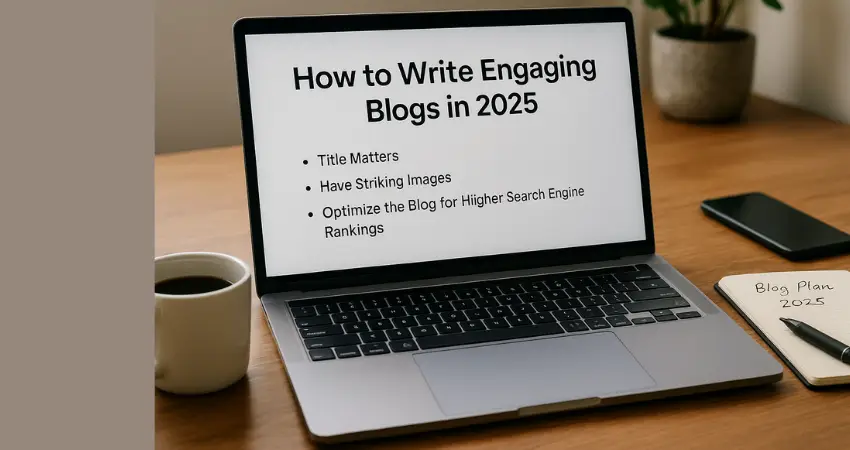
Engaging blogs are written for different purposes. Some write it to share knowledge. Others to make money or to pour out their thoughts. But all blogs are not equal. Some are popular while many are ignored. We look at how to write engaging blogs this year. Title Matters The first thing is to have an interesting or catchy title. For your information, people are looking for different things. Some are looking for knowledge. Certain folk want to do research for a purchasing decision. Some want to find out the best product/service which they will eventually acquire. Put yourself in the reader’s shoes and brainstorm what they need as well as want. This will shorten the timespan to choose the right title and the appropriate content for it. Have Striking Images Including images makes a blog look good and easy to read. You can source your images from free sites. If you can afford it, go for paid sites. In general, paid sites have a wider variety of images and have better quality images than free sites. Do not make the mistake of selecting the first image you come across. Allocate time to go through and shortlist the appropriate and best image for your blog. Optimize the Blog for Higher Search Engine Rankings One important factor is fast loading of the blog. Readers will not wait to read blogs that take too much time to load. Make sure that your blog is responsive. To put it simply the blog should look good as well as easy to read across multiple devices. Today most people use their respective smartphones to do various activities including reading blogs. Avoid keyword stuffing. The blog should have a title that is high in demand. The focus keyword should be included in the title, sub-headings, a few times within the blog as well as in the meta description. Use a quality hosting platform for your website. The reason being your blog will load faster and there will be minimal downtime. Other advantages of using a quality hosting platform are stellar customer support and ease of publishing the blog. Also, you can edit the blog conveniently with little or no technical knowledge. Ease of Readability Do not use bombastic language and obscure words. Use simple words known to most readers. Offer translation to cater to readers familiar with languages other than the one the blog is written in. Have relevant sub-headings for paragraphs that readers can scan and decide whether to read that particular paragraph or not. Use short as well as simple sentences. It is a good practice to use active voice instead of passive voice in the blog. Each paragraph should be short and not too big. Organizing the content will surely help readability and scale up popularity. Edit Well Use tools such as Grammarly to spot and rectify spelling mistakes, grammatical errors as well as incorrect punctuation. It is a good practice to proofread the blog at least twice to make sure the blog quality is satisfactory. Have a fresh pair of eyes to examine the content. This is because another person will have a different perspective and catch errors you have missed or overlooked. Have both Internal Links and External Links Include a few internal links in the blog. The links could offer additional information or in-depth explanations. Do not have too many links as this will make the blog look cluttered and confuse the reader. Include a few external links to authoritative sites. This will boost credibility as well as ramp up search engine rankings for the blog. A Final Note Make sure your blog delivers real value, is easy to read, and visually appealing. Once it’s live, promote it across platforms, respond to comments, and give credit where it’s due. Consistency, quality, and engagement are what turn a casual reader into a loyal follower. Need help? We are there—whether it’s refining your content, optimizing for SEO, or brainstorming ideas. Start writing with purpose, publish with confidence, and watch your blog grow in 2025.
Understanding Tone of Voice in UX Writing: The 4 Dimensions Every Writer Needs to Master
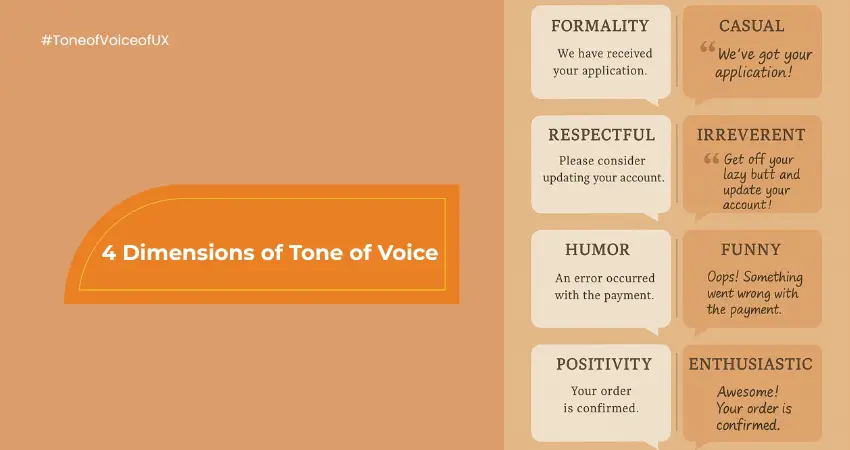
Tone of voice in UX writing is more than just personality—it’s a powerful UX design principle that influences user trust, clarity, and connection. And in an online environment where users are constantly scanning and judging with limited attention spans, tone becomes the invisible bridge between design and human experience. Whether you’re writing a 404 error message, onboarding flow, or chatbot script, your tone of voice determines how the message lands—emotionally and cognitively. This article breaks down the four essential tone of voice dimensions—developed through usability research—and shows how content writers and UX professionals can use them to craft accessible, consistent, and compelling microcopy. Why Tone of Voice in UX Writing Isn’t Optional Anymore Tone of voice is often dismissed as something you sprinkle at the end of the content process. That’s a mistake. Here’s why it deserves a front-row seat in every UX writing strategy: It builds trust. A consistent and relatable tone builds credibility and emotional comfort. It reduces cognitive load. Familiar and human-centred language is easier to process, especially in high-stress moments like error handling or payments. It reflects brand integrity. Your product’s tone should echo your values. If you’re a brand that promotes simplicity and empowerment, your copy should too. It shapes user behavior. Tone can nudge users toward taking action or provide the reassurance they need to continue a task. Tone isn’t an overlay—it’s part of the UX architecture. The 4 Dimensions of Tone of Voice (and How to Use Them) The tone of your writing can be broken down into four sliders or spectrums. These allow teams to visualise, define, and apply voice in a more systemised way. 1. Formal vs Casual Formality sets the tone for how professional or conversational your writing feels. A formal tone is structured, respectful, and restrained. It minimises contractions and slang and is best suited for sensitive, legal, financial, or high-stakes content. A casual tone mirrors everyday speech. It uses contractions and informal phrases. This style humanises the interface and makes it approachable. Deeper Insight: A formal tone may signal authority but can also create distance. A casual tone feels warm but may lose precision. Balance based on the user journey stage. Tip for writers: If you’re writing across multiple touchpoints (e.g., FAQs, landing pages, chat support), define a tone range rather than a single point. Formal: “Your credentials have been verified.” Casual: “All set! You’re good to go.” 2. Funny vs Serious Humour in UX writing is powerful—but it’s not always welcome. A humorous tone introduces playfulness and charm. It’s ideal for light-hearted products, creative industries, or gamified user experiences. A serious tone is neutral, direct, and no-nonsense. It’s crucial during tasks that involve user stress, confusion, or critical data. Deeper Insight: Humour is cultural, contextual, and highly subjective. What works in a Gen Z fintech app may fall flat in an enterprise SaaS dashboard. Tip for writers: Always user-test humour. One misplaced joke can erode brand trust more than a typo. Funny: “Oops! We messed up. We’re fixing it faster than you can say ‘debug’.” Serious: “An unexpected error occurred. Please try again.” 3. Respectful vs Irreverent This dimension speaks to how seriously the brand takes the user’s emotions, expectations, and boundaries. A respectful tone communicates empathy, support, and user-centric thinking. It avoids assumptions, sarcasm, and flippant responses. An irreverent tone is bold, edgy, and sometimes provocative. It deliberately challenges norms to stand out and appeal to a specific, loyal user base. Deeper Insight: This spectrum often aligns with your brand’s broader values. Are you inclusive and careful, or do you want to push boundaries and be noticed? Tip for writers: Irreverence is not the absence of respect—it’s a calculated tone strategy. If you’re targeting niche audiences, irreverence can be magnetic. Respectful: “Would you like to turn on reminders?” Irreverent: “Want us to nag you with helpful reminders? You know you love it.” 4. Enthusiastic vs Matter-of-Fact This spectrum deals with energy—how much enthusiasm or emotional weight your writing carries. Enthusiastic writing radiates positivity and excitement. Use it for moments of achievement, onboarding, or promotions. A matter-of-fact tone is neutral and direct. It’s suitable for documentation, transactions, and backend processes. Deeper Insight: High enthusiasm during error messages can feel tone-deaf. Similarly, a flat tone during user success moments may undercut momentum. Tip for writers: Treat tone like a thermostat. Dial it up during emotionally positive touchpoints; lower it during serious or instructional content. Enthusiastic: “Hooray! You’ve unlocked your next milestone!” Neutral: “Your progress has been updated.” How to Build a Scalable Tone of Voice Strategy Too often, tone is inconsistent because teams write in silos. Here’s how to build a shared framework: Create a Tone of Voice Grid Plot your product’s default tone across the four dimensions. Use examples of what to say and what not to say to build clarity. Map Tone to Journey Stages Define how tone shifts across onboarding, support, transactions, empty states, and celebrations. For example: Onboarding = Casual + Enthusiastic Error message = Formal + Serious CTA = Casual + Confident Use Voice Principles to Train Teams Go beyond do’s and don’ts. Create a tone principle like “We speak like a friendly expert—approachable but precise.” Let this drive how content is shaped. Test, Analyse, Iterate Use tone testing frameworks like pairwise tone comparison, heatmaps, and task completion rates. UX writing is UX. Track how tone affects performance metrics. To Sum Up Tone of voice in UX writing is not the finishing touch—it’s part of the interface. It guides, reassures, persuades, and sometimes even entertains. By understanding and applying the four tone dimensions—formality, humour, respectfulness, and enthusiasm—you build more human-centred, credible, and persuasive experiences. In an era where users are bombarded by apps, notifications, and messages, tone becomes your differentiator.
How to Write Blogs That Actually Get Read
Blog writing today is no longer just a creative hobby — it’s a powerful skill that can build authority, drive traffic, and create real impact. Yet, with millions of new posts published daily, most blogs barely survive the scroll. If you’ve struggled to get eyes on your work, you’re not alone. But here’s the truth: mastering blog writing is not about writing more, it’s about writing smarter, deeper, and with more empathy for your reader. In this blueprint, you’ll learn the proven strategies that turn ordinary blog writing into unforgettable experiences readers want to share. Why Most Blogs Get Ignored (and How to Avoid It) With so much content competing for attention online, average blog writing struggles to stand out. Readers are craving: Genuine answers to their problems Clear action steps they can apply immediately A relatable, human voice behind the content If your blog writing doesn’t offer connection, depth, or relevance, it gets lost — no matter how well-formatted it looks. That’s why aligning your blog writing with experience, expertise, authority, and trust (EEAT) is now non-negotiable. In this article we cover 7 important points that will help you improve your blogging skills. Lets jump right in. 1. Know Exactly Who You Are Talking To Effective blog writing starts with intimacy — knowing exactly who you’re serving. Before writing, ask these questions: Who is my ideal reader? What are they worried about today? How can my blog writing genuinely help them?Successful blogs feel personal, not generic. They read like a letter from a mentor or a friend. Pro Tip: Create a simple persona. Imagine one real person reading your blog writing and focus only on solving their immediate problems. 2. Create Magnetic Headlines That Spark Curiosity Even the best blog writing can fail if your headline doesn’t stop the scroll. Your headline acts as the first handshake with your reader — it must create immediate interest, convey a clear benefit, and compel them to click. Winning headline techniques: Solve a clear pain point (“How to Improve Your Blog Writing Fast”) by offering an obvious benefit or shortcut. Create a curiosity gap (“You Won’t Believe How Easy Blog Writing Can Be”) by sparking intrigue without revealing everything upfront. Promise transformation (“From Invisible to Unstoppable: Blog Writing Mastery”) by showcasing the shift the reader can expect after reading your blog. Think of your headline as a promise you’re making. A strong headline sets accurate expectations for the value the reader will receive, while a weak one leads to disappointment and high bounce rates. SEO Tip: Place the term “blog writing” naturally within your headline to boost keyword relevance — but always prioritize clarity and emotional pull over robotic phrasing. 3. Write an Opening That Pulls Them In Instantly Your blog’s opening lines are critical because they decide whether the reader stays or clicks away. Strong blog writing hooks the audience emotionally, promises value, and makes them curious to continue. Weak openings cause readers to lose interest within seconds, no matter how valuable the rest of the content is. Effective blog writing opening sentence can: Ask a direct and compelling question Paint a vivid struggle the reader instantly recognizes Share a bold, unexpected fact or statistic Example: “Struggling to get your blog noticed? It’s not about luck — it’s about sharpening your blog writing craft in ways few bloggers talk about.” Remember: the goal is to make the reader feel understood — and hungry to read more. 4. Deliver Deep, Actionable Value (Not Just Surface Advice) Google’s AI search updates now reward blogs that demonstrate real experience. Shallow, generic blog writing gets buried quickly because it adds no new value to the reader’s journey. To build trust and genuine engagement through blog writing: Share real-world examples or personal anecdotes that show you have walked the path. Give practical, step-by-step actions that readers can immediately apply. Offer original frameworks or methods you’ve developed or successfully used yourself. EEAT Tip: Readers trust blog writing that is experience-backed and detail-oriented rather than generic. Example: Instead of vaguely advising, “write engaging introductions,” break down the actual process of how to craft an irresistible opening — starting with a hook, a problem statement, and a compelling reason to keep reading. 5. Structure Your Blog for Addictive Reading No one wants to read walls of text anymore. Successful blog writing today must deliver information in a visually appealing, digestible way that aligns with how readers scan content on mobile devices. When structuring your blog writing: Break long blocks of text into short, focused paragraphs (2–3 sentences each). Use clear, descriptive H2 and H3 headings to create natural stopping points and guide the reader’s eye. Introduce bullet points and numbered lists to simplify complex information. Include images, pull quotes, and generous white space to give the eyes breathing room. A clean structure doesn’t just improve readability; it keeps readers engaged longer, boosts SEO performance, and makes your blog writing more memorable. SEO Bonus: Use variations like “improve your blog writing” or “successful blog writing” in your subheadings to enhance topical relevance without sounding repetitive. 6. Build Instant Trust Through Authenticity Real blog writing builds genuine relationships between writer and reader. Readers today have finely tuned sensors for detecting insincerity, and polished corporate fluff no longer builds loyalty. To cultivate authentic trust through your blog writing: Be honest and transparent, even when admitting challenges or failures. Link to credible sources, reputable studies, and respected experts to strengthen your points. Maintain a conversational, empathetic tone that respects the reader’s intelligence and feelings.Authenticity isn’t about being perfect — it’s about being real, relatable, and reader-focused. Authority Tip: Interlink your blog writing across related posts to build a seamless, value-driven reader journey. Creating interconnected content strengthens your site’s topical authority signals and shows Google you are a credible expert in your niche. 7. End With a Clear, Motivating Call-to-Action (CTA) A strong blog writing strategy doesn’t just end with valuable information; it closes with
How I Trained Myself to Write Daily (and Actually Enjoy It)

You’ll notice the title sounds quite impressive (at least, I hope it does!). But the great thing is that anyone can achieve this — and it’s not as daunting as it sounds. All these outcomes came from doing small, consistent actions every day over a long period. Cultivating a writing habit does not need perfect conditions. Actually, it begins with a tiny action of writing every day. Whatever I have achieved today is the outcome of the small but smart and regular actions that I have taken over a long period of time. I strongly believe that tiny habits have a way of evolving into life-changing patterns and writing is no different. Here are the four core principles I used to build lasting habits. Every time I wanted to improve, these four approaches worked without fail. Let’s go straight into the topic. 1. Start Small: Write for Just a Few Minutes a Day When I first focused on building my writing habits, the biggest mistake I made was to ask myself too much. I aimed too high out of excitement – I went from barely journaling once a month to setting goals like “ writing a full short story every week.” The gap between where I was and where I wanted to be was too wide. And I failed after a week. And each failure made it harder to even try the next day. As James Clear explains in Atomic Habits, habits are fundamentally about routines. He further goes on to explain that routines thrive when you focus on small wins and visible progress. And these routines build habits. The breakthrough came when I discovered the idea of starting tiny. Instead of expecting a polished blog post daily, I committed to writing just one small sentence a day. Quality over Quantity. Even one rough sentence counted as a win. This tiny commitment removed excuses. Once writing one sentence became second nature, I naturally started writing two…then a paragraph…then a page. Over time, these small, manageable actions built momentum without feeling overwhelming. Example: My Journey Daily Writing Habit: One sentence every evening before bed. Result: In the first year, I wrote three times more articles and finally completed a novella draft. Bonus: Writing became a stress-free, joyful part of my daily routine — not a chore. 2. Focus on One Habit at a Time One of the biggest challenges in habit-building is trying to change everything all at once. I wanted to improve my writing skills, exercise daily, meditate, and cook homemade meals; and all in the same month! Naturally, I failed at all of them. Here’s what I decided to do: I started focusing on one key habit; writing daily. Until that habit felt automatic — something I no longer had to push myself into — I didn’t add anything else. This made building the habit easier and the success, sustainable. When you give your full attention to just one habit, it grows stronger, faster. 3. Remove Barriers: Make Writing Easy and Accessible We tend to underestimate how small friction points can derail habits. Even something as simple as not knowing what to write about can become a roadblock. I made it easier by: Keeping a journal and pen on my bedside table Keeping a book with writing prompts bookmarked Pre-deciding when and where I would write (e.g., “After dinner, at my desk”) By eliminating decisions and setup effort, writing became almost automatic. If you reduce the number of choices and hurdles, showing up becomes the default. Tip: Create a writing space that feels welcoming. It doesn’t have to be fancy. Even a cleared-off corner with a cup of tea can signal “It’s time to write.” 4. Celebrate Small Wins Initially, finishing a paragraph felt underwhelming — “Is this even progress?” I thought. But learning to celebrate small victories made all the difference. Each finished page, each day I kept the streak alive, each story idea scribbled down; these were all wins worth noticing. Celebrating tiny milestones fuels your motivation. It builds confidence and reinforces the identity of “I’m someone who writes daily.” A small ritual, like ticking a calendar or giving yourself 5 minutes of guilt-free Instagram scrolling after writing, can anchor your brain to that success. To Sum UP The real secret to building a writing habit? Small steps, taken daily, with patience and celebration. If you show up consistently, even in the tiniest way, the results compound beautifully. By the end of the year, you won’t just be someone who “wants to write more” —you’ll be a writer.
The Difference Between Some Time, Sometime, and At Times

Understanding the difference between some time, sometime, and at times is key for writers. This article breaks it down with examples to help you use them correctly.
The DOSE Effect: Boost Writing Productivity with Science-Backed Habits
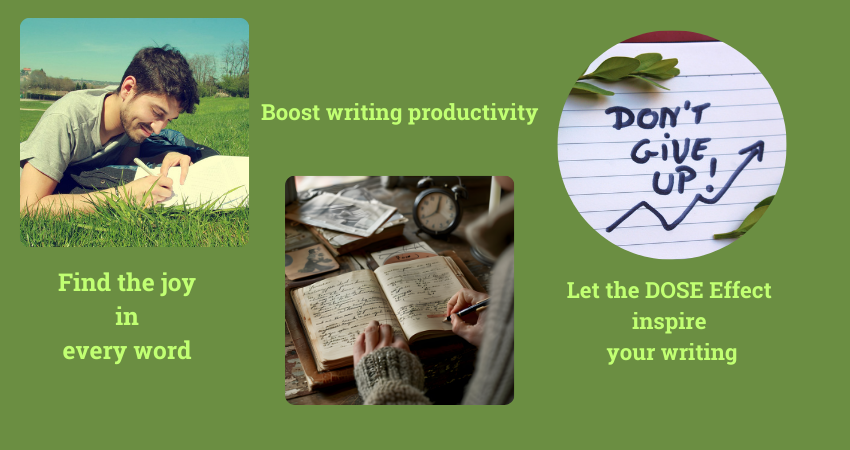
Boost writing productivity with the DOSE Effect, a science-backed strategy that uses Dopamine, Oxytocin, Serotonin, and Endorphins to transform your writing habits into a fulfilling and rewarding experience.
Timeless Writing Advice from C.S. Lewis That Still Inspires Today

Great writing isn’t just about stringing words together—it’s about clarity, rhythm, and authenticity. Decades ago, C.S. Lewis shared simple yet profound advice that still resonates today. From silencing distractions to writing with passion and precision, his words serve as a timeless guide for anyone looking to sharpen their craft. Whether you’re drafting your next LinkedIn post or penning your first book, Lewis’s wisdom reminds us that writing well is an art—and it all starts with the fundamentals.