How to Make Grammar Part of Your Daily Life
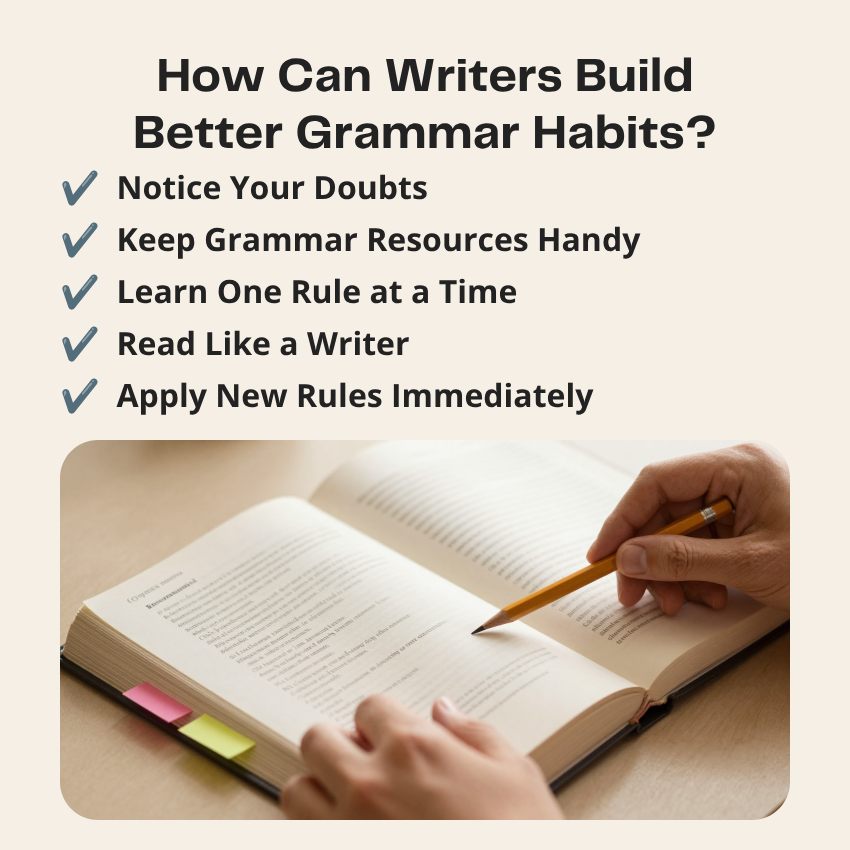
I recently started learning how to bake bread after a long hiatus. Not that I ever really learned how to bake properly in the first place, so in many ways, I’m still very much a beginner. And some days, it frustrates me. I want the measurements to be right. I want the dough to feel right in my hands. I want that smooth elasticity that experienced bakers seem to achieve without even thinking about it. Instead, I find myself adding too much flour, too little water, kneading too much, or perhaps not enough. And then there is the shoulder pain. Nobody tells you that bread making can be hard work. Kneading dough repeatedly for ten or fifteen minutes can leave your shoulders protesting long before the dough is ready. But I keep trying. Because somewhere between the sticky dough and the imperfect loaves, I know I’m learning something. Writing and grammar work much the same way. When we first start writing seriously, grammar can feel like an obstacle course. There are commas to worry about, sentence structures to remember, and rules that seem to have exceptions just when we think we finally understand them. Sometimes it feels easier to ignore grammar altogether and simply write. But grammar is not the enemy of good writing. It is one of the tools that helps good writing reach the reader. Why Grammar is Important Can people communicate without perfect grammar? Absolutely. We’ve all read messages filled with spelling mistakes and missing punctuation and still understood what the writer meant. But understanding and clarity are not always the same thing. Good grammar removes distractions. It allows readers to focus on your ideas instead of trying to interpret your sentences. It gives your writing rhythm, structure, and confidence. For freelance writers, it also builds trust. Clients may forgive the occasional typo, but consistent grammar mistakes can make even excellent ideas look careless. Nobody Truly Finishes Learning Grammar One of the biggest surprises I discovered as a writer was that experienced writers still look things up. They still debate commas. They still question whether a sentence should end with a preposition. They still open style guides and grammar references when something doesn’t feel quite right. Grammar isn’t a destination you eventually arrive at. It’s a skill you continue sharpening throughout your writing life. The same is true of vocabulary and usage. Even experienced writers occasionally pause to check whether two words mean exactly the same thing or carry slightly different shades of meaning. Take “finish” and “complete,” for example. They are often used interchangeably, yet context can make one a better choice than the other. Those small distinctions are part of what makes writing both challenging and rewarding, and they remind us that learning the craft never really stops. How Can Writers Build Better Grammar Habits? The good news is that grammar doesn’t require hours of study. Small habits often make the biggest difference. Pay Attention to the Moments of Doubt Every writer has moments when a sentence doesn’t quite feel right. Maybe the punctuation looks awkward. Perhaps you’re unsure whether a word should be hyphenated or whether you’ve used the correct tense. Sometimes you read a sentence three times and still can’t decide if it works. Don’t ignore that feeling. Those moments of uncertainty are often the best opportunities to learn. Instead of making your best guess and moving on, take a minute to look it up. Check a grammar guide, search for examples, or consult a trusted resource. More often than not, you’ll remember the answer because it was connected to a real writing problem you were trying to solve. Over time, these small moments of curiosity begin to add up. The grammar rule you looked up for a blog post today becomes something you remember for an article next month or a client project next year. Learning grammar rarely happens in one big leap. More often, it happens one question, one doubt, and one discovery at a time. Keep reference material close Every writer should have a trusted grammar reference or style guide within easy reach. Professional writers use them all the time. The good news is that you don’t have to invest in shelves full of grammar books to get started. There are plenty of reliable online resources that can help clear your doubts in minutes. If you’re unsure about commas, citation styles, sentence structure, or grammar rules, look them up. Over time, those quick searches become knowledge that stays with you. Even experienced writers regularly consult reference materials. Looking something up isn’t a sign that you’re inexperienced. It’s a sign that you care about getting it right. Learn one thing at a time Trying to master grammar on a weekend is like trying to master bread baking in a single afternoon. You wouldn’t expect to understand hydration ratios, gluten development, fermentation, shaping, and scoring all at once. Most bakers learn one technique at a time and build on it gradually. Grammar works the same way. Don’t try to memorize every rule, exception, and punctuation mark in one sitting. Start with one concept, perhaps commas, subject-verb agreement, or the difference between “its” and “it’s.” Use it in your writing until it begins to feel natural. Then move on to the next concept. Small improvements made consistently often lead to bigger results than trying to learn everything at once. A year from now, you probably won’t remember the afternoon you spent learning a grammar rule, but you’ll notice how much more confident and effortless your writing has become. Read with a writer’s eye Reading is one of the easiest ways to improve your grammar without feeling as though you’re studying. The next time you read a book, a blog post, or a magazine article, pay attention to how experienced writers structure their sentences, use punctuation, and guide readers from one idea to the next. Notice where they use short sentences for emphasis and longer ones to develop an idea. Observe how commas
Content Strategy Explained: The Modern Guide for Writers, Freelancers, and Small Businesses

There was a time when publishing regularly was enough. A writer could publish a few blog posts each month, add a handful of keywords, share the articles on social media, and expect some results. Small businesses could post whenever they found the time and still attract attention online.That approach doesn’t work as well anymore. Today, AI can produce articles, emails, social media captions, product descriptions, and website copy in minutes. The internet is filling up with content faster than ever before, which means that creating content is no longer the challenge it once was. The real challenge is creating content that serves a purpose. This is where content strategy becomes important. Content strategy isn’t reserved for large companies with marketing departments and six-figure budgets. In many ways, it matters even more to the freelance writer building a portfolio, the startup founder juggling multiple roles, and the small business owner trying to grow without hiring a full marketing team. Many businesses now rely on a combination of freelancers, AI tools, and lean teams rather than dedicated content departments. At the same time, writers are increasingly expected to contribute far more than words on a page. Clients want help with audience research, topic selection, search intent, content planning, and distribution. The role of the writer is changing along with the expectations placed on content professionals. Businesses are no longer looking only for someone who can write an article. They are looking for someone who understands why that article should exist, who it is meant to help, and what business outcome it should support. For writers willing to develop those skills, that shift represents an opportunity rather than a threat. Writers who understand content strategy can move beyond charging for words and start charging for outcomes. Small businesses that understand content strategy can compete with larger organizations without matching their budgets, headcount, or advertising spend. The rise of AI hasn’t reduced the importance of strategy. If anything, it has enhanced it. AI can help create content faster, but it cannot decide which customer questions deserve attention, which topics support business growth, or which experiences make a business worth trusting. Those decisions still belong to people. This guide was written for writers who want to become more valuable, freelancers who want to offer more than content creation, and small businesses that need every piece of content to work harder. If you’ve ever wondered what content strategy actually means, how it fits into the age of AI, or how to apply it without a marketing department, this guide will walk you through it. Who This Guide Is For This guide is designed for: New content writers who want to understand the thinking behind successful content rather than simply learn how to write articles. Freelance writers who want to offer higher-value services and move beyond charging by the word. Experienced writers who want to move into content strategy or consulting roles. Small business owners who handle their own content because hiring an in-house marketing team isn’t realistic. Startup founders, solopreneurs, and one-person marketing teams trying to make every piece of content count. Professionals trying to understand how content strategy fits into a world increasingly shaped by AI tools and AI search experiences. You don’t need expensive software, a marketing degree, or a large team to build an effective content strategy. What you do need is a clear understanding of your audience, a plan for helping them, and a way to ensure that your content contributes to something larger than filling an editorial calendar. What Is Content Strategy? Ask ten people to define content strategy and you’ll probably hear ten different answers.Some will say it’s SEO. Others will describe it as a content calendar, while some assume it means publishing consistently on LinkedIn or posting a certain number of blog articles every month. Those activities may form part of a content strategy, but they are not the strategy itself.At its simplest, content strategy is the process of planning, creating, distributing, and improving content so that it helps both the audience and the business achieve a specific goal. Every piece of content should have a job to do.That job may be attracting potential customers, building trust, generating leads, educating buyers, answering common questions, or helping someone move closer to making a decision. If content exists simply because there was an empty slot on the publishing calendar, it may keep a website active, but it is unlikely to move the business forward in any meaningful way. One of the most widely accepted definitions comes from content strategist Kristina Halvorson, who described content strategy as:”The creation, publication, and governance of useful, usable content.”It remains one of the clearest definitions available. Useful content solves a genuine problem. Usable content is easy to understand and act upon, while governance ensures that content decisions are guided by a process rather than a series of disconnected publishing efforts. Content Strategy Is Not a Content Calendar One of the biggest misconceptions about content strategy is that it is simply a spreadsheet filled with article titles and publishing dates.However, It isn’t. A content calendar answers operational questions such as what will be published this month, who will create it, when it will go live, and which channels will be used to distribute it. Those questions matter, but they come much later in the process.Content strategy asks larger questions about the audience the business wants to serve, the problems those people are trying to solve, the information they need before they trust a business, and the actions they should take after consuming the content. For example, a calendar may include an article on AI writing tools scheduled for Friday morning. Content strategy asks whether that topic attracts the right audience, answers a meaningful question, and supports a larger objective such as generating leads, building authority, or growing a newsletter audience. This is where many freelancers and small businesses get stuck. The calendar gets filled because something needs to be published. One week the topic is AI because everyone is talking about AI. The following week the focus shifts to SEO
9 AI Tools Every Content Creator Should Know About
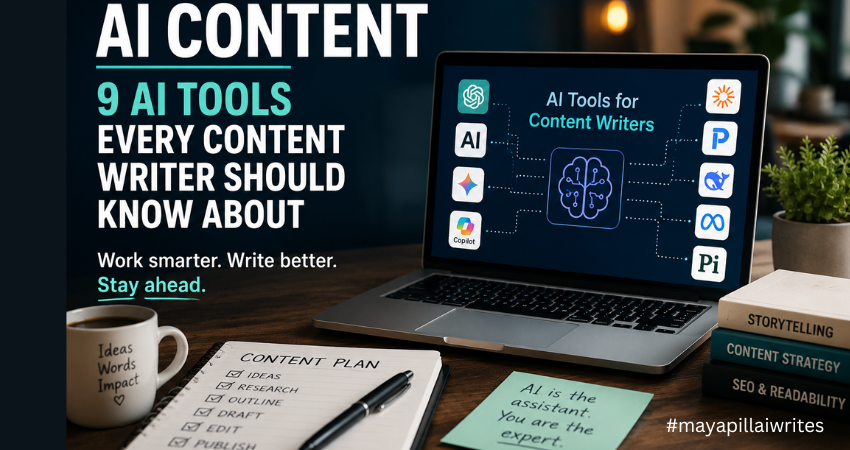
Artificial intelligence has changed the way content is created, researched, and optimized. As a content writer, I’ve seen firsthand how AI content tools have evolved from simple writing assistants into powerful platforms that support research, ideation, editing, and productivity. Despite the concerns surrounding AI, one thing has become increasingly clear: AI is not replacing good writers. Instead, it is becoming part of the modern writer’s toolkit. Whether you’re a freelancer, blogger, copywriter, content marketer, or someone looking to start a writing career, understanding how AI tools work can help you become more productive without sacrificing quality. The key is knowing which tools to use, when to use them, and how to maintain your expertise and voice throughout the content creation process. In this article, I’ll walk through nine AI tools that content writers should know about, compare their strengths, and explain how they can support modern content workflows. The Growing Role of AI in Content Creation Businesses are producing more content than ever before. Websites need blog posts. Brands need newsletters. E-commerce stores need product descriptions. Marketing teams need social media content, case studies, white papers, and landing pages. At the same time, Google continues to prioritize high-quality content that demonstrates Experience, Expertise, Authoritativeness, and Trustworthiness (E-E-A-T). This creates a challenge for writers. We need to produce content consistently while maintaining accuracy, originality, and value. That’s where AI content tools can help. Rather than replacing writers, these tools help reduce time spent on repetitive tasks such as: Research Topic ideation Outlining Editing Content optimization Summarization The most successful writers use AI to improve efficiency while keeping human judgment at the center of the process. Before I discuss the tools on this list, I want to mention the one I use most often. While every tool has its strengths, ChatGPT remains my preferred AI assistant for content creation. Over time, it has become a regular part of my writing workflow, helping me research, brainstorm, structure articles, refine ideas, and even create cover images and infographics for my content. I’ve experimented with several AI tools over the past few years. Some are excellent at research. Others are better suited for long-form writing, technical documentation, or social media content. Each tool serves a different purpose, and I don’t believe there’s a single “perfect” AI platform for every writer. Yet I keep coming back to ChatGPT. Part of the reason is how naturally it fits into my workflow. I don’t simply use it to write articles for me. Instead, I use it to organize thoughts, explore different angles, identify content gaps, and develop stronger outlines before I start writing. One of the biggest challenges writers face is getting started. Sometimes the ideas are there, but they are scattered. ChatGPT helps me bring those ideas together and create a structure that makes the writing process easier. I also appreciate its flexibility. On any given day, I might be working on a cybersecurity article, website copy for a client, a LinkedIn post, or a personal blog. ChatGPT adapts well to different formats, audiences, and writing styles, which makes it useful across multiple projects. Another reason I rely on it is the time it saves. Content creation involves much more than writing. Research, outlines, content briefs, FAQs, title suggestions, meta descriptions, and social media snippets all take time. ChatGPT helps speed up those tasks, allowing me to spend more time on research, storytelling, and editing. Beyond writing, I also use ChatGPT to support the visual side of content creation. For many of my articles, I create custom cover images and simple infographics using AI-generated prompts. Instead of spending hours searching for the right stock image or trying to explain a design concept from scratch, I can describe what I need and quickly generate ideas that match the topic of the article. This has been particularly useful for cybersecurity content, where finding relevant and non-generic visuals can be challenging. I also use it when creating infographics for blog posts, LinkedIn content, and website articles. Whether I need a comparison graphic, a process flow, a timeline, or a feature breakdown, ChatGPT helps me organize the information and create clear visual concepts that are easier for readers to understand. As content becomes increasingly visual, having a tool that assists with both written and visual content makes the entire publishing process more efficient. As someone who writes about cybersecurity and technology, I also find it useful for simplifying complex topics. Technical concepts often need to be explained in a way that’s accessible to everyday readers. ChatGPT helps me break down complicated ideas into clear, understandable language without losing the core message. What I value most, however, is that it feels more like a brainstorming partner than a content generator. I can ask questions, test ideas, challenge assumptions, and explore different perspectives. That collaborative aspect is what keeps me returning to it. That said, AI is still just a tool. Every article requires fact-checking, editing, and human judgment. Personal experience, expertise, and critical thinking cannot be automated. While ChatGPT remains my preferred choice, the reality is that every writer’s needs are different. That’s why it’s worth exploring the wider AI landscape and understanding where each tool can add value to your content creation process. While ChatGPT has become a valuable part of my content workflow, I also believe it’s important to understand how AI platforms handle user data. As writers, we often use AI tools for research, brainstorming, and content development, which means we’re regularly sharing prompts and information with these systems. Before using any AI tool extensively, it’s worth understanding its privacy practices, data handling policies, and security considerations. If you’re interested in learning more, I recently explored the topic in detail in my article, “ChatGPT Privacy in 2026: What Users Should Know.“ AI Content Tools Comparison Table Tool Best For Major Strength Ideal User ChatGPT Content creation Versatility Freelancers and bloggers Claude Long-form writing Large context window Researchers and editors Gemini Research and productivity Google integration Content marketers Perplexity
10 Mistakes Freelance Writers Make
Let’s be honest—freelance writing can feel like a juggling act. Between finding clients, meeting deadlines, and producing top-notch work, it’s easy to slip up. Whether it’s undervaluing your time or rushing through edits, every writer makes mistakes. But here’s the thing: those mistakes aren’t career-ending. They’re opportunities to learn and grow. If you’ve ever felt stuck or frustrated in your freelance writing journey, you’re not alone. Let’s unpack 10 common mistakes freelance writers make and how you can avoid them. 1. Saying Yes to Every Project Freelance writers often feel pressured to say “yes” to every opportunity, especially when starting out. But taking on every project can leave you overwhelmed, overworked, and, frankly, uninspired. Not every job will align with your skills or interests, and that’s okay. The solution? Take a step back and evaluate each opportunity. Does the project excite you? Does it pay fairly? If not, it’s better to politely decline than to burn out on work that doesn’t fulfill you. 2. Undercharging for Your Work Many freelance writers struggle with pricing their services. It’s tempting to lowball your rates to land a client, but that often backfires. Charging too little not only undervalues your expertise but can also leave you stressed about making ends meet. Instead, research what other writers in your niche charge and confidently set rates that reflect your skills. Remember, your time and talent are worth it. 3. Miscommunicating with Clients Clear communication is the backbone of any successful project. Without it, misunderstandings can crop up, leaving both you and your client frustrated. It’s easy to assume you know what the client wants, but assumptions often lead to mistakes. Always ask questions, clarify details, and provide updates throughout the project. Clients appreciate writers who take the time to get things right. 4. Missing Deadlines We’ve all been there—biting off more than we can chew and scrambling to finish on time. Missing deadlines, though, can harm your reputation and damage client trust. To avoid this, get real about how long a project will take. Use tools like Google Calendar to keep track of deadlines and break the work into manageable chunks. And if life throws you a curveball? Communicate with your client right away. They’ll value your honesty. 5. Skipping the Editing Phase You’ve just finished a draft, and the temptation to hit “send” is strong. But skipping the editing phase is one of the biggest mistakes a freelance writer can make. Even small typos can leave a bad impression. Make editing non-negotiable. Take a short break before revisiting your draft with fresh eyes, and use tools like Grammarly or Hemingway to catch errors. The extra effort goes a long way. 6. Avoiding Self-Promotion If promoting yourself feels awkward, you’re not alone. Many writers hesitate to market their skills, relying instead on job boards or word-of-mouth. But avoiding self-promotion limits your growth. A strong online presence—like a polished LinkedIn profile or a personal website—can showcase your expertise and attract the right clients. You don’t need to brag; just share your work and let it speak for itself. 7. Forgetting to Use Contracts Skipping contracts might save time upfront, but it can lead to headaches later. Without clear terms, you risk payment issues, scope creep, or even losing control of your work. Protect yourself and your clients by always using a simple contract. It doesn’t need to be fancy—just outline what you’re delivering, when, and for how much. 8. Trying to Be a Jack-of-All-Trades Many freelance writers try to cover every topic under the sun, thinking it will make them more marketable. But being a generalist often makes it harder to stand out. Clients look for specialists who understand their industry. Find a niche you’re passionate about—whether it’s tech, travel, or parenting content—and focus on building your expertise there. You’ll not only attract better-paying clients but also enjoy the work more. 9. Taking Feedback Personally Let’s face it—receiving feedback can sting. Writing is personal, and criticism can feel like a direct attack on your skills. But taking feedback personally only holds you back. Instead, view it as an opportunity to improve. Ask yourself, “What can I learn from this?” Applying constructive feedback helps you grow and build stronger client relationships. 10. Neglecting Professional Growth Freelance writing isn’t a “set it and forget it” career. Trends evolve, and clients expect writers to keep up. If you’re not actively improving your skills, you risk falling behind. Dedicate time to learning, whether it’s through online courses, books, or webinars. Staying curious and adaptable ensures you stay competitive in the industry. To Wrap Up Mistakes are a natural part of any journey, and freelance writing is no exception. What matters most is how you respond to them. By recognizing these common pitfalls and taking proactive steps to avoid them, you’ll set yourself up for long-term success. Remember, it’s okay to make mistakes—they’re opportunities to learn, grow, and become an even better writer. So, which mistake will you tackle first? Looking for a writer who can bring your brand’s voice to life? I’d love to help. Let’s talk about your project and create content that works as hard as you do!