How to Write Conversational Content for Voice Search
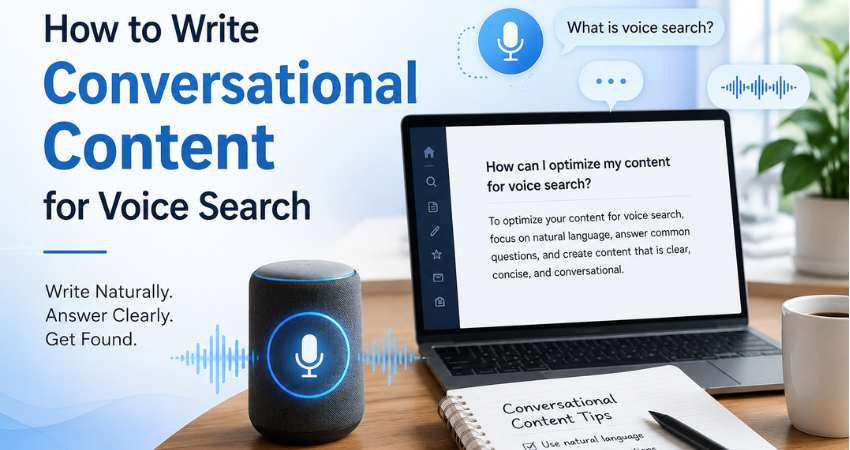
The growth of voice-enabled devices has changed the way people search for information online. Consumers no longer rely exclusively on short, keyword-driven searches typed into a search engine. Instead, they speak to their devices in the same way they would speak to another person. This shift has created a greater demand for conversational content, content that reflects natural speech patterns while maintaining accuracy, authority, and clarity. For professional content writers, copywriters, and small business owners, understanding this change is no longer optional. Voice search is influencing how search engines interpret intent, evaluate relevance, and select content for featured snippets and spoken responses. Businesses that continue to write solely for traditional search behavior risk missing opportunities to connect with users who increasingly prefer spoken queries. The challenge for writers is not simply to insert more questions into their content. The challenge is to produce conversational content that sounds natural, addresses user intent directly, and still reflects professional expertise. Why Voice Search Requires a Different Writing Approach Traditional search behavior encouraged writers to optimize for short and often fragmented keywords. A user might type “content marketing tips” or “best accounting software” into a search engine because typing long phrases was inconvenient. Voice search has removed that limitation. Users now ask complete questions such as: “What are the best content marketing strategies for a small business?” “Which accounting software is suitable for freelancers managing multiple clients?” “How can I improve my website’s visibility in voice search results?” These searches reveal far more about user intent than traditional keywords ever could. Search engines have evolved to understand context, relationships between words, and the purpose behind a search query. As a result, content that mirrors natural speech patterns often performs better in voice search environments than content written solely around keyword placement. This is where conversational content becomes particularly valuable. It aligns with the way people ask questions and the way search engines interpret those questions. Understanding What Conversational Content Really Means Many writers mistakenly assume that conversational writing requires an informal tone or excessive use of casual language. In reality, professional conversational content is neither overly formal nor overly casual. A useful way to think about it is this: conversational writing should resemble the way an experienced professional explains a subject to a client or colleague during a meeting. The language should be: Clear and direct. Easy to understand. Free from unnecessary jargon. Structured around the reader’s questions. Supported by examples and practical context. The objective is not to simplify ideas to the point of losing accuracy. The objective is to remove barriers that prevent readers from understanding those ideas quickly. A cybersecurity consultant explaining ransomware to a small business owner does not rely on technical terminology simply to demonstrate expertise. An experienced consultant explains the issue in language that allows the client to understand both the risk and the solution. Content writers should approach voice search in the same manner. Begin With the Questions Your Audience Is Already Asking The foundation of effective conversational content lies in understanding audience language. Many writers begin with keywords and then attempt to build content around them. Voice search often requires the opposite approach. Writers should begin with questions and then identify the keywords embedded within those questions. Several sources provide valuable insight into audience language: Customer emails and inquiries. Frequently asked questions received by sales teams. Customer support conversations. Social media discussions. Industry forums and communities. Google’s “People Also Ask” section. For example, a traditional SEO keyword may be: Freelance writing rates However, a voice search user is more likely to ask: “How much should a freelance writer charge for a 1500-word article?” The second query provides context, intent, and a clear expectation of the information required. Professional writers who study audience questions carefully will naturally produce stronger conversational content because they are responding to genuine concerns rather than hypothetical search terms. Write the Way People Speak, Not the Way Textbooks Read One of the habits many writers struggle to overcome is the tendency to sound overly academic or unnecessarily formal.Consider the following example. Formal corporate language: “Organizations should implement comprehensive cybersecurity frameworks to mitigate vulnerabilities and enhance digital resilience.” Natural professional language: “Businesses should strengthen their cybersecurity practices before attackers can exploit weaknesses in their systems.” Both statements communicate the same idea. The difference is that the second example sounds closer to the language used during a professional consultation or client meeting. Experienced writers understand that authority does not come from complicated vocabulary. Authority comes from clarity, relevance, and accuracy. When developing conversational content, writers should ask themselves whether the sentence sounds like something they would comfortably say during a presentation or workshop. If the answer is no, the sentence may require revision. Use Questions as Structural Elements Within the Article Voice search is fundamentally question-driven. As a result, question-based headings often perform exceptionally well because they align closely with search behavior. Instead of using generic headings such as: Pricing Models Local SEO Content Distribution Consider headings such as: How Should Freelance Writers Price Their Services? How Can Local Businesses Improve Their Visibility in Voice Search? Which Distribution Channels Deliver the Best Results for Long-Form Content? Question-based headings provide several advantages: They mirror real search behavior. They improve topical relevance. They support featured snippet opportunities. They help readers navigate the article more easily. This structure also strengthens conversational content because it creates the feeling of a dialogue between the writer and the reader. Provide the Answer Before Expanding the Discussion One of the defining characteristics of successful voice search content is immediacy. When users ask a question through a voice assistant, they expect an answer quickly. Search engines respond to this expectation by favoring content that addresses the query directly. For example, if the heading asks: What Is Voice Search Optimization? The opening sentence should answer the question immediately. Voice search optimization is the process of creating content that matches the natural language patterns people use when speaking to voice-enabled devices. Once the answer has been established, the writer can introduce examples,
Content Strategy Explained: The Modern Guide for Writers, Freelancers, and Small Businesses

There was a time when publishing regularly was enough. A writer could publish a few blog posts each month, add a handful of keywords, share the articles on social media, and expect some results. Small businesses could post whenever they found the time and still attract attention online.That approach doesn’t work as well anymore. Today, AI can produce articles, emails, social media captions, product descriptions, and website copy in minutes. The internet is filling up with content faster than ever before, which means that creating content is no longer the challenge it once was. The real challenge is creating content that serves a purpose. This is where content strategy becomes important. Content strategy isn’t reserved for large companies with marketing departments and six-figure budgets. In many ways, it matters even more to the freelance writer building a portfolio, the startup founder juggling multiple roles, and the small business owner trying to grow without hiring a full marketing team. Many businesses now rely on a combination of freelancers, AI tools, and lean teams rather than dedicated content departments. At the same time, writers are increasingly expected to contribute far more than words on a page. Clients want help with audience research, topic selection, search intent, content planning, and distribution. The role of the writer is changing along with the expectations placed on content professionals. Businesses are no longer looking only for someone who can write an article. They are looking for someone who understands why that article should exist, who it is meant to help, and what business outcome it should support. For writers willing to develop those skills, that shift represents an opportunity rather than a threat. Writers who understand content strategy can move beyond charging for words and start charging for outcomes. Small businesses that understand content strategy can compete with larger organizations without matching their budgets, headcount, or advertising spend. The rise of AI hasn’t reduced the importance of strategy. If anything, it has enhanced it. AI can help create content faster, but it cannot decide which customer questions deserve attention, which topics support business growth, or which experiences make a business worth trusting. Those decisions still belong to people. This guide was written for writers who want to become more valuable, freelancers who want to offer more than content creation, and small businesses that need every piece of content to work harder. If you’ve ever wondered what content strategy actually means, how it fits into the age of AI, or how to apply it without a marketing department, this guide will walk you through it. Who This Guide Is For This guide is designed for: New content writers who want to understand the thinking behind successful content rather than simply learn how to write articles. Freelance writers who want to offer higher-value services and move beyond charging by the word. Experienced writers who want to move into content strategy or consulting roles. Small business owners who handle their own content because hiring an in-house marketing team isn’t realistic. Startup founders, solopreneurs, and one-person marketing teams trying to make every piece of content count. Professionals trying to understand how content strategy fits into a world increasingly shaped by AI tools and AI search experiences. You don’t need expensive software, a marketing degree, or a large team to build an effective content strategy. What you do need is a clear understanding of your audience, a plan for helping them, and a way to ensure that your content contributes to something larger than filling an editorial calendar. What Is Content Strategy? Ask ten people to define content strategy and you’ll probably hear ten different answers.Some will say it’s SEO. Others will describe it as a content calendar, while some assume it means publishing consistently on LinkedIn or posting a certain number of blog articles every month. Those activities may form part of a content strategy, but they are not the strategy itself.At its simplest, content strategy is the process of planning, creating, distributing, and improving content so that it helps both the audience and the business achieve a specific goal. Every piece of content should have a job to do.That job may be attracting potential customers, building trust, generating leads, educating buyers, answering common questions, or helping someone move closer to making a decision. If content exists simply because there was an empty slot on the publishing calendar, it may keep a website active, but it is unlikely to move the business forward in any meaningful way. One of the most widely accepted definitions comes from content strategist Kristina Halvorson, who described content strategy as:”The creation, publication, and governance of useful, usable content.”It remains one of the clearest definitions available. Useful content solves a genuine problem. Usable content is easy to understand and act upon, while governance ensures that content decisions are guided by a process rather than a series of disconnected publishing efforts. Content Strategy Is Not a Content Calendar One of the biggest misconceptions about content strategy is that it is simply a spreadsheet filled with article titles and publishing dates.However, It isn’t. A content calendar answers operational questions such as what will be published this month, who will create it, when it will go live, and which channels will be used to distribute it. Those questions matter, but they come much later in the process.Content strategy asks larger questions about the audience the business wants to serve, the problems those people are trying to solve, the information they need before they trust a business, and the actions they should take after consuming the content. For example, a calendar may include an article on AI writing tools scheduled for Friday morning. Content strategy asks whether that topic attracts the right audience, answers a meaningful question, and supports a larger objective such as generating leads, building authority, or growing a newsletter audience. This is where many freelancers and small businesses get stuck. The calendar gets filled because something needs to be published. One week the topic is AI because everyone is talking about AI. The following week the focus shifts to SEO
9 AI Tools Every Content Creator Should Know About
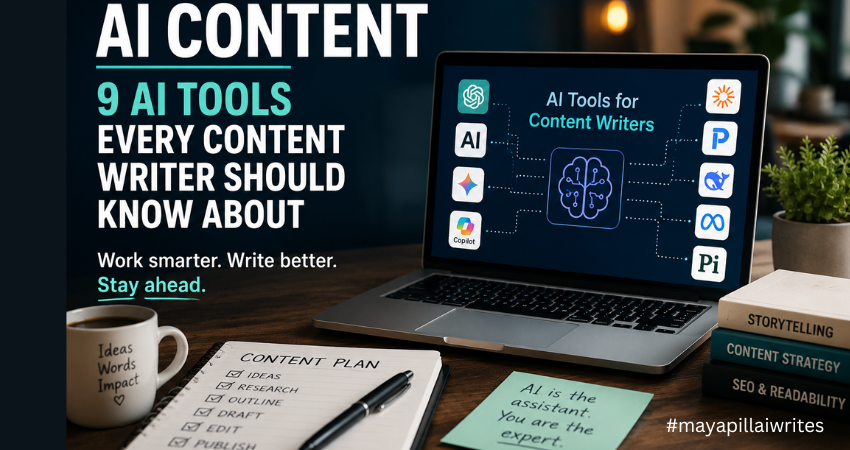
Artificial intelligence has changed the way content is created, researched, and optimized. As a content writer, I’ve seen firsthand how AI content tools have evolved from simple writing assistants into powerful platforms that support research, ideation, editing, and productivity. Despite the concerns surrounding AI, one thing has become increasingly clear: AI is not replacing good writers. Instead, it is becoming part of the modern writer’s toolkit. Whether you’re a freelancer, blogger, copywriter, content marketer, or someone looking to start a writing career, understanding how AI tools work can help you become more productive without sacrificing quality. The key is knowing which tools to use, when to use them, and how to maintain your expertise and voice throughout the content creation process. In this article, I’ll walk through nine AI tools that content writers should know about, compare their strengths, and explain how they can support modern content workflows. The Growing Role of AI in Content Creation Businesses are producing more content than ever before. Websites need blog posts. Brands need newsletters. E-commerce stores need product descriptions. Marketing teams need social media content, case studies, white papers, and landing pages. At the same time, Google continues to prioritize high-quality content that demonstrates Experience, Expertise, Authoritativeness, and Trustworthiness (E-E-A-T). This creates a challenge for writers. We need to produce content consistently while maintaining accuracy, originality, and value. That’s where AI content tools can help. Rather than replacing writers, these tools help reduce time spent on repetitive tasks such as: Research Topic ideation Outlining Editing Content optimization Summarization The most successful writers use AI to improve efficiency while keeping human judgment at the center of the process. Before I discuss the tools on this list, I want to mention the one I use most often. While every tool has its strengths, ChatGPT remains my preferred AI assistant for content creation. Over time, it has become a regular part of my writing workflow, helping me research, brainstorm, structure articles, refine ideas, and even create cover images and infographics for my content. I’ve experimented with several AI tools over the past few years. Some are excellent at research. Others are better suited for long-form writing, technical documentation, or social media content. Each tool serves a different purpose, and I don’t believe there’s a single “perfect” AI platform for every writer. Yet I keep coming back to ChatGPT. Part of the reason is how naturally it fits into my workflow. I don’t simply use it to write articles for me. Instead, I use it to organize thoughts, explore different angles, identify content gaps, and develop stronger outlines before I start writing. One of the biggest challenges writers face is getting started. Sometimes the ideas are there, but they are scattered. ChatGPT helps me bring those ideas together and create a structure that makes the writing process easier. I also appreciate its flexibility. On any given day, I might be working on a cybersecurity article, website copy for a client, a LinkedIn post, or a personal blog. ChatGPT adapts well to different formats, audiences, and writing styles, which makes it useful across multiple projects. Another reason I rely on it is the time it saves. Content creation involves much more than writing. Research, outlines, content briefs, FAQs, title suggestions, meta descriptions, and social media snippets all take time. ChatGPT helps speed up those tasks, allowing me to spend more time on research, storytelling, and editing. Beyond writing, I also use ChatGPT to support the visual side of content creation. For many of my articles, I create custom cover images and simple infographics using AI-generated prompts. Instead of spending hours searching for the right stock image or trying to explain a design concept from scratch, I can describe what I need and quickly generate ideas that match the topic of the article. This has been particularly useful for cybersecurity content, where finding relevant and non-generic visuals can be challenging. I also use it when creating infographics for blog posts, LinkedIn content, and website articles. Whether I need a comparison graphic, a process flow, a timeline, or a feature breakdown, ChatGPT helps me organize the information and create clear visual concepts that are easier for readers to understand. As content becomes increasingly visual, having a tool that assists with both written and visual content makes the entire publishing process more efficient. As someone who writes about cybersecurity and technology, I also find it useful for simplifying complex topics. Technical concepts often need to be explained in a way that’s accessible to everyday readers. ChatGPT helps me break down complicated ideas into clear, understandable language without losing the core message. What I value most, however, is that it feels more like a brainstorming partner than a content generator. I can ask questions, test ideas, challenge assumptions, and explore different perspectives. That collaborative aspect is what keeps me returning to it. That said, AI is still just a tool. Every article requires fact-checking, editing, and human judgment. Personal experience, expertise, and critical thinking cannot be automated. While ChatGPT remains my preferred choice, the reality is that every writer’s needs are different. That’s why it’s worth exploring the wider AI landscape and understanding where each tool can add value to your content creation process. While ChatGPT has become a valuable part of my content workflow, I also believe it’s important to understand how AI platforms handle user data. As writers, we often use AI tools for research, brainstorming, and content development, which means we’re regularly sharing prompts and information with these systems. Before using any AI tool extensively, it’s worth understanding its privacy practices, data handling policies, and security considerations. If you’re interested in learning more, I recently explored the topic in detail in my article, “ChatGPT Privacy in 2026: What Users Should Know.“ AI Content Tools Comparison Table Tool Best For Major Strength Ideal User ChatGPT Content creation Versatility Freelancers and bloggers Claude Long-form writing Large context window Researchers and editors Gemini Research and productivity Google integration Content marketers Perplexity