Before You Write That Raksha Bandhan Story, Read This

Every year, as Raksha Bandhan approaches, writing communities begin sharing story prompts. Anthology announcements appear on social media, writers start discussing ideas, and before long, the same themes begin to surface. A loving brother. A caring sister. A beautifully decorated thali. A heartfelt promise of protection. While there’s nothing wrong with these stories, many of them end up sounding alike because they begin with the festival instead of the people. Over the years, I’ve realized that festivals don’t create memorable stories. Relationships do. I don’t have a brother, so I don’t have childhood memories of tying a Rakhi or waiting excitedly for a gift. In Kerala, Raksha Bandhan is not celebrated. Yet I’ve always been drawn to stories about siblings. Perhaps that’s because affection between siblings has very little to do with rituals. It’s found in everyday moments that most people hardly notice. A sister quietly packs an extra snack because she knows her brother will forget his lunch. A brother pretending not to care, yet waiting outside his sister’s examination hall until she finishes. The teasing, the arguments, the unspoken understanding, and the comfort of knowing someone has known you since childhood. Those are the moments that stay with us. And that’s exactly where a good Raksha Bandhan story begins. When I read stories written around festivals, I rarely remember how beautifully the rituals were described. What I remember are the characters. I remember the elderly brother who travelled overnight just to spend a few hours with his sister. I remember the woman who found an old Rakhi while cleaning a cupboard after her mother’s passing. I remember the child who carefully saved pocket money for weeks to buy the simplest gift. None of these memories stayed with me because of the festival. They stayed because they felt like they could have belonged to someone I knew. As writers, I think we sometimes put too much pressure on ourselves to come up with an unusual plot. We spend hours wondering what unexpected twist we can add, when perhaps we should be asking a different question altogether. What relationship am I trying to capture? Once you answer that honestly, the story usually finds its own direction. One thing I’ve noticed while observing families is that siblings rarely express affection in obvious ways. They interrupt each other, argue over the smallest things, borrow belongings without permission, and somehow still become each other’s strongest support during difficult times. That contradiction is what makes sibling relationships interesting. If every conversation between your characters is warm and affectionate, readers may admire them, but they probably won’t believe them. The stories that touch us are usually the ones that allow their characters to be imperfect. A brother may forget an important date but remember exactly how his sister likes her tea. A sister may spend half the day complaining about her brother, yet be the first person he calls when life falls apart. These little contradictions make characters feel human because that’s how most of us are. I’ve also learned that ordinary objects often carry more emotion than dramatic scenes. Whenever I’m searching for the heart of a story, I find myself thinking about things people hold on to rather than the events themselves. An old greeting card. A faded photograph. A train ticket. A lunch box. Even a pencil box with a forgotten Rakhi tucked inside. Objects quietly collect memories over the years. They become witnesses to lives being lived, and sometimes they tell a story without a single line of dialogue. Readers notice these details because they’ve experienced something similar in their own lives. Most of us have opened an old drawer looking for one thing and unexpectedly found another that transported us back in time. That feeling is difficult to manufacture, but when it appears naturally in a story, it creates an instant connection. Another mistake I often see is giving too much importance to the festival itself. We don’t need several paragraphs explaining how the thali was decorated or how every ritual was performed unless those details move the story forward. Your readers already know what Raksha Bandhan looks like. What they don’t know is how your characters will change because of that day. Perhaps a brother returns home after years of working abroad. Perhaps two siblings meet after an argument that lasted longer than either of them expected. Perhaps an elderly woman ties a Rakhi to an old photograph because the brother she misses is no longer there. The festival becomes meaningful because of what it awakens in the characters, not because of the rituals themselves. If there’s one piece of advice I’d offer any writer working on a Raksha Bandhan story, it’s this. Spend less time thinking about the festival and more time observing people. Listen to conversations at family gatherings. Watch how siblings tease each other across a dining table. Notice the little gestures that often go unnoticed. Someone serving food before being asked. Someone carrying an extra umbrella because they know the other person never remembers one. These moments may seem ordinary, but they often become the foundation of unforgettable stories. I also believe we don’t talk enough about the many forms sibling relationships can take today. Not every Raksha Bandhan story has to revolve around a biological brother and sister. Some cousins grow up like siblings. Some sisters become each other’s greatest protectors. Some people celebrate the festival with friends who have become family over the years. And there are those who celebrate quietly through memories because the person they once tied a Rakhi to is no longer with them. These stories deserve to be told because they reflect the world we live in today. Whenever I finish writing a story, I don’t ask myself whether readers will cry. Instead, I ask whether they’ll remember it. Those are two very different things. A story doesn’t have to be heartbreaking to stay with someone. Sometimes it only needs one honest moment, one familiar memory, or one
How Much Grammar Do Writers Really Need to Know?
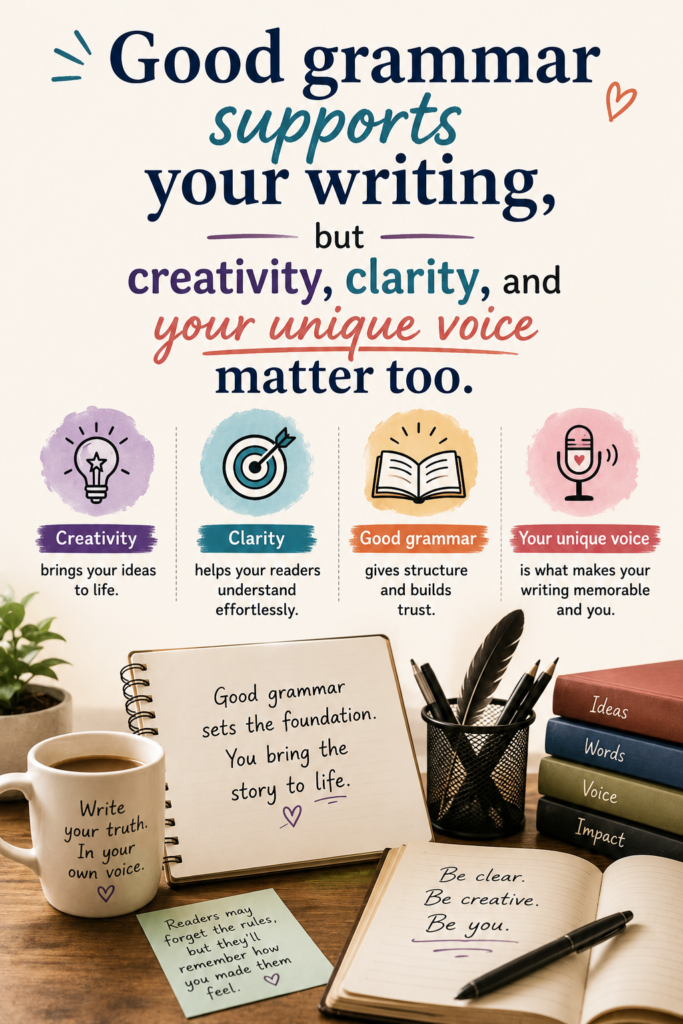
Do writers need to know every grammar rule to write well? After more than 25 years as a professional writer, I don’t think so. I still pause, check a word, or look up a grammar rule when I’m unsure. Knowing grammar and writing effectively aren’t always the same thing. Whether you’re an aspiring story writer, content writer, or experienced professional, you need enough grammar knowledge to communicate clearly and recognize when a sentence isn’t working. AI and grammar tools can suggest corrections, but they can’t replace your judgment. So, how much grammar do writers really need to know? Enough to write clearly, question suggestions, and make informed choices. This blog is for aspiring writers who are still finding their way with grammar, content writers who want to write with more clarity, and story writers who don’t want grammar rules to restrict their creativity. It’s also for experienced writers who occasionally stop mid-sentence and wonder, “Is this actually correct?” If you’ve ever wondered how much grammar you really need to know, especially when AI and grammar tools are always within reach, this article is for you. What Does Knowing Grammar Really Mean for a Writer? When we say a writer should “know grammar,” what exactly do we mean? Does it mean being able to name every tense, explain the difference between a phrase and a clause, or recall every punctuation rule without looking it up? Not necessarily. For a writer, knowing grammar is less about proving how many rules you remember and more about knowing how to use language to express an idea clearly. It’s the ability to build sentences that say what you intend, notice when something sounds unclear, and make changes without losing your natural voice. You may not always remember the technical term for what you’re doing, but you understand how your choice of words, sentence structure, and punctuation affects the person reading them. Knowing Grammar Is More Than Memorizing Rules You don’t need to remember the name of every tense or explain every grammatical term to be a good writer. What you do need is an understanding of how sentences work. For example: “She don’t know why the meeting was cancelled.” You may not stop to think about subject-verb agreement, but you probably know that “She doesn’t know” sounds right. That’s grammar knowledge at work. The same applies when you’re writing a story, blog post, or client article. Knowing grammar helps you spot something that doesn’t sound quite right, even if you can’t immediately name the rule behind it. Understanding How Language Communicates Meaning Grammar isn’t only about whether a sentence is correct. It also affects what the sentence means. Consider these two sentences: “Let’s eat, Grandma.” means you are inviting Grandma to join you for a meal. The comma shows that you are speaking directly to her.“Let’s eat Grandma.” without the comma suggests something very different—it sounds like you are suggesting eating Grandma herself. One small comma changes the meaning completely. It’s an exaggerated example, but it shows why punctuation and sentence structure matter. As writers, our job is to make sure the reader understands what we intended to say. If a reader has to go back and read a sentence twice because the meaning isn’t clear, the problem may not be the idea. It may simply be how the sentence is structured. Developing an Instinct for What Works The more you write, read, and edit, the more you begin to develop an instinct for language. You start noticing when a sentence feels too long, when a word doesn’t quite fit, or when punctuation interrupts the natural flow. For instance: “The article that I wrote last week, which was about grammar and was written for new writers, received a lot of responses.” There’s nothing terribly wrong with the sentence, but it feels heavy. You might naturally rewrite it as: “Last week, I wrote an article about grammar for new writers. It received a lot of responses.” That’s the instinct writers develop over time. It’s not about showing how much grammar you know. It’s about making choices that help your readers move through your words without struggling to understand them. And that, to me, is what knowing grammar as a writer really means. This section builds on the previous one by moving from what knowing grammar means to why that knowledge matters in real writing. Why Does Grammar Matter for Writers? When you write, you already know what you want to say. Your reader doesn’t. They have only the words you put on the page to understand your thoughts, ideas, or story. Grammar helps those words carry your intended meaning from your mind to theirs. This is why grammar matters whether you’re writing a novel, a blog post, website copy, an email, or an article for a client. The purpose and style may change, but the need to be understood doesn’t. Good grammar works quietly in the background. Readers may not notice when you get it right, but they often notice when something goes wrong. Grammar Helps Writers Communicate Clearly At its simplest, grammar gives structure to our thoughts. It helps us show who did what, when something happened, and how one idea connects to another. Consider this sentence: “After speaking to Riya, Meera said she would send the manuscript.” This sentence confuses the reader because the pronoun “she” is unclear. It could refer to either Meera or Riya, so the reader cannot be sure who is supposed to send the manuscript. Who is sending the manuscript, Riya or Meera? The sentence is grammatically possible, but the pronoun “she” makes the meaning unclear. A simple rewrite solves the problem: “After speaking to Riya, Meera said, ‘I’ll send the manuscript.’” As writers, we shouldn’t make readers work harder than necessary to understand what we mean. Clear grammar helps keep the reader focused on the idea or story rather than on figuring out the sentence. Grammar Prevents Misunderstandings Sometimes, a small grammatical or punctuation error can communicate something
How to Make Grammar Part of Your Daily Life
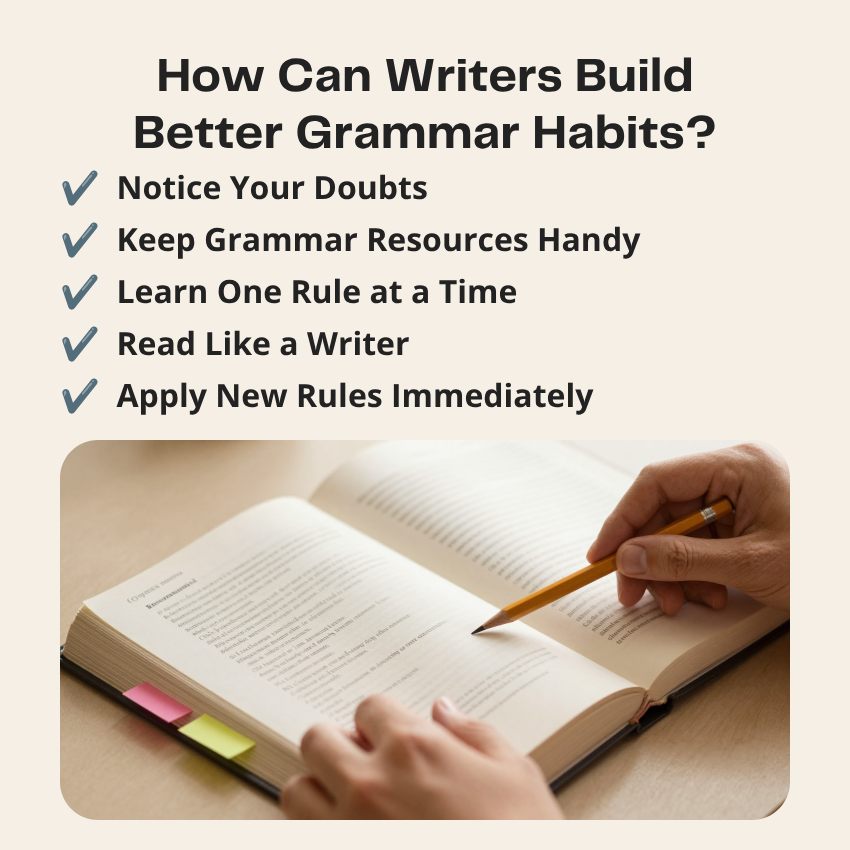
I recently started learning how to bake bread after a long hiatus. Not that I ever really learned how to bake properly in the first place, so in many ways, I’m still very much a beginner. And some days, it frustrates me. I want the measurements to be right. I want the dough to feel right in my hands. I want that smooth elasticity that experienced bakers seem to achieve without even thinking about it. Instead, I find myself adding too much flour, too little water, kneading too much, or perhaps not enough. And then there is the shoulder pain. Nobody tells you that bread making can be hard work. Kneading dough repeatedly for ten or fifteen minutes can leave your shoulders protesting long before the dough is ready. But I keep trying. Because somewhere between the sticky dough and the imperfect loaves, I know I’m learning something. Writing and grammar work much the same way. When we first start writing seriously, grammar can feel like an obstacle course. There are commas to worry about, sentence structures to remember, and rules that seem to have exceptions just when we think we finally understand them. Sometimes it feels easier to ignore grammar altogether and simply write. But grammar is not the enemy of good writing. It is one of the tools that helps good writing reach the reader. Why Grammar is Important Can people communicate without perfect grammar? Absolutely. We’ve all read messages filled with spelling mistakes and missing punctuation and still understood what the writer meant. But understanding and clarity are not always the same thing. Good grammar removes distractions. It allows readers to focus on your ideas instead of trying to interpret your sentences. It gives your writing rhythm, structure, and confidence. For freelance writers, it also builds trust. Clients may forgive the occasional typo, but consistent grammar mistakes can make even excellent ideas look careless. Nobody Truly Finishes Learning Grammar One of the biggest surprises I discovered as a writer was that experienced writers still look things up. They still debate commas. They still question whether a sentence should end with a preposition. They still open style guides and grammar references when something doesn’t feel quite right. Grammar isn’t a destination you eventually arrive at. It’s a skill you continue sharpening throughout your writing life. The same is true of vocabulary and usage. Even experienced writers occasionally pause to check whether two words mean exactly the same thing or carry slightly different shades of meaning. Take “finish” and “complete,” for example. They are often used interchangeably, yet context can make one a better choice than the other. Those small distinctions are part of what makes writing both challenging and rewarding, and they remind us that learning the craft never really stops. How Can Writers Build Better Grammar Habits? The good news is that grammar doesn’t require hours of study. Small habits often make the biggest difference. Pay Attention to the Moments of Doubt Every writer has moments when a sentence doesn’t quite feel right. Maybe the punctuation looks awkward. Perhaps you’re unsure whether a word should be hyphenated or whether you’ve used the correct tense. Sometimes you read a sentence three times and still can’t decide if it works. Don’t ignore that feeling. Those moments of uncertainty are often the best opportunities to learn. Instead of making your best guess and moving on, take a minute to look it up. Check a grammar guide, search for examples, or consult a trusted resource. More often than not, you’ll remember the answer because it was connected to a real writing problem you were trying to solve. Over time, these small moments of curiosity begin to add up. The grammar rule you looked up for a blog post today becomes something you remember for an article next month or a client project next year. Learning grammar rarely happens in one big leap. More often, it happens one question, one doubt, and one discovery at a time. Keep reference material close Every writer should have a trusted grammar reference or style guide within easy reach. Professional writers use them all the time. The good news is that you don’t have to invest in shelves full of grammar books to get started. There are plenty of reliable online resources that can help clear your doubts in minutes. If you’re unsure about commas, citation styles, sentence structure, or grammar rules, look them up. Over time, those quick searches become knowledge that stays with you. Even experienced writers regularly consult reference materials. Looking something up isn’t a sign that you’re inexperienced. It’s a sign that you care about getting it right. Learn one thing at a time Trying to master grammar on a weekend is like trying to master bread baking in a single afternoon. You wouldn’t expect to understand hydration ratios, gluten development, fermentation, shaping, and scoring all at once. Most bakers learn one technique at a time and build on it gradually. Grammar works the same way. Don’t try to memorize every rule, exception, and punctuation mark in one sitting. Start with one concept, perhaps commas, subject-verb agreement, or the difference between “its” and “it’s.” Use it in your writing until it begins to feel natural. Then move on to the next concept. Small improvements made consistently often lead to bigger results than trying to learn everything at once. A year from now, you probably won’t remember the afternoon you spent learning a grammar rule, but you’ll notice how much more confident and effortless your writing has become. Read with a writer’s eye Reading is one of the easiest ways to improve your grammar without feeling as though you’re studying. The next time you read a book, a blog post, or a magazine article, pay attention to how experienced writers structure their sentences, use punctuation, and guide readers from one idea to the next. Notice where they use short sentences for emphasis and longer ones to develop an idea. Observe how commas
Word of the Day: Scrutiny

Synopsis Some words slow things down on purpose. Scrutiny is one of them. It suggests careful attention, close observation, and a willingness to look beyond surface-level claims. In writing, research, and public discourse, scrutiny is what separates assumption from understanding. Word of the Day Scrutiny Word of the Day Meaning Scrutiny refers to close, detailed examination or inspection. It implies careful and critical attention, often applied to information, actions, decisions, or claims that require verification or evaluation. Word of the Day Pronunciation Guide SKROO-tuh-nee Word of the Day: Origin and Etymology The word scrutiny comes from the Latin scrutinium, meaning “a searching examination” or “inquiry.” It is derived from scrutari, which means “to search” or “to examine thoroughly.” The original sense of the word emphasized investigation rather than judgment. As the word entered English, scrutiny retained its association with careful examination, especially in formal, legal, and intellectual contexts. Over time, it became closely linked with accountability and evaluation. Word of the Day: Synonyms and Antonyms Synonyms Examination Inspection Analysis Review Assessment Antonyms Neglect Oversight Inattention Disregard Carelessness Word of the Day Usage in Sentences: Across Genres In Journalism The report came under intense scrutiny after new details emerged. In Political Analysis The proposal faced public scrutiny before being approved. In Academic Writing All data was subjected to rigorous scrutiny before publication. In Literature She felt his scrutiny linger longer than words could explain. In Travel Writing The glossy brochure promised luxury, but the details did not stand up to close scrutiny. In Legal Commentary The evidence was placed under judicial scrutiny. Why “Scrutiny” Is Worth Knowing Scrutiny is an important word because it frames attention as deliberate and careful. Instead of implying suspicion or hostility, it emphasizes responsibility. In writing, using scrutiny signals that claims are being examined thoughtfully, not dismissed casually. For writers and researchers, scrutiny is essential. It shapes how sources are evaluated, arguments are tested, and conclusions are reached. Without scrutiny, information remains unchecked. With it, clarity and credibility emerge. In editorial work, scrutiny often strengthens trust. Readers respond to writing that demonstrates care in how facts, language, and assumptions are handled. Word of the Day in Modern Context Today, scrutiny is everywhere. News stories, public decisions, and information shared online are often examined closely by people who want honesty and clear answers. But scrutiny isn’t limited to public debates or headlines. It shows up in performance reviews at work, academic research, and even the choices we make in our daily lives. Sometimes it helps improve quality and accountability. At other times, it can create pressure to get every detail right. For writers and creators, scrutiny serves an important purpose. It encourages careful thinking, fact-checking, and attention to detail. More importantly, it helps build and maintain the trust of readers. FAQs 1. What does scrutiny mean? Scrutiny means looking at something carefully and in detail to understand it better or check its accuracy, quality, or truthfulness. 2. Does scrutiny always have a negative meaning? No. Scrutiny simply refers to close examination. It can be neutral, positive, or critical depending on the context. 3. What is the difference between scrutiny and criticism? Scrutiny focuses on careful observation and examination, while criticism involves forming an opinion or judgment about something. 4. How do you use scrutiny in a sentence? Example: The research paper underwent careful scrutiny before it was published. 5. What does the phrase “under scrutiny” mean? “Under scrutiny” means being closely watched, examined, or evaluated by others.
Four Hours for a Jar of Jam

This is a continuation of Five Mangoes and My Mother’s Summer Jam . If you haven’t read the first part yet, I hope you’ll stop by there before joining me in my mother’s cooking session. After banishing me from the kitchen, my mother got down to business.As expected, K’s face was worth watching when she saw the five mangoes waiting for her. On most days, she only has vegetables to chop. That day, she had to peel and grate five huge raw mangoes as well.By the time she was done, there was a large steel bowl full of grated mangoes sitting on the kitchen counter.My mother added some pink salt and freshly powdered pepper to it and mixed everything well with her hand. Then she covered the bowl and left it alone for about an hour.After an hour, she placed a sieve over another vessel and tipped the mango mixture into it. Taking a potato masher, she pressed down hard, squeezing out as much juice as possible.The juice wasn’t thrown away.”It will be good in rasam or sambhar,” she said, pouring it into a glass bottle and keeping it aside.The squeezed mangoes were then measured and transferred into a heavy-bottomed kadai.For every cup of grated mango, she added a cup of jaggery.She mixed the two with a wooden spoon until the jaggery was evenly distributed. And then, she did absolutely nothing for the next three whole hours.The kadai sat undisturbed on the counter. By the time my mother switched on the stove, a thick syrup had oozed out of the mixture. The aroma was hard to ignore, the tanginess of raw mango mixed with the sweetness of jaggery. I stood there inhaling deeply, wishing there was some way to bottle that smell and keep it for another day. This was the only part of the process that wouldn’t allow her to walk away. She stood by the stove, stirring continuously and keeping a close watch on the kadai. I sat at the dining table watching her. That’s how I know she stirred it for exactly seven minutes. At the end of the seventh minute, she switched off the flame. I don’t remember her looking at a clock even once. It was almost as if an invisible timer had gone off in her head. Exactly seven minutes. Not a second more.Only then did she add the powdered misri and dry ginger that had been waiting patiently since morning. I am fairly certain she had slipped in a few cardamom pods while powdering the misri because there was a gentle hint of cardamom lingering in the kitchen.She gave everything one final stir and left the jam to cool.By then, nearly four to five hours had gone by.Four to five hours, if one counts the hour K spent peeling and grating the mangoes, the hour the grated mango rested with salt and pepper, the three hours it sat with jaggery slowly drawing out its juices, and finally those seven minutes at the stove that my mother guarded so carefully.And then came the best part.The jam didn’t even last an hour.We spread it over chapathis, sandwiched generous spoonfuls between slices of bread, and tucked some inside buns.It was my daughter who suggested trying it over vanilla ice cream. During the summer months, there is almost always a family pack of Amul vanilla ice cream sitting in our freezer. We simply love it because its mild flavor goes well with almost anything.A spoonful of the jam over a scoop of ice cream turned out to be surprisingly good. The cold creaminess of the ice cream balanced the sweet, tangy jam beautifully.My mother sat quietly watching us eat.There wasn’t enough left to fill a proper jar.But she didn’t seem disappointed.She leaned back in her chair, looking immensely pleased with herself, grinning like a cat that had got its cream.Perhaps that was what she had wanted all along.Not rows of jam bottles lined up on a shelf.Just her family gathered around the table, happily eating something she had spent an entire afternoon making.
9 AI Tools Every Content Creator Should Know About
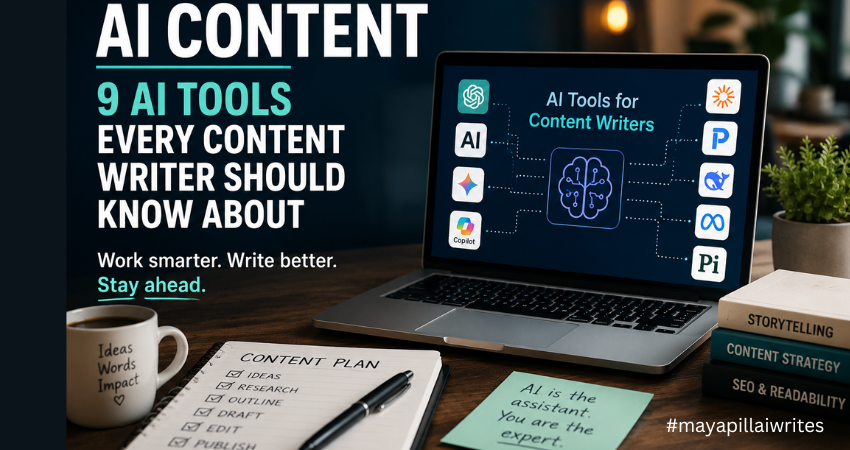
Artificial intelligence has changed the way content is created, researched, and optimized. As a content writer, I’ve seen firsthand how AI content tools have evolved from simple writing assistants into powerful platforms that support research, ideation, editing, and productivity. Despite the concerns surrounding AI, one thing has become increasingly clear: AI is not replacing good writers. Instead, it is becoming part of the modern writer’s toolkit. Whether you’re a freelancer, blogger, copywriter, content marketer, or someone looking to start a writing career, understanding how AI tools work can help you become more productive without sacrificing quality. The key is knowing which tools to use, when to use them, and how to maintain your expertise and voice throughout the content creation process. In this article, I’ll walk through nine AI tools that content writers should know about, compare their strengths, and explain how they can support modern content workflows. The Growing Role of AI in Content Creation Businesses are producing more content than ever before. Websites need blog posts. Brands need newsletters. E-commerce stores need product descriptions. Marketing teams need social media content, case studies, white papers, and landing pages. At the same time, Google continues to prioritize high-quality content that demonstrates Experience, Expertise, Authoritativeness, and Trustworthiness (E-E-A-T). This creates a challenge for writers. We need to produce content consistently while maintaining accuracy, originality, and value. That’s where AI content tools can help. Rather than replacing writers, these tools help reduce time spent on repetitive tasks such as: Research Topic ideation Outlining Editing Content optimization Summarization The most successful writers use AI to improve efficiency while keeping human judgment at the center of the process. Before I discuss the tools on this list, I want to mention the one I use most often. While every tool has its strengths, ChatGPT remains my preferred AI assistant for content creation. Over time, it has become a regular part of my writing workflow, helping me research, brainstorm, structure articles, refine ideas, and even create cover images and infographics for my content. I’ve experimented with several AI tools over the past few years. Some are excellent at research. Others are better suited for long-form writing, technical documentation, or social media content. Each tool serves a different purpose, and I don’t believe there’s a single “perfect” AI platform for every writer. Yet I keep coming back to ChatGPT. Part of the reason is how naturally it fits into my workflow. I don’t simply use it to write articles for me. Instead, I use it to organize thoughts, explore different angles, identify content gaps, and develop stronger outlines before I start writing. One of the biggest challenges writers face is getting started. Sometimes the ideas are there, but they are scattered. ChatGPT helps me bring those ideas together and create a structure that makes the writing process easier. I also appreciate its flexibility. On any given day, I might be working on a cybersecurity article, website copy for a client, a LinkedIn post, or a personal blog. ChatGPT adapts well to different formats, audiences, and writing styles, which makes it useful across multiple projects. Another reason I rely on it is the time it saves. Content creation involves much more than writing. Research, outlines, content briefs, FAQs, title suggestions, meta descriptions, and social media snippets all take time. ChatGPT helps speed up those tasks, allowing me to spend more time on research, storytelling, and editing. Beyond writing, I also use ChatGPT to support the visual side of content creation. For many of my articles, I create custom cover images and simple infographics using AI-generated prompts. Instead of spending hours searching for the right stock image or trying to explain a design concept from scratch, I can describe what I need and quickly generate ideas that match the topic of the article. This has been particularly useful for cybersecurity content, where finding relevant and non-generic visuals can be challenging. I also use it when creating infographics for blog posts, LinkedIn content, and website articles. Whether I need a comparison graphic, a process flow, a timeline, or a feature breakdown, ChatGPT helps me organize the information and create clear visual concepts that are easier for readers to understand. As content becomes increasingly visual, having a tool that assists with both written and visual content makes the entire publishing process more efficient. As someone who writes about cybersecurity and technology, I also find it useful for simplifying complex topics. Technical concepts often need to be explained in a way that’s accessible to everyday readers. ChatGPT helps me break down complicated ideas into clear, understandable language without losing the core message. What I value most, however, is that it feels more like a brainstorming partner than a content generator. I can ask questions, test ideas, challenge assumptions, and explore different perspectives. That collaborative aspect is what keeps me returning to it. That said, AI is still just a tool. Every article requires fact-checking, editing, and human judgment. Personal experience, expertise, and critical thinking cannot be automated. While ChatGPT remains my preferred choice, the reality is that every writer’s needs are different. That’s why it’s worth exploring the wider AI landscape and understanding where each tool can add value to your content creation process. While ChatGPT has become a valuable part of my content workflow, I also believe it’s important to understand how AI platforms handle user data. As writers, we often use AI tools for research, brainstorming, and content development, which means we’re regularly sharing prompts and information with these systems. Before using any AI tool extensively, it’s worth understanding its privacy practices, data handling policies, and security considerations. If you’re interested in learning more, I recently explored the topic in detail in my article, “ChatGPT Privacy in 2026: What Users Should Know.“ AI Content Tools Comparison Table Tool Best For Major Strength Ideal User ChatGPT Content creation Versatility Freelancers and bloggers Claude Long-form writing Large context window Researchers and editors Gemini Research and productivity Google integration Content marketers Perplexity
5 Tips for Writing Digital-Era Crime Fiction That Feels Real
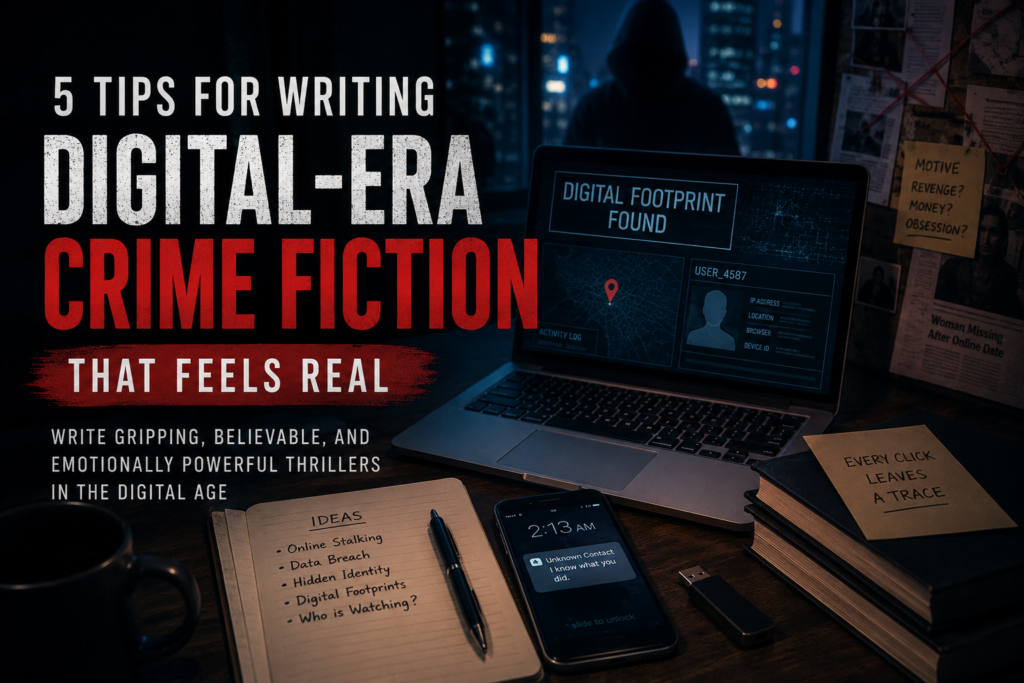
Crime fiction has always evolved with the times. Once upon a time, detectives solved crimes using handwritten letters, cigarette ash, and overheard conversations in smoky bars. Today, people leave behind different kinds of evidence, location history, deleted chats, dating app profiles, cloud backups, Reddit posts, food delivery records, and late-night Google searches they thought nobody would ever see. And that changes how crime stories work. The problem is, a lot of modern digital thrillers either become too technical or too unrealistic. Some stories read like software manuals. Others make hacking look like magic. Readers notice both. The best digital-age crime fiction feels human first, technical second. If you’re trying to write a cyber thriller, an online stalking story, or a modern detective novel, here are a few things that make the story feel believable and emotionally gripping. TL;DR Writing digital-era crime fiction isn’t about showing off technical knowledge. It’s about using technology to deepen suspense, reveal human behavior, and create believable emotional tension. The strongest cyber thrillers focus less on gadgets and more on fear, obsession, secrecy, and vulnerability in online spaces. Use Technology Like a Tool, Not a Superpower One mistake many writers make is treating technology as an instant solution. The detective taps a keyboard furiously for ten seconds and suddenly gains access to everything, passwords, CCTV feeds, deleted messages, bank records. It works in movies because the scene moves quickly. On paper, though, it often feels lazy. Real digital investigations are messy. Sometimes the phone is locked.Sometimes the footage is blurry.Sometimes the suspect used a burner account that leads nowhere. And honestly, those limitations make stories more interesting. Imagine this: A missing woman’s Instagram account suddenly becomes active at 2:13 a.m. after three months of silence. Her family believes she’s alive. But the investigator notices something odd, the captions don’t sound like her anymore. The emojis are different. The grammar is cleaner. Someone else may be using the account. That’s far more chilling than a dramatic hacking scene. Technology should raise questions, not immediately answer them. Focus on Human Behavior Online Good digital crime fiction isn’t really about computers. It’s about people behind screens. Think about how differently people behave online compared to real life. Someone quiet in public may become aggressive online. Someone lonely may build fake identities. Someone obsessed may track another person’s activity for years without ever speaking to them. Digital spaces expose habits, insecurities, and emotional patterns. A character’s browsing history can reveal fear.A deleted message can reveal regret.A fake account can reveal obsession. And often, what characters hide says more than what they openly confess. For example: A husband reports his wife missing. During the investigation, police discover he has been reading old Reddit threads about “how long phone records are stored” and “how to permanently delete cloud backups.” He hasn’t technically confessed to anything.But readers instantly feel something is wrong. That’s where tension comes from. Don’t Drown Readers in Technical Language A lot of writers think complexity equals realism. It doesn’t. Readers don’t need long explanations about malware architecture or encryption protocols unless those details directly matter to the plot. Too much jargon creates distance between the story and the reader. Most people read thrillers for emotional momentum, suspense, and atmosphere. Simple details often work better. Instead of writing: “He initiated a packet interception attack through an unsecured router vulnerability.” You could write: “He sat outside the café for two hours because he knew people trusted free Wi-Fi too easily.” The second line feels visual. Human. Cinematic. That’s the difference. You don’t need to prove you’re technically smart. You need readers to stay emotionally invested. Digital Fear Works Best When It Feels Personal The scariest thing about modern technology isn’t always surveillance. It’s exposure. People store entire lives online now, conversations, secrets, relationships, financial records, private photos, voice notes, search history. Losing control over that information feels deeply personal. That’s why digital-age thrillers work best when they tap into emotional vulnerability. A woman receives photographs taken inside her apartment, but her curtains were closed.A teenager realizes someone has been editing his old social media posts.A journalist discovers her smart speaker recorded conversations she never knew existed. None of these scenes require violence.But they still feel disturbing. Readers connect with these fears because they already live with technology every day. The danger feels possible. And believable fear is always stronger than exaggerated drama. Remember That Crime Fiction Is Still About Emotion Technology changes methods. It doesn’t change motives. People still commit crimes because of jealousy, revenge, shame, greed, desperation, loneliness, or obsession. Even the most modern cybercrime story needs emotional depth underneath the technical layer. A hacker stealing financial data for money is predictable. But a hacker targeting one specific person because of an unresolved betrayal from ten years ago? That feels human. Messy. Real. Readers may remember the technology for a moment.But they remember emotional conflict for years. Think about some of the most memorable thrillers people talk about. Usually, it isn’t because the software was accurate. It’s because the characters felt believable. The emotional core always matters more. To Sum Up A good digital crime thriller doesn’t depend on flashy hacking scenes or complicated tech language. It depends on tension, believable characters, and the uncomfortable feeling that something hidden is happening behind ordinary screens. The strongest stories understand one simple thing, technology may change the way crimes happen, but people remain the same. Fear, obsession, revenge, loneliness, greed, and guilt still sit at the center of every crime story. So while writing, don’t focus only on devices, apps, or cyber tools. Focus on what your characters are trying to hide, what they’re afraid of losing, and how technology exposes parts of them they never wanted anyone to see. That’s what makes a digital-era crime thriller feel real. And that’s what keeps readers turning pages long after the story ends. Key Takeaways Technology should complicate the story, not solve everything instantly Human behavior online matters more than technical jargon Digital
A Work Trip, a Broken Washing Machine, and a Borrowed Iron

In early 2018, I was in Chennai for a client visit and a short training program. It was one of those trips that looked neat on paper. Flights booked. Stay arranged. Schedule packed. Everything sorted.At least, that’s what I thought.I was put up in a service apartment close to the office. It felt like a sensible choice. More space than a hotel. A kitchen I didn’t use. Meals were made in the common kitchen and served upstairs in the apartment, or you could have it in the dining room. A sense of routine, even when you’re away from home. The apartment had a common washing machine, which sounded reassuring. I packed light weight shirts, trousers and salwar suits, assuming I could manage laundry easily.Little did I know that the washing machine didn’t work.Not temporarily. Not “we’ll fix it tomorrow.” It just didn’t work. After a long day of training sessions and client meetings, I found myself standing in the bathroom, staring at a bucket. I soaked my clothes before leaving for the office, scrubbed them by hand at night, and tried to convince myself that this was fine. That it was just one of those things. That I could manage.Eventually, I hired one of the cleaning staff to wash my clothes. It felt awkward. Not because they were unwilling, but because it wasn’t what I had signed up for. I wasn’t looking for a favor. I just wanted a working washing machine.The clothes came back clean enough. But then came the next problem. The cotton clothes needed to be starched and ironed to remove the wrinkles.There was no iron wala nearby.No corner shop. No roadside ironing setup. Nothing within walking distance. I asked around and was told I could borrow an iron box from one of the residents. So I did. I stood in the apartment, pressing my own clothes, hoping I wouldn’t burn a shirt I needed the next morning. None of this was dramatic. Nothing went terribly wrong. And yet, the experience stayed with me.Because travel discomforts are rarely about big failures. They’re about small frictions. The kind you don’t plan for. The kind that slowly chip away at your energy. Washing clothes in a bucket after a full workday. Borrowing an iron from a stranger. Feeling mildly frustrated but telling yourself to “adjust.”At the time, I didn’t have a name for what bothered me. I just knew I was unhappy with the whole thing. Not angry. Just tired.Looking back, I realize how much we normalize inconvenience, especially when we’re away from home. We accept broken systems because they’re “temporary.” We solve problems ourselves because it feels easier than complaining. We move on.But these small moments matter. They shape how we experience a place. How rested or drained we feel. How much mental space we have for the work we’re actually there to do.That Chennai trip taught me something simple. Comfort isn’t about luxury. It’s about things working the way they’re supposed to. Clean clothes without negotiation. Pressed clothes without favors. Systems that don’t make you improvise at the end of a long day.I didn’t write about this experience back then. It felt too ordinary. Too small.But years later, it stands out. Not because it was difficult, but because it wouldn’t happen the same way today.Now, laundry services are available at your fingertips. A few taps on your phone, and someone picks up your clothes, cleans them properly, irons them, and sends them back. No buckets. No borrowed irons. No awkward workarounds at the end of a long day.It’s easy to take that convenience for granted. But when I think back to that Chennai trip, I realize how much these small services quietly change how we travel, work, and rest.We may not remember every meeting we attend.But we surely remember the nights we stood in bathrooms with a bucket, wishing things were just a little easier.
Word of the Day: Credible
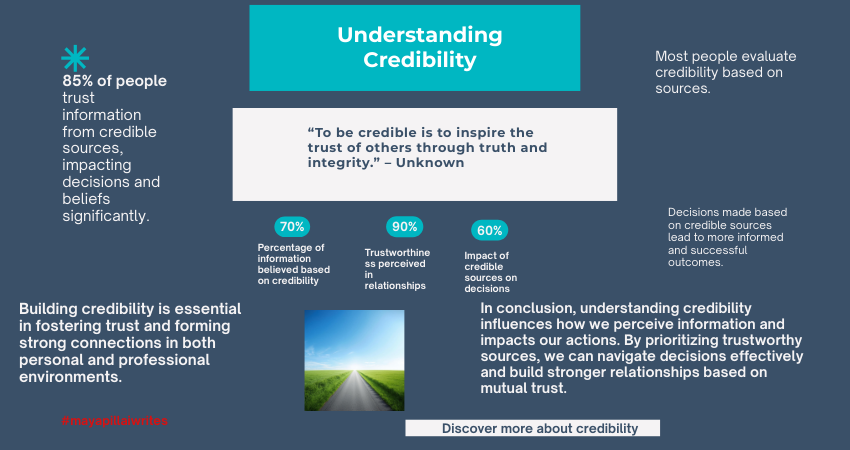
Synopsis Some words quietly carry trust. Credible is one of them. It doesn’t promise perfection or certainty, but it signals that something is believable, reliable, and worthy of attention. In writing, journalism, and everyday communication, credibility often determines whether a message is accepted or ignored. Word of the Day Credible Word of the Day Meaning Credible means able to be believed or trusted. It describes information, sources, arguments, or people that appear reliable because they are supported by evidence, consistency, or expertise. Word of the Day Pronunciation Guide KRED-uh-buhl Word of the Day: Origin and Etymology The word credible comes from the Latin credibilis, meaning “worthy of belief,” which itself comes from credere, meaning “to believe” or “to trust.” This root is shared with words such as credit and creed, all connected to belief and trust. Historically, credible was used to describe testimony or claims that deserved acceptance. Over time, its usage expanded to include people, institutions, media sources, and even ideas that demonstrate reliability through consistency and evidence. Credible: Synonyms and Antonyms Synonyms:Believable, trustworthy, reliable, convincing, dependable Antonyms:Unreliable, doubtful, implausible, questionable, untrustworthy Word of the Day Usage in Sentences: Across Genres In Journalism:The report relied on credible sources and verified data. In Political Analysis:The opposition failed to present a credible alternative policy. In Academic Writing:Only credible studies were included in the literature review. In Literature:Her fear felt credible, grounded in the reality she knew. In Travel Writing:A credible local guide made the experience safer and richer. In Legal Commentary:The court found the witness to be credible based on consistent testimony. Why “Credible” Is Worth Knowing Credible is a practical word because it helps distinguish between information that deserves attention and information that does not. Instead of dismissing something as wrong or misleading, calling it not credible points to a lack of trustworthiness without exaggeration. For writers, credibility is foundational. Style and voice matter, but credibility determines whether readers stay. Claims supported by evidence, clear sourcing, and consistent reasoning help establish a credible tone. Without it, even well-written content can fall flat. In editorial and professional writing, credible is often preferred over stronger terms because it allows space for evaluation rather than judgment. Credible in Modern Context In the modern information landscape, credible has gained renewed importance. With the volume of content available online, readers constantly assess whether information can be trusted. Credibility is now linked not only to authority, but also to transparency, accountability, and consistency. In professional spaces, being credible often means showing your work, acknowledging limitations, and avoiding overstatement. In creative and personal writing, credibility comes from emotional honesty and coherence rather than facts alone. As audiences become more discerning, credibility is no longer assumed. It is built gradually, through repetition, clarity, and care. FAQs Is credible the same as true?Not exactly. Credible means believable or trustworthy, while true means factually correct. Something can appear credible and still be proven wrong later. Can credible describe people as well as information?Yes. People are often described as credible when they are seen as reliable and consistent. What is the difference between credible and reliable?Credible focuses on believability and trust, while reliable emphasizes consistency over time. If you need help with long-form writing, blog content, or editorial pieces, I write at a pace that values thought over haste. Connect with me.
Word of the Day: Pragmatic
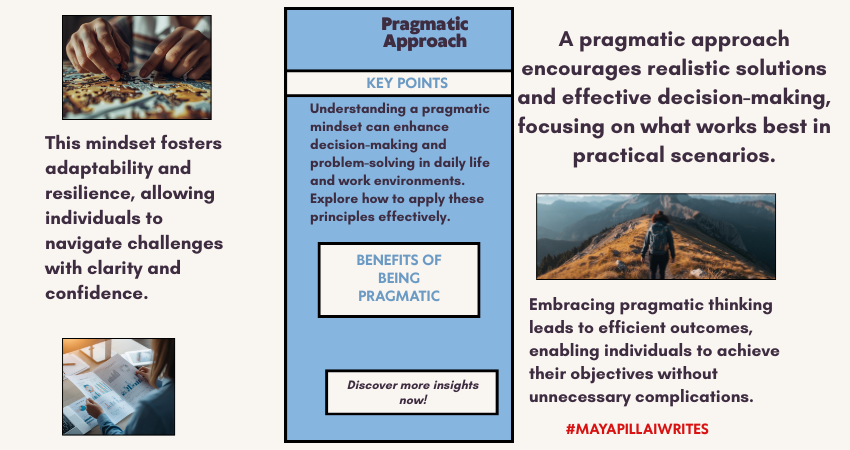
Synopsis Some words value usefulness over elegance. Pragmatic is one of them. It describes an approach that prioritizes what works over what sounds ideal. In writing, decision-making, and everyday problem-solving, this word signals a shift away from theory and toward action. Word of the Day Pragmatic Word of the Day Meaning Pragmatic refers to dealing with things sensibly and realistically, based on practical considerations rather than ideals, emotions, or abstract theories. Word of the Day Pronunciation Guide prag-MAT-ik Word of the Day: Origin and Etymology The word pragmatic comes from the Greek pragmatikos, meaning “fit for action,” which in turn comes from pragma, meaning “deed” or “act.” The original sense of the word was closely tied to action and practical involvement rather than speculation. Over time, pragmatic entered English to describe approaches that focus on results and workable solutions. Today, it is commonly used in professional, political, academic, and everyday contexts to describe decisions grounded in reality rather than ideals alone. Pragmatic: Synonyms and Antonyms Synonyms:Practical, realistic, sensible, down-to-earth, functional Antonyms:Idealistic, theoretical, impractical, unrealistic, abstract Word of the Day Usage in Sentences: Across Genres In Journalism:The report called for a pragmatic response to rising costs. In Political Analysis:A pragmatic compromise helped move the legislation forward. In Academic Writing:The study adopts a pragmatic framework focused on real-world outcomes. In Literature:She took a pragmatic view of life, shaped by experience rather than hope. In Travel Writing:A pragmatic packing list made the journey easier. In Legal Commentary:The court favored a pragmatic interpretation of the law. Why “Pragmatic” Is Worth Knowing Pragmatic is useful because it offers clarity without judgment. It doesn’t dismiss ideals, but it recognizes limitations. For writers, this word is especially valuable when discussing decision-making, strategy, or problem-solving without sounding dismissive or cynical. In editorial writing, pragmatic helps frame choices as thoughtful rather than cold. It signals consideration of constraints such as time, resources, or risk. Used carefully, it adds balance to arguments that might otherwise feel overly theoretical. Pragmatic in Modern Context In modern usage, pragmatic appears frequently in discussions around leadership, policy, work culture, and personal boundaries. It is often used to describe people who adapt expectations to circumstances rather than insisting on perfect outcomes. In professional settings, being pragmatic is increasingly seen as a strength. It reflects adaptability, maturity, and an understanding of trade-offs. In creative and freelance work, a pragmatic approach often means choosing sustainability over short-term idealism. Pragmatic thinking does not reject ambition. It simply asks what can be done now, with what is available, and moves forward from there. FAQs Is pragmatic always a positive word?Usually, yes. Pragmatic often suggests sensible and realistic thinking, though it can sound dismissive if used carelessly. Can pragmatic be used in academic or professional writing?Yes. It is commonly used in research, policy analysis, business writing, and legal commentary. What is the difference between pragmatic and practical?Practical focuses on usefulness, while pragmatic emphasizes decision-making based on real-world conditions and outcomes. If you need help with long-form writing, blog content, or editorial pieces, I write at a pace that values thought over haste.