
There was a time when publishing regularly was enough. A writer could publish a few blog posts each month, add a handful of keywords, share the articles on social media, and expect some results. Small businesses could post whenever they found the time and still attract attention online.

That approach doesn't work as well anymore. Today, AI can produce articles, emails, social media captions, product descriptions, and website copy in minutes. The internet is filling up with content faster than ever before, which means that creating content is no longer the challenge it once was. The real challenge is creating content that serves a purpose. This is where content strategy becomes important.  Content strategy isn't reserved for large companies with marketing departments and six-figure budgets. In many ways, it matters even more to the freelance writer building a portfolio, the startup founder juggling multiple roles, and the small business owner trying to grow without hiring a full marketing team.
Many businesses now rely on a combination of freelancers, AI tools, and lean teams rather than dedicated content departments. At the same time, writers are increasingly expected to contribute far more than words on a page. Clients want help with audience research, topic selection, search intent, content planning, and distribution.
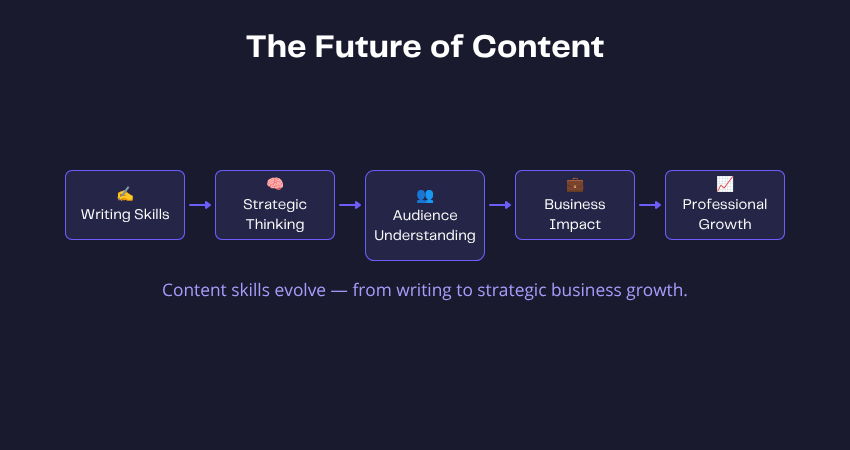
The role of the writer is changing along with the expectations placed on content professionals.
Businesses are no longer looking only for someone who can write an article. They are looking for someone who understands why that article should exist, who it is meant to help, and what business outcome it should support. For writers willing to develop those skills, that shift represents an opportunity rather than a threat. Writers who understand content strategy can move beyond charging for words and start charging for outcomes. Small businesses that understand content strategy can compete with larger organizations without matching their budgets, headcount, or advertising spend.
The rise of AI hasn’t reduced the importance of strategy. If anything, it has enhanced it. AI can help create content faster, but it cannot decide which customer questions deserve attention, which topics support business growth, or which experiences make a business worth trusting. Those decisions still belong to people.
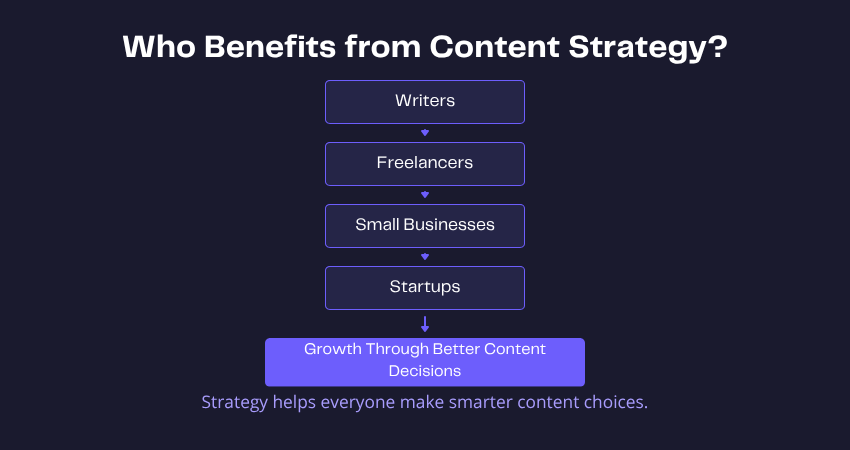
This guide was written for writers who want to become more valuable, freelancers who want to offer more than content creation, and small businesses that need every piece of content to work harder. If you’ve ever wondered what content strategy actually means, how it fits into the age of AI, or how to apply it without a marketing department, this guide will walk you through it.
This guide is designed for:New content writers who want to understand the thinking behind successful content rather than simply learn how to write articles.Freelance writers who want to offer higher-value services and move beyond charging by the word.Experienced writers who want to move into content strategy or consulting roles.Small business owners who handle their own content because hiring an in-house marketing team isn't realistic.Startup founders, solopreneurs, and one-person marketing teams trying to make every piece of content count.Professionals trying to understand how content strategy fits into a world increasingly shaped by AI tools and AI search experiences.
You don't need expensive software, a marketing degree, or a large team to build an effective content strategy.What you do need is a clear understanding of your audience, a plan for helping them, and a way to ensure that your content contributes to something larger than filling an editorial calendar. Ask ten people to define content strategy and you'll probably hear ten different answers.
Some will say it's SEO. Others will describe it as a content calendar, while some assume it means publishing consistently on LinkedIn or posting a certain number of blog articles every month. Those activities may form part of a content strategy, but they are not the strategy itself.
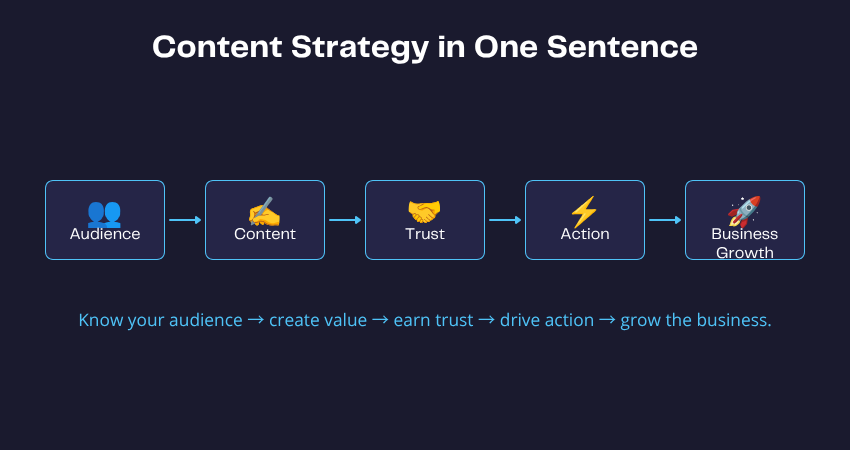
At its simplest, content strategy is the process of planning, creating, distributing, and improving content so that it helps both the audience and the business achieve a specific goal. Every piece of content should have a job to do.
That job may be attracting potential customers, building trust, generating leads, educating buyers, answering common questions, or helping someone move closer to making a decision. If content exists simply because there was an empty slot on the publishing calendar, it may keep a website active, but it is unlikely to move the business forward in any meaningful way.
One of the most widely accepted definitions comes from content strategist Kristina Halvorson, who described content strategy as:
"The creation, publication, and governance of useful, usable content."
It remains one of the clearest definitions available. Useful content solves a genuine problem. Usable content is easy to understand and act upon, while governance ensures that content decisions are guided by a process rather than a series of disconnected publishing efforts.
One of the biggest misconceptions about content strategy is that it is simply a spreadsheet filled with article titles and publishing dates.


However, It isn't. A content calendar answers operational questions such as what will be published this month, who will create it, when it will go live, and which channels will be used to distribute it. Those questions matter, but they come much later in the process.

Content strategy asks larger questions about the audience the business wants to serve, the problems those people are trying to solve, the information they need before they trust a business, and the actions they should take after consuming the content. For example, a calendar may include an article on AI writing tools scheduled for Friday morning. Content strategy asks whether that topic attracts the right audience, answers a meaningful question, and supports a larger objective such as generating leads, building authority, or growing a newsletter audience.

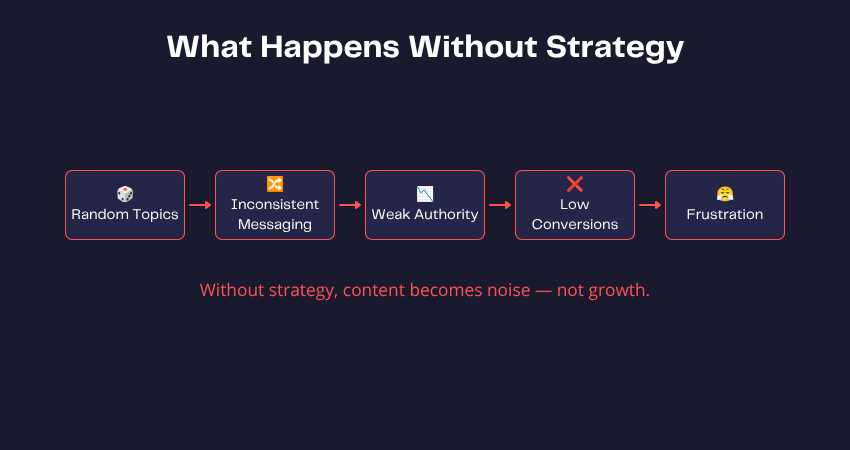
This is where many freelancers and small businesses get stuck. The calendar gets filled because something needs to be published. One week the topic is AI because everyone is talking about AI. The following week the focus shifts to SEO because competitors are writing about it. A few weeks later the business is publishing content on personal branding, productivity, and marketing trends without any clear connection between them.

Six months later there may be thirty articles on the website but no clear audience, no topical authority, and no measurable business impact. The problem isn't a lack of content. The problem is that the content was planned without a strategy behind it. A content calendar helps you stay organized. Content strategy ensures that every piece of content contributes to a larger goal.
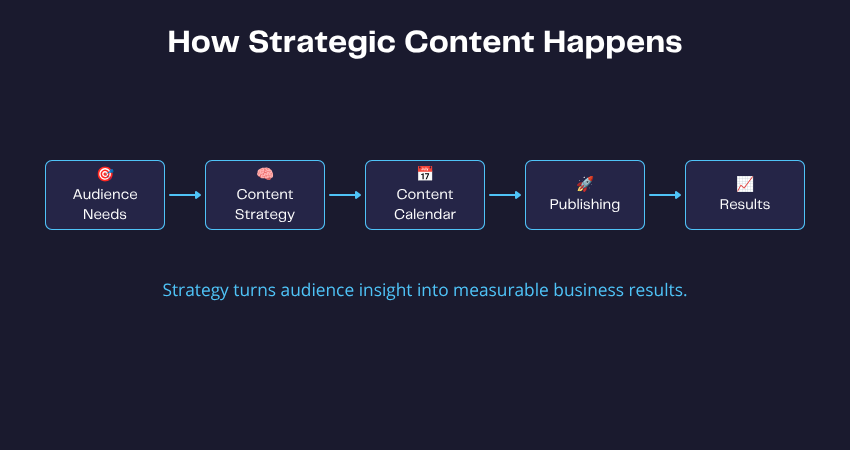
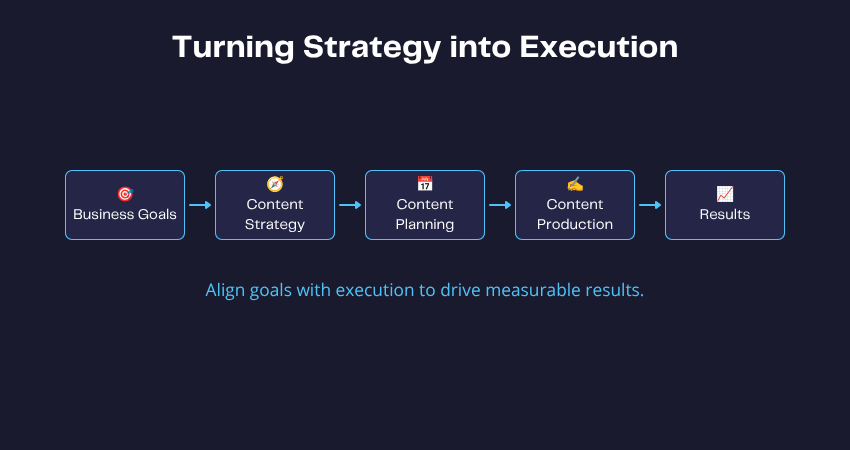
Content strategy and content marketing are closely connected, which is why they are often confused with one another. The easiest way to understand the difference is to think of content strategy as the blueprint and content marketing as the work that follows. Content strategy focuses on decisions such as who the audience is, what problems matter to them, which topics deserve attention, and how success will be measured.

 Content marketing takes those decisions and turns them into action through blog posts, newsletters, videos, social media content, case studies, and other formats.  Without content strategy, content marketing can become a cycle of creating and publishing without a clear direction. Without content marketing, even the strongest strategy remains an idea on paper.  A useful way to think about the relationship is that content strategy decides the destination, while content marketing builds the road that gets you there.
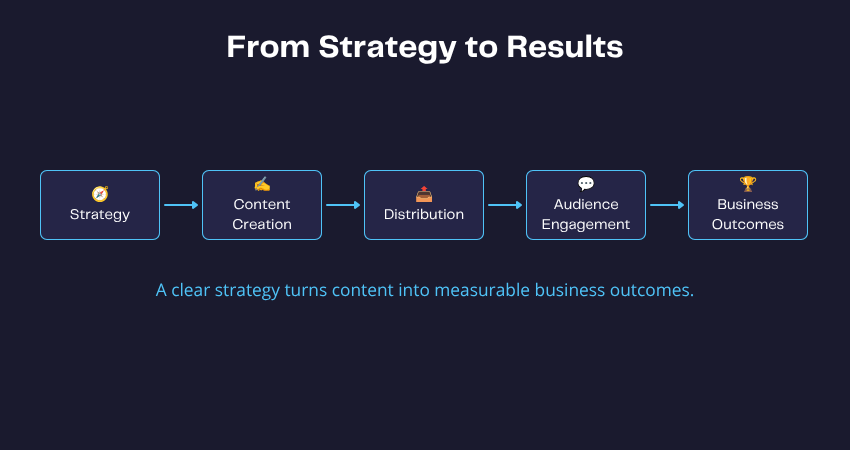
Another common misunderstanding is the belief that content strategy and SEO are interchangeable. They aren't. While SEO focuses on helping people discover content through search engines and increasingly through AI-powered search experiences, content strategy determines whether that content deserves to exist in the first place and whether it supports a meaningful objective. A keyword may have thousands of monthly searches and very little competition. From an SEO perspective, it may look like an opportunity worth pursuing.


But if that topic attracts readers who will never become subscribers, leads, or customers, it may contribute very little to the business. The opposite can happen as well. A business may publish well-written content on topics that interest the team internally but have little relevance to the audience they are trying to reach. The strongest results rarely come from choosing between content strategy and SEO. They come from combining both. Content strategy ensures that you create the right content. SEO helps the right audience find it.
That distinction matters even more today because AI search engines are becoming increasingly effective at summarizing information that already exists across hundreds of websites. What they struggle to replicate are personal experiences, original research, customer stories, specialist knowledge, and unique perspectives. Those are strategic decisions rather than SEO decisions, and they are becoming some of the most valuable assets a writer or business can offer.
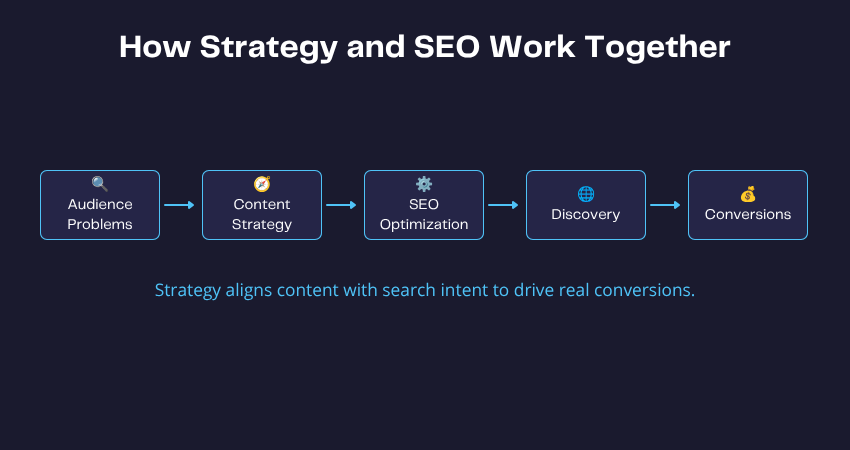
If content strategy determines the direction, content planning determines how that direction is put into practice. Content planning focuses on the operational side of content production. It answers questions such as which topics should be covered this month, who will create the content, when it should be published, and which channels will be used to distribute it. These are important decisions because even the strongest strategy will fail without a system to support it. By the time planning begins, there should already be a clear understanding of the audience you want to reach, the problems they are trying to solve, and the business goals the content is expected to support.


The topics should not be chosen simply because they are trending or because competitors are writing about them. They should be selected because they answer genuine audience needs and contribute to a larger objective. This is where many businesses and freelancers run into difficulties. They become highly efficient at producing content without ever stopping to ask whether they are producing the right content.

Planning without strategy often creates busy teams, full publishing schedules, and impressive content output, but very little business impact. A useful way to think about the relationship is this: content strategy decides where you want to go, while content planning organizes the work required to get you there. Both are essential, but planning delivers its best results when strategy comes first.
The content industry is entering an interesting phase. For years, the ability to create content quickly was considered a competitive advantage. Businesses looked for writers who could produce more articles, publish more frequently, and keep websites and social channels active. The challenge was one of production, and the people who could create content at scale often found themselves in demand.

That reality is changing. Today, almost anyone can generate content with the help of AI tools. Drafts that once took days can now be produced in hours. Businesses that struggled to maintain a publishing schedule can now generate blog posts, newsletters, product descriptions, and social media updates at a speed that would have seemed impossible only a few years ago.
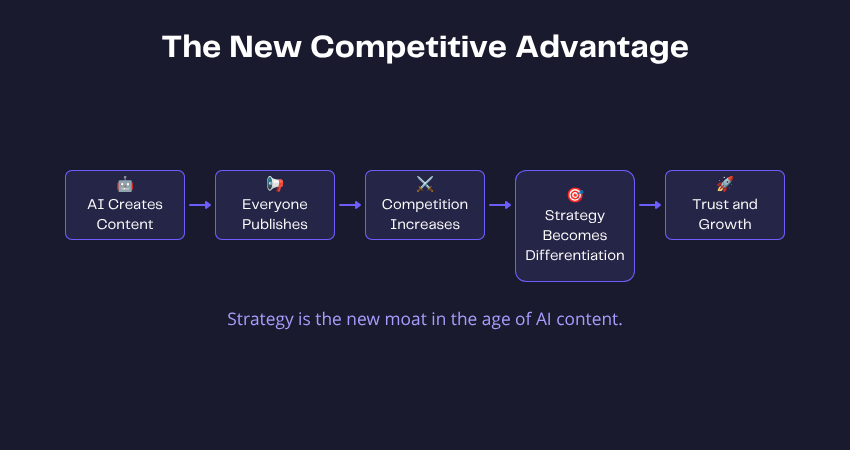
Yet despite this abundance of content, many businesses continue to struggle with the same questions they faced before AI arrived.
What should we write about?Who are we trying to reach?Why isn't our content generating leads?Why are people reading our articles but not becoming customers?Why does content feel like an endless cycle of activity without a corresponding business outcome?
These are not content production problems. They are strategy problems. This shift has important implications for writers. The market will always have room for people who can write well. What businesses increasingly need, however, are professionals who understand the relationship between content, audience behavior, business objectives, search intent, and customer trust. They need people who can explain not only how content should be written, but why it should exist in the first place and what role it should play in the broader growth of the business. For aspiring writers, this should be viewed as an opportunity rather than a threat. The future is unlikely to belong exclusively to the fastest writers, the cheapest writers, or even the writers who are most comfortable using AI tools. It is more likely to belong to those who can combine writing skills with judgment, research, strategic thinking, and a genuine understanding of the people they are trying to serve.
In many ways, the profession is returning to its foundations. Good content has always been built on curiosity, empathy, expertise, and the ability to understand what people need before they know how to ask for it themselves. Technology may change the tools we use, the channels we publish on, and the ways in which information is discovered, but those principles remain remarkably durable.As writers, we often spend our time thinking about headlines, keywords, formats, and publishing schedules. Content strategy asks us to step back and consider a larger question: "What difference should this piece of content make once it enters the world?"
The answer to that question influences everything that follows. It shapes the topics we choose, the audiences we prioritize, the stories we tell, and the outcomes we pursue. More importantly, it determines whether our work becomes part of the noise or part of the solution. Perhaps that is the real value of content strategy. It encourages us to think beyond articles and toward impact, beyond publishing and toward purpose, and beyond traffic and toward trust.